The Wrath of Kon

Dispatches, thoughts, and miscellanea from writer Jon Konrath

The Internal Locus

I’ve spent all morning picking away at some automatic writing that has to do with 2008, which is always weird.  I mean, it’s weird to write nostalgic writing about a period that’s two years ago, and it’s more weird to talk about it here, when you can just click on a link about three inches below this and simply read what I actually wrote in 2008.  But I have the advantage of distance in that my 2008 was about 350 miles south of here, and the general feeling of LA is markedly different than that of San Francisco.

Here’s the thing: I have been listening to the BT album This Binary Universe. In many ways, this is an absolutely perfect album; it’s very technical, a total departure from BT’s typical techno roots, and extremely, extremely expressive.  It’s so heavily textured, with so much going on in each track, that it’s entirely enjoyable for me to listen to.  And it’s the perfect balance between music I can completely background and think about something else and something I can dive right into and just be consumed by the thoughts that come from the music.

But the big reason I like the album so much is that it’s a total time machine for me.  I got this album in 2007, the summer of 2007, when I worked from home in Denver, and spent most of my free time either hobbling to various foot doctors to find out what the hell was wrong with my ankle, and going to every Rockies game I could afford, since they were about a hundred feet from my front door.  And a lot went on that summer emotionally - the big break from New York, I was going to get married, I was trying to define myself - was I a writer?  A programmer?  Could I find another tech writing job?  I was very lost, and lost in a new city, but so excited by this huge turn in my life, this new place, the ability to get in a car and drive to random new locations like mountains and barrios and abandoned air force bases and giant book stores.

And there’s a weird ripple effect, because in 2008, that album was such a time machine back to 2007, I would listen to it when I was struggling in LA and wanted nothing but to be back to that same place in Denver.  And it always hurt me so much, caused so much strange emotional pain, but it would consume me so much I had to do it and had to feel all of it and go through the entire album from start to finish and just absorb that 74:19 of extreme emotion and go on with my new life in LA.

I remember the end of LA, one of my trips up to SF, either for a job interview or apartment hunting or to drop off a Yaris full of stuff, and I got on the I-5 to head north through the giant desolation of our state’s food basket or whatever the hell they call that no-man’s-land through the central state that’s nothing but farms.  I tried to find something to listen to, and decided that I would go through the entire album, listen to it from start to finish as I was stuck in the cabin of the tiny car, driving north through nowhere and nothingness.  I would absorb the entire performance and transform myself, like a shaman going into a sweat lodge to absorb a lifetime of memories and problems and touchpoints in one concentrated, hallucinogenic dose.  And I did, and it absolutely etched another destination for this time machine device.

Anyway, I chipped away this morning at more writing, stuff that probably will never see the light of day, but I gave the entire album a listen again, and the thing still floors me.  I can’t say much more than that, but just that this album is one of my absolute favorites.  I sometimes wish I had the space and place to just listen to it every day, and pour out the writing that came from it, until I had a book’s worth of words captured.  Maybe I will.

Interview from 2006

I was digging through my hard drive and found a set of questions and answers I wrote for Mike Whybark, for an article in the short-lived Now Playing magazine back in 2006.  I don’t think the article ever made it to print, but for kicks, here’s the answers I sent back to him.  I’ll put the questions in this color.

Jon Konrath, Tell Me a Story about the Devil, http://www.rumored.com/

Mike Whybark for Now Playing magazine, issue seven, projected street date late summer, 2006.

Jon, please just write your answers in under the questions. As you know, using complete sentences is helpful. The responses you provide will be used in part for quotes to appear in a 400-word piece for the magazine. I’m interested in elucidating the intersection of writing, blogging, and self-publication with specific respect to your experience doing all three. Feel free to flog your books and please be sure to cite specific examples from each book where appropriate.

How long have you been writing online?

I started a death metal e-zine in early 1992, but I didn’t start regularly journaling online until 1997.

Did your interest in writing predate your interest in online publication?

Yes, but only because there wasn’t much of an “online” back in the late 80s.

Tell me about your subject matter and techniques. What are your goals in writing and publishing these works?

I started by writing what I knew, which was the Kerouac-style biographical-but-fiction stuff, and tried to frame things in a way that made them readable, but not entirely plot-driven.  I’ve slowly become more interested in more experimental prose, trying to do things that are nonlinear, but still readable.

My goal in publishing is mostly to drive myself to complete projects.  I don’t care about money and fame, and would continue to write even if I didn’t have the means to self-publish.

Much of your work appears to be focused around the idea of the memoir, of looking back at experiences lived. Do you have a sense of why that is? Have you ever written material grounded in an imaginary experience or with a protagonist who is radically different in background, experience, and worldview from your own?

Before I wrote books, I wrote short stories, and personal past was easily translated into slices of short fiction.  My first book, Summer Rain, was based on one of those short stories.  As I’ve progressed, I have less interest in the traditional novel format, but my own experiences still rub off into my fiction.  My second book, Rumored to Exist was a lot less grounded in reality, and my next book is pretty much 100% fiction.

Briefly, summarize your books.

Summer Rain is autobiographical fiction about being stuck in the college town of Bloomington, Indiana for a summer in 1992.  There’s a lot of conflict in the form of money, parents, relationships, academics, and what to do next in life.

Rumored to Exist is a nonlinear novel that’s essentially 200 different slices of reality, each one bizarre and surreal.  It’s my first shot at writing something like William S. Burroughs’ Naked Lunch.

I’ve also written Dealer Wins, which is a book of travel essays about Las Vegas; an anthology of the first three years of my journal, Tell Me a Story About the Devil; and The Necrokonicon, a glossary of my times in Bloomington and Elkhart, Indiana, which started online but also became a print book.  All of these are projects that started as online writing, but eventually came to the print world solely because PoD made it cheap and easy for me to wrap them up into a paper book.

Is there one which you feel particularly strongly about?

I think Rumored to Exist is the one that I can always flip open to a random page and read a few paragraphs and still think it’s great.  It’s closest to the direction I want to continue with writing, and it sold better than any of my other stuff.

When did you decide that you wanted to self-publish? What book is that?

When I finished Summer Rain in 2000, I was not sure I wanted to flog it around to agents and publishers as a commercial product, partially because I knew they would want me to change things in the name of better sales  (“Can you rewrite it to take place in Seattle, and make the main character a gay cowboy?”), and partially because the book was so personal to me, and it felt like I’d be whoring out my child.  But I wanted some copies for friends, and thought about printing a thousand of them, but feared having 970 of them sit in my garage forever.  Around that time, iUniverse came along, and it seemed like a decent compromise to me.

What kinds of research have you done in looking for publication partners? What are the key things you look for when you decide where to go for publication?

I mostly looked at cost-benefit comparison when I shopped around for publishers.  Some offer more service, but at a higher price.  I focused more on getting the core service done, and not the frilly extras.  I also carefully read everything that made sure the contracts did not have any clauses that would cause problems down the road, as far as ownership and copyright.

Who are the primary self-publishing providers? What’s your analysis of each?

I can only speak for the two I’ve used.  I started with iUniverse and did three books with them.  They were one of the first, and before they figured out their market and pricing structure, they were relatively cheap.  I think for my first book, I didn’t pay anything for the initial startup.  But as time went on, they became more expensive as far as start-up costs, and tried to justify it by adding more services that didn’t interest me.  They handled things like cover design, which might be good if you don’t know anything about computers, but I design books all day, so I didn’t feel like giving them an extra few hundred dollars and possibly having a dud book design.

Lulu.com came out after iUniverse, and it’s much more of a DIY resource.  While iUniverse is pretending to be more of a serious, traditional publisher, Lulu is more focused on providing you the tools to publish.  They offer many of the same services, but everything is ala carte, so you just add what you want to your project.

Your books are available on Amazon.com – do you list them yourself, or does your publication partner do that?

A feature of most Print-on-Demand publishers is that they will add a UPC code and ISBN number to your book, and then list it in the Ingram publishing database, which means it propagates to a lot of booksellers’ databases.  There’s also some additional paperwork nudging to get it to Amazon.  In the process, your book also ends up at Barnes and Noble and a bunch of other online booksellers, plus the computer order systems at almost every brick and mortar bookseller.  (It doesn’t actually get you in stores, though – people have to special order it.)

Different publishers have different price points at which they will add this option.  iUniverse’s lowest-priced package doesn’t offer it, but the next one does.  For Lulu, you have to pay an additional fee (I think it’s about $149, but I don’t remember.)

What’s the best way to buy your publications? How many different ways are there to obtain them?

Other than buying from me in person (no shipping), the best way is usually from the publisher’s web site.  If you buy from Amazon or other sites, it usually costs you more, and I get less money.  But I know people get pretty locked into Amazon, so that’s available as an option.  You could order it from your local bookseller if you’re loyal to a particular shop.  And like I said, the Ingram thing means the book pops up in a lot of weird places on the web.  I remember my first two books were available on the Wal-Mart web site for a while.

Did the books originate as blog-based pieces, or did you develop them offline with the intent of restricting the content to offline publication?

Bits and pieces of blog-like writing end up in the books.  But when I’m blocked or bored, I tend to write things in my online journal as an experiment, and then swipe them later for the books if they worked.  My writing though, is not typically the “take a bunch of blog entries and make them into a paper book”.  (That said, my third book was exactly that.)

Have you sought commercial publishing opportunities for your books?

Not really.

If not, do you intend to?

Maybe.  I would rather direct my energy into writing my own work than trying to pitch some commercially viable projects with sales potential to agents and writers.  Sitting around all day trying to think of what will be the next DaVinci Code isn’t really writing to me, it’s producing commercial books.  And that’s a job, and I already have a job.  I want to write what I want to write.

In musical terms, it’s a lot like the difference between being into punk rock and jamming out in a garage and having a web site that will put up your demo so you can sell nice-looking CDs to 20 or 30 of your friends, versus sitting around and saying “Shakira’s really hot this quarter, maybe write some Latin AOR crossover hits with possible secondary market potential” and shilling it to guys in suits.  The punk thing probably won’t feed you (unless you’re Billy Joe Armstrong), but it’s a lot more interesting than playing golf or collecting stuff you don’t need on eBay.

Do you work as a writer professionally, and if so, in what capacity?

I work as a technical writer for a software company.

Tell me an anecdote about something interesting, surprising, cool, or terrible that has occurred to you as a result of your online and self-publishing endeavors.

When I was doing my old death metal e-zine, called Xenocide, a kid from California used to send me record reviews, and we wrote back and forth a bit, and I published his stuff.  About 12 years after the e-zine folded, I came home from work and had a ton of messages from the FBI and pretty much every major news outlet you could think of.  It turns out that the kid who wrote for me was Adam Gadahn, who was recently named as a terror suspect by the FBI and got on the most-wanted list.  I still had old issues of the e-zine on my web page, and when you searched for Gadahn, it was one of the only hits online.  I got to spend the next few weeks on the phone with everyone from the New York Times to the National Enquirer, plus an FBI antiterrorist task force, telling the same story over and over about how I only knew this kid from talking about Cannibal Corpse and Autopsy records.

Are you aware of or interested in the notable successes seen in recent years in publishing that began as self-published works, such as Eragon?

I think most self-publishing marketing books or web sites tell you all about that, or the color of your parachute book, or I think the chicken soup for your soul book was originally self-published.  These are all extreme long-shots and not typical at all of self-publishing, but they’re still interesting stories.

Do you see the move toward self-publication as empowering to the author and reader or as a devolution of responsibility on the part of the publisher?  Does the potential outcome of the trend – the loss of major book publisher’s editorial development departments, or their replacement by marketers and ‘cool hunters’ – fill you with excitement and optimism or worry?

It’s empowering to authors because it’s an instant way to get a book onto paper, in the same way that blogging or web publishing is also an instant outlet, without waiting for editors or publishers or any other form of The Man.  And it’s empowering to readers because they can read stuff that normally wouldn’t be published. I don’t think it devolves big publishers at all, because they’re still putting out their DaVinci Code big-sellers.  And if a self-published author wanted the help of a professional editor or PR agent, all they need to do is break out the credit card and find one.

How many copies of your books have you sold?

Not enough to be able to publicly admit to any total.

How many would you need to sell in order to support yourself as a writer from their sale?

50,000 a year?  100,000?

What do you think would be necessary in order to accomplish that?

You’d need a lot of marketing to sell that many books, or a hell of a book.  And at that volume, print-on-demand wouldn’t be as profitable – you could double your profit by going to a traditional printer.

I think if you already have a big captive audience, self-publishing would work.  Like if you were already famous, like a movie director, musician, or had a blog that got 100,000 hits a day, it could work.  Henry Rollins has been self-publishing books for years.  But he also took a beating on his big-art books, and now he’s got publishers putting out his stuff for him.  It’s all very trendy, very high-risk.

Do you think that you would be able to succeed in these tasks if you determined to attempt to meet that goal?

I don’t know, I’m pretty lazy about the business side of it.

How many self-published writers do you think are able to support themselves from their works?

A handful, maybe.  I think it’s more the case that there are self-published writers that are able to parlay their writing into other work.  I imagine if you were writing a cool self-published tech book on AJAX or something, you could make a living on contracts and consulting work.  If you were a motivational speaker and self-published the next big chicken soup book, you could hustle a lot of speaking gigs.

Are there any other self-published writers whose work you admire?

As far as fiction, my friend John Sheppard.  His self-published book, Small Town Punk, actually got picked up by Ig Publishing, so he’s retiring from the PoD world now.

I also admire anyone who self-publishes books about their work or history.  There are a lot of military history books coming out that would have been ignored otherwise by large mainstream presses, but it’s good to see that history preserved, especially when it’s interesting to read.  And even if someone came out with a book on managing a Taco Bell 20 years ago, I’d probably read it.

Have you ever purchased another author’s self-published work?

I’m always cruising around lulu.com to find like-minded authors, and I probably purchase a book or two a month.  I do trades whenever I can, too.

Is there anything else you’d like to add?

Thanks very much for your time.

Hipstamatic-ing

IMG_0130

When I was a kid, my very first camera ever was this Kodak 110 that I won at my dad’s company picnic, in maybe 1979 or 1980. The name Instamatic rings a bell, but after a bit of googling, I think it was an Ektra. Anyway, it used this 110 cartridge film, this grainy stuff that took perfectly square photos in an almost psychadelic color scheme, with tons of lens flare and the inability to take a picture in less than full daylight unless you bought those strips of flash bulbs, the kind you plug in, take a few pictures, then flip over to the other side, then throw the whole melted, short-circuited mess out. And as a kid living on allowance, my budget for this hobby was somewhat less than the average trust fund hipster swinging around a Holga and mailing off their shots to some super-OCD lab in Seattle.  In fact, I think I shot maybe four or five rolls on this thing, and except for maybe one or two of them, the exposed rolls sat in a kitchen junk drawer for years until they corroded into nothingness. But I do love the handful of images I took with it, not because they look good or are artistic in any way, but because they have such quirky size and color.

So today I discovered the Hipstamatic app for the iPhone. It’s essentially a replacement for the iPhone’s built-in camera software, but it’s also an emulator for all things hipster-esque in the camera department.  It looks on the screen like you’re holding up a freaky German plastic camera, with a little square video preview window, and another square window showing you the film “cartridge” loaded into it.  But the cool part is, you can mix and match various film, lens, and flash combinations by drag and drop in the interface.  And they have an in-app purchase system to buy other new packs of lenses and films, if you want to go B&W or get that plastic lensed Holga look.

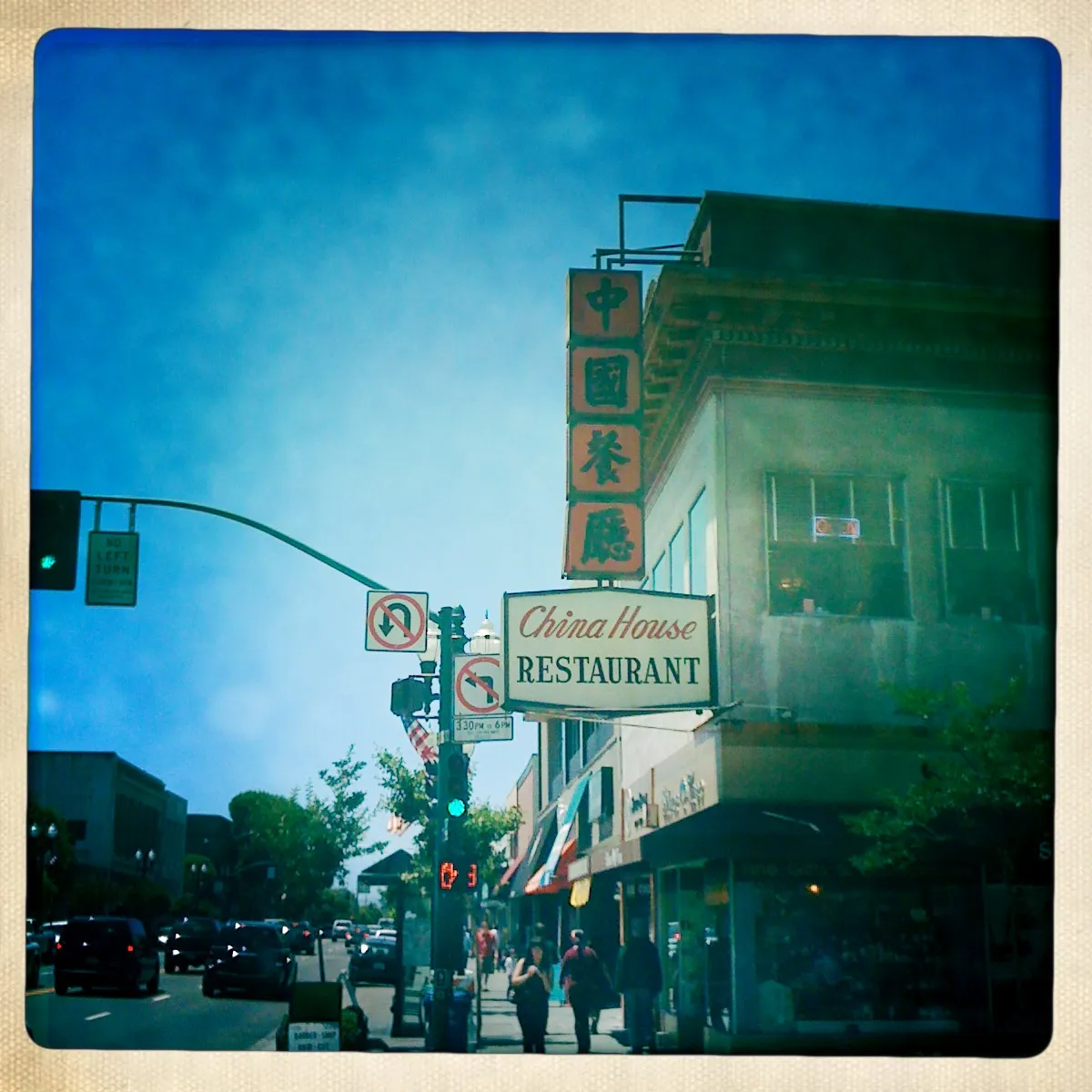
I snapped a few shots at lunch and after work in Palo Alto, and really dug the results.  Some of these photos look like they were taken in the mid-seventies and forgotten for decades.  Maybe it’s just a gimmick, but it’s great fun, and I did not need a lick of Photoshop work to accomplish this.

Anyway, here’s a slideshow, or click on the preview picture above to go to the Flickr set.  (Note to people not reading this from https://www.rumored.com/journal - you might not see the embedded images - sorry.)

Dirty fingernails

Today I had this wise idea to get my car washed and waxed.  Well, I actually just went and got it washed first, at this weird ghetto car wash within the Macarthur Maze, a place that looked like it used to be a gas station, but with all of the pumps ripped out of the islands, and the former mini-mart now sold bootleg t-shirts.  It was run sort of like a barbershop, with a bunch of essentially freelance dudes, all hungry for the next car to pull in.  I got this guy that looked like Snoop Dog, wearing a Jahvid Best jersey, and he charged me $13 although I just paid him 20 because he spent forever scrubbing off roughly a years’ worth of bugs and tree droppings all over my car.  The whole thing was just strange in a surreal way, these dudes detailing a bunch of Caddys and cruisers with 22” rims, while my little Yaris sat there in the bay.

So then on the way home, I decided I wanted to wax the car.  After lunch, I went to the local Autozone, and bought some weird Turtle Wax kit for cars with black paint that promised to rejuvenate it magically.  It weighed like seven or eight pounds and had a variety of formulas in it, so I figured that was the stuff to get.  Back home, I started in on it and then realized the whole thing was this four-step procedure that required about twenty microfiber towels.  First it used this cleaning agent, which was a thick black spray that basically looked like dirty motor oil, and got all over me, the parking spot, my hands, my clothes, and some of it got on the car too.  Then you washed that off with a detailing spray, then sprayed on a wax, then another round of detailing spray.

By the end of the fourth round, I really did not give a flying fuck what my car’s finish looked like, and just wanted to be done.  I am not sure if the stuff did any magical wonders or not, except that my fingernails will be black for the next week.  And it made me wonder about age and aging and all of that, because twenty years ago, I would have spent an insane amount of time working on my car, washing it or cleaning it or whatever.  And now, I don’t change my own oil, and I don”t do any repair work, and I wonder if I ever had a project car, like if I got an old unrestored Camaro, if I would ever have the patience and time to ever work on it.

Case in point, I brought the Yaris to the dealer this week to get a few things done.  They changed the oil  (I realize it’s stupid to let a dealer do this, but I figured I would throw them a bone and give them a simple high-margin bit of profit so they would put up with my other issues), and I also had them flush out the air conditioning system with some crap to kill all of the various mold and mildew and whatnot.  I’ve also had a check engine light on and off since my accident last year, and I can read and reset those codes with the ScanGauge, but I did not know what to do about this.  They found the issue - the valve in the evaporative emission system was broken, and the hose that connected it to the charcoal canister was cut or broke.  So they ordered the parts, and I will get this fixed tomorrow.

I could probably have let this repair go, but I want the car to be CEL-free when I eventually have to get the next smog inspection.  I guess that doesn’t happen until 2014 or when I sell this car, but I still fantasize about buying another car soon.  I would really like to get a new TDI VW, maybe a Jetta, but I also don’t want a car payment, so I will keep squrreling away money, and when I eventually I get enough to buy a new car for cash and a trade-in, I will start to seriously entertain the idea.

The Yaris is still chugging along fine otherwise.  It’s just about to cross the 40,000 mile mark, and I’m still averaging just shy of 40 MPG for the daily commute.  I figured I would need new tires by now, but the original set still have a decent amount of tread.  I think the first thing to wear out on the car will be the driver’s side floor mat; my right shoe is rubbing raw a little area on a daily basis.  (And no issues with floor mats getting stuck on the gas pedal or any other sudden acceleration issues; my car was not one of the Toyotas affected.)

I think I’m going to go scrub my hands for the tenth time and see if any more of this crap will come loose.

New Look

Wordpress 3.0 got released, and I took the plunge and upgraded.  After using my own scripts for a dozen years, I like the idea of a quick download adding a bunch of new features, instead of having to actually implement the things myself.

The biggest change is the new default theme, which I’m using, at least for now.  I’m sure once I run across a thousand other sites that look exactly like this, I’ll change to something else.  One of the features I like is the nifty header image.  I swapped in a nice sunset from our trip to Mexico last Thanksgiving, but I’d like to find a good plugin to handle random image changes and plop in a dozen or so banners.  I’m resisting the urge to start tearing into the PHP and adding my own duct tape; I’ve even avoided any plugins, at least for now.

Anyway, let me know if you find any weirdness or bugs…