The Wrath of Kon

Dispatches, thoughts, and miscellanea from writer Jon Konrath

October 2015

The Watch

I got an Apple Watch this week - it was an anniversary present from my wife. I’ve vaguely wanted one, but wasn’t sure. I’ve used it for a day now, and it’s interesting in the same way all new Apple products are interesting to me.

I’ve had two different experiences with new Apple products: either it is a complete game-changer, or it doesn’t seem to offer anything, and over time, it slowly becomes apparent why it is valuable. A clear example of the latter is the Apple TV. We had a Roku box, and replaced it with the Apple TV. And at first, all I thought was “okay, more of the same.” It didn’t run apps, didn’t do anything special, and was pretty much the same thing, with a different UI and slightly different lineup. But then its value became slowly more apparent as I realized I could stream anything from my Mac into the living room, and use AirPlay to mirror over video from an iOS device.

Other things hit it out of the park. Switching from a big tower PC with Linux to a little Mac Mini in 2005 was a complete game-changer. Moving from a MiniDisc player to an iPod with every piece of music I owned was a complete paradigm shift. The move from a crap Windows Mobile phone to an iPhone in 2009 was a huge thing. I think any time I replaced something with an Apple equivalent device, it was a major positive change, and usually added functionality that greatly helped my productivity. Or, in most cases, it removed distractions that gave me much more time to focus on other things.

The iPad was a weird example, though. It didn’t replace anything; it was an odd supplement. It did take over using an old laptop when I was sitting on the couch watching TV, and made the passive second-screen experience much more fluid. It also took over using my main laptop on planes or during travel. But it ping-ponged between being too big to be a phone and too small to be a laptop. I tried bringing only it on small trips, using it as a writing machine with an external keyboard, and it never really hacked it. I also used it as an ebook reading machine, before I largely gave up on reading ebooks, because they are horrible and you really should read everything on paper. I love the iPad, but it’s stuck in this chasm between what I need and what I want.

That brings us to the watch. First, like any other Apple product, it is immaculately designed and engineered. The display is incredibly crisp and radiant. The lines of the case are smooth and minimalist. The way it sits on the wrist is not overly “techie” looking like a Pebble watch or other smart watches. It’s very sleek and smaller than my last watch, a Timex Expedition.

I’ve always worn watches. I never don’t wear one, including at night and in the shower. Since high school, it has been a changing cast of plastic waterproof Timexes and Casios, ranging from the most basic drug-store cheapies to a few more expensive G-Shock and Ironman models. My only real requirement of a watch is that I don’t need to think about it, that it is ultimately waterproof, unobtrusive, and has a battery that lasts a long time. I don’t care about fashion or gold or leather or any of the fetishistic Rolex-esque collectible qualities. I dislike analog watches, and I don’t care for wind-up or mechanical watches. If I have to have features, I want a date function, maybe a multiple-timezone thing, a very readable display, and a light is key.

I’ve wandered into the world of smart watches only in the earliest ideas of it. I did have a solar-powered G-Shock with altimeter, barometer, and all that jazz. It was okay, but did not charge well indoors, and I never went outdoors. I did a few different iterations of the Timex DataLink, which was interesting, but ultimately flawed. I generally like the look and feel of Timex, but it always seems they don’t test the UX of their watches, or they generally have 80% of the features I want, and the other 20% is sheer stupidity. And then when they break a year later, you have no way to replace a weird-shaped proprietary band or get them repaired, so they are ultimately disposable.

There are obvious issues with my demands that an Apple Watch won’t meet. It needs to be charged daily. There are Apple apologists who say you can maybe get two days out of it if you turn everything off and don’t actually use it, but get real — you need to charge it every day, for about 45 minutes or so. You could do this at night, but I like to have a watch on at night so I can read the time when I wake up at 2

, and I’m interested in tracking sleep. I also can’t really wear the Apple Watch in the shower. You can, but it’s “splash resistant” and not “water resistant 5M” or whatever. Washing hands with it on is fine. It’s probably best to keep your wrist clean and avoid irritation, too. So I will try to kill two birds here and put it on the charger in the morning while I am getting ready, and let it charge while I’m in the shower. That’s a change in workflow, and I’m super anal-retentive about getting ready in the morning and do everything in the same exact order like I’m on the spectrum or something, because if I don’t follow a Rainman-esque procedure, I end up putting on deodorant four times and then only shaving half my face. So I need to get used to the new procedure.

The interface to the watch is interesting. It’s a new paradigm. When the iPhone came out, it took a page from the Palm Pilot playbook and made itself a subset of the Mac from which it synced, so you took only your essential data and mirrored it to your phone, along with its own Apps. This is different than the way Windows Mobile and now some Android phones work, with a different methodology, in that the phone is a PC, and the data is partitioned or divided between the two in some hodge-podge manner just like if you had two completely different PCs in your house. My friends who believe in the phone-as-PC are dumbfounded by the phone-as-subset paradigm, and think it is an indicator that the iPhone is “stupid” or “cobbled” because it can’t do everything a PC could. I see it as the opposite; a phone masquerading as a PC usually can’t do everything as well. The input and output methods on a phone aren’t the same as a PC, so you need to tailor the UI of the phone differently, to expect a touchscreen and fat fingers and less viewing area. You also want to keep a phone lightweight, so it requires less CPU and uses less battery. (This is more apparent on the tablet-as-full-PC paradigm, like the Surface. When you transfer an entire PC to a tablet, you also bring over all the parasitic overhead of an OS that has to be backward-compatible 20 years, so you have a disaster of a registry system, DLL hell, the requirement of a thousand background processes and virus scanning and obsolete drivers for floppy drives and line printers polluting your OS, and random PC LOAD LETTER errors or whatever the hell else you don’t want popping up in a Win 3.11-esque UI on your tiny touchscreen.)

So the Watch is a subset of a subset. It pairs with your iPhone and gives a glimpse of its data through a bluetooth tether, with a certain amount of computing working through its own CPU, memory, and network connectivity in the form of WiFi. I don’t know what the division is; this is hidden from the user. It’s fairly seamless; you put on the watch, tell your phone to pair with it, and after scanning a weird QR-like code on the watch face with your iPhone camera, it’s done. It is odd to think of this Russian dolls method of nesting, but that’s how it works, and it works.

I was worried the watch UI would not work out for me with my rapidly diminishing nearsightedness, but it seems fine. The big change is the haptic interface it uses to send notifications. This is more than just a single-frequency buzzer; it uses some kind of variable motor that can make notifications feel like a “tap” of different frequency to send things to you. Depending on the app, this can be quite effective. The issue is how to standardize this on apps, or have an app come up with a good idea of how to notify you. For example, the Apple Maps app uses different tapping to indicate when you should take a turn, which is pretty genius. I think there is a good possibility for an app that uses taps to do things like tell you running pace or notify you of different types of communication via a morse code-like tapping system, to change the need to look at things. I don’t know what yet, but the idea of a haptic sensor in such a prominent place (as opposed to a phone in a pocket) could mean something significant in the form of direct communication beyond the sense of sight.

Apps right now are limited, and it depends on what you want to use the watch for. There is essentially no good input device for the watch, aside from Siri. If you use Siri a lot now, this is very useful. I use Siri at least ten times every time I cook (I can’t do measurement conversions at all — sorry for failing you, grade-school math teachers) and having it on my watch is wonderful. If you make a lot of quick phone calls, having a speaker phone on your wrist where you can yell “call home” is very useful if you drive a lot. Frequent texts, in the form of “send a message to Joe saying I’m going to be ten minutes late” is helpful.

Many of the apps — especially the mail app — are in their primitive, first-stab level of functionality. When I was sitting in bed, it was useful to open mail, and immediately delete half the messages, which I always do. But as I was doing this, it reminded me of 1999, when I had my first Sprint PCS phone, a flat rubberized slab of butt-dialing goodness that had a tiny calculator screen to show you texts and what it thought was “mobile web,” a rough and dumb approximation of browsing the internet in the form of showing you the first 18 characters of a stripped-down web site after about a minute of loading. Reading my mail messages on this little screen made me think back to those early days of reading mails on the tiny square screen of a Nokia, with no adornment or spacing or anything, just bare words in a little LCD box. It looks better and smoother on the Watch, but in my mind it is a representation or reminder of that feeling of “this is our first go at this, but in ten years, this is going to be phenomenal.”

Some apps are silly, or plain dumb. Apps are not separately synced; an iOS app may or may not have an associated Watch app. When your phone app has a watch app, you get it when you sync. As an example, the Walgreen’s phone app has a Watch app, and all it does is remind you when to take your pills. That’s it. I could have used a Watch app that showed me my rewards balance, but no. Some apps are decent. Like the Yelp app is pretty good at giving you condensed choices. The Weight Watchers app is buggy as hell and largely useless. The MLB At Bat app seems to be well thought-out, but won’t even launch for me. I think this will get better as the new native apps API get out there. The possibility for good apps exist. Maybe now that they’ve sold a few billion dollars’ worth of watches, they will start to happen.

Built-in apps are good. I like the idea of controlling iTunes with my watch. The messaging apps are decent. I rarely text or use the phone because I’m an introvert shut-in with no friends, but if you talk to friends a lot, there’s a lot of usefulness there.

One of the main reasons I wanted the watch is to keep track of fitness and quantify that. The sensors for this are excellent, as is the activity monitor. I normally use a Fitbit to count steps/floors, and the Watch seems to count slightly lower, which is normal for a wrist-mounted counting device, I think. The heartbeat sensor is pretty good. The integration with Apple Health is awesome. I first used the exercise monitor feature on yesterday’s walk, and it was great to capture my heart rate changes during the usual fast-walk with hills. I also used the Sleep++ app to track sleep last night, and that worked well.

All in all, it’s an interesting device — I’d like to see how it works out in the long term, and find more uses for it with regard to the usual writing/research/data collecting/tasks workflow.
the changing range of nostalgia

I got an observation/question in email from Larry about this (and I’m paraphrasing): back when we were in high school in the mid/late-80s, there were a couple of kids who had old cars, “classic” cars like the ’57 Chevy, and that was a big deal, because they were 30 years old and “antique.” Or back then, the twenty-year-old range put you into classic muscle cars, like the ’69 Z-28 or Mustang Mach 1.

Now, a thirty-year-old car lands you in the mid-80s. And he posits, are kids now impressed with a 1985 car with a bad tape deck the way we lusted after old Bel Airs and T-Birds?

Oddly enough, that’s true to some extent. I read a reddit for project cars (which makes total sense, because I don’t have a garage, or time, or money, or patience, so I waste tons of time looking at pictures of people restoring old cars.) And the year range of what I consider “classic” is now insanely out of reach. Every baby boomer who has cashed in and is in The Crisis is searching for that ’66 Stingray or ’69 GTO they couldn’t get back in high school, which has made the prices skyrocket. Even the completely fucked and destroyed shell of an old Camaro convertible is going to cost more than my 2014 Toyota did new.

So, the kids of now are looking back to “old” cars that I still mentally consider “new.” Like on that reddit, two of the most popular resto-mod projects are old Fox-era Mustangs (’79-’93) and first-gen Miatas (’89-’97.) When I was in high school with a falling-apart rust bucket of a 1976 car, I was given endless shit by kids whose parents bought them a new car, and the one in vogue was the ’88 or ’89 Mustang 5.0 GT. That to me is a “new” car, but now they’re almost 30 years old.

If you were looking for a cheap project, you can buy one of those mid-80s Mustangs for a grand or two, with a beat-apart four-banger engine. This was right before computerization and fuel injection took over the engine bay of modern vehicles, so it’s not hard to tear out that engine and rebuild a pick-and-pull 351 V-8 for a grand or so. You can get all the Edelbrock bolt-on stuff like an intake manifold or headers online, and head over to Tire Rack to get running gear UPSed to your door. But yeah, kids now see those as “old” cars, and are into the retro aspect as much as they are into vinyl records.

I’ve also noticed this in another k-hole I fall down, which is retro computing. I also browse through a reddit for vintage computers. When eBay first came out, I went through this thing where I had to buy an old Atari 2600, which I never had as a kid, and also re-buy a new Commodore 64 and relive the past glory of my first real computer. And people still do that, and there’s a big community of folks with old Amigas and ColecoVisions and all that. But now, I’m also seeing a lot of kids restoring “retro” machines like 386 and 486 PCs.

My first reaction to this, seeing someone fighting with a 486DX-33 and a Windows 3.1 install was “wait, what?” Because those aren’t vintage, they just came out… well… okay, twenty-some years ago. If you pull an old 486 out of the garbage and have no memory of these beasts, it’s going to seem radically different from your new PC. It will have floppy drives, a 40-Meg disk drive that’s IDE if you’re lucky, or maybe even an MFM or RLL interface. There won’t be a DVD or CD drive, USB, any sort of memory card reader, and it probably won’t have a network card. (It might have an old 10 Base T Ethernet card, if it was from an office.) It would hopefully have a VGA card, but good luck if it was Hercules or mono. And prepare for that gigantic space heater power supply used to spin up the massively loud hard drive to have bulged and leaking capacitors that need replacement.

It’s an odd thing, because in some senses, a computer from 1992 is going to be much harder to deal with than one from 1982. That pre-internet era is not as documented as it could be, and most parts and spares went into the garbage. It was also the wild west as far as standardization. Only one company made TI computers; there were dozens of Taiwanese shops knocking out PCs in the early 90s, all using only vaguely compatible pieces, and most of them are vanished and unknown. Now, every computer looks absolutely identical, but then, even the same manufacturer might have a dozen differently-cased computers, each with entirely incompatible parts. Try finding a replacement front bezel for a Leading Edge computer - your only real hope is finding another complete Model D to cannibalize.

And these “old” computers seem like they are five minutes in my past. When I started this site, I had just upgraded from a 486DX-33 to a 486-DX120. I had the same beige mini-tower case from 1992 to I think 2002, and incrementally updated bits and pieces of the system when I got a few bucks. I wrote my first two books on computers shoehorned into that box, and it doesn’t seem like it was that long ago. But 1992, that was 23 years go.

I should add the disclaimer here, so I’m not completely Andy Rooneying this, is that I don’t see anything “bad” about current computers, in a “they don’t build them like they used to” way. Same with cars - you can buy a $10,000 car and drive it for a hundred thousand miles easy, only changing the oil and maybe getting a set of tires or two. You don’t screw with distributor points and cam timing and cleaning spark plugs any more. I haven’t had to change jumpers on a computer in a long time, haven’t needed to run to the store for some random ribbon cable to get this to talk to that. They’re appliances now, and maybe something is gone in the tinkering, but I’ve got too much shit to do to mess with that now.

Still — christ, I’m getting old.

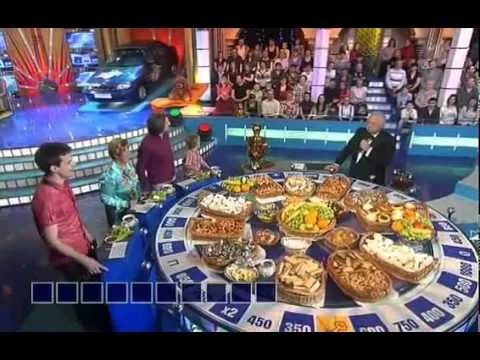
Current Obsession: Pole Chudes

hqdefault

I don’t know how I got to this, but I’ve been borderline obsessed with the Russian version of Wheel of Fortune, which is called Pole Chudes. I do not speak Russian, and can’t solve Cyrillic letter puzzles, but the fascinating thing about the show is how little it has to do with the actual word game. Also, this show is Russian As Fuck, which I greatly enjoy.

I really like watching foreign TV I can’t understand, and find things like the tone of the announcers and commercials to be unintentionally hilarious. When I was in college, my pal Simms was friends with these guys who were maybe music majors or in a band. Their house was cool as hell, because the basement was covered in egg carton crates and soundproofing blankets, and they had a bad drum set and a bunch of shitty instruments, like old Teisco guitars and band instruments and toy synthesizers, and we’d go over there and beat the hell out of everything in a total noise symphony. Anyway, one of the guys worked at Sahara Mart and had a copy of the Bollywood movie Raja Babu, the VHS tape complete with TV commercial breaks, and I got a dub of it. The spectacle of a Bollywood musical and all the dance numbers is one thing, but I also thoroughly enjoyed the commercials for various pre-made curries, rices, and banking centers. And falling down a YouTube k-hole looking for Russian game shows brings on a similar experience.

A few brief thoughts and observations on the show:

  • “Pole Chudes” means “The Field of Wonder.” It is a reference to the Aleksei Tolstoy book “The Golden Key,” which is based on The Adventures of Pinocchio by Carlo Collodi. Tolstoy’s version of the book is a sort of fork of the original Collodi book in the same sense as Disney’s sanitized derivations of other fairy tales, with many of the gruesome bits like the burning of feet and sharks swallowing people and whatnot. Also Pinocchio’s nose doesn’t grow when he lies. The game show has nothing to do with any of this.
  • The show is an official Merv Griffin-created version of the US franchise. There are about 60 international versions of Wheel, and many of them are bizarre in some way, like a Polish version named Koło Fortuny, which always offered a free dishwasher for the toss-up puzzle.
  • Pole Chudes has a few rule changes, such as a prize symbol, which lets a player choose 2000 points, or a secret prize as a buy-out, which is sometimes a vegetable.
  • Unlike the rapid-fire gamified puzzle version shown in the US, the game itself is secondary. Most of the show has to do with the host interviewing and interacting with the guests. If you edited out all game elements from the US version of Wheel, you’d have about three minutes of footage per episode. With Pole Chudes, you’d probably have a solid 50 minutes that would resemble an American variety show from the seventies.
  • The host, Leonid Yakubovich, is a white-haired, big-mustached guy who looks like he’d be running a Russian deli in the East Village of New York. He is absolutely normal, and worked as a heating technician at the ZiL auto plant before getting into show business. He looks like the great-uncle or grandfather every Russian would have.
  • Half the time, the wheel has tons of food and farm grains and baskets of bread, like it’s a restaurant table.
  • I don’t know the process for getting guests, but they are incredibly random and look like they were bussed in from outer Siberia for the greatest moment of their lives. It’s a strange mix of old babushkas, village idiots, and guys with 80s-nerd glasses and the facial hair of a town rapist. They also seem to have a lot of children on the show with parents, in the ever-painful “host asks the cute kid questions and gets baby-talk dumb answers so the old grandmothers can laugh.”
  • Each guest brings the host a gift from their town, usually something culturally significant. So a good portion of the show is always the host and contestants eating jars of pickled wolf ears in a borscht sauce from Vladivostok, and chugging down fine vodka from ornate bottles that look like they’re out of the 19th century.
  • There is actually a museum by the studio filled with gifts brought to the show.
  • The show inexplicably breaks into musical numbers or displays of children in historical uniforms dancing to folk tunes, like some kind of Soviet propaganda film broadcast on the government TVs that only got one channel.

I can’t explain it any more except to say it is Russian As Fuck. There are a lot of full episodes on YouTube, but for a good overview, go straight to the 1TV web site and watch this minute-long teaser: http://www.1tv.ru/sprojects/si=5810

why web search is completely useless at this point

I wanted to look up pockets, as in the thing in your clothing where you put your phone and keys.

Searching on “pockets” brings me a page of stuff about Hot Pockets. (Granted, I’m eating Hot Pockets right now, but my computer doesn’t know that. I hope it doesn’t.)

Searching on “pocket” brings me pages of stuff on Pocket, the service where you save articles you want to read later, and then never get around to reading them. Seriously, the first three or four pages of results don’t have anything to do with garments.

Bing searching on “pocket” will give you a result on Pocket-Greenhaven, the Sacramento neighborhood, so I guess that’s a start.

Oh! DuckDuckGo does give you a result to the Wikipedia page on the first page of hits.

I originally was looking up pocket to make a Hot Pockets joke, or rather look up the origin of the word ‘pocket’ to twist into some kind of Hot Pockets reference. I couldn’t think of anything - pocket is middle English for sack, Anglo-Norman French for pokete, diminutive of pouch. There are various types of pockets: formed from a patch, camp pockets (sewn to the outside of a garment), slit pockets, etc. The beer pocket was popular before Prohibition, a pocket specifically designed to hold a bottle. Hot Pockets were invented by the Merange brothers, David and Paul, Iranian Jews from Orange County. They sold their company Chef America, Inc. to Nestle for $2.6 billion. Hot Pockets were manufactured in Englewood, Colorado. I got my Denver driver’s license in 2007 at the DMV immediately north of there. Jim Gaffigan grew up in Chesterton, Indiana, which isn’t too far from where I grew up. The Hot Pockets headquarters are in Solon, Ohio, outside of Cleveland, but they are manufactured in Mount Sterling, Kentucky. Nancy Green, who played the original Aunt Jemima, was from Mount Sterling.

Enough wikipedia for today. I already ate the Hot Pockets. I don’t have any idea of how Google ranks sites today, but this is why the days of searching on something are dead. RSS feeds. Everyone should blog. End rant.

Sleep Research Facility and ambient music

I’m always searching for music to listen to while I’m writing, because I can’t think and fall into the right kind of trance to dump my subconscious onto pages when extreme death metal is screaming away in the foreground. Classical music puts me to sleep, and jazz is jazz, so it’s hard to precisely nail it. I do like ambient music, as long as it isn’t too passive, and doesn’t veer off into the Yanni-esque new age shlock. All points south of classic Eno can be good, but that specific sound doesn’t imprint my brand of writing exactly the way I need it, so I’ve been looking for more.

Dark ambient, for better or worse, is closer to what I like. It contains a texture that provides a good underlying current for my work, and blocks out everything around me, yet doesn’t invade my mind in a way that would turn it in the wrong direction. Dark ambient removes from the equation the type of music a hippy-dippy acupuncturist would play in his office, which is good. The main problem with dark ambient is that it’s impossible to find a straight answer as to what it is. Ask ten people what ten bands constitute death metal, and you will get twelve highly contested answers. Dark ambient is the same. It shares distant borders with Krautrock and experimental music, and I don’t know enough about it to give you a defined answer as to who the main players are. (Maybe you should tell me.) I can tell you about a specific band I like, though.

Sleep Research Facility, the working name of Glasgow musician Kevin Doherty, has released five albums of essentially beatless dark ambient music, along different themes. The one thing in common is a dark, textured soundscape, usually without musical elements, or maybe with long, sustained chords. The name of the band relates to the work’s lack of any elements that would disturb sleep. That’s a slight peeve of mine, because it’s difficult for me to listen to dark ambient that contains extreme screeching, loud noise, and distorted shrieking voices. It’s hard to get in a trance state to work when interrupted with those elements. I’m not saying they don’t have artistic merit within a composition, and I can enjoy listening to them for the sake of listening to them, but when looking for functional music, it’s an issue.

Another challenge with creating any ambient music is having a central theme or “gimmick” or some set of tracks for the train to roll down. SRF seems to do this well, in the choice of conceptual framework. The prime example, and a good starting point, is the album Nostromo. This is a nearly 70-minute album that was inspired by the ship from the movie Alien. The album details a walkthrough of the ship from Ridley Scott’s scifi/horror movie, starting in the A-Deck, while the crew is in suspended animation, hurtling through space back to Earth. Scott meticulously detailed the ship, not as a sterile, futuristic vessel, but as a beaten, worn, working man’s craft, like a battle-damaged oil platform in the middle of the ocean. But when the crew is in stasis, prior to the computer waking them, there’s a certain calm, or anticipation in the vessel.

Nostromo starts in the A-Deck of the ship, presenting a deep-bass flow of sound, with slight electrical static and drifting sounds of machinery. It’s not like the harsh industrial sounds of the cyberpunk-influenced electronic genres of the mid-90s (I’m thinking the mechanical sounds of, say, the interstitial tracks of early Fear Factory, or even the earlier sounds of something like Front 242. (and sorry for the horrible reference points. This is very far outside my wheelhouse of musical knowledge, trying to learn here.)) Anyway, the dozen-minute tracks drift deeper into the ship, as the sounds and textures become more refined. The entire album is very dream-like and drifts seamlessly through the ship. The 2007 release contains a bonus track named “Narcissus,” which was the lifeboat escape pod of the Nostromo, which contains similar elements, although it is texturally different. You could imagine Ripley putting herself in stasis and drifting back to earth during the final track.

I listened to Nostromo constantly when I was writing He. I’d sit down to write every day, start the album on repeat, and keep it as a constant soundscape. I do this a lot when writing; for Atmospheres, I listened to the Sleep album Dopesmoker every day for at least a year. It’s not exactly ambient, but it’s an easy album to fall into.

So what album do I use for the next book? More importantly, what is the next book? Still working on that.

Anyway, check out more about SRF at their home page: http://www.resonance-net.com