The Wrath of Kon

Dispatches, thoughts, and miscellanea from writer Jon Konrath

August 2012

Another Friday giant-list update

It’s Friday, and I have no concrete ideas for a larger update, yet have all of these smaller bits and pieces, so here goes:

  • I try to take notes of all of my ideas, but 90% of the time, they make no sense later.  I did this at some point in the middle of the night, and woke up to a note on my keyboard, in red pen and underlined several times, that simply said “ALIENS”.
  • I am going to see Close Encounters on the big screen tonight at the Paramount, which might be part of it.
  • It is now dark enough when I wake that I need to use the full-spectrum light.  This means soon we will reach the nighttime temperatures that involve felines fighting over who gets to sleep on which human’s head or feet to keep warm.
  • I bought this stuff called “miracle noodles”, on my latest diet rampage.  It’s this Asian noodle, like an angel-hair pasta, which has zero calories and carbs and is pretty much just strands of fiber.  They come packed in little six-ounce bags filled with water.  Most reviews said they have a peculiar smell when you first open them, until you rinse them off.  That “peculiar” smell is the smell of stale semen.  Once you rinse them off and boil them for a minute, they’re essentially flavorless, and will pick up the flavor of whatever you mix them with.
  • Another thing I got, while guilt-shopping on Amazon for anything to help me maintain weight, is this stuff called PB2, which is a powdered peanut butter which has had all of the fats and oils pressed out of it.  A tablespoon of the real deal has either 3 or 4 weight watcher points, but two tablespoons of PB2 has one point.  It tastes pretty much like the real deal, albeit the slight inconvenience of mixing it together for reconstitution.
  • I made a salad-type thing with the miracle noodles, the fake peanut butter, some rice wine vinegar and sesame oil, soy sauce, baked tofu, bean sprouts, white cabbage, and scallions.  It was surprisingly good.
  • I was never a big peanut butter person, especially since weight loss, since an appreciable amount of chunky peanut butter is about a half-day of points.  I also never liked putting peanut butter on white bread, and then the knife tears through the bottom of the bread.  And you can’t make a peanut butter sandwich on pumpernickel.  (Well, maybe you can.)
  • My strongest memory of peanut butter is getting a jar of Jif and a box of saltine crackers in a care package in college, sitting in bed between classes on the day of the first snow in 1989, looking out over a white-covered campus, listening to an Art of Noise album and making little peanut butter and cracker sandwiches.
  • I got jury duty.  Day after labor day, but it’s one of those things where you call in the night before and most of the time they tell you not to come in.  I guess this is because Oakland is so crime-free.
  • Every time I go to Rite-Aid there is a commercial playing on the PA saying that you should buy a book of the Forever stamps.  I seldom mail anything anymore, but I also never know when there will be another rate increase, which seems to happen constantly, so I almost always buy a book of the stamps.  (They aren’t really a book though; more like a sheet of stickers.)
  • I remember when first-class letter stamps were only 20 cents, from a brief and fleeting childhood interest in philately. It seemed like forever between 20 cents and when they raised it to 22 cents.  It now seems like they raise it another penny every other time I have to mail something.  I don’t know if that’s a function of inflation or my perception of time.
  • I changed themes here on Wordpress, to the latest Twenty-Eleven theme, which isn’t that different.  I did change the font, though, using google web fonts.  I think it’s more readable, but I might hate it in a month.  The biggest problem with changing themes is I always fall down this k-hole of trying different themes and not knowing which one to choose, trying and trying until I eventually go back and use the first one I tried.
  • Someone on facebook started a memorial group for all of the people from my high school that have died.  I didn’t join, but I paged through it, and it’s majorly depressing.  Other than my neighbor Peter that died in a car crash when he was 18, I wasn’t particularly close to anyone who has died yet, but I definitely remember many of them.
  • As far as I know, none of my ex-girlfriends have died.  I think when that happens, I will be freaked the fuck out.
  • Two of my exes are now in Texas.
  • Sarah was in Milwaukee for a week, and while in bachelor mode, I got almost no writing done.  I would sit down to write and fall into these endless wikipedia k-holes that would keep me up half the night, googling about prison food and serial killers and space shuttle computers and obsolete video game systems.  If you ever get to the point where it’s after midnight and you’re furiously searching for a primer on set theory, just go to bed.
  • I bought one of those Apple magic trackpads, which is really nice, but it’s only bluetooth, so I can’t use it through my KVM on both machines.  I have it sitting next to my trackball and use it on the mac only, which is a waste.  I wish the entire right side of my desk was a giant trackpad, and I could use it for gestures and stuff, but I’d probably end up putting my arm or elbow on it too much.

Okay, time to get some real work done.
What happened to hypercard?

Hypercard was released 25 damn years ago.  Has it been that long?

Back in college, I spent a lot of time screwing around on the Mac, and there were certain programs that welded that old-school 68K Classic Mac experience in my mind.  One of them was Aldus PageMaker, which was the desktop publishing program of the day. This was in the very early 90s, in the days of DOS and WordPerfect 5.1, when the most advanced publishing work you could do on the WinTel side of things was using italics.  But the Mac had this funky and advanced program that enabled you to create page layouts and cool newsletters and even newspapers.  I saw many a journalism student slaving away on those old black-and-white Apples with the tiny grey screens, tweaking layouts and dumping fantastic publications to postscript printers.  I later learned PageMaker by doing the last issue of my old zine Xenocide in it, spending months tweaking page borders and reflowing columns.

The other program I messed with endlessly was HyperCard.  This was something included on all of the old Macs, and it was incredibly interesting to me.  Basically, you created a stack of cards, and each card could have a mix of text and clip art graphics on it.  But you could also plop controls on the cards, like links or text boxes.  You could then hook up those controls to link cards to each other, or do other freaky stuff like run scripts.

This sounds pretty pedestrian compared to what we do daily on the web.  And it sounds disturbingly like PowerPoint, which is probably one of the most evil things created in the business world. But back then, in the late 80s and early 90s, these concepts were absolutely revolutionary.  And even better, the interface to HyperCard was not that intimidating.  If you could make basic art in MacPaint or write a paper in WordPerfect, you could easily create a HyperCard stack.

I remember spending a lot of time at work creating a choose-your-own-adventure game using HyperCard.  I forget exactly what it was - I think it was a game about trying to score drugs on a college campus, and you could click on various pictures to move around.  It wasn’t exactly as sophisticated as the Zork series, but it was something I could do at work, under the guise of “learning more about HyperCard.”  I never learned much about the scripting language, but I did work with some people who did pretty sophisticated stacks.  The system was widely used by education majors, I guess to develop learning tools for kids.  I guess the original Myst on the Mac was written in Hypercard, each of the worlds a Hypercard stack, interlaced with heavy-duty graphics and audio, presented with custom plug-ins.

Like I said, the web came along, and HyperCard more or less vanished.  It was one of the products developed by Claris, which was spun off from Apple and then later re-merged.  The last version of HyperCard came out in 1996, but it was one of the projects killed by Steve Jobs after his return.  You could run old versions for a while, but it did not survive the jump from OS9 to OSX.  You could get it to work in Classic emulation on newer systems, but it only worked on PPC Macs.  On today’s Intel-based machines running later versions of OSX, it doesn’t work at all.

Its one big legacy on the Mac is that the HyperTalk scripting language was adapted and added to System 7, and called AppleScript.  It’s still around in modern versions of OS X, and is even more interesting, now that you can run unix commands from within AppleScript.  It influenced the development of HTTP, JavaScript, and Ward Cunningham said the whole idea of wikis goes back to using HyperText.

To me, HyperCard was always a bit of a missed opportunity.  I think it would be very easy for casual users to create HyperCard stacks and then use some kind of tool to push them to a web site; it would potentially be easier to create high-quality interactive web sites with something like that.  There are probably many programs that you could buy to do that, but none that come with your operating system and follow its UI paradigm.  It would also be great to develop mobile apps.  I could see creating a stack, testing it out on your computer, then pushing it through a compiler and shooting out a binary that could be run on a phone or tablet.  You couldn’t write the next Skyrim that way, but for simple stuff, like interactive kid’s books or multimedia guides, it would be great.  Same thing for interactive books on the Kindle or iPad.

I know you can do all of these things with XCode or by hand or whatever, but there’s something about the ease of use by a non-programmer, and the availability on every Mac, that make this a different paradigm.  There are some conspiracy theories that Jobs killed Hypercard in order to solidify the division between creator and consumer.  I don’t know if that’s true; I think he killed it because Apple had eleventy billion disparate things going on when he returned, and none of them were getting the company closer to profitable hardware sales or a decent operating system.  It’s too bad we don’t have something like this anymore.

Shut The Fuck Up About Megapixels

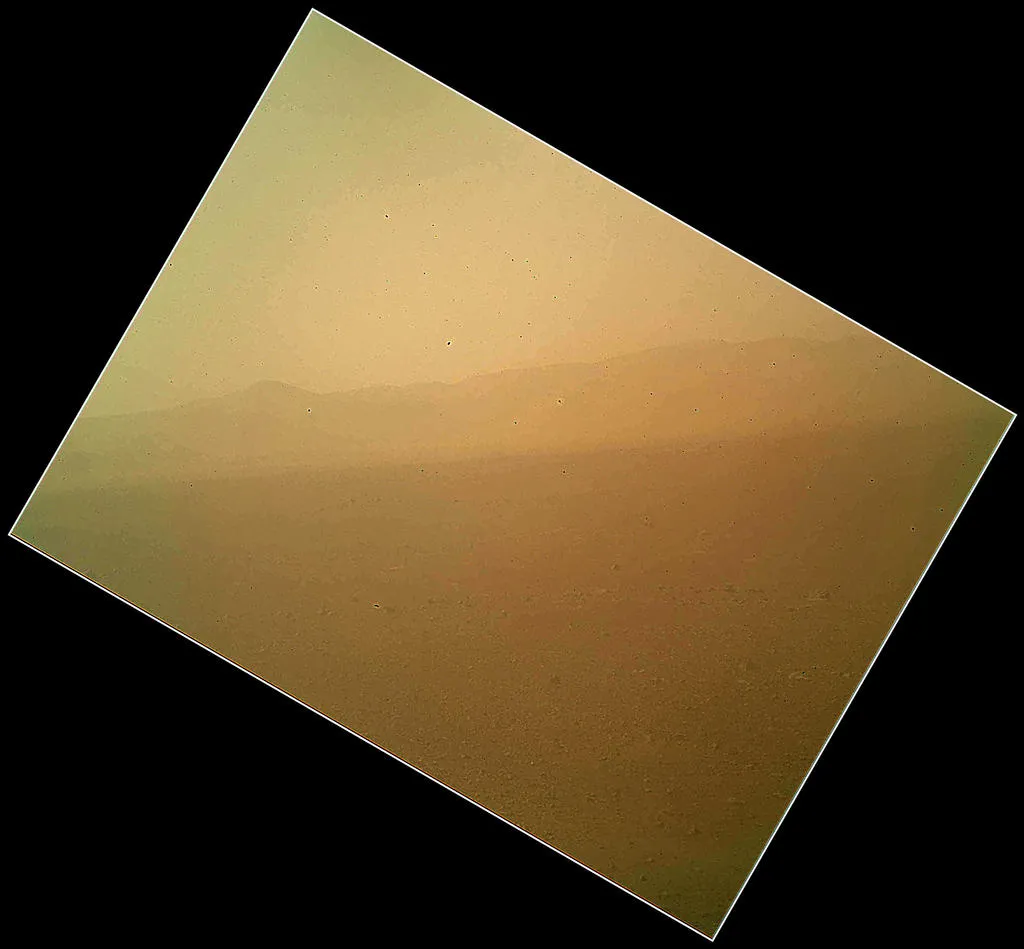
First_Color_Image_of_the_Martian_Landscape_Returned_from_Curiosity

I hate it when people think that more megapixels are better.  They are wrong.

This has been bugging the shit out of me ever since the latest Mars lander touched down.  Once people heard the probe had a two megapixel camera, the circle-jerk started.  “HEY MAN WTF DID THEY USE THAT CAMERA MY ANDROID HAS AN 8 MEGAPIXEL NASA SUX GLGLGLGLG”

Okay, back up a few steps.  Back in the old days, a camera worked by focusing light through a pinhole and onto a sheet of film, which chemically trapped that blast of light into something you could hang on a wall (after you did some developing process to the sheet involving trays of chemicals in a dark room, or dropping the shit off at Walgreen’s and waiting a week.)  That pinhole then evolved into a glass lens or a series of lenses that could be used to optically process what image ended up on what paper.

Digital cameras do away with the film part by using a computer chip that’s sensitive to light, called an image sensor.  That image sensor is divided up into millions of little pixels.  The number of pixels determines the camera’s resolution.  So if that sensor had 1024 by 1024 little square dots that reacted to light, it would be a one megapixel sensor. The sensors aren’t typically square, though; they’re usually in some rectangular format, which is why all of the pictures in your Facebook albums aren’t perfect squares.  An average cell phone is going to have a sensor that has an active area of about 5.3mm by 4.0 mm.  A consumer point/shoot is going to be a couple times wider and taller.  Canon’s DSLRs are either APS-C (22.2x14.8mm) or APS-H (28.7x19mm).  There are full format cameras that are even bigger.  Obviously, the bigger a sensor, the more it weighs, costs, and uses power.

When you take the size of the image sensor and divide it up by the number of pixels, you’re going to get the size of each pixel.  It’s like cutting a cake.  If I take one of those big sheet cakes from Kroger and cut it into four pieces, each piece is going to have 2876 Weight Watchers points in it, and will put you into a diabetic coma.  If you have to cut up the same cake for an office of six hundred people, each piece would conveniently fit in a thimble.  (A 16x24” sheet cake cut into 2” squares feeds 96 people, unless you’re serving it in Indiana, in which case it will serve about two dozen people, provided nobody’s scooter batteries die during the meal and leave them stranded away from the cake.)

The iPhone 4S uses a 4.54 x 3.42mm sensor.  Its capture size is 3264x2448, or 8 megapixels.  The Curiosity uses cameras based on the Kodak KAI-2020 sensor, which is a 1600x1200 capture size on a 13.36 x 9.52 mm chip.  That means the iPhone has a pixel size of 1.4 micrometers (or microns) square, and the KAI-2020 has a pixel pitch of 7.4 microns.  With a cell phone camera, you’re “serving” far more people cake, but with the larger format camera, you’re starting with a much bigger cake and sharing it with far fewer people.  So it “serves” nowhere near as many people, but those are some giant chunks of cake.

What does the size of the pixel mean?  First, you get much more detail with a larger pixel size, because the image that’s transferred through the optics and onto the sensor is going to be captured more faithfully.  It’s why your old 110 or disc film camera took such shitty pictures, and your 35mm camera didn’t; the larger a camera’s format, the more area it had to capture the image.  A small pixel size also limits the dynamic range, or the amount of range between highlight and shadow.  If you’re ever tried to take a picture with your cell phone when an extremely bright light was in the image, and you got  a shot of a bright ball of white surrounded by darkness, it’s because your camera couldn’t handle the dynamic range between the two.  And also, the smaller the pixel, the more noise that’s added to the picture, especially in low light conditions.

That doesn’t mean all high-megapixel cameras are junk, just high-megapixel cameras with small image sensors.  If you go pick up a Nikon D800, it’s a 36 megapixel camera, but it’s got a 24 x 35.9 mm sensor, so it’s a 4.88 micron pixel pitch.  That’s not quite the 7ish of NASA’s camera, but it’s much better than the 1.4 of an iPhone.  Of course, that D800 is going to cost you three grand plus lenses, and it’s not going to fit in your pocket or make phone calls or play Angry Birds.

There are a bunch of other factors involved in the difference between the Curiosity’s cameras and the ones on your phone.  First, your phone doesn’t have to deal with radiation or temperature extremes.  Also, they shopped around for a camera in 2004, and then tested the living fuck out of it before putting it on a rocket for space.  Your camera phone probably has a couple of tiny plastic lenses, while NASA hung much more complex optics off of their units.  And their budget was slightly bigger than that of a cell phone manufacturer, so they didn’t have to pinch pennies on the sensors they used.  And NASA typically takes a bunch of pictures, sends them on the slow link back to earth, then stitches them into the much larger images that you see.

It’s a shame that people are taught to judge hardware by numbers like this, and that we’re marketed hardware based on them.  I remember when I worked at Samsung, a meeting erupted into a giant argument, because everyone but me and another guy believed — KNEW — that a higher megapixel camera was always better, because… it had more megapixels.  It’s like when people talk about how their computer is so much better because it has a higher clock speed, without mentioning that their OS is burning way more cycles running crapware and antivirus software.  The 450 horsepower in a 36,000 pound low-geared John Deere is not better than the 430 horsepower in a 3200 pound Corvette.  It isn’t.

Baseball 2012

IMG_0113

I haven’t been writing any posts about baseball this year.  Reason being, the wheels fell off the Rockies pretty early in the year, and then things just went from bad to worse.  I think I got a few weeks into April before I decided to stop watching, and things got exponentially worse after that.

I don’t know why I still follow the Rockies.  If I had any sense, I’d just jump on the Giants bandwagon, spend twice as much on tickets, and coast into the postseason with no problems.  But I started on this baseball kick when I lived a block from Coors Field, in that magic 2007 season, and now the curse of the whole thing is that I was programmed to like Colorado and hate the Giants and the Dodgers and the Diamondbacks and so on.

Okay, so 2011 ended in a shitstorm, a strong April start for the first damn time, and then the train completely derailed.  In 2009 and 2010, I had the ritual of counting wins and losses and magic numbers, coming out of a movie on a Saturday night and frantically starting up the MLB At Bat app on the iPhone to see if they managed to whittle away another half-game in the standings.  In 2009, they made the wild card; in 2010, there was hope, but they fettered it away.  In 2011, not even close.

Then you enter that period from October to February, where you hope the owners make some changes, dangle some big money out there for the free agents, hunt down some good roster moves with other teams.  Or, in the case of the Rockies’ ownership, it’s more like shopping for used tires in the five-dollar rack behind a shady gas station, picking through the leftovers for a mismatched set with almost enough tread to last you a month or two.  The Rockies almost never spend money on anything big, and this offseason was no different.  They did grab Marco Scutaro to fill in at second base, which seemed like an okay signing.  But the big need was pitching, and they got… Jamie Moyer, who is older than dirt; Jeremy Guthrie, a pop-fly pitcher, which never works out at Coors; and resigned to the fact the rest of the pitching staff would be the various minor-league parts and back-of-rotation pieces they had left over from 2011.

The 2012 injuries have been phenomenal. Here’s a partial list:

  • Jorge De La Rosa tore his arm apart in 2011 and had surgery.  There was talk that he’d be back early in the season; it’s August and after a couple of rough starts and setbacks, he’s just now starting to throw.
  • Juan Nicasio broke his neck last year after he got hit by a comebacker, and miraculously was throwing by spring training and started the season.  He’s now out with a leg injury requiring surgery.
  • Jeremy Guthrie, the #1 pitcher in the rotation, fell off his damn bike on the way to the park and screwed his shoulder.  He came back, had a complete meltdown, and was then pulled out of the rotation and later traded.
  • Jhoulys Chacin hasn’t pitched since May with some nerve inflammation issue.
  • Chris Nelson ended up in the hospital in July with an irregular heartbeat.
  • Jonathan Herrera went on the DL at the same time as Nelson because his arm got infected from his watch.  (Did he buy one of those Ro1ex watches in Chinatown?)
  • Troy Tulowitzki left with a groin injury in May that required season-ending surgery.
  • Christian Friedrich just got shut down for the season with a stress fracture in his back.
  • Jason Giambi’s been out since mid-July with the flu.
  • Todd Helton just had season-ending (and maybe career-ending) surgery on his hip.
  • Add to that a dozen and a half or more trips to the DL for various strains, sprains, and minor problems.

What’s even more laughable is how the ownership and management have treated the problem.  First, the plan going into this year was stupid, this “veteran movement” where a bunch of late-30s/early-40s players got slated for everyday positions.  That alone should have gotten the GM Dan O’Dowd fired and manager Jim Tracy demoted to equipment manager for the way he handled things day-to-day.  But instead, Tracy got an “indefinite contract extension”, and O’Dowd went on and on about how he was the greatest GM in the game.

So, the pitching rotation fell apart.  Only one pitcher (Drew Pomeranz) in the five-man rotation remains.  When everyone got gangrene or anthrax or hoof-and-mouth disease or traded to a minor-league team in Mexico, the powers that be thought it would be awesome to switch to a four-man rotation with a strict pitch count.  That essentially means none of Colorado’s starters will pitch more than 100 innings this year; none of them will be out of the single-digit win range, and what’s left of the bullpen will be majorly overtaxed.  This caused pitching coach Bob Apodaca to cry uncle and quit; he was replaced by “co-coaches”.

The Rockies were neither buyer or sellers at the trade deadline, which was odd.  I didn’t expect them to go hunting for new talent, which they did need, but wouldn’t do much good when you’re 20-some games out of first in your division.  But I also expected them to offload more of their long-term liabilities to get some younger prospects to start rebuilding.  They did trade Scutaro, and inexplicably added Jonathan Sanchez (who then lost three games and… wait for it… moved to the DL.)  But the inaction on O’Dowd’s part was a clear indicator that he thinks everything’s a-ok.

Everyone wants O’Dowd to quit.  And it looked like he would, but then he pulled some half-assed “co-managing” stunt, where he named his assistant the part-time GM or some lame bullshit like that, with him still “overseeing” everything.  It reminds me of when I worked for the university, and there would be these endless re-orgs, but with the same idiots in charge of the same flunkies, just with fancy new acronyms.

And I know running a baseball team’s probably hard work, and probably involves a certain amount of luck and momentum and blah blah blah.  I realize that if you can spend a quarter-billion dollars on salary, everything will be golden, and if you are in a small market, you’ve got to scrape and beg and borrow.  And I know that Coors is hell on pitchers.  But when you have a bunch of Jesus-freaks pushing their “everyone’s a winner” crap and never having the balls to just fire someone or maybe spend a few bucks on some outside talent, this is what you get.

And yet, I’m strangely nostalgic for the bastards.  It’s no fun to watch, and I will only occasionally check a score just to make sure they’re not getting no-hit.  I’m definitely not paying a couple grand to fly out to Denver and watch them drop two or three games to the Cubs or Padres.  And I’m not paying the now-hyperinflated AT&T Park ticket prices to sit in a sea of orange and watch the Rockies lose 16-2 to the Giants.  The season was over in April for me, and I do miss it, but it’s hard to grin and bear it at this point.

Recalling Total Recall

I always love to hear about a new movie adaptation of a Philip K. Dick story or book.  But I’ve been on the fence about the new Total Recall remake, mostly because I’ve always enjoyed the 1990 original movie.  It seems like almost every movie that comes out now, especially the big summer blockbusters, is just recycled garbage, reboots of comic book franchises that don’t need yet another reboot, or movies based on TV shows, video games, board games, and I’m predicting that by next summer, they’re going to do movies based on classic fast food items.  (Seriously, if you could get Jerry Bruckheimer to turn out McRib, it would do at least $100 million if you marketed it right.)  Most remakes are nothing but the lamest parts of the original movie, with a bunch of fake CGI and needless chase scenes.

I almost went to go see the new Total Recall this weekend, but I chickened out.  Instead, I dug up my DVD from the original 1990 version, and decided to give it a spin.  What’s interesting is that pretty much every reviewer that slams the new version says “the original was better,” but after a decade of distance from the movie, the 1990 version… kinda sucks.  I remember it as being pretty incredible, but after a re-watch, I’m of the opinion that aside from as the basis of a drinking game, it’s probably not worth watching again.

Here’s my list of reasons I thought the movie was much worse than I remembered:

  •  Arnold Schwarzenegger simply cannot act.  Or maybe he can act, but he can only play the kind of tough guy caricature that doesn’t work for the film.  I could see why the Terminator franchise was so good for him: the role of an emotionless killing machine with mechanical movements, minimal lines, and no required facial expressions works well for him.  Here, there were lots of places where the role of Quaid/Houser needed some finesse, and he simply did not have any.  Like the scene at the beginning of the movie where he’s in bed with his wife is like feeding peanut butter to a dog and watching him try to lick it off the roof of his mouth.  It’s so horrible and cringe-worthy, it eventually becomes hilarious, and none of those are the emotions needed for the scene.
  • Speaking of that scene, it’s a good example of how this 113-minute movie could have been better in a 90-minute cut.  It goes on and on and on about his dream, and his wife’s (phony) reaction, and it’s like a 14-second scene dragged out to nine minutes.  It’s like when someone writes a one-page paper and then fucks with the margins to get five pages out of it.  I’m almost tempted to rip a copy of this whole movie, drop it into an editor, and crank out a hot 88-minute version, but that would involve watching it a hundred more times.
  • I think enough fun has been made of Arnold’s one stock yell (“aaaaaiggh!”) but he does it so damn much in this movie, it’s almost like he registered it with ASCAP and gets a fixed royalty every time he says it.
  • A lot of the technology has not aged well.  There are huge CRT screens all over the place, like in the subway or at the hotel registration desk.  I don’t know if this was just because they wanted to throw real graphics on them, or because the idea of just having a flat screen seemed unrealistic in 1989.  (It’s not like they couldn’t have thrown the images on there via chromakey.)  And the blocky futuristic cars and trains all look silly.  The biggest laugh is when he’s on his way to Rekall and he stops at a kiosk in the lobby to look for directions.  The kiosk has a clone IBM Model M keyboard glued onto it, which dates the whole thing almost down to the year.
  • Speaking of graphics, every place where there are computer graphics looks absolutely stupid.  When they show something like a graph on a screen, you can totally tell it’s done on an Amiga.  And in places where there are terminals, they use a lot of green monochrome monitors with screens that look like a timesheet program written for an IBM mainframe back in 1986.  I almost expected someone to open up VAXPhone or an emacs window in one of them.
  • It’s always hilarious when 80s cyberpunk movies decide to show the world of the future as being wall-to-wall advertising by plastering the sets with logos from companies like Curtis Mathes.
  • This was probably one of the last movies to rely on miniature models instead of CGI for all of its effects, and it shows.
  • Aside from the technological anachronisms, the sets in general convey this 80s feeling of the future.  There’s a lot of brushed aluminum and stainless steel and poured concrete walls and neon tubes.  It’s an interesting little time-slip issue, when you look at a scene that is supposed to scream “2071” at you, and it’s very much “1990”.  I haven’t watched Blade Runner recently, but from what I remember, it had a different kind of griminess to it, probably because it didn’t try to look like the far future, and because the lighting design was much more subtle about the way it conveyed the grunginess.
  • There are plot holes that are catastrophically obvious because of the timing of the movie, as I mentioned above.  For example, when Quaid arrives at Mars and pulls off the fake head, the scene where he “loses control” of the fake head’s voicebox must go on for minutes, with everyone in the spaceport standing still and staring at him.  From the time the bad guys spot him to the time he throws the head at them, you could seriously count out a 100-Mississippi.  By act 3 of the movie, every fight scene is exhausting, because you know it’s going to be like when British troops in the American revolution would line up in a straight line, fire, and then wait until the other side fired until they returned fire.
  • There are tons of minor gaffes, mostly attributable to the editing down of the movie from an X to an R rating.  People get stabbed once and then at second glance are drenched in blood from head to toe; people shot in the back suddenly have bullet holes in their head.
  • I still like the overall plot of the movie, the “is this real or is he dreaming?” aspect of it.  But the hammy acting fat-fingers all of the scenes explaining this so much, it’s impossible to take it seriously.

Overall, like I said, the movie has not aged well.  I don’t know if that’s because effects are so good now and we’re all accustomed to lightning-fast edits and action sequences, or if I was just too excited about cyberpunk movies twenty years ago and needed the distance to see all of this.  Either way, I think I’m going to pass on the remake, or at least wait until it’s a free movie on Netflix streaming, so I don’t have to shell out money to see it.