The Wrath of Kon

Dispatches, thoughts, and miscellanea from writer Jon Konrath

August 2011

Prying Light Bulbs Out of Cold, Dead Hands

Wired did a cover story on the light bulb, which is fascinating to me, for many of the same reasons two freight trains containing rocket fuel and napalm colliding at full speed is fascinating to most people. Wired never has more than four god damned things a year even worth reading, unless you’re always in the mood to buyer’s guides for $700 headphones, or twelve-page ad spreads for crap Toshiba laptops, the glossy layouts disguised to look like actual articles. (I got a free subscription by trading in some about-to-expire miles on an airline I never fly, something that looked like a borderline identity theft request. Wired was by far the best magazine offered, with the second and third place choices being Vibe For Pregnant Teens and Country Shitkicker Kitchen.)  What fascinated me was the fact that Lightbulb-Gate has reached the level of fury where you can get guaranteed linkbait with a title like “Five things you need to know before Congress takes all of the light bulbs out of your house and rapes your children in the dark”, and we’re an election cycle away from adding a Constitutional amendment prohibiting any legislation regarding incandescent lighting.

It amazes me that people can get so bent out of shape about manufactured swing issues. I think all it takes is convincing side A that their mortal enemies on side B hates something, and side A will suddenly champion their complete opposite. If I could find the magic place to leak a story that the President is trying to criminalize the consumption of dog shit sandwiches, you’d see within three days a photo-op of some far-right nutbag with a foot-long hoagie of Doberman links, lettuce, and tomato, screaming “TAKE THIS ONE AWAY YOU GODLESS COMMIE BASTARDS!”  Sarah Palin would be working part-time as a night cashier at an Arco gas station, collecting food stamps, and living paycheck-to-paycheck in a studio apartment if the left wouldn’t keep blathering about how much they hate her.  And yeah, both sides are guilty; I’m sure that NASCAR does not implicitly endorse slavery, chaining women in kitchens, or impregnating first cousins, although that’s generally the opinion held by most people with an extensive secondary education.  I’m not saying I’m ready to tattoo a giant number 3 on my face, but I’ve never watched more than two seconds of a race, so I’m not about to condemn it.

News isn’t news. People argue that the news is the reporting of fact, and that the reporting of “incorrect” news is “bias”. We don’t read news to find out facts as much as we read it to validate our worldview.  You could replace the root page of CNN, Fox, MSNBC, and all of the other media sites with a single story that says “Your beliefs have been validated, and that makes you the center of the universe”, and 90% of the function of the media would be functionally replaced.  News stopped being news when the media realized that the most important part of journalism is pumping up your number of page impressions to increase ad revenue.

Here’s a cheat sheet on the “light bulb ban”:

  • It doesn’t “ban” anything; it sets new standards for efficiency that will eventually make the use of incandescent light bulbs impractical.
  • It was signed by law by George W. Bush.
  • The whole issue with Chinese workers getting mercury poisoning while making CFL bulbs would probably be irrelevant if people stopped buying so much Chinese-made shit at Wal-Mart.
  • Mercury thermometers contain way more mercury than CFLs, and you put those in your kids’ mouths and asses. (They are also banned in many countries but not the US.  If you’re looking to manufacture next year’s fake crisis, maybe something involving Nancy Grace screaming about how our babies are going to die of fever because Congress is takin’ away our thermometers.)
  • Thomas Edison did not invent the light bulb.  It’s not an American invention.  Joseph Swan patented it a year before Edison, and Edison avoided litigation by eventually merging with Swan’s company.
  • CFLs are not condemned, condoned, or even mentioned in the Holy Bible, at least not in the version I stole from a Las Vegas hotel room to use as a coaster.
  • The focus of all of the fury is currently on the CFL bulb, but LED bulbs are coming down in price, don’t have the weird flicker/refresh effect, can be dimmed, are more efficient, and produce a more natural looking light.  I expect that once the LED bulbs break the $10 price point for an equivalent 100-watt incandescent, we’ll start hearing stories about how they’re really produced by homosexual Muslim terrorist splinter cells that abuse children.

I keep hearing that this is a libertarian issue, that we need to keep Big Government off of our backs, that we’ll spend some ridiculous amount of money on the light bulb police to kick down doors and send felon soft-white-light lovers off to maximum security prison.  And all of these laws and regulations will stifle the growth of business and kill jobs (even though all of the biggest industries in this country — pharma, telecom, aerospace, finance — are all heavily regulated.)  People keep talking about a return to “simpler times”, when we could dump raw sewage in drinking water, cut the mufflers off of our giant V-8 engines, and buy a table saw with absolutely no warning labels, guards, or any other pussy communist safety features that would prevent one from cutting off their fingers or launching a piece of wood at 800 miles an hour into your abdomen.  (Those lightweights in Europe only sell table saws with riving knives to prevent kickback when ripping lumber, but where’s the sport in that?  If I want to risk fatality and save $3 on a $947 table saw purchase, god damn it, that’s my right as an American!)  I wish we would return to simpler times - like the ones where idiots were too afraid of computers to use them.

And none of this is about the math, or the savings, or the efficiency.  It isn’t about mercury poisoning or the color of light produced by CFLs or the up-front cost of bulbs.  It’s because one side said “don’t do this,” the other side had to say “well FUCK YOU I am totally doing this.”  It’s about people who have been told to be angry by a for-profit news source that they feel validates their lives.  It’s about millionaires becoming billionaires by telling the poor that they should be pissed off at someone trying to save them a dollar.  It’s a non-issue.  Let it go.  There are more important things to fight about.
Small Fish Big Pond

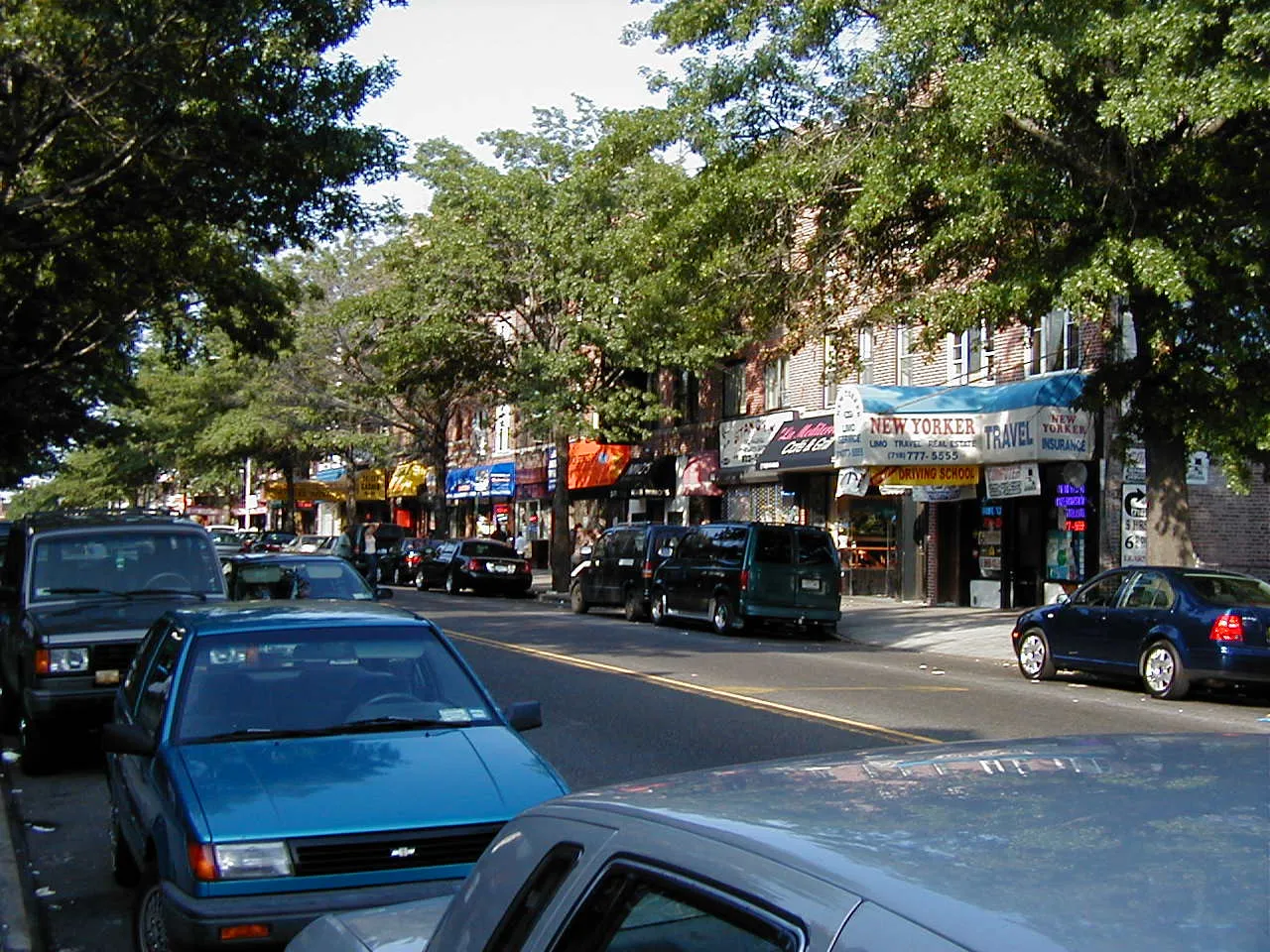
P8260013

I was listening to Mark Maron’s podcast the other day - specifically, an interview with Aubrey Plaza - and they started talking about how they both used to live in Queens.  But then Maron said where he lived, which was at 37th Street and 30th Avenue, and it completely blew my mind, because I lived about a block from there, at 36th and 28th.  And we both lived there at the same time, which means we shared the same subway stop, and the same restaurants and bodegas and fruit stands and drunken assholes sitting outside of cafes, blocking the god damned sidewalk.  And I’m sure my day job and his life as a late-night comedian probably didn’t place us on the platform for the N train at the same times, but I’m sure there must have been at least a couple of occasions when we were up there, looking down the tracks and wondering where the hell the next train was.

That’s a reminder that the world is much bigger than I imagine.  Or maybe I mean more dense.  I came from a life where you knew every single person in your neighborhood.  Our subdivision had a homeowner’s association - not like a condo HOA where you were required to be a member, but rather a group of do-gooder PTA motherfuckers that liked to be overbearing and have a Christmas decoration contest and post crimestopper signs that did no good and that sort of crap.  And they used to put out an annual directory, a photocopied thing that listed every damn person in the subdivision, along with their kids’ names and if any of them did chores like babysitting or snow plowing or whatever.  I think the whole purpose of the thing was to shame people into giving twenty bucks to the group, or maybe because people were so god damned proud of their kids, they needed to show everyone how many of them they had.  I don’t know, but I know in my infinite boredom stemming from a life of only five TV channels, I pretty much memorized that book and knew the names of every person in every house of our neighborhood.

The entire city of Elkhart - not just my little subdivision - had a population just under what Astoria’s population was, except Elkhart is about 25 square miles, where the 11103 is maybe three-quarters of a square mile.  So you’re talking about a serious number of people piled on top of each other; nobody’s got a giant ranch house or a backyard or even a place to park a car, let alone a collection of cars, like pretty much everyone in Elkhart has on their front lawn.  And at first, this was overwhelming to me.  When I first visited New York, I was amazed that it wasn’t just one single main arterial street had clusters of stores and shops, like every town in the Midwest.  Every time you turned off of one street and onto another, that would be a main drag too, with wall-to-wall storefronts.

But at some point, I got desensitized to all of this, and had this mental picture of my neighborhood as having vast amounts of nothing.  I mean, I’d have this internal diagram that would say “my house, five blocks of nothing, the Key Foods, two blocks of nothing, the subway stop, and then ten blocks of nothing until the tunnel and the city.”  In reality, every one of those blocks of nothing had thousands of people living there.  And even though half of the storefronts in Astoria are abandoned and boarded up and probably used as illegal gambling halls, and of the other 50%, a certain plurality were these stores with maybe $17 of merchandise on all of the shelves, probably because the place was a mafia front. But there were all of these places where you could get lost forever, that were their own worlds within one street address.  I’d duck into that horrible Rite-Aid on 30th, and it was not the world’s biggest drug store, but it was its own universe, once you got in there and got stuck waiting an hour while the only cashier finished her cell phone call and rang up your purchases.

I still feel like that now.  I mean, there really is nothing in my neighborhood - we’re like on the edge of the ghetto, patiently waiting for gentrification to happen, maybe the next big earthquake to suck under a mass of old Victorian crackhouses and leave room for a new Trader Joe’s. But then when I go back to Indiana, everything truly looks abandoned.  It always amazes me when I go back there, because it looks like some post-apocalyptic movie, where the whole population has vanished.  And when I did go back to New York, I felt overwhelmed again, which means my sense of scale has reset itself.  But the moral of the story is I should be taking a closer look at what’s around me.

Anyway.  I spent far too long looking at the picture above, then looking at Google Maps, to see if that is indeed 37th Street and 30th Ave, and I think it is, but you can’t tell because so much of the stuff has changed hands.  Someone said you’re officially a New Yorker when you say “do you remember when this used to be a ______”?  Yeah, something like that.

Review: Lost in America by Colby Buzzell

It appears that someone over at HarperCollins saw my previous review of Colby Buzzell’s first book, My War, that I wrote last March, because they sent me an advance copy of his latest, Lost in America: A Dead-End Journey, which is coming out in September.  I remember looking for more info on him after reading My War, and not finding much, except for an article at Esquire, and some blog posts about how he got called back up for IRR duty, but got discharged before going back to Iraq because of PTSD or alcohol abuse or whatever they call it these days.  So I was happy to hear he had another book coming out, and I was curious to see how it went.

I mentioned in my other review that I’m always skeptical of people who do a successful blog and then turn it into a book, which was all the rage a few years back.  It’s not that I think this is good or bad; it’s just that when people blog about their life and the biggest moment in their life and turn it into a good project, when you ask them to do a second book, it’s almost always garbage.  I mean, Citizen Kane might be the best movie in the world, but if it came out in 2011 and made bank, you know they’d do a CK2 with reporter Jerry Thompson played by Ted McGinley or some shit, and they’d do it in 3D, so there would be all these scenes of Chuck Kane throwing glasses of water or shoving spears into the audience.  (“Wow, that sled was coming right at me!”)  And half the time, the second book by a blog-to-book author is this whiny tome talking about the huge letdown of having to do talk shows and meet famous people and go to dinner parties and get their URL plastered on the sides of busses.  So I was seriously curious what would happen in this book.

Buzzell’s assignment was to take the great American road trip, to retrace Kerouac’s footsteps and head across the country and report what was going on in that big space between New York and LA.  He was told to “write a love letter to Kerouac”, and fortunately, he didn’t really do that.  I was hoping this would not turn into some overly academic circle-jerk that treated the Kerouac journey as authentically as Olive Garden turns out Italian food.  In fact, very little time’s spent talking about Kerouac, finding parallels between his work and the world today, or pondering why Jack looked for kicks.  That was all quickly brushed aside as Buzzell set out in his ‘64 Mercury Comet, driving east and looking for his own version of kicks.

There are some strange parallels that Buzzell doesn’t consciously ponder here.  Kerouac and friends set out on their travels partly as a reaction to the Iraq of their generation, which was World War 2.  Jack struggled with the death of his father, and Buzzell talks greatly about the memories of his mother, who died from cancer right before he started his trip.  And like Kerouac’s attempts to reconcile his place in humanity, Buzzell wonders about his recent marriage, his new child, and how all of those pieces are supposed to fit together.

Probably the biggest takeaway from the book is that the middle class is dead, and the middle of America is a prime example of it.  He stumbles through various jobs at day laborer places, talks to people living on minimum wage, hangs out with guys stripping Detroit buildings of their copper pipes, and sees firsthand the abject poverty and lack of any hope in places like Cheyenne, Omaha, and the former motor city.  It’s like his own version of Barbara Ehrenreich’s Nickel and Dimed, except I thought her book was a pretentious slow-pitch to the NPR crowd, while his was more authentic.

Is this pure journalism?  No.  But that’s the struggle, and one that he acknowledges: you need some kind of plot or gimmick or device to provide forward motion in a book like this, and he struggles through the 297 pages to find that.  You can’t just load up a car in San Francisco and say “go!” and write down each place you stop for gas and call it a book.  There could have been many different ideas that would have propelled the book more, that he mentions but never returns to.  Like, what if he would have taken that book advance and drove from SF to NY and stopped at every VFW in between, hoisting beers and asking the patrons what they thought about America?  What if he did try to only survive on the money he got from those shit jobs?  What if he tried to look up every army buddy in his platoon, John Rambo style, and see what they made of their lives?  What if he pulled a Hunter Thompson and searched for “the American Dream”?  He has his motives and he ends up doing the work as far as remembering his mom and his past, but it’s not a focused effort toward any one thesis.

The writing in this book seemed a bit better than the last.  I don’t think he’s completely found his voice, and I found some clunkiness in places, but for every point where he violated the show-don’t-tell rule, there was another point with incredible detail and clarity.  Some of the best examples of this were his depictions of Detroit.  It’s easy for outsiders to simply say “Detroit == Somalia/Bosnia/Tripoli/whatever”, but there is some strange duality in the old houses versus the abandoned stores, the proud residents and the scared whiteys.  He explores a lot of the urban terrain, which is something a bit cliche now that every hipster doofus in a fedora is out wandering abandoned warehouses with their digital SLR, but it’s coming from this guy who was in the shit, who had the crazy experiences in Iraq and knows what real devastation is like.

This book is sure to piss off some people, because Buzzell isn’t easily pigeonholed.  He’s got some strange allegiances, like his odd infatuation with Wal-Mart and views on Fox News.  He didn’t drive a hybrid, instead choosing an old dinosaur V-8, and instead of being fiscally responsible, he spent his nights blackout drinking.  It’s not like his last one, where it’s easy to pitch it and say “read this if you want to know about Iraq.”  There are a dozen other books about cross-country driving or exploring the underbelly of poverty that I’d recommend over this one.  And yeah, the message is not cheery, from an economic standpoint. But this one was a good read, and I’d love to see what he knocks out next.

The Death of Palm

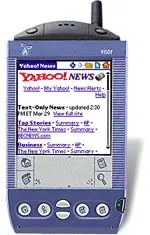
visorphone

In a serious WTF move yesterday, HP announced they were ditching their hardware manufacturing business, and abandoning their work on WebOS devices.  HP just bought Palm a little over a year ago for 1.2 billion dollars.  Their big splash was the iPad killer tablet, the HP TouchPad, which sold roughly as well as the Edsel in the year before its demise. It’s a sad end to Palm, and evidence that doubling down doesn’t always pay off.

I have a long history with Palm, mostly because I’ve always wanted some kind of little portable machine to store my “brain” of vital info and capture little bits of writing ideas as I’m away from my desk.  I remember first hearing about Palm back in 1996, when I was still at my first job in Seattle.  At that time, the gold standard of portables was the Apple Newton, which were nice, but cost somewhere around a grand.  US Robotics rolled out their new device for only $300 for the low-end model, and they were way smaller and lighter than the Newton.  When I first stumbled across this new product on the web, they had a little Palm Pilot simulator you could download, which let you walk through the various screens of the PDA, albeit without the touch-screen area for a pen stylus.  I was 90% sold on this initial model, but 10% of me had serious doubts.  (And 100% of me didn’t have $300 burning a hole in my pocket.)

The thing that was most offputting to me was that the Newton was essentially a shrunk-down computer. You could put cards in it and it had its own file system that you could fill with apps and documents and whatever else.  But PalmOS was based on this alien concept that you carried a mirror of your important data, a copy, that got synced when you plugged the device back into the mothership of your home PC.  It was a sort of parasite, like one of those little helicopters on the decks of huge yachts, and wasn’t a “real” computer.  I don’t know why that bothered me, but it was new at the time, and I didn’t like it.  (It’s the same stumbling block a lot of Windows people have about the iPad, and why you see tons of people in message boards yelling “IT DOESNT HAVE A PCMCIA SLOT!  I CANT RUN VISUAL STUDIO ON IT!  HOW AM I SUPPOSED TO CUT BROADCAST-QUALITY HD VIDEO ON THAT THING?”)

So I didn’t get one. In the meantime, a bunch of people I worked with at my next job bought into a lot of bleeding-edge PDAs that have since left our collective consciousness.  Some of them were Newton or MessagePad die-hards, and a couple bought into the Magic Cap platform.  Windows CE devices also started appearing, which I thought was absolutely ridiculous at the time.  I spent my cash elsewhere, mostly on this other portable reading system better known as paper books, and patiently waited until Moore’s Law kicked in.

After I moved to New York, though, I foresaw a future of sitting on subway trains for a good chunk of my day. So I went down to J&R’s Music World, which is like the East-coast version of Fry’s electronics stores crowded with off-brands and flashy bright pricetags. I bought a Palm IIIx, which I think set me back $200 or so, and then figured out all of the cryptic mumbo-jumbo I needed to get it to talk to a linux machine.  (It probably involved recompiling the kernel five times.)

My use of the Palm fluctuated, and went through phases.  I’d go through periods when I downloaded a ton of ebooks, tried to keep a journal, and jotted down everything I saw or thought of, in hopes of eventually rolling it into my own writing.  I’d play dope wars forever (“you found two hits of acid on a dead dude in the subway!”) and remember reading that Bruce Sterling book The Hacker Crackdown and a good chunk of the Unabomber manifesto on that little 160x160 greenish LCD.  I never got the hang of writing in graffiti, the shorthand system of scratching on the little input area; I can barely print in Latin letters, let alone a system I haven’t been using for decades.

Everyone had a Palm back then.  When I worked at Juno, I think every single person on my team had a Palm III or V, except for one dude that had a Handspring Visor.  (One of the Directors also had the ultra-expensive Palm VII, which had an antenna hanging off of it, and could pull down the amount of web traffic you’d consume in about 60 seconds now over the course of a month, all for $14.95.) One of the project managers on my team found a hangman game you could play wirelessly over the IR ports, and our meeting productivity suddenly dropped 100%.  I’d get on the train and see dozens of people clicking with their little styluses on the charcoal or silver boxes, all of them drowning in crazy NASDAQ money as the tech bubble continued to expand like a huge zit on a teenager’s face.

I never fully sunk into the system, though.  Part of it was that it wasn’t 100% of what I needed to do with the damn thing.  I couldn’t really write on it; I couldn’t run totally kick-ass games with it.  There was no camera, no web browser, no way to send emails on the go.  I couldn’t write my own programs for it.  I could barely get the damn thing to sync with my PC, and would only plug it in maybe once or twice a month.  There was also the issue that I had a cell phone that could do about 23% of what I wanted, and this Palm that could do maybe 41%, and then I carried around a MiniDisc player, which totally solved the music issue, but only for the discs I remembered to shove in my pocket that morning.  I really needed some device that would do all of this and more, but that would be almost a decade away.  In the meantime, I assembled this mess of cables and adaptors to plug the Palm into the ass-end of this Samsung feature phone I had back then, so I could use the phone as a modem and dial in to a modem when I was on vacation, which almost worked.

Around 2001 or 2002, I took a half-step in that general direction, and upgraded to a Handspring Visor Prism, and got the Visorphone. The Visors had this cartridge port on them called the Springboard port, and the Visorphone was this sick attachment that  snapped on the back and essentially turned it into a cell phone.  And the Visor could use the phone for data, so you could fire it up and get SMS messages on your phone, or send out an email.  The Visorphone sounded like the coolest thing since the Boba Fett action figure with the shooting rocket pack that some stupid fucking kid shot down his throat and got the whole thing banned, but it was a total piece of shit.  It had its own battery in it, and you had to charge it separately from the main unit.  The software was barely integrated correctly, so it almost worked as well as one of those piece of shit Jitterbug phones.  And your monthly bill of 40 or 50 bucks came with just enough minutes to download and delete about four of your spam email messages.  Plus it got me locked into a T-Mobile contract, which was absolutely craptastic.  I did use the Prism for a while, and it was a nice step up from the IIIx, but I did miss the sleekness of the old Palm, the little fliptop case that reminded me of a Star Trek communicator, and the fact that it ran forever on AAA batteries.

I also owned Palm stock briefly.  I probably don’t need to explain how that went.

I sold the Handspring to a coworker, and jumped to a Sidekick, which, despite the fact that it was designed for emo 14-year-olds, had its shit together as far as data integration.  It was essentially useless as a phone, but I don’t like talking on the phone, and preferred getting the data-only unlimited plan and spending all day in AIM or browsing the web.  I did briefly consider getting a Treo when everyone else got Treo fever, but talked myself out of it.  Years later, when I was at the big S, we got a couple of Palm Pre units when they came out, and I spent twenty minutes screwing with one, long enough to lock it up two or three times.  I’d already moved to the iPhone by then, and it was the perfect solution I’d waited ten years for, so I was pretty nonplussed.  The WebOS UI had some nice features, but in a world where everyone had Ataris and Commodores, I didn’t want to buy a Coleco Adam because it had a neat keyboard.

I was thinking about all of this, and what happened to all of my old Palm files, and I remembered I used a program called jpilot on linux to sync my old devices.  It made a .jpilot directory, and it turns out I have two full backups of my old Palm’s filesystem, one from 2000 and another from 2001.  It is a total mindfuck to see what I carried on the thing back then.  I’ve got a list of DVDs I wanted to buy; a list of books to research later; and there’s an attempt at a journal that’s mostly a list sorted by date of when I was having panic attacks.  There’s an itinerary from a February 2000 trip to San Diego, and a copy of an early draft of my second book in PDB format.  I have all of the applications that were installed too, from a universal remote app to an R2D2 sound generator to some app that takes a Manhattan street address and tells you the cross streets.

Sometimes I wish I never kept things like this, because now I’m going to spend the next two hours digging through these files.

Thoughts on a random picture: the N

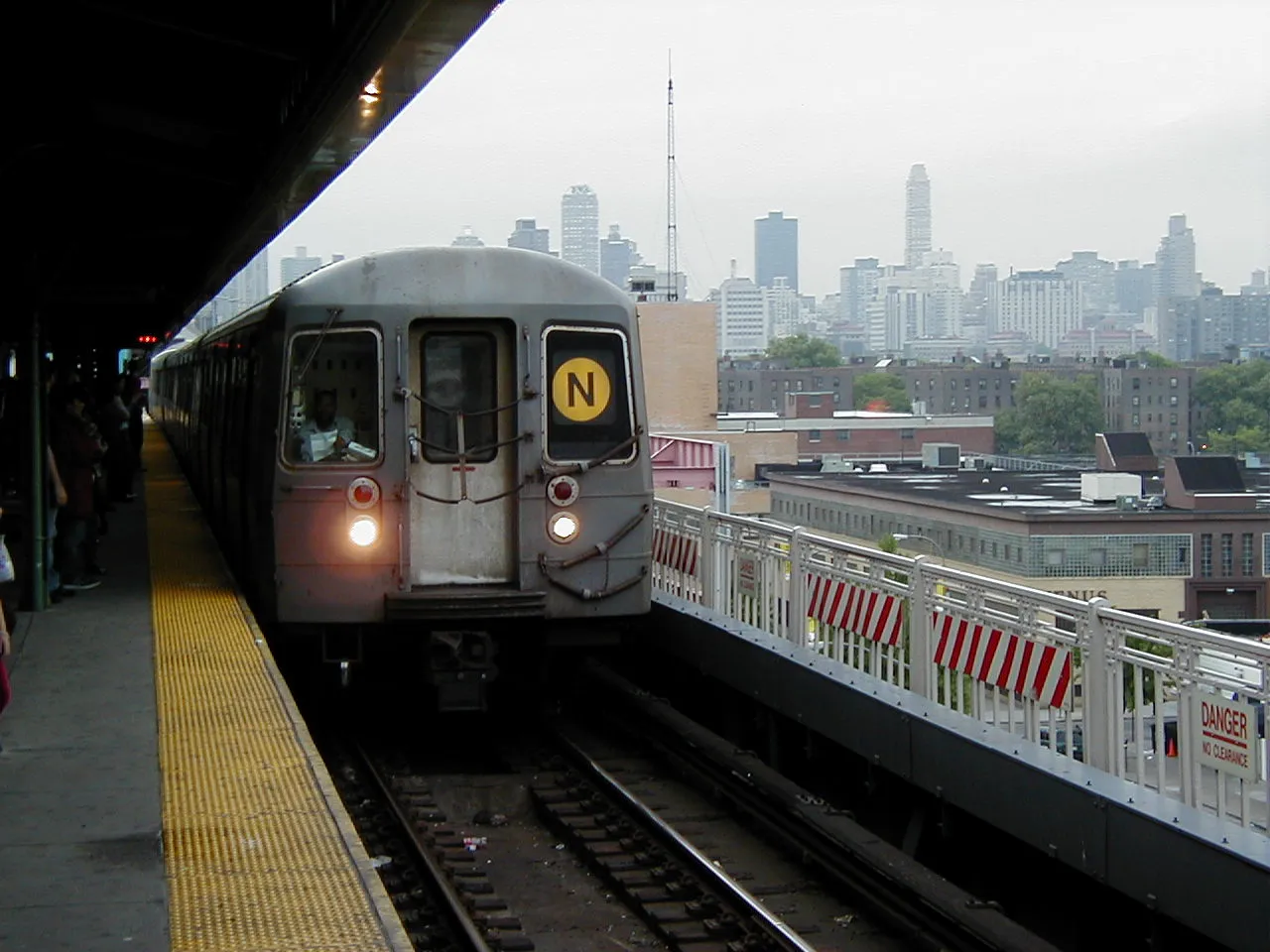
This is the N:

P5270040

I took this picture just over ten years ago.  I was on the way home from my second date with Kelly.  We went to Jackson Heights, and then to Target.  It doesn’t sound that exciting, but when you live in New York in 2001 and you spent a good chunk of your life in Indiana, and suddenly, there’s no Target, the idea of taking two trains and a bus to the middle of nowhere in Queens to see a real Target is pretty enticing.

That picture was taken on Queensborough Plaza, which is the first stop in Queens after the N train goes through the Steinway tunnel and under the East River.  It’s the start of a new borough, a transition to a different land, and the point where the normally-underground subway train suddenly appears up on an elevated platform that snakes above the rooftops in Long Island City and Astoria.

I hated the N train.  The N and R trains ran into Queens, and they stood for Never and Rarely, because you could wait forever for one of the damn things to show up.  And while you were up on that elevated platform, freezing your ass off in January as the wind tunnel effect made the extreme weather even worse, they’d run twice as slow.  And while those A trains or F trains ran every 2 minutes for the last century in “The City”, the MTA had this habit of randomly shutting down the N trains all weekend, which started roughly around two weeks after I moved to Astoria, and went on until about the time I left.  They said it was for “station work”, but I was almost certain that some Sopranos wannabe motherfuckers paid off the MTA to force all of us to spend our money in their craptastic shops and restaurants all weekend.

Queensborough plaza was in a sketchy neighborhood, a part of Long Island City where everything around was either taxi repair shops, scrapyards, or the kind of strip clubs you go to if you have a c-section scar fetish.  There was also a “bootleg” Dunkin Donuts there; it had a sign with the same font and same colors as the real place, but it just said “fresh donuts” or “fresh coffee” or something.  I was waiting for the whole thing to get painted over after a cease/desist, but there were a lot of blatant trademark violations in Queens, and nobody gave a shit.  There was this place on 30th Ave called Pinocchio Restaurant, and I swear they had a pixel-for-pixel copy of the genuine Disney artwork on their sign.  I don’t know if a lawyer from Walt’s parent company woke up with a horse’s head in his bed one morning, but the damn thing’s still there today.  I desperately wanted the Olympics to come to New York, just to see all of those IOC lawyers try to shut down every business in Astoria with the word “Olympic” in their names, which is about 70% of them.

Two train lines butted against each other at that station: the BMT’s N/R and the IRT’s 7.  The 7 was the line built to run up to the World’s Fair, and they ran those famous red subway cars, which have since been stripped and dumped in the Atlantic to form an artificial reef.  I’m guessing this is the train John Rocker took out to Shea Stadium described in his infamous rant that got him all kinds of love and adoration from New Yorkers.  On the day I took this picture, we returned from Target on the 7 train, and then I switched to the N to go home, while Kelly got on a different train to head back to Brooklyn.

I spent so damn much time on the N train.  A rough order-of-magnitude guess is 2 times a day x 5 days a week x 50 weeks a year x 5 years = 2500 trips.  Each trip took about 45 minutes, so that’s roughly 78 days of my life.  Yeah, I invested that time into reading, and I probably read a book or two a week, but that’s still a lot of strap-hanging.

The whole idea of the subway seems a lifetime away for me.  I can’t even fathom any part of my existence back then: being single, living in such a big city, living in such a fucked up neighborhood.  I think about it a lot, because I’m at the same job as back then, and I’m working on docs for the same product (among others), so I often play dumb games like “what was I doing around the time I first started working on this?”  I think back to when I was struggling to get Rumored out the door, when I was trying to date, when I would take any free time I had and scrape up enough dough to get on a plane to Vegas, just so I could rent a car and drive again, and be in an open area that didn’t have a fifty thousand people per square mile.

And I think about life now sometimes - like I was in the parking lot of Target the other day (honestly, Target isn’t paying me to mention them in every damn post I put up here) and I was just thinking “fuck, I’m living in California.”  I get so busy with the day-to-day that I don’t even think about it, about how 25 years ago, California was this far off, distant land only seen in movies, and it may as well have been the planet Vulcan.  And now I’ve lived here for three and a half years, and I still don’t even realize it until I’m outside on a nice sunny day, and I realize it’s something like -60 degrees in Elkhart and I haven’t had to dig a car out of a snowbank for decades, and I really do live within a stone’s throw of the Pacific Ocean, a body of water I never even saw until I was 26 years old.

So looking back at pictures like this, the old rolling stock of the MTA, that look of soot and skyscrapers and brick project houses and a view of Queens so vivid, I can practically hear the car alarms and jackhammers at five in the morning and the taxis laying on their horns continually, and it’s a huge time machine for me.  It’s not that I want to go back or that I miss any of it, but it’s a huge reminder that even though I feel like the same person and the same old crap is going on every day, so much time has passed between now and then, and things have changed so radically.