The Wrath of Kon

Dispatches, thoughts, and miscellanea from writer Jon Konrath

Tag: bass

Bass work

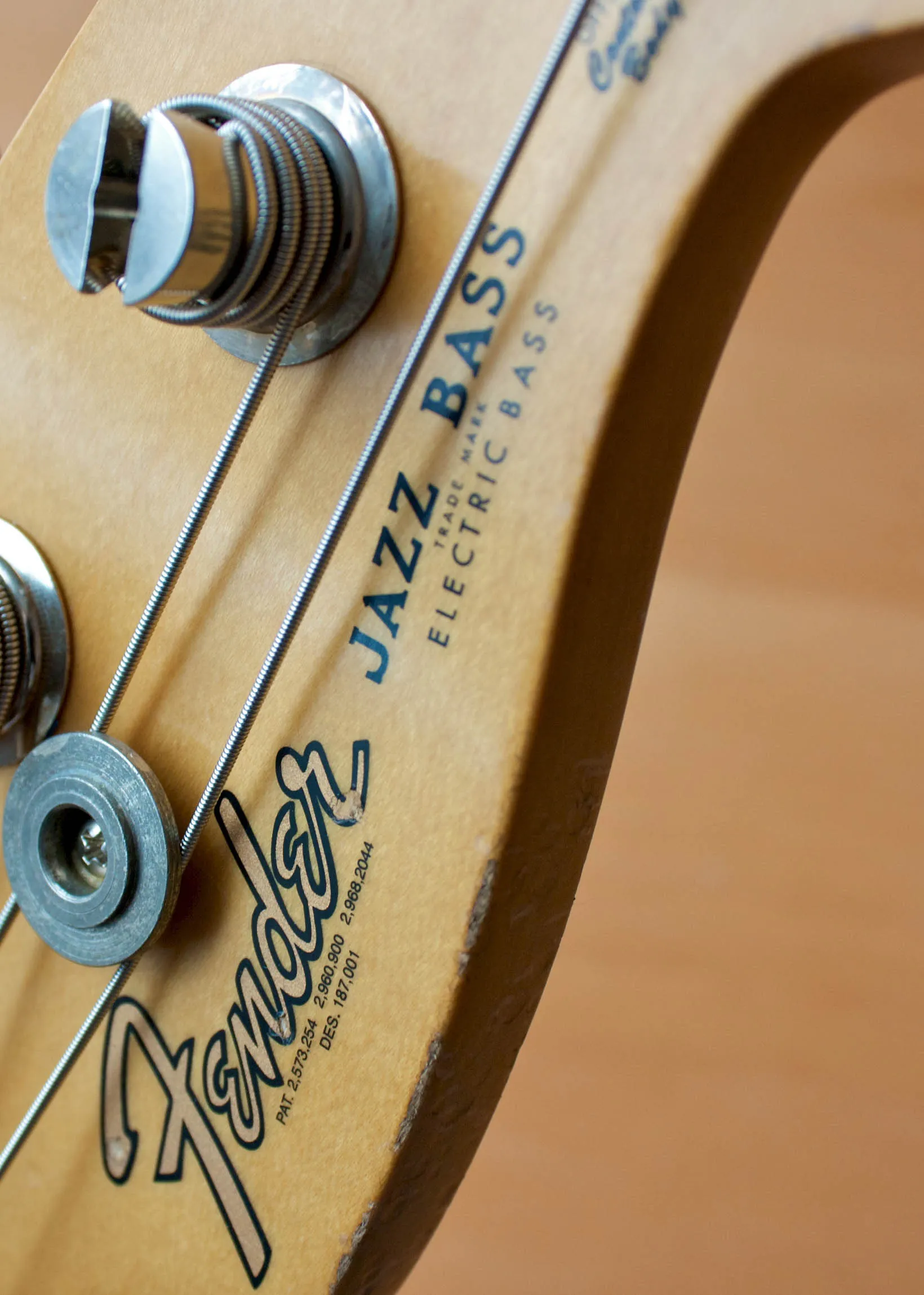
Fender Jass Bass

I have this bass - a 2014 Fender Jazz Road Worn, which I got in 2014. The road worn/relic basses get a bad rap because “it’s like buying jeans with holes in them already,” but they’re also the cheapest way to get a lacquer finish bass from Fender. That and the fact that they kiln-dry the wood before assembly means the wood is dense and low-moisture, which gives you a deeper sound and a lighter weight. Anyway, I like the bass. But I haven’t played it lately because the neck went all psycho on me, and it had a ton of action. From the side, it looked more like a bow and arrow. And I couldn’t fix it with truss rod adjustments. So much like my retirement planning and general health, I ignored it and hoped someday I’d have a chance to figure it all out, but not now.

So then this music repair shop opens up about a block or two from my house. They are called Wood Street Guitar Repair. I brought the bass in to get a verdict on if the neck was completely destroyed or not. That’s when I saw what instantly sold me on the place: they had a brand new Plek machine, straight from Germany. I was in like flint.

A Plek machine is crazy. Basically, you strap a guitar into this thing that looks like a phone booth-sized 3-D printer. It scans the entire neck and loads the scan into a computer, which can then determine what frets are out of whack. The computer can then futz with this virtual model and simulate exactly what can be done to fix things. Once the operator picks a set of adjustments, a robot arm with a 50,000-RPM cutting tool buzzes away and files down high frets and does whatever other minor cutting and deburring and polishing needs to be done.

This whole process used to be done by hand, by sight. Now it’s done within a thousandth of an inch by a machine. Here’s a good video on how Gibson uses Plek now. I got a Lakland bass a few years ago, and they Plek every instrument they sell. That Lakland (a Skyline 44-01) has one of the best necks I have ever played, and it is their cheapest budget model. It’s truly revolutionary stuff.

When I checked in the bass, they asked me all the questions on how I like to play, what strings I wanted to use, etc. They also popped the neck and checked the truss rod, and it was still adjusting, so that looked okay. Unfortunately, when they got into it a couple of weeks later, they could not get the neck close to level, even with the truss rod bottomed out. So they heat-pressed the neck first. Basically, they put the neck in some clamps and use heat blankets to heat up the wood and slightly melt the glue. The neck is held straight and then dries overnight. They did this, then ran it through the Plek, and hand-filed the fret edges, which were a little too sharp.

Anyway, the verdict is that the bass now plays like butter. Super-low action, and it feels great. No high spots, just an incredible feel to it. I now have two great basses for slightly different purposes. The Lakland has active soapbar pickups and a very “fast” neck, a good combination for more modern metal or prog-rock. The Fender has passive 60s-style Fender pickups and a slightly chunkier neck, which feels great for old seventies rock. The guys at Wood Street Guitar did a great job - if you’re in the Bay Area, check them out.

Fight club, family trees, newspapers, bass

DJI_0409-HDR

Christ, it’s been a month since I updated. So much for the “blog more” thing. I started the new job, but first rule of fight club. Things have been much more sane, but the pessimist in me is always waiting for the other shoe to drop. And I still have these weird bureaucratic nightmares (usually when I take Benadryl, which is too much this allergy season) where I’m like endlessly trying to sort a giant spreadsheet or I have some problem where I ask person A what to do and they say “ask B” and B says “ask C” and C says “ask A or B” and repeat. This was much worse when this was my actual work environment for twelve hours. After I was free and clear from the last job, I thought about starting a thread about all of the stupid stuff that went down over the last ten years, and then I (coincidentally) got a boilerplate letter from their legal that they send to all former employees, reminding me of the employee agreement I signed in 2010 and how I can’t disclose trade secrets. So, next topic.

I’ve fallen down the genealogy k-hole again, which is largely John’s fault, but it’s also something I do every few years. It’s ironic because it is something that obsesses me, even though I pretty much don’t talk to most of my family anymore. I debated using Ancestry versus MyHeritage and heard the latter was better for European records, so I signed up and then found out that it isn’t. I found out some rudimentary things that were wrong, like incorrect years and an incorrect last name that was throwing off all previous attempts to go back more than three generations. So it’s interesting, but it’s gotten boring, and like I said, it’s not like I’m going to suddenly find long-lost seventh cousins fourteen times removed that I’m really interested in talking to.

The other thing I did which I am obsessed with but probably need to quit is I got a full-on subscription to Newspapers dot com. (They have a variety of tiers: useless, mostly useless, and expensive.) I know I’ve bitched constantly about the bait-and-switch with newspaper archives: you used to be able to hit everything on Google, and then in the media landscape consolidation/race-to-the-bottom, everything went paywall. Well, I didn’t know this, but if you get the full-blown Newspapers account, there is a ton of old information on there.

What’s problematic with my family research is that the Elkhart Truth (sic) does not participate in this program. But the South Bend Tribune does. When I grew up, the SBT was a “real” newspaper, and the Truth was sort of half-ass, but way more local information. Anyway, most obituaries and so on are covered there. My dad’s side of the family lived in Edwardsburg, which is covered well under the Herald-Palladium paper (and its four pre-merger papers) so there’s a lot there. The other side of the family is in Chicago, and the Tribune has an extensive archive, but that family has an extremely common last name, and apparently some genetic predisposition for not even knowing how to spell their own kids’ names, according to census papers I found. Anyway.

The family stuff - I won’t go into it, but I found a lot there. And then I started plugging in various dead malls, and holy shit.

I wrote this big thing about Pierre Moran Mall recently, and really had to scrape to find even the most basic dates. I plugged this into the search for the South Bend Tribune, and found a ton of stuff, including pictures, store open and close dates, articles about events at the mall, the expansion and enclosing of the mall, the failed attempt to turn the old Target into a Christian event hall… way too much to process.

I want to someday write an article on the Scottsdale Mall in South Bend like the one I wrote on PMM. I didn’t spend as much time there as a kid, but I spent a lot of time there in 1990-1991 when I went to IUSB. Anyway, I started searching, and the South Bend Tribune did an entire section on the grand opening of the mall, with an article per store, and in most cases an ad from the same store (probably why they did this, to gin up future ad sales) and of course a ton of pictures. When I mean every store, they even did a piece on the local pretzel stand in the mall.

On to Concord Mall: I found articles going back to years before the mall opened, when they planned on plowing up the farmland in Dunlap and putting some bridges across the Yellow River to get things started. They also did a similar send-up with plenty of articles about the stores moving from downtown to the new shopping center. It looked like the article about Wards was largely boilerplate - I think corporate sent the same copy to the paper for both the South Bend and Elkhart stores, which both opened the same year.

Other interesting things I found out: one is that the original plan for Concord was to include 200 apartments on the property. That would have been a fun little futuristic utopia, living and working in the same building, eating Karmelkorn for dinner every night, going on dates in the JC Penney.

Another weird one was there was a study and a plan done on building yet another mall in Goshen. That area was over-malled with four malls in the seventies already. Goshen was decimated by Concord going in, because almost all of their downtown shops fled, and that place was a ghost town for decades. Building a fifth mall in a city of maybe 15,000 back then was a real hail mary to try to keep shopping dollars in the city, and someone probably ran the numbers and decided it wasn’t worth giving the developer a fat tax break on it. So nothing happened, and then of course Wal-Mart came in and built two super-stores and completely finished off the downtown. (The good news is that it’s become somewhat hipster-gentrified, which is good to see, actually.)

The newspaper thing was a real problem, scraping up the serotonin and eating up my time. It was like when Google first came out and I spent weeks searching on everything I could think of, wasting way too much time reading dumb articles about abandoned military bases or ghost towns in Colorado or whatever I was into at that point. It is amazing, and totally hit the nostalgia nerve, and I should probably cancel my subscription soon. Luckily, there aren’t any Bloomington newspapers on there.

The Panera by my house closed. Like I think I ate there a week ago, and on Friday, it was completely stripped down, all the signs and lights and awnings gone. I’m currently in food jail, so that’s probably a good thing; I got into a bad habit of ordering from there every week or so. You can probably eat healthy there, but the bread part kills me. Anyway, it’s become this dumb inside joke/meme, and like all of my dumb inside joke/memes, I’m hopelessly sick of it, but the same three people that make the same dumb jokes on every single thing I post on Facebook won’t let it go. I really need to delete my Facebook.

No progress whatsoever on writing these days. After the overwhelming non-success of the last book, I think maybe I should buy the next PlayStation and just work on that for the next ten years, like I did from 2001-2010. Good thing I can’t actually find one. I’m trying to get back into playing bass again, so that’s good. I bought a Palmer Bass Pocket Amp which is a great piece of kit for practicing with headphones. Now I just need to get back up to speed on it.

Two for two

I’ve spent far too much time at Guitar Center in the last few days, and too much time at UPS in the last week or two. I’m in the middle of a long bass guitar arbitrage situation that will eventually end up dropping two (or three) basses and netting another two.

First was the massive pedalboard sell-off.  I use a Zoom B3 multi-effect for everything and love it, so the idea of having a pedalboard and a bunch of effects pedals was silly, and it sat in the closet for the most part. I listed everything on talkbass, and sold them off, one-by-one.

My goal was to part out my main bass, a Fender Jazz I built from parts, selling off the aftermarket bits and putting back on the stock parts, which I kept, until I eventually could dump the bone-stock version. I took off the hipshot detuner, and I also took out a set of EMG pickups that were in an old starter bass, and those went.  That’s about a dozen trips to the PO total, although I did chunk a few together.  The Jazz bass still has a high-mass bridge, very nice Nordstrand pickups, and an Audere preamp.  Those will go in a bit.

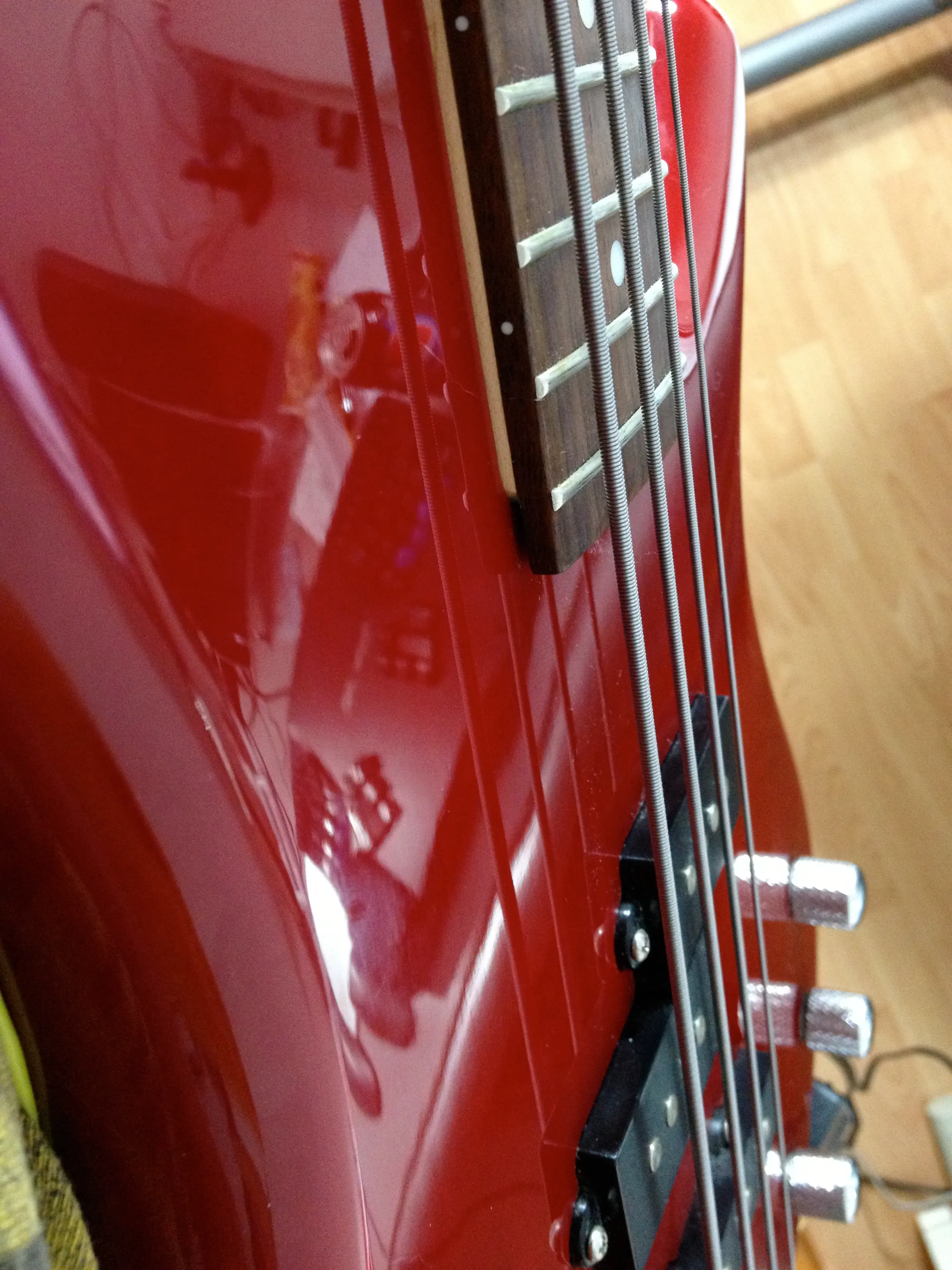
I then scored the pieces to my next Jazz bass build. A guy on talkbass sold me a Road Worn 50s-reissue Precision bass neck, in maple. And I scored a 60s-reissue Road Worn Jazz body in Fiesta Red on eBay.  Put together, they will make a very light, very vintage-looking bass with lots of fake mojo.  The Road Worn thing is sort of a gimmick; they relic off some of the paint, and age the hardware with some acid so it looks all rusty. It’s like buying pre-ripped jeans, which is sort of silly. But the secret of the Road Worn is that they use real nitro paint, like the old days, and not the super-thick, super-glossy stuff that doesn’t kill spotted owls or whatever. And they kiln-dry the wood longer, so it’s got the light weight and deep sound of an old bass.  And you get the shape and controls and contours of the old stuff.  So those parts are in the mail, and I may have pictures later in the week there.

On Friday, I rewired the Ibanez that gave up its EMG pickups, and brought it and my Schecter to Guitar Center for a trade-in.  This took forever.  They are nice enough there, but they’re always understaffed and overworked and doing nine things at once, so it’s a wait.

I didn’t feel much remorse about the Ibanez, even though it was my daily driver for about a year, and it’s a nice lightweight bass and looks decent enough.  The neck is thin and fast, but not perfect, with lots of fret sprout and some unevenness.  The Schecter I was more conflicted about.  It’s a very nice-looking bass, mahogany wood with a satin black finish. It’s well-balanced, a very smooth neck-through that feels great, and it looks awesome. It’s a 35” scale, and has a great sounding B-string for a 5-stringer.  But it’s got a thin neck with narrow spacing, and I just couldn’t deal with it.  It wasn’t getting played. So, time to go.

I ended up swapping the two, and ordering a Warwick. They didn’t stock them, and it got back-ordered.  I really wanted one, but I didn’t want to wait a month (or two, or three) and was dead-set on either getting something in-store, or at least something GC had in-hand. So I went back the next day to cancel the order, and play everything in the store a second time, and maybe pick something out.

A general bulleted list of everything I argued about mentally while they were taking hours to do my paperwork:

  • I played a couple of the Epiphone Toby basses and their necks were surprisingly smooth for a $200 bass.  But they were $200 basses, so light they felt cheap.  And I didn’t need another dual single-coil bass, if I had a Jazz.  And that missing-puzzle-piece thing in the headstock is weird.
  • I tried a few higher-end Ibanez basses. They were okay, but the Ibanez SR/GSR line is plagued by the problem that all of the basses look and feel functionally identical, with slight increments in workmanship and electronics. A GSR-500 is not 2.5 times as good as a GSR-200. It’s like if Toyota built nothing but Corollas with more and more options as you paid more.
  • Squier basses are coming very close to Fender basses in quality. I played a Jaguar from each and they felt very close to the same. But a Jag is a Jazz with a weird body. I played a standard Precision, and it was a standard Precision. Sort of boring to me.
  • The SBMM SUB is a damn decent feeling $300 bass.  If they had one with a rosewood fingerboard, I probably would have done that.
  • The EBMM Stingray is a damn nice bass. (Explanation: Sterling by Music Man is a company that licenses the design of the Ernie Ball Music Man basses and makes them in Indonesia.) The EBMM version has a perfect neck, very fat and wide and a strange satin feel to it that’s just incredible.  The cheapest one was about $1400.  So, no.
  • Spent a lot of time on a Gibson EB-0.  I don’t like their stuff (I also played a Thunderbird, which, aside from having a book by the same name, I was not into) but this thing was sweet. It was all mahogany with a cherry satin finish, but weighed almost nothing. It had a really responsive, thumpy neck that I liked.  But, it was a short-scale 30”, had this dumb anniversary inlay at the 12th fret, and was a little above my price point.  I really hemmed and hawed over this one, though.
  • Played a couple of Yamahas and they were shit. Very fret-buzzy.  It could have been the setup. There are probably some nice Yamahas, but that’s like saying that I’m sure International Harvester could build a nice car.
  • I played a Jackson with a nice neck, but it had that swoopy inline headstock with a giant logo that looked as 1980s as Yngwie Malmsteen eating a McDLT.

I ended up doing a compromise on the EBMM/SBMM front. Sterling makes a RAY34 which is sort of the high end of the low end line, and has an active EQ and pickup voiced to be close to the old-school Stingrays. I found a used one in aqua blue with a rosewood fingerboard in a store in New Jersey, so that’s on its way out here.

So, down to just one bass in the house temporarily. Lots of UPS watching this week. Hope this long gear thread didn’t bore you too much.

First first bass

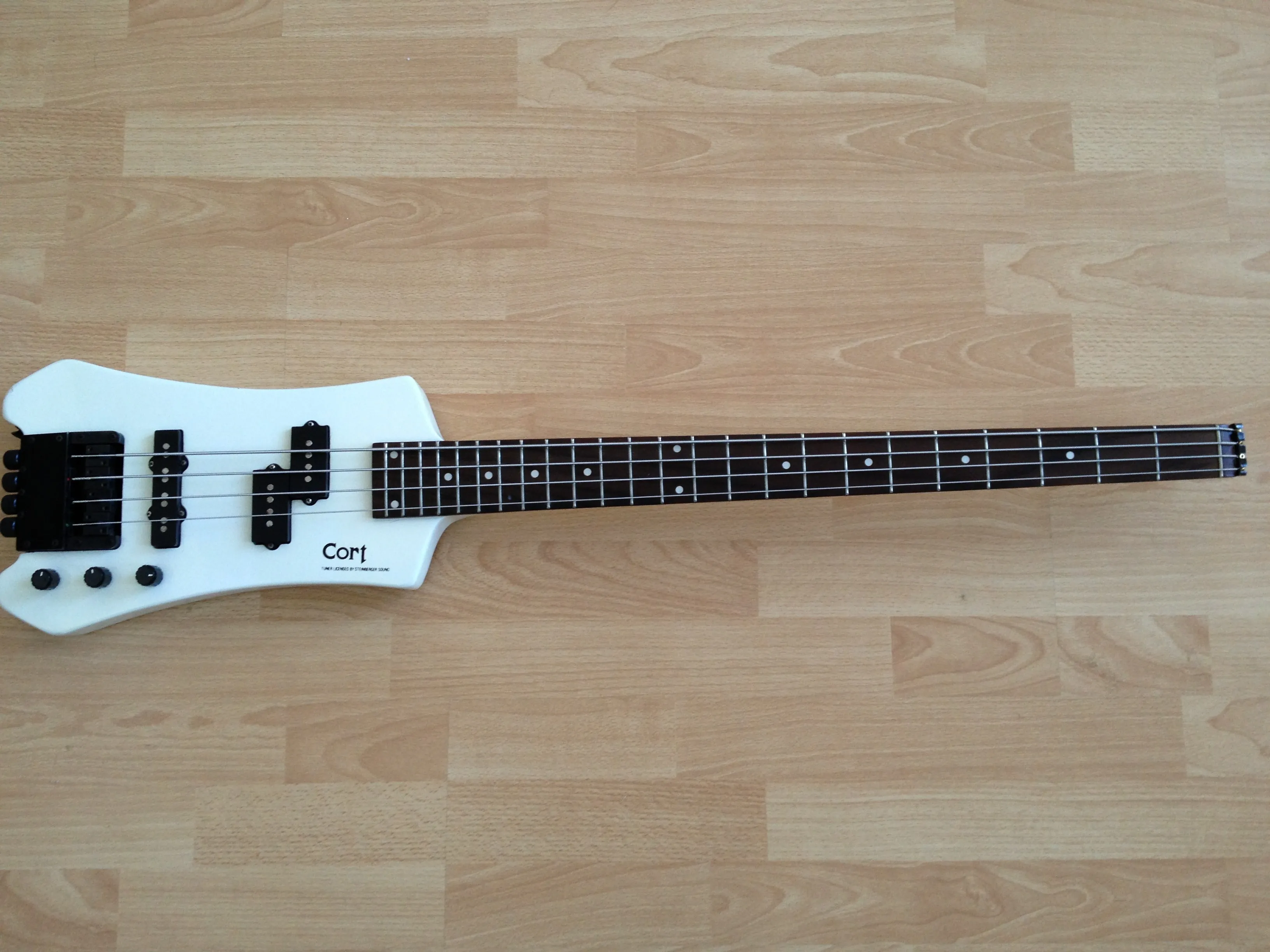
I keep mentioning that my first bass was one of the Cort headless basses with the Steinberger licensed tuners.  I’ve got a duplicate one sitting at the house now, and my old roommate has the original one.  But that actually wasn’t my first bass.  I have to start the story with how I first decided to play bass.

I had a friend named Jamie who was a 15-year-old guitar prodigy, one of those guys who spent all of his time locked in the basement learning Steve Vai and Yngwie Malmsteen songs note-for-note.  I took a semester of piano in high school, and had a little Casio keyboard I screwed around with, but wanted to play something else, because strapping on a keytar and rocking out some Rick Wakeman solos didn’t exactly appeal to me.  I met Jamie because he was in a band with Ray and Larry, and after he quit or they fired him or whatever, I used to go over to his house in Granger, right by the UP mall, and just hang out, watch him belt away sweep-picked arpeggios on his Ibanez, and talk about Joe Satriani.  He said I should learn bass, and I thought about it, but didn’t jump on it, partly because I didn’t own a bass, and didn’t have any spare money, with all of the end-of-high-school expenses looming, like prom, college applications, SAT tests, and all of the other junk they nickel and dime you with at the end of your senior year.

I went to prom, and we originally planned on some day-after-prom trip to Great America, but ended up not going.  So the Sunday night after prom, with that extra money burning a hole in my pocket, I called up Jamie and told him I wanted to start lessons.  He told me to come over, and he’d charge me five bucks an hour, and I had to buy him smokes, since he wasn’t 18 yet.  I used the cheap bass he had at his house, and we did all of the basics: EADG, the major scale, breaking apart chords, and a basic bass line.  My alcoholic stepdad had an old acoustic at our house, so for the time being, I could practice on the lower four strings of that, but I needed to get my own bass.

Musical instruments are pretty cheap now - you can get a brand new Squier for a hundred bucks online, and the build quality of even the cheapest Chinese-made guitars are pretty decent, especially now that half of the stuff is done by robots or CNC machines.  But back then, a crap guitar cost a few hundred bucks, and none of the pawn shops in Elkhart had anything even playable.  (I’m sure people will disagree and say they had tons of 60s Fender Jazz basses sitting around in pawn shops for a hundred bucks a pop back in the 80s.  All I know is we did not in the middle of nowhere, Indiana.)  I always used to go to the couple of pawn shops downtown, but they would generally have maybe one or two basses, and they were typically beyond repair, things that were junk back in the early 70s and had now seen decades of abuse and neglect.

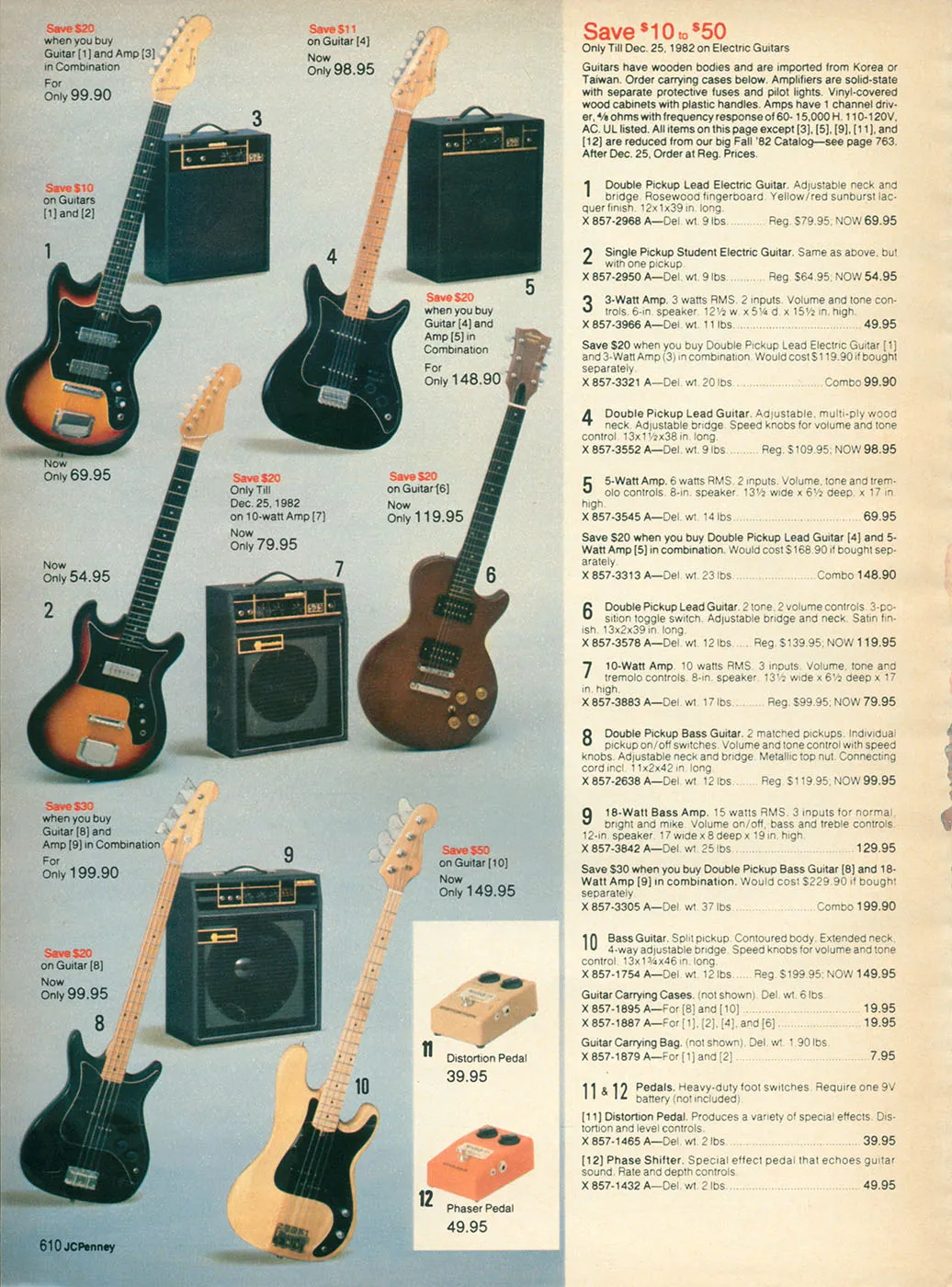
So I couldn’t find a used bass, and I certainly couldn’t afford to shell out for a new one.  But, I had a JC Penny charge card.  I’m not sure why; I probably filled out the application to get a free candy bar.  The Penny’s in the Concord Mall didn’t sell electronics, but they did have a catalog department.  So, I went there, and sight unseen, ordered the only bass they sold through mail-order.

7050508281_b022b1392f_o

Check out this catalog page.  This is from a 1982 catalog, but the 1989 offerings were pretty similar.  Most of their instruments were made by a company named Harmony, which back in the 60s made instruments that are coveted by a small group of fanatics over on eBay. But I think they went out of business and someone bought the name and started slapping it on low-end instruments made in China and sold through catalogs.  There are two basses shown on this page; I ordered the one on the right, the single-pickup design.

About my bass: I think it was called a Harmony Igniter.  It had the P-bass-shaped body, although mine was black, along with a very cheap pickguard, single pickup, bolt-on neck, and very low-end tuners that stayed in tune for about six minutes.  It showed up with mile-high action and the whole thing felt like plastic. It had a super lightweight plywood body and the neck felt okay, with a very glossy finish and razor-sharp fret edges.  The sound was very anemic, with weak electronics, and of course the factory strings were junk.  But, it was a bass, and I played the hell out of it, until I got the Cort about a month later.  I kept it as a backup, and also carefully removed the pickguard and painted it, a weird Eddie Van Halen meets Jackson Pollock abstract mess of splashed Testor’s paints that actually looked pretty cool on it.  If I was smart, I would have tore out the pickup and put in something hot, and at least changed the strings.

The bass is a distant memory to me; I have no pictures of it, no documents or instructions or old manuals, because it came with nothing.  I got a “real” bass about a month later, so I spent little time on this one.  It came to school with me, and I ended up trading it to a guy in my math class who was studying violin making and did a refret job on my Cort bass.  What actually lived on for much longer was the amp and case I bought from the catalog.  The case was cheap but had backpack straps, and I think Simms might still have it somewhere at his house.  The amp was a plastic piece of shit that had a clock-radio speaker and could run on C-cell batteries.  After it died, I tore out the “amp” part, a little circuit board the size of a business card, and used it basically as an overdrive pedal and headphone amp for years.

There’s also little to no Harmony information on the web, at least about the late 80s version.  There is a Harmony collector’s site, but it focuses on the 60s version.  There are a couple of people who have mentioned the name over at Talkbass, but I don’t know anybody who has one.  I’m very certain that nobody with a functional fireplace would hang onto one for long.  There is a part of me that almost wishes I could find another one in a dusty pawn shop or an eBay auction for $40, just for goofs, but I’ve wasted enough time and energy just hunting down that catalog page.

Anyway, there’s a brief look into a k-hole for you.  It’s sort of infuriating to me how a part of history from only 25 years ago is completely unsearchable on the web, but you could probably find a million more things about some event that happened in 1865.  That’s the weird thing about technology and the constant flow of information.  Items that were in paper records from over fifty years ago will live on for much longer than, say, TV commercials that were broadcast to millions in 1986.  Part of me thinks that at some point, some new technology is going to come out, like a low-power MRI that can scan the slightest iron content in print books and digitize entire libraries in ten seconds flat, and there will suddenly be a huge influx of data that was previously gone.  There is a part of me that hopes this never happens, because when it does, my writing will completely cease, and I’ll spend all of my time digging through the internet instead of actually writing.

State of the bass, January 2013 edition

I mentioned a while back that I started playing bass again.  Here’s an equipment update, since it seems like all I’ve been doing is amassing new stuff.

IMG_0929-e1357411764778

I previously wrote about my Cort bass.  It’s a Steinberger-licensed headless bass from the late 80s or early 90s, and it’s still here.  It looks okay in this picture, but that white finish looks a little yellowish, and the neck needs adjustment.  I am also not 100% with the tone, and wouldn’t mind ripping out the pickups and putting in a set of EMGs, but I have bigger fish to fry.  This one’s probably off to the shop for a setup though.

IMG_0833

The next bass is the Ibanez, which is a GSR-190 4-string, made in 2007.  It’s been the main workhorse as of late, and I like it a lot.  It’s well-balanced, has decent tone, and a thin, fast neck, which I really appreciate.  One of the downsides compared to the Cort is that it goes out of tune every few days, just slightly.  With the Steinberger tuners, you could pretty much drop the Cort out of a plane at 40,000 feet and the tuning would still be dead on, but it also makes me wonder if I should someday swap out the tuners or something.

One change I did make: I had this coupon burning a hole in my pocket, so I ordered a set of EMG pickups, originally thinking I’d put them in the Cort, but then chickening out because there’s almost no space in its cavity for the battery and other junk, and I play the Ibanez daily.  The switch was incredibly easy; EMG now puts DIP-style connectors on all of their gear, like a PC motherboard, so you can completely wire a bass without any soldering.  The new pickups (the EMG X series) are incredibly punchy and very warm.  The best part is that they are completely silent.  My office is filled with noisy fluorescent lights and barely shielded WiFi and bluetooth and whatever else shooting energy through the air, and most musical instruments will pick up hissing and buzzing and Mexican radio stations and everything else, but the active EMG pickups are dead silent.

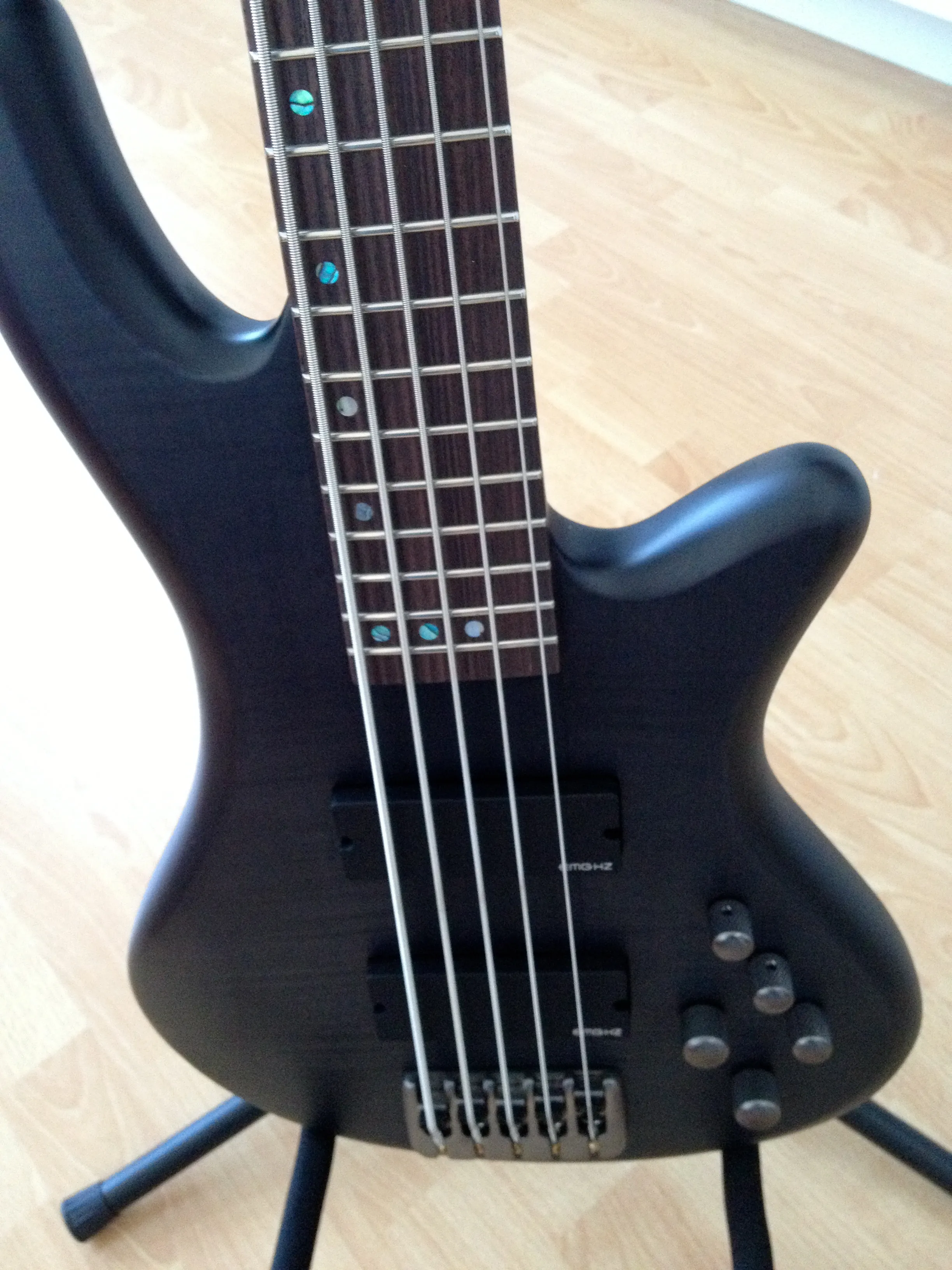
IMG_0923

And then the new one.  Yesterday, I got a new Schecter Stiletto Studio 5. It’s a mahogany body finished in a see-through satin black finish, which is stunning, although hard to photograph.  From a distance, it looks like a stealth bomber’s paint, but up close, you can see through the wood grain underneath.  It’s a 35” scale neck, which means it’s an inch longer than a standard bass, making the sound much more incredible.  (Think the difference between a tiny upright piano and a big concert grand.)  It’s a neck-through, for insane sustain, and it’s got passive EMG HZ pickups and an active 3-band EQ.

The one thing about this bass is that it is HEAVY.  I mean, it’s like if you carried around an M-16 all day and someone handed you an M-60 machine gun - it’s a substantial heft, but it feels really good.  I’ve got a wider strap, but I feel like I’ll need to double down on chiropractic care in the upcoming months.  It’s not horrible, but compared to the light Ibanez, it’s a big step up for me.

I’ve never played a five-string before, and this is a bit overwhelming to me. The neck isn’t substantially wider or thicker than my 4-string, but there are three things going on.  First, that extra inch of scale is fucking with me, and while I can cover the first four frets on a 34” bass with a fret per finger, I need to change my technique here or something.  Second, I’m so used to the bottom string being the E, that I get lost and start doing shit on the wrong string.  Or even worse, my left hand is off by a string but my right one isn’t, or vice-versa.  And third, there’s all of this mental arithmetic of the different possibilities I can use to play the same notes.  It’s confusing, and will take a lot of time.

But - that low B string is absolutely sick.  Just the sound of it rattling away is awe-inspiring. I’m so used to the lowest sound a bass makes as that low E, and the B below it sounds like pure doom.  I went to Songsterr yesterday, and my first thought was to look up some Carcass songs, like off of Heartwork and Swansong, which are both albums that I think purists hate, but that over the years have really grown on me.  I started playing the song “Keep On Rotting in the Free World”, and the first time I hit the open B, I realized I made the right choice with this thing.

I was going to write more about effects, which are also rapidly multiplying here, but I think I need to go practice.  Actually, I need to do back stretches, then practice.