The Wrath of Kon

Dispatches, thoughts, and miscellanea from writer Jon Konrath

Tag: books

Generation whatever

On Saturday, I went to the big Barnes and Noble at the Third Street promenade in Santa Monica, which I guess is just a Barnes and Noble like the one by my house, but it’s got the weird art deco letters on the outside, and I always go there when I’m at the promenade, which is about as stupid as making a special trip to a specific McDonald’s as part of an OCD ritual, when there are a million other locations putting out the same shit.  I also had a $25 gift card to use.  Anyway, I ended up leaving with a couple of books, one of which was Douglas Coupland’s Generation A, which I proceeded to read over the rest of the short trip this weekend.

The book wasn’t bad, a quick read.  I think every review said it mirrors Generation X, but I found it to be a much different type of book.  Maybe it’s because I haven’t read the former book in forever, but I seem to remember it as more of a series of transgressive vignettes that mostly bitch about how the hyper-accelerated culture of the post-boomer generation is… whatever.  This book seemed to have more of a story behind it, a thriller about five people who get stung by bees after bees are extinct, and how everyone is addicted to this new psych med.  The plot got a little stupid by the end, but it really made me miss Coupland’s writing style.  He’s an observationalist, and can really nail these little asides about life, in the way a comedian can in their material.  I don’t have any huge examples of this, but that’s the point; he dials in these little beats about the things his characters observe, and I always like how he can do that.

I think I got into Coupland’s stuff right around the time I left Bloomington, at the apex of the whole Generation X marketing movement.  It was a weird time, when grunge was alive (or was it dead by then?) and heavy metal was dead and everyone who was into heavy metal told the same stupid joke-slash-observation about how “alternative” wasn’t an “alternative” if it was mainstream.  I used to read Details magazine, I think because I bought a copy with an article by Henry Rollins, and I used to scan their various marketing manifestos of what items you were required to buy or consume if you were Generation X.  I used to think a lot of it was stupid, like that I’d spend $700 on a watch that did the same thing as a $19 casio from the drug store, but they also had some author interviews and book reviews that led me to stuff like David Foster Wallace.

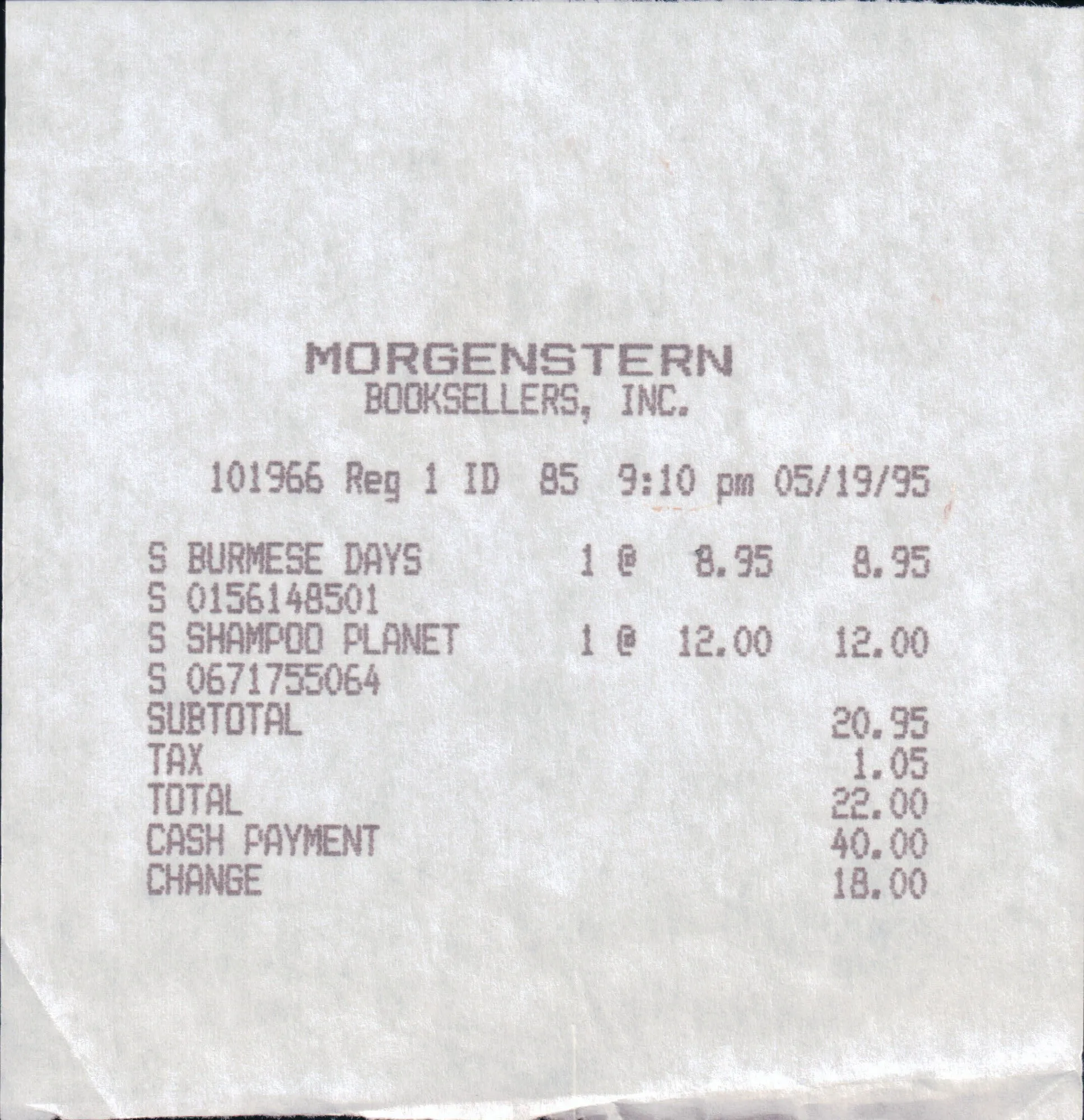
I got into writing in part because of Rollins and his spoken word, but that led me to Henry Miller, and then Bukowski and Kerouac, and all of that made me feel like I needed to find some lifestyle or youth movement or culture, and I knew it wasn’t listening to John Mellencamp and getting blackout drunk on cheap domestics, so I knew it involved leaving Indiana.  So I fell into reading Coupland’s stuff, and I think I read all of his books within a week.  I remember the exact week, because it was right after Larry left Bloomington for Texas.  He left behind an apartment with a month of rent on it, and told me to use it for writing or whatever the hell, and I was trying to pick at my first book, along with filling up the spiral notebooks with whatever came to my head.  And right after that, I was driving over to his place on a Saturday morning, and my car died - it threw the timing belt, and I had to tow it to this repair place out by College Mall.  I walked to Morgenstern’s books, bought all three of his books, then walked to Larry’s place and sat on the floor to read.

For a good chunk of my college experience, I walked everywhere.  But then I got this car in 1994, and spent all year driving everywhere, or sometimes driving nowhere, doing lazy loops around the campus while listening to whatever death metal album I was into that week.  Not having the car made me feel like I was regressing, because I had to pound the pavement with the Reeboks, except now I was out of shape, and didn’t have a nice walkman anymore, and hoofed it in silence.  Plus I now lived way the hell west of campus, which meant a long day of walking.  I really absorbed those books, and they made me want to leave Indiana more than ever.  I didn’t know that a month later, I’d be in Seattle, interviewing for a job that I would get, that would relocate me 2400 miles away and into this world not far removed from the fictional places in his novels.

I should probably re-read Generation X now.  I am guessing it has not aged well, but to be fair, neither have I.

Jesus' Son

I’m running out of things to read in the house, or at least I have the perception of running out of things to read.  I probably have at least a hundred or two books that I haven’t read, so maybe I should say “things I want to read” or “things I should read”.  I feel like I need to be reading more every day, but I also feel like I should only be reading things that feed directly into what I want to write next: either things that are stylistically similar, or the non-fiction that will fill my brain and eventually dump out onto the pages in my fiction.

So the other night I grabbed a copy of Denis Johnson’s book Jesus’ Son.  It’s a short little book, maybe 150 pages in the pocket edition, and each page is pretty terse.  Johnson is, at least here, a very minimalist writer, the kind of prose that can completely kick your ass in the fewest words possible.  He’s the kind of writer that can spin these infinitely interesting characters, with the kind of quirk that really sticks in your head, but he doesn’t do it by spending pages and pages laying down details.  Sometimes, it’s just a sentence or even a few words of a sentence, but I feel like he burns in these people more than when I spend chapters trying to explain the same type of thing.

This book is a collection of realist short stories, in what I would pejoratively call “MFA fiction” if a wannabe was trying to do the same thing.  I see far too much of this when I’m reading submissions to the zine, and I guess with ten times as many people in MFA programs these days, there’s a lot of it circulating.  Normally, this stuff bores me to tears, but Johnson is one of the few that can make this work.  I haven’t really thought about what the difference between good fiction and “MFA fiction” is, and just by mentioning this, everyone with an MFA is going to be up in my shit about it.  Further, the common theme of the stories is an addict that’s hanging out with other junkies and fuckups, and their various escapades.  It’s a far too common trope in that space of writing, but he does manage to pull it off without being cliche.

The thing about Johnson doing this Raymond Carver sort of writing is that he makes it look so effortless, that it makes me think it would be easy to do.  And of course it isn’t.  And it’s dangerous for me to read this kind of thing and get some wise idea that I should get back to writing this kind of modernist, realist fiction, and start thinking about beating the dead horse that is this unfinished book about Bloomington and forget about the kind of absurdist thing I’m trying to chase.  Fortunately, I’m writing every day in this automatic writing thing, just doodles, and when I tried to get into this kind of writing again, I failed horribly, and that made it easy to move on.

Johnson does make me think of flashes of things that probably could someday become stories, and that’s valuable because I’m at the point where I feel like I’ve been wrung dry of material.  Case in point is this blog: any time I think of something interesting to say about the past, I look here and realize I wrote the story back in 2006.  I don’t feel like a lot is happening here day-to-day, at least the things that I could spin into stories or posts.  And I feel like I told the story of Jim getting his kid caught in a vending machine at least five times in the archives here.

I am still struggling to get the next book moving.  I keep thinking I need to write some big, plotted, narrative book that could go toe-to-toe with any genre writing out there, or at least get me out of the situation where I can’t explain my book in a single sentence.  My usual thought is that I should be writing another Rumored, since it’s the book that I’m happiest with, and it’s my book that’s sold the most copies.  But there’s also this huge disconnect for a lot of people who can’t deal with nonlinear fiction, and I feel like one harmful thing the Kindle has done is made the audience for books much more trained to only like heavily plotted genre fiction, or at least that’s who’s buying most of the books these days.  I don’t want to write vampire romances, but I wouldn’t mind turning out a book like Leyner’s Tetherballs of Bougainville, either.

Re-reading Infinite Jest, part 2 of 863

So I’m now just shy of 300 pages into my re-read of Infinite Jest, which is just over 25% of the way through according to the Kindle, although I think it’s closer to 1/3 done when you consider the last hundred-some pages are all endnotes.  Here are more random observations as I continue:

  • I think reading it on the Kindle does make it seem to go faster than print.  I don’t know the exact numbers or metrics, but it seemed like one print page of the hardcover contained something like 1200 words, where a normal trade paperback contained something like 250-300 words, meaning each page of IJ seemed four times longer.  With the Kindle, each screen has the same number or words, more or less, as any other book I read, be it Vonnegut or George Carlin or Tolstoy.  This makes it seem like the pages are going by faster, although it obviously takes several page turns to get through a single virtual “page”.
  • The endnotes don’t seem to be as much of a pain in the ass as they were back in 1996.  Part of that may be that they lend themselves to hypertext much more, and the Kindle’s links are more convenient than flipping between two bookmarks.  Or it could be that if (and once again, numbers are bogus) there were two endnotes per printed page, and there were six page turns per printed page, it would seem like there were three times fewer endnotes per “page”.
  • It’s so interesting that Wallace created this near-future world that happens in what others have determined to be 2009.  I’ve always disliked when near-future books predict worlds of jetpacks and robot butlers in the year 1991, like pretty much every Philip K. Dick book or 60s pulp Scifi novel.  DFW managed to create a world that largely felt like 1996, except for tiny changes in things like video conferencing and politics and TV media formats.  And that’s pretty much what has happened.  Granted, teleconferencing is just starting to take off because of Facetime, and the DVD and later BluRay were the displacing technologies of video entertainment, but his Boston of the late -00s is pretty close to the Boston of 1996, which I enjoy.
  • There is, however, the issue that this near-future now takes place in the past.  When it was supposed to be 13 years in the future, there was much more license for suspension of disbelief.  Now that it’s three years after the events should have taken place and the futuristic film cartridge system has not been invented, you need to not think about stuff like that.
  • I notice that in some ways Wallace can out-Leyner Mark Leyner.  I never fully understood the relationship between the two, and thought DFW eclipsed Leyner in greatness and popularity, but it also seems that Wallace admired or looked up to Leyner’s work prior to his own fame explosion.  I’ve always thought Leyner had no real peers in his absurdism and almost sketch comedy approach to writing, and always thought DFW was less ha-ha funny and more NPR/Franzen funny or whatever.  But then I see some carefully-placed reference or innuendo in part of IJ that would seem even too absurd for Leyner’s humor.
  • It amazes me how IJ pads itself with pretty much every inside joke or urban legend that Wallace heard over the course of a decade, but manages to pull it off so all of this stuff is an integral part of the story.  At points, it’s almost like he was looking for some excuse to kill pages, like he was getting paid by the word, and said “aha!  I’ll recycle the Jamaican Toothbrush Bandit story, and make it part of Gately’s back story - that should eat up a good 5000 words.”  But of course, it always works.
  • I have the unfortunate issue that whenever I read about Orin, in my mind I envision CJ, the punter who was on Real World: Cancun.

That’s all for now. I’m keeping track of my page count over on goodreads, if you want up-to-the-minute (or -day) tallies.

Re-reading Infinite Jest, part 1 of ?

Okay, I gave in and started re-reading Infinite Jest the other night.

I’m 8% finished as of last night, which is roughly like running the first two miles of a marathon.  It’s enough that I’m getting some momentum, but so little that I feel like it could take me a while.  I dug through my 1996 paper journal last week and found that it took me something like 20 days to read it last time.  Of course, I did not have a TV, was single, had no social life, and this was before Facebook, Twitter, and a million other things were invented.  In fact, I think I was still dialing in at 14.4K back then, and my computer was a Linux machine that wasn’t running X, just a naked command line prompt on a 12” monochrome monitor.  The closest thing I had to a tablet computer was made by Mead, spiral-bound and college ruled.

My first strategic move on this attempt was to eschew the print edition.  The only print copy of the book I own is a hardcover first edition, signed by the author with the “smiley face” next to his name, which might or might not be more rare or indicative that he was in a good mood when he read in Seattle.  The print copy killed my wrists last time around, and this was long before I’d developed all of my wrist, back, neck, and other chiropractic RSI issues.  When I read in bed, I tend to hold the book with three fingers and my thumb on the cover, and my pinky under the book, as a sort of stand.  This means when a book weighs any tangible amount, it strains my small fingers, and if that book is a thousand pages long, it starts to feel like they’ve been slammed in a car door.

So I went with the kindle ebook.  This solves another problem, the “how many bookmarks do I use?” issue.  Unless you memorize page numbers in some Rain Man-esque fashion, you’re going to use at least one bookmark on a read of the paper edition.  Most people agree you should use two, with one marking where you are in the body of the book, the other marking where you are in the endnotes.  Some people also advise you to keep a bookmark on the page describing the Subsidized Time timeline.  Nobody ever told me about that, but there weren’t web pages about how to read IJ in 1996.  That said, there also wasn’t a wikipedia page I could reference instead of using a third bookmark.

In the kindle edition, endnotes are hyperlinked.  And thankfully, there’s a “return to text” backlink after each endnote, so you can quickly get back to the text.  The only issue with this is that the kindle software will return you with the line containing the endnote reference at the top of the screen.  So, for example, if you’ve got 30 lines per screen (arbitrary - I didn’t count) and on line 16, there’s endnote 44, you can click that, read it, click “back”, and that line will now be at the top of the screen, not on line 16.  That means you lose some context and might need to back up a page, depending on how you read.

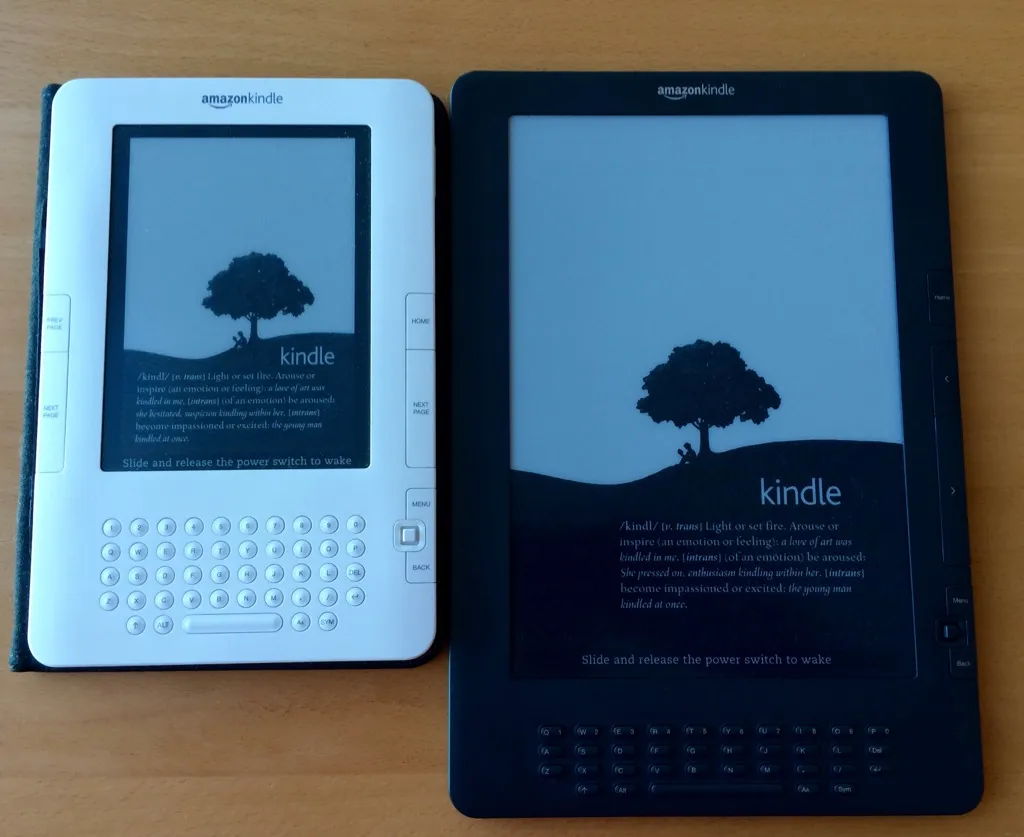
I started reading on my iPad, and then switched to my actual Kindle.  The advantage to the real Kindle is that it’s paper-white on the e-ink display, and it doesn’t have Facebook, Twitter, and a bunch of games on it.  But I ended up going back to using the actual iPad.  Why?  Because it’s a bigger screen, and because clicking on endnotes is much easier.  I have the keyboard Kindle, which requires you to navigate around with the little stub of a joystick to get to an endnote and click on it.  Then you have to wait a second for the screen to refresh, and then you have to repeat the procedure.  It’s much faster and less of a hassle to do it on the iPad.

Another huge advantage to reading on the Kindle is that I can click a word and the definition pops up.  I’m finding that Mr. Wallace has a much more, um, big vocabulary than me.  I don’t know if looking up definitions like this is teaching me new words, but I’m much more likely to click on a word rather than dig out a copy of Webster’s.

I’m finding that this time around, it’s been much easier for me to get in the swing of things, but I don’t know if this is because I already know the general plot of the thing.  When I read it in 1996, I didn’t know a single other person trying to read it, and there was no wikipedia to help me.  I am avoiding any secondary reading during this pass, though.  I’m not looking at any of the blogs or fan sites, and I haven’t bought Elegant Complexity or any of the other reading guides.  No sherpas, no supplemental oxygen on this climb up Everest.

My impression so far is that the book is reminding me so much of 1996 and the events around then.  I had a horrible time of it back then, something I’ve alluded to on here, but something that was incredibly painful to read about when I dug around my paper journals back then.  I was about a year into my stay in Seattle, a year removed from my college life.  I hadn’t seriously dated anyone since the end of 1993, and was certain I never would.  I had some kind of stomach disorder going on and was certain it was gall bladder cancer or unchecked appendicitis (it wasn’t), and I seriously didn’t know what the fuck I was doing with writing.  I now look back at Rumored as my favorite book I’ve written, but back then, I spent all of my energy trying to convince myself I needed to stop working on it entirely.  All of this influenced my perception of the book, and now as I navigate his prose, it brings back a lot of those memories, which is both good and bad.

I don’t have any other great insight at this point, but I felt that if I kept mentioning the reading project on here, I’d stick with it.  So, there you go.

Things I Remember About Infinite Jest

IMG_0611

I first heard about David Foster Wallace’s Infinite Jest from the 1996 profile in Details.  (I used to subscribe to Details for some reason; I’m not sure why.)  I didn’t have a TV then, so of course I ran to the bookstore, bought the hardcover, and forced myself to read at least 50 pages a day over the next few weeks and get through the whole thing.  And I did, and it was awesome.

And now it’s 16 years later, and I’m trying to start another book, and whenever I ask myself, “what the hell do I want to write?” of course IJ is on the short list.  And I think I should re-read it.  And I bought it on the Kindle, because one of my chief complaints about the book was that at the time, I lived in a tiny 100-some square foot studio apartment with no furniture, and slept on a twin mattress on the floor, and the only way I could ergonomically handle that big chunk of dead tree was to lay on my side with the book on the floor, and completely fuck up my neck and back twisting around to look at the pages.  And of course, I have not re-read it since, because I would have to invest a month of time into it, and I can barely focus long enough to type 140 characters at once.

But I keep trying to think, what the hell do I remember from that book?  So here’s the list.  It’s probably filled with spoilers, so you’ve been warned.

  1. Lots of end notes, but you already knew that.
  2. The one guy was a pro football player, and was a really shitty player on his college football team, but he knew about tennis and one day when he was pissed off, he kicked a football like a tennis ball some insane number of feet, and that led to a career in the NFL.
  3. I knew nothing about the NFL at the time, and was not sure if there was a team called the Arizona Cardinals.  (This was before wikipedia.)
  4. The guy shaved against the grain, like his dad taught him, which was apparently wrong, but I did the same thing and wondered if I was going to somehow give myself some incurable skin disease.
  5. The one girl with the messed-up face was using some toothpaste that was supposed to rebuild your enamel.  Hers was messed up from smoking crack; my teeth were pretty much totaled at that point from drinking a six-pack of Coke every day, and I was in the middle of getting everything restored, and kept thinking about trying to find some similar product.
  6. There was a big discussion about pot being physically addictive in some small percentage of people, and I remember having a similar argument with someone at work once.
  7. A guy killed himself by putting his head in a microwave oven.  He accomplished this by cutting a hole in the door so he could stick his head in it while it was closed.  Shortly after I read this, my microwave oven died and I freaked the fuck out, convinced the coincidence was somehow related.  (And also because I had this thing of Hamburger Helper cooking in it, and you can’t really eat that shit cold and uncooked, and putting it on the stove was beyond my skill level, so I drove to Target and bought a new one at nine at night.)
  8. The part of the story about how that girl ended up with a messed-up face was not explained right off the bat, which I realize is something you do to pull the reader into continuing with the story, but every time this happened in the book, I was convinced I’d somehow missed that part of the backstory by skimming over it, and would go back and re-read, searching for answers, something that made the book take far longer for me to read.  (I am in no way criticizing DFW’s plotting and foreshadowing ability and/or decisions; I’m just saying I’m a poor reader.)
  9. I was going through a very significant depression in the fall of 1996, and the way DFW described the various depressed people greatly disturbed me, mostly because his descriptions were so goddamn accurate, and I greatly felt like I’d end up like one of them.
  10. I thought the ending was the most unresolved ending in the history of literature.

And that’s it.  I do not remember anything else.  So yeah, I need to re-read it.