The Wrath of Kon

Dispatches, thoughts, and miscellanea from writer Jon Konrath

Tag: consumerism

Day 4

IMG_2617

I’m not alone here in saying that things got weird fast here.

I’ve been debating writing about any of this. I’ve seen every hot take possible on COVID-19, and I’m seeing endless posts about being shut in, suddenly having to work from home, losing work, panicking about food and medical care, and so on. And in the current climate, I feel like putting anything out there opens me up to “oh, you think you have it bad?” attacks. I feel the same way about writing almost anything these days. We’ve fallen down this pit of stupidity that makes talking about almost anything pointless.

But, I need to keep writing every day. It’s more important than ever when the only other choice is to freak the fuck out about everything. And also, I know someday, I’m going to want to look back and see what I was thinking as World War C unfolded. If you look down at the sidebar here, it’s missing a few months of dates in the fall of 2001. This wasn’t a conscious decision; I was just working on finishing Rumored and was too busy to run this thing. And now I wish I could go back to read entries from September and October of that year, to see what I was thinking the last time the world was ending.

---

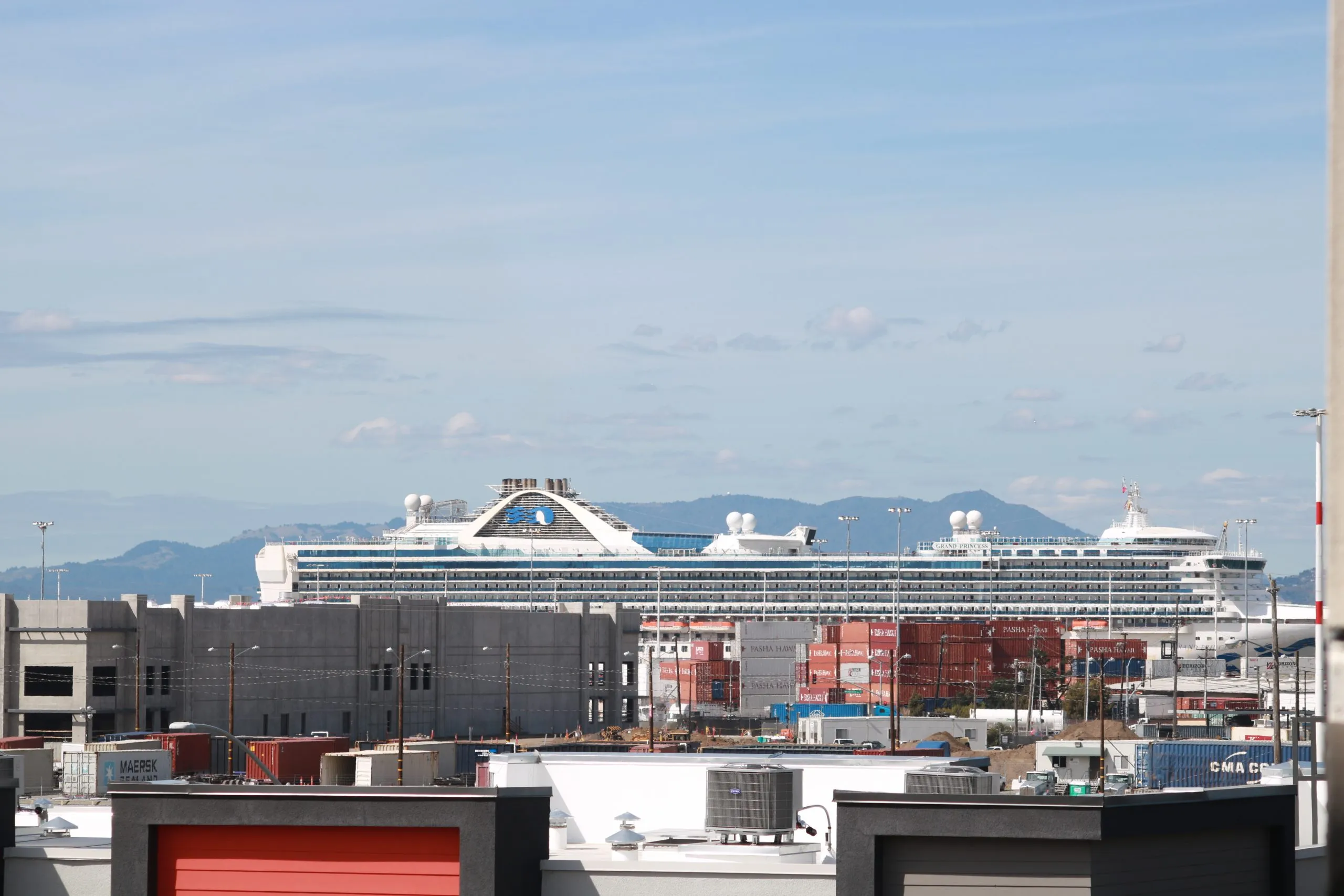
So first, the boat. The fucking boat. That Princess cruise ship docked at the Port of Oakland like a week ago. (I don’t even know when it was. The last week seems like a year and a half long.) The ship was about four thousand feet from my house, and if I was up on the parking garage connected to our building, it was plainly visible. (It’s not visible from our house, because they built another set of townhouses right in front of us, blocking our view. That’s another point of aggravation, but what can you do.)

Despite it being that close, it was a world away. No danger of infection, no view of the evacuation, just a giant symbol of how shit was about to go down, sitting on the horizon. The optics of it were bad — “well, we can park this thing in Oakland, because nobody lives there.” Thanks a lot, fuckheads. I understand the logistics of deep-water harbors and all that, but I’m sure if Atherton had a fifty-foot draft depth berth next to it, there’s no way the ship would have ended up there.

I also got the usual craziness from relatives who assumed I was ten seconds from death, like I do every time there’s a forest fire six hundred miles away or a 3.2 earthquake outside of LA. I had a real problem after 9/11 in that for a lot of people, I was their closest connection to the attacks. I did not like being in that position, being the face of the disaster, especially from people who generally had zero interaction with me, and suddenly they had a best friend who was in the towers when it collapsed, even though neither of those things were true.

---

The shelter-in-place happened quickly. At one point, they said seniors should think about staying home, and hours later, we all had to go on lockdown. Things changed fast, and in a world of clickbait media and dumb algorithms, it was difficult to get straight answers on anything. There were more questions than answers on Monday, and I didn’t wrap my head around the enormity of the situation as it was happening.

I did ease into this a bit since I got back the week before. I resupplied at Target on Friday afternoon, thinking everything would be wiped out by the weekend. I filled my prescriptions, bought toilet paper, got cat food, did all of my errands. I’m glad I did, because by all accounts, Monday’s midnight shelter order turned every store into a nightmare. You probably saw the pictures, a million times. Disaster porn is big these days.

The Saturday before, it was rainy and cold, and I drove out to Pleasanton to walk Stoneridge mall. I was slightly apprehensive about it, but I figured if I kept my space and didn’t touch anything, it would be no problem. The mall wasn’t empty, which surprised me. I think that was more scary than if the mall was completely empty on a Saturday. The quick walk made me super anxious and nervous, and I had to get the hell out of there.

That mall is now closed — all Simon malls are. The only malls that are open at this point are insane or stupid. A month ago, the whole concept of the mall in general had a shaky future at best. Now, malls are absolutely fucked. Some of the more prosperous large chains are withholding their earnings projections statements. Every anchor store imaginable is completely dead. None of the mom-and-pops will be able to survive. At least in the bay area, malls that were living day-by-day are going to be shuttered for months. At best, they’ll be temporarily reopened as virus hospitals. Most will probably end up in foreclosure, chained up, left to rot. Maybe in five or ten years when the market is back and REITs are thinking about redevelopment, they’ll get rebuilt into apartment complexes.

I wanted to get out of the mall nostalgia thing. Looks like that decision’s been made for me. Hang onto your photos, fellow mall-walkers. It’s all we’ll have left of the era of indoor shopping.

---

I’ve been working from home for almost ten years now, so this is business as usual for me.  I never leave the house anyway, and all of my meetings are always on Zoom. If anything, things are more chaotic for me because I simply have too much work to do. Not to get into details, but I have three really big things going on, plus an endless barrage of update meetings on what’s happening, how we’re responding, etc. Also, there’s a lot more chatter on Slack, in email, on Zoom. One of the reasons I love WFH is that the eight-hour office work day is really about two hours of solid work, and six hours of social interaction and distraction and annoyance and ritual. Remove that, and I can do three times as much work, plus still have time for cat herding and whatever else. But a lot of other people are getting stir crazy over this, and it’s ramped up the amount of online distraction. This is in addition to the bad news every two minutes on the rest of the internet.

The structure of my work day routine has not changed, for the most part. Work all day, try to take a walk at lunch (that’s still allowed), try to write (and don’t), then watch TV until bedtime. The weekend is going to be another story. I usually walk around my house during the week, and spend the weekends driving somewhere else to walk or hike or shop or whatever. Now, I can’t officially do that. Not sure what I should be doing to stay sane. And this will go on for weeks, or maybe more. I know, #humblebrag, I still have a job and a roof over my head and health insurance, and I’m worried about park access. I’m mentally ill, go fuck yourself, see the second paragraph above, and feel free to start your own blog.

---

I think the worst part of all of this is the resonation between this and 9/11. There’s that overwhelming feeling of panic saturated into everything. The economy is in free-fall, and not coming back. Major industries like the airlines, auto production, retail, restaurants may never recover. Many things we took for granted two weeks ago have completely vanished. A large swath of the public is completely fucked. And none of this is even including the tens of thousands of people who are going to die from this.

I don’t officially have PTSD from 9/11, at least from like a diagnostic standpoint. And if I did, I’d be too ashamed to admit it, knowing that people in my office died, and they had family and friends and spouses who were directly tied to it, while I was just an observer. But sirens can get me ramped up. The smell of burning electronics has the same scent as the powdered concrete and metal smoke that hung over lower Manhattan, which doesn’t exactly have a calming effect on me. I tend to get too amped up over natural disasters and emergency evacuations and mass-panic situations like that. And having a helicopter hover a thousand feet over your house 24/7 for a week so the channel 2 news can get a picture of a fucking cruise ship isn’t great for this predicament. All of this, all of the uncertainty and the plummeting economy and the thought about if the grocery store is going to be open in a week and if I’ll still have a job by then or if banks will still be open — there are strong parallels, ones I can’t entirely put on the back burner and ignore.

This situation makes me think way too much about the fall of 2001, the feeling that all of lower Manhattan was going to shutter, send everyone back to whatever square state they came from, leave behind a skeleton crew of locals and a few bodegas, boarding up everything else, turning into some burned-out dystopian nightmare like the 1977 shown in every Son of Sam or Ramones movie. When I walk outside with nobody around, almost no cars on the road, no planes overhead, it reminds me of that same feeling I had eighteen and a half years ago. It’s scary. It’s something I wish I could ignore. It’s something I can’t. I have to work on that.

---

Not much else. Working. Watching TV. Trying to not look at my 401K, which I think is gone now. Playing Out of the Park Baseball, and simulating a season per month, now that the 2020 one is probably dead. This week, my team is 61-60 and three games out of the wild card, with 40 games left. (It sims a game every thirty minutes.) The 1971 Dock Ellis is the ace in my rotation, and my outfield is a 1984 Tony Gwynn, 1976 Ron LeFlore, and 1934 Jo-Jo Moore. If you’re a fan of the national pastime, spend the twenty bucks and get a copy. Drop me a line when you do, and we can start a league or something.

I should be writing. I’m not. I should work on that. Hope everyone else is surviving out there.
stupid list #167

  • I just paid my annual hosting bill for this site. It’s a bit depressing, because when I calculate how many posts I make per year, it averages out to like ten bucks per post, unless I make a whole bunch of entries in the next two months.
  • The Apple Airpod Pro release made me think I should make a lengthy post about every pair of headphones I’ve bought in the last few years, and why they ultimately didn’t work out. I have a bit of a problem when it comes to headphones, and can never find something that works perfectly. Then I spend an inordinate amount of time shopping for something that maybe would.
  • I’m 100% sure if I did buy Airpods, they would fall right out of my ear and I’d lose them, anyway.
  • I am not near the fires, and I haven’t lost power, so let’s not get into that.
  • Caviar got bought by DoorDash. This also pisses me off, because DoorDash is a horrible company and Caviar has been great. I realize food delivery is lazy, but I am lazy.
  • There is this outdoor mall thing about a mile from my house. (Bay Street in Emeryville). Anyway, they at one time had like a dozen restaurants, and now they have one. In the last couple of weeks, Buckhorn and Fuddrucker’s closed, and Rubio’s closed a bit before that. Now there’s an upper level where every single store is closed except California Pizza Kitchen. I eat at CPK way too much, but when that closes, I’m done.
  • There’s also a Barnes and Noble in that mall, and I used to hate B&N and see them as this company that killed indie book stores (I talked about this before, sorry) and anyway, it’s only a matter of time before they shutter that place, too.
  • This outdoor mall was literally built on an Indian burial ground. I used to go to Weight Watchers with a retired Archaeology professor who was hired by the builders to dig around and identify graves and whatnot. Maybe that’s why they can’t keep any restaurants going there.
  • I think they discontinued the deodorant I have used since like 1993, and I have to switch to another. That kind of thing really pisses me off.
  • I hate to sound like an old person when I talk about this stuff closing, but it’s depressing, and makes me think a lot about how everything dies, including all of us, and I can’t process that. When I hit 50 soon, look for this worry train to go completely thermonuclear.
  • Speaking of DoorDash, I just placed a Caviar order at a place that’s usually pretty quick to fill deliveries, and got a text now saying the order will be late. The last time I ordered from DoorDash, they did this like three times and then completely no-showed. And so it begins.

The Death of Northgate

786px-Bon_Marche_at_Northgate_1950

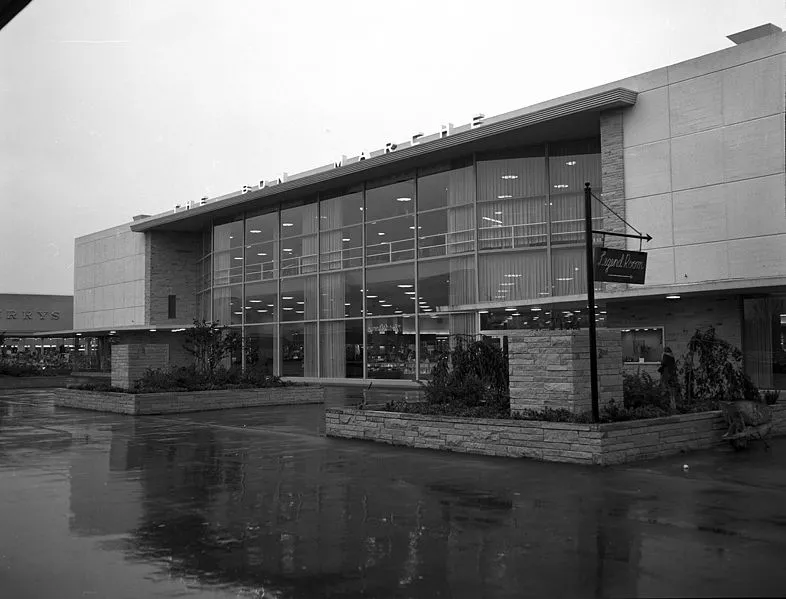
Bon Marche at Northgate, 1950 (Credit: Seattle Municipal Archives from Seattle, WA [CC BY 2.0 (https://creativecommons.org/licenses/by/2.0)\])

Looks like Northgate mall in Seattle is quickly winding down. The JC Penney already closed, and the Macy’s and Nordstrom are in the process of shutting their doors. The plan is to demolish the main stretch of the mall, leave some of the external “village” buildings that were tacked onto the front in the mid-00s, and then build an NHL practice facility and some housing. I hate being nostalgic about this place or any mall in general, and I have mixed feelings for a few reasons.

When I lived in Seattle from 1995 to 1999, Northgate was sort of my default mall. It wasn’t my favorite mall, and it wasn’t the best one in the area, but it was the closest to my house, and I ended up there at least once a week. When I first moved to Seattle, I stayed at my friend Bill’s place in Mountlake Terrace for a month, and took the bus down I-5 every day for work. And every day, we’d pass this sprawling shopping center, just off the highway. One thing I remember clearly is it had a giant two-screen movie theater on the north side, with a changing-letter marquee where the words were taller than me, advertising the movies Clueless and Apollo 13. So when I got a car and had some time on a weekend, it’s the first mall in Seattle I visited.

After I moved to First Hill, this mall was a straight shot up the highway for me. Hop on I-5, drive a hundred blocks, exit, done. Even though I worked next to the much smaller Factoria mall across the lake, I ended up driving to Northgate pretty much constantly. Between the Denny’s and a smaller local pancake place, I always had a default diner there too, so every Saturday was spent at this mall, more or less.

Northgate is arguably the first mall in America. There are like a half-dozen different malls that claim this, and I’m too lazy to research which one is right. But they built two strips of stores in 1950, then covered it with a “sky shield” and eventually sealed off the whole thing in the early 70s, making it an enclosed mall. They later built one of the first Nordstrom stores, the big two-screen theater, and the other anchors. Later additions while I was there in the late Nineties included a Toys R Us, a food court, and a general remodel. In the 00s, Simon did their usual “lifestyle addition” thing with a Potemkin village of outward-facing smaller anchors on the west side of the mall (one of them always being an Ulta Beauty), and removal of the theater (and the giant totem pole that was in front of it.) A Target and Best Buy went in across the street, and the surrounding landscape of the area has completely changed five times since I left. There were also various anchor and store flips in the last twenty years. I wasn’t there, you can look it up.

I honestly found the architecture and layout of Northgate to be a bit boring, and deceiving. It looks small, but it’s gigantic. When I lived there, they had four anchors, all of them softlines, which bored me. (JCP, Nordstrom, Lamonts, Bon Marche.) And the entire mall was a single hallway, a straight 1,500-foot shot with stores on either side. It didn’t have a winding floor plan, so it seemed smaller, but if you walked from anchor to anchor twice, that’s over a mile. It had no vintage charm, just high ceilings and faded white everywhere, like an airport concourse. It also had few stores where I really shopped. But I still ended up there a lot, and spent an insane amount of time walking up and down that long hallway, looking for… I don’t know what. The drab non-decor was replaced during the 97-98 remodel with fake-ass timber accents on the high ceilings that made it look like a ski lodge, which was all the vogue in the time in the PNW.

What attracted me, other than the proximity to my house, was that Simon malls all had this universal emotional antiseptic feeling to me. Wandering that place felt very similar to walking through College Mall in Bloomington, or University Park Mall in South Bend, even if they layout and the stores were different. Especially in my first year there, I was extraordinarily depressed, missed Bloomington a lot, knew almost nobody, didn’t know where anything was, didn’t have a TV, and was always broke. I later found other malls further out, and other stores to buy music and books and food. But it became a default place to mope around, walk a few laps, and then go home and try to write.

I didn’t buy stuff in that mall much. I only went to that movie theater a few times (I remember seeing Event Horizon there) and I used to pop in the B. Dalton every time I visited. Bon Marche had a Vans shoes section, and I’d buy a pair each year like clockwork. A Wizards of the Coast store was always worth a browse, even though I didn’t play D&D or Magic at the time. An office supply/craft store provided me with a lot of fancy pens I’d later lose. The mall had an attached drug store where I’d frequently load up on cold medicine, and a QFC grocery was good for a frozen dinner or two. After Toys R Us arrived, I’d pop in there for Nintendo 64 games. But more of my shopping was around the area, like the Silver Platter records just south of there.

Aside from the strange nostalgia for the place, and the fact that it will all be gone soon, is the fact that the coverage around the remodel sort of pisses me off. People in Seattle have always hated malls, it seems. They’ve always talked about how horrible Northgate was, even when it was a top-grossing mall. Now, the YIMBY crowd is super excited about the death of the mall, mostly because we’re all supposed to ride bicycles and something with a parking lot somehow triggers them. I don’t follow Seattle redevelopment news much, but we have our own vocal YIMBY contingent here, so I imagine the more-housing-at-any-cost crowd is celebrating the mall’s death enthusiastically. Seattle has 100% changed since I left, and I get it — cities change. Since I left, Amazon has hired more people than my home town has, period. So, housing crunch, people hate malls, yada yada, you already know the rest.

It’s been over twenty years since I saw that place, or any of Seattle. I still miss it, because it was such a key time in my life, my first four years out of college, which felt more like a decade. But it’s an extreme case of “you can never go back,” because so much of the city has changed.

Wish I had some old pictures of the place, but that was in the film era. I do have some pictures of my VW in the parking lot, and you can almost sort of see the east entrance of the mall in the background of one shot. I used one of the pictures for the third edition cover of Summer Rain, but you can’t see anything but the pavement in the zoomed-in shot. (And fun fact: the license plate in the pic is a photoshop job. And Indiana didn’t had front license plates in 1992, so that’s wrong, too.) Anyway…

Holes

IMG_8939

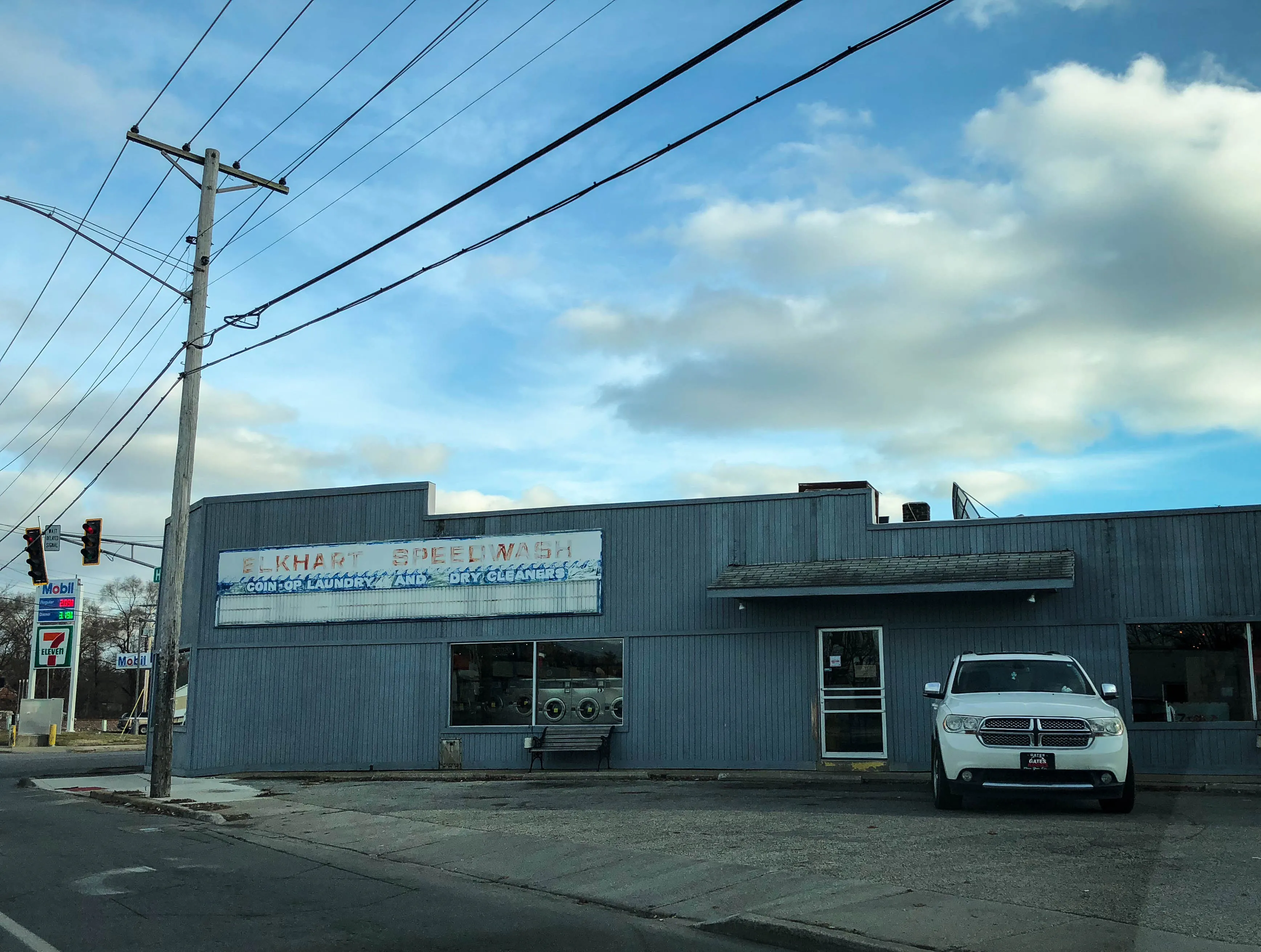
I’ve been back from Indiana for a while, but I’ve been thinking about something I can’t exactly shake, something I saw during my drives around old stomping grounds. This was further drilled into my head when my pal John Sheppard came out to Michiana for a day-long Konrath Reality Tour leading all through Elkhart, Mishawaka, and South Bend. As we drove around, and I pointed where things were, what used to be something else, I noticed a common theme: holes.

By holes, I mean a few things: abandoned properties, massively downsized operations, national-brand grocery stores that were now Mexican bingo halls only open a day a week, the endless regional-brand drug stores that are all a sad Dollar General now. There were also blighted properties, weather-beaten properties, faded and un-maintained properties. But beyond that, there were holes: Blighted properties that would never come back, or that had completely vanished, plowed under and destroyed, vacant lots that would probably remain vacant forever.

It was disheartening and depressing comparing the geography of my childhood in my mind to the current landscape and what still remained. For example, the area of Dunlap that was once the main drag when I was in high school is largely bulldozed and gone. The two-mile strip of US-33 from maybe CR-13 to Hively has lost a majority of its businesses. I’ve already covered Concord Mall a million times, but there’s that. Then there’s my old Taco Bell, sitting abandoned for years; the Arby’s next to it is a vacant lot; the tile place on the other side was torn down by the city because it was blighted. The Astrobowl bowling alley is leveled; the Shakey’s pizza is leveled. The Aldi’s grocery store was abandoned, then was briefly a Guatemalan fruit stand, but is now abandoned. The place next to it was I think a Goodwill; abandoned. Optical store, empty. Bank, empty. Martin’s grocery store, they started rehabbing it, hit asbestos and a leaky roof, and abandoned it half torn apart. Movie theater, abandoned. There’s a small strip mall that had a band instrument place and a furniture store; half the slots are empty, and it has a gold and pawn and a tattoo place. A long, long stretch of this highway was eminent domained to put in a US-20 bypass exit, and is eerily vacant, never redeveloped. This is all within two miles, and there are a lot of other parts of the city also pock-marked with similar holes.

I don’t want to get into a political argument about the wage situation or how Elkhart is being made great again by wage-labor jobs that will all vanish when gas hits four bucks a gallon again. That’s not the point; the point is, it seems like a lot of retail landmarks have vanished, and haven’t been replaced by anything. Some of this is because of Amazon, I’m sure. Some of it is Walmart killing off mom-and-pops. Same with big venture cap hostile takeovers to pick the old retail giants clean of any value and leave them for dead. (I’m talking about you, Sears.) Some of it is that the remaining nationals and regionals have moved to other locations, like the swath of businesses south of Elkhart, or the constant growth in Mishawaka and South Bend. There’s also the possible case that the area was just massively overdeveloped when I was a kid. In the pre-Reagan years, a good investment was developing real estate like malls and using accelerated depreciation to reap a greater tax deduction. (See also.) Elkhart may not have been a city big enough to support two malls, a vibrant downtown, and the suburban Dunlap retail corridor, all of which are gone now. (The two Walmarts are doing okay, though.)

Other reasons: a lot of gas stations of my youth are gone, scraped bare and vacant. That’s probably rusty underground tanks that were easier to abandon than clean up. A lot of these have also become used car lots, the u-work/u-drive type that quickly flip auction sale cars at predatory interest rates. But if it can’t become a car lot (or a church - lots of those there) it becomes a vacant lot. The same environmental issues are also an issue for rehabbing old architecture for new use. The Martin’s grocery store I mentioned is a prime example, and one that has happened many times. Asbestos, perpetually leaking roofs, piss-poor insulation and bad HVAC (try heating 100K square feet when it’s 45 below zero out, like this week), sinking and broken foundations that were laid on the cheap back during the construction boom. and just bad configuration and layout which would require more than just a full gut.

There’s also the “white flight donut” going on. In the Seventies, everyone left the inner city for the suburbs, where subdivisions were hastily built from plowed-up cornfields. (That’s where I spent my childhood.) When those quickly-assembled houses fell apart twenty or thirty years later and their owners retired, they moved further out into the country. In some American cities, when this happens, you get the “donut” effect, when the core downtown is gentrified by yuppies. (See also Chicago, or even Goshen.) This hasn’t happened in Elkhart, but the suburbs that were created when I was a kid aren’t as active as they used to be.

I recently read the book Obsolescence: An Architectural History by Daniel M. Abramson. It brought up this concept that I never really thought about, and is contrary to most of the old retail/dead mall/preservationist thought I see on various blogs. The thesis was that architecture has planned obsoleteness, just like that three-year-old phone of yours that won’t keep a charge anymore. There is an idea that a building or a house is built for forever, that it is a landmark that will last an eternity. But historically, starting in the Sixties, architects moved to a frame of thought that buildings had a shelf life. It was cheaper to make something that only lasted thirty years, and this also fit into the general tax code, as I mentioned above. But also, if you designed something trendy in 1961, it would be played out in 1991, and you’d level it and start over.

There’s two sides to this school of thought, and I’m sure this horrifies some people. Just the idea that something would be destroyed after one paid so much, both in money and ecological impact, would seem disturbing to some. But it’s something I think about a lot when I see these buildings that basically implode and vanish. There’s no money in rehabbing these buildings, replacing them with vibrant businesses. It’s more economically viable to leave them blighted. It’s a real paradigm change to think of housing and property to be a temporary investment, an expendable purchase, instead of something you buy forever. Most people can’t deal with the mental concept that a purchase like a phone or a car isn’t designed to last forever, so this school of thought is beyond them.

I guess the thing that’s sad to me is that it’s one thing to think that buildings become obsolete and should be replaced when their time is up. I see a lot of that here in Northern California, but here the movement is upward. Single-story houses are replaced by townhouses; single-floor stores are replaced by shopping centers. Old corporate headquarters buildings are torn down and replaced with modern ones that are several times the size. (See also my old office.) But the value of land here is so high, it’s a no-brainer, aside from the nostalgic component, to scrape an old building and replace it with a higher-grossing structure that can do more, hold more, make more money.

In Elkhart… that isn’t happening. Houses don’t get scraped like they do in Palo Alto. Commercial development doesn’t seem to be over the top. Maybe factories are expanding, but the retail corridors look vacant or underutilized. Like I said, there are probably numbers to counter that, but from what I saw, it was depressing. It makes me wonder what will still remain if I visit again in another ten or twenty years.

Toys R Us

2354669_2354669-R4-038-17A

I was not a Toys R Us kid.

No, I wasn’t one of those weird religious kids who weren’t allowed to play video games, and I didn’t have hippy parents who thought GI Joe was promoting war. TRU just wasn’t an option for my corner of Indiana.

Like I mentioned in my previous post, K-Mart was a big part of my childhood. The two K’s really — K-Mart and Kroger. This was before Target, before Wal-Mart, and those two stores were the bulk of my retail experience in the mid to late Seventies. I spent all my time in the toy aisle of K-Mart; I could probably still note its location on a store map, had the store not been gutted and turned into a Big R farm supply. I also did a lot of my toy gawking at a now-gone variety store called GL Perry’s, which was just down from the Kroger in the also-gone Pierre Moran mall. But it was a few years before I really got locked into a proper toy store for my Lego and Star Wars needs.

The Concord Mall didn’t have a Toys R Us, but did have a Kay-Bee toy store. I was definitely a Kay-Bee kid. They originally had a narrow little store just to the left of the anchor that was then Robertson’s, and was later Meis, Elder-Beerman, and most recently Carson’s, before dying. It later moved into a bigger location in the middle of one of the arm’s spokes.

In my mind, Kay-Bee was slightly more disorganized and second-rate compared to TRU. The aisles were narrower, the shelves were more floor-to-ceiling and packed tighter, and the front half of the store was this blue-carpeted dumping ground for pallets and bins of toys, with little walking space between them. All the video games were locked away in glass cases behind the front counter, which was counterintuitive to browsing them for hours. It didn’t have the flow or the larger footprint of a bigger, standalone TRU store. It was a bit of a mess, but wonderful as a kid.

Another thing is that in retrospect, they had a lot more discount/clearance stuff, oddball brands and closeouts. It was a bit of a dumping ground for weird brands on the way out. And I used to fixate on that stuff, both because it was weird, but because it had the magical yellow tag on it saying it was discounted, showing the old price slashed out in red, the perfect argument for convincing a parent that you needed to buy it. And these strange off-brand things are now impossible to find online.

One weird example I was thinking about: so there was this big market for third-party Atari joysticks back in the day. Atari used a common 9-pin connector on the 2600, and they used the same circuit on the Commodore 64. I was always on the lookout for a better controller, a cheaper solution for the C64, and Kay-Bee was the dumping ground for every small company that tried to get in on the video game craze and got burned when it crashed. I remember buying a pair of the garbage wireless 2600 joysticks when those got dumped on clearance. I also had a weird touchpad controller that was like a mix of an Intellivision disc-style stick and the Atari keypads used by Star Raiders and nothing else. It wasn’t that great, but I have some obsession for finding it online, and it’s impossible.

The other big example was that Kay-Bee was a big dumping ground for the liquidation of the Mattel Aquarius, which was my first computer. I’ve already written about this at length, but the bullet is that Mattel crashed and burned about fifteen minutes after they quick-released this underpowered, chicklet-keyboarded machine, and they started showing up at Kay-Bee for like a hundred bucks in a bundle with four games and joysticks and everything else. I got that for my thirteenth birthday, and that started a whole great career that led up to where I am now. (Not sure if that’s good or bad, but middle management at a software company is probably better than coal mining.)

Anyway, Kay-Bee became my default place to go in the mall. Any time there was Christmas money or extra allowance or a birthday coming up, I’d gravitate to that spot in the mall. And every obsession of my pre-teen world was there, almost like a cycle of things I fixated on as a kid. It went from Star Wars to GI Joe to model trains to model planes to D&D to video games. I know a lot of people talk or write about how music or punk rock saved their lives, but for me, in those years, it was everything in Kay-Bee. I don’t know what path, better or worse, I would have traversed if I had not spent the beginning of junior high memorizing the Dungeon Master’s Guide, but going to Kay-Bee (and to Walden Books) to pore over the collection of modules and figurines and dice was a major percentage of my time.

At a certain point, things changed, and the fixation went to the other wing of the mall, the one with the independent record store, Super Sounds. The toy store was somewhat forgotten. It changed its name at some point to KB, and the later, Mitt Romney and friends drove them into the ground, a story that would later repeat itself with TRU. I never shopped at Kay-Bee after a certain point, although sometimes out at College Mall, I’d duck into that location as a nostalgia trip. I remember Kay-Bee going under, but I was tuned out of the news for whatever reason, and never really mourned it in any way.

Much later, Toys R Us did come into focus for me, but it was a place to look for video games. I remember buying a Nintendo 64 there, at the one in Seattle at Northgate Mall, and I’d always check them out to see if they had any weird cartridges, in the pre-Amazon days when you could just look up every cartridge in the world and be a click away from owning it.

But Toys R Us never had that strong reverberation with me, that primal childhood pull, just because it was off my radar. I think Chicagoland had many locations, and there actually was one just north of University Park mall, but I never regularly went to UP until I started driving, and then the interest was in music (and girls, but nothing ever happened there).

I can relate to the same angst that people have about the TRU bankruptcy, and the various rumors about brand necrophilia, the stories that they might come out of bankruptcy court as a holiday pop-up, or a mini-store inside Target, or whatever. I went through this with Wards, which I really missed after working there for years. And some random mail-order place later bought their name and use it for this pickwick-like catalog of Chinese junk, which never sat well with me. Wards vanished quickly, and it’s impossible to find any traces of it anymore. I’m guessing the same will happen to TRU. Lots of people are taking pictures now, but they’re uploading them to cloud services that will also die or be killed. Try finding a picture you put on Kodak Gallery or MySpace ten years ago — that’s what will happen to all deadmall history in a decade.

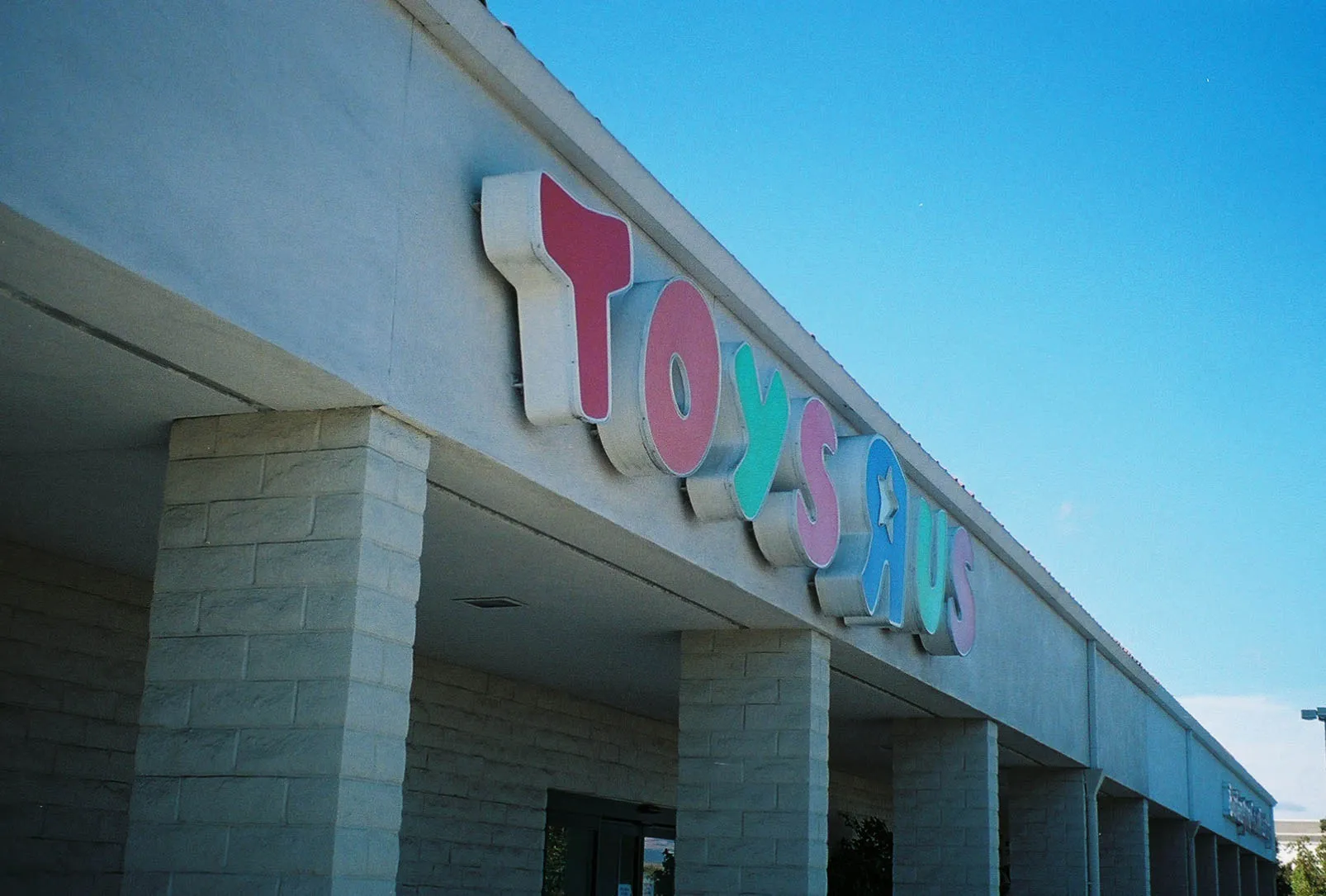
There was a TRU in Emeryville, a few miles from my house, which is now becoming some sporting goods store. I took a few shots last weekend of the one out in Dublin, which is just sitting there. I’m always curious to see what will happen with these places, and what direction retail would go. I should archive more, but like I said, the more I get into this, the more depressing it gets.