The Wrath of Kon

Dispatches, thoughts, and miscellanea from writer Jon Konrath

Tag: indiana

Wisconsin, Indiana

Wauwatosa at night

In the mad flurry of book release stuff and end-of-year stuff, I forgot to write down anything about the trip to the Midwest last month, so I’ll jot down a few things in case I need to remember it ten years from now.

  • Total trip was a Saturday to Sunday thing, eight nights. But I took a side trip, drove to Indiana on the morning of the 24th and back the night of the 26th.
  • There was a lot of stress about getting out of Oakland because it was zero visibility and flights were starting to get delayed or cancelled. We left a half-hour late, but made it up in the air. Had a very brief layover in Denver, then headed out to MKE. The flight felt insanely quick, with two segments that were just over 90 minutes each, and zero hassles on both.
  • Hertz is officially on the no list forever. We landed at like 7:00 and when I went to the Hertz counter to get my car, it had closed completely at 5:00, with a phone number that said, “Sorry, closed.” Not sure why they didn’t tell me that when I rented the car. The rental thing said “your name will be on the board and you can take your car and leave.” It wasn’t. We hurried over to National and got set up there. After 20 minutes in the Hertz AI madness phone tree, I talked to a person who was going to charge me $300 for the privilege of not getting a car.
  • We stayed at a Marriott Residence Inn in Wauwatosa. It’s in some weird “research park” thing built on top of a former sanitarium or something, and it’s a super-modern road with roundabouts and a bunch of empty buildings. The room was identical to the one I had in El Segundo in 2021. I think it’s the same as what I had in Denver and in Chicago in 2022. That’s always a weird experience.
  • It was like 20 degrees the whole time I was there. No real snow. Insanely high winds, like Iceland-rip-your-car-door-off winds. Losing half my body fat made this rough. But the hotel had an incredible warmth to it, which always felt nice.
  • There were three days of family stuff with Sarah’s family, but the out-of-town contingent wasn’t there yet, so this was mostly quiet time with her mom or dad. We went to a mall, which was busy, like almost mid-00s busy. I expected it to be quiet, given the economy. Went to Boswell Books, which was pretty packed. Always good to see people buying analog.
  • I don’t know why, but any time I stay at a Marriott, anywhere in the world, any time I go to the gym, there’s an older Asian woman on the elliptical for like four hours straight. It doesn’t matter if I’m in Schaumburg or Helsinki or Nuremberg or Orlando. I think they fly them in. It’s almost refreshing in a weird way.
  • The drive to South Bend was pretty uneventful, and much faster than I remember. I feel like when me and Ray drove to the Milwaukee Metalfest in 1993, it took like six or seven hours, and this was maybe three hours plus an hour of time shift.
  • I stayed at this weird Hilton vacation property that’s off Main Street in Mishawaka, by the UP mall. I think it was built in 1995 and not touched since. It has all of this college football stuff in it and probably makes all of its money on home games. I told my sister it looked like a Notre Dame themed funeral home. She told her friend who works for Hilton and he thought it was hilarious.
  • I didn’t pay for the hotel (thanks, Amex) and I’m glad, because it had a million little annoyances: a kitchenette that was a dorm fridge and microwave and nothing more; bad plumbing; lots of noise from the pool below; a completely unusable exercise room containing I think the Sears treadmill my mom threw out in 1997. Good location, except there’s a real Hilton just north of it, and that’s confusing when you give someone directions.
  • I went to University Park mall on Christmas Eve. I managed to lose my Pocket 3 camera, which sort of soured the whole trip for me.
  • Went to my sister’s twice, had Christmas there. Saw my dad for brunch the next day, then headed out.
  • The trip was very odd, because I did not feel like I was in Indiana, at all. Part of this was the short amount of time I had, and I didn’t get to wander. Part of it is things have changed so much. I remember walking the mall (and recording it on video, which of course I lost) and wondering what was still there from when I used to frequent the place in the late 80s/early 90s, and the answer is absolutely nothing. I guess JC Penney still remains, but there’s been 100% turnover, plus a giant food court that’s alien to me, new carpet, new skylights, new parking lot layout, and now the Sears is dead. Most of my time in Indiana was like this, which astounds me, considering how slow-moving things are there, and I used to come back and places would have the same exact signage from when I was a kid in like 1975.
  • I think a big part of this is I’ve turned a corner on the Nostalgia Problem. Looking at old journals, I used to ruminate way too much on things like Bloomington or the one weird year I spent working at IUSB or my old haunt, the Concord Mall. Now I don’t care. I don’t think about it. That strong sentimentality is gone. I have a few theories on this, and maybe I worry about it slightly, but I’m glad I have reached this point.
  • Quick trip back to Milwaukee. All I will say about the trip around Chicago: you should not be able to legally call something an express lane if the speed limit is 55.
  • Because I missed the 24th/25th festivities, I arrived in MKE just in time for the post-holiday wind-down, and basically had a day in which to pack and jettison trash and get ready for the flight home.
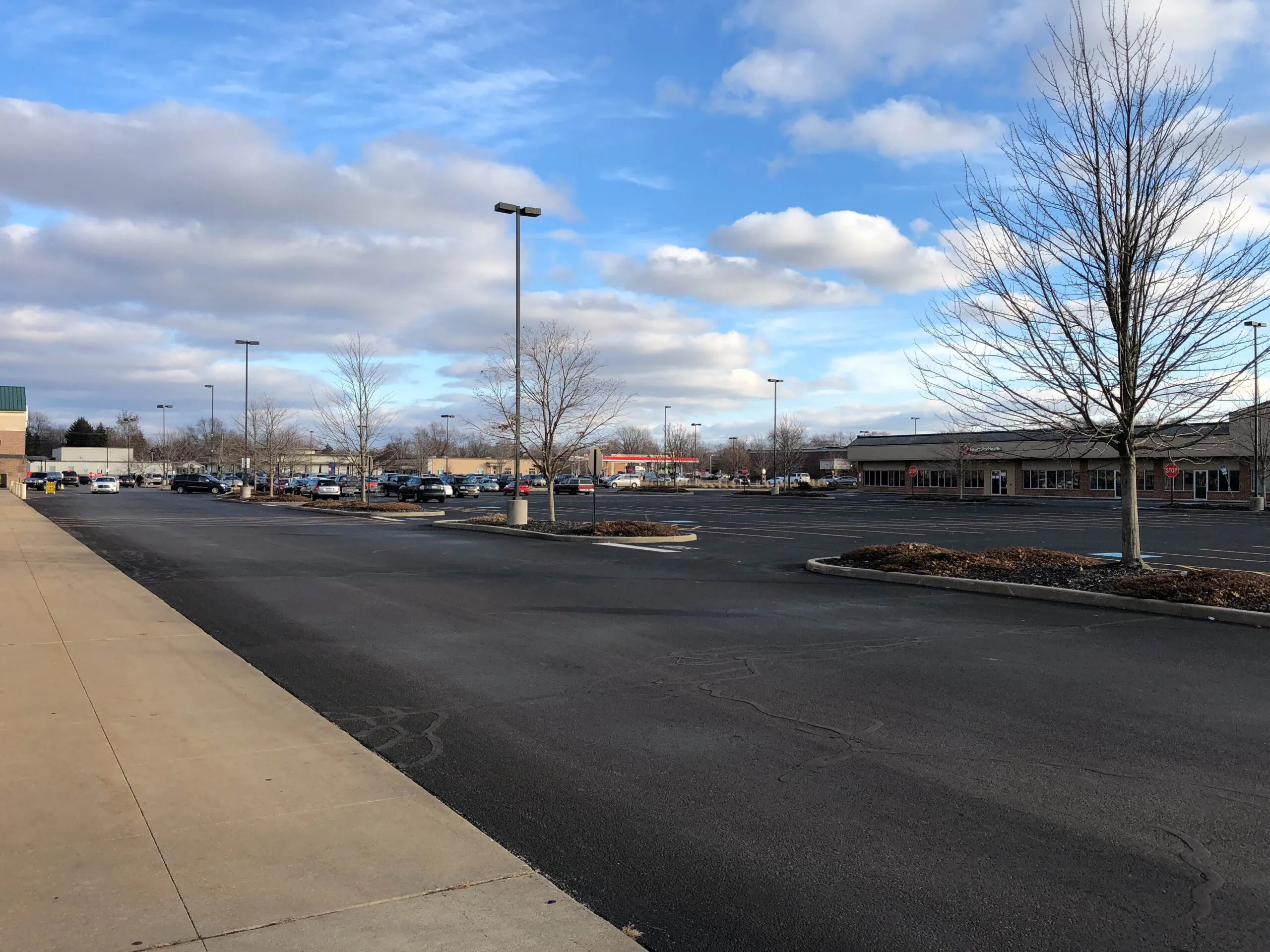
  • There was something almost Scandinavian about the street at that Discovery Ignition whatever park in Wauwatosa. It reminded me of the layout in Iceland or Oslo or something. Maybe it was an odd sense memory of the temperature and wind outside, but I liked it.
  • Also, there is a county park across the way that’s nothing but some slight hills covered in golden grass that’s waiting for the spring showers. I had this ASA drone test book with a picture of someone flying a sUAS standing on a hill like this, and it made me wish I had brought a drone with me, although the winds would have made it tough, plus standing outside in 20 degree weather for an hour or two isn’t ideal. I spent the first half of the trip thinking I should drive to Costco and buy a cheap Potensic Atom 2 to take a few flights there. Then I lost that stupid camera and was out $500 and realized this was a dumb idea.
  • Trip back was pretty stress-free. But it’s sad to come home and not have anyone waiting for you. I really miss returning to the cats after having been gone and having both of them be total velcro for a few days.

Overall, it was a pretty quick and uneventful trip, but I’ll take it. I was happy to see everyone and we had some quality time in there, but it was almost strange how it went down. And miracle of miracles: I came back with no flu, no Covid, not even a cold. That’s a good start to 2026.
Indiana

concord

I just spent five days in Indiana for the pre-Christmas Christmas with my side of the family. It’s a split trip, with this second week in Wisconsin. We flew into Chicago on Monday, then rented a car and drove out to South Bend for the first week.

It’s always weird to be back. The area around University Park Mall was all cornfields when I left in 1995, and now the Grape Road and Main Street strips that run parallel to the mall have exploded with big-box stores, strip malls, and chain restaurants. This time we stayed at at Hilton Home2 that’s roughly by where the old Night Lights all-ages club was in the 80s. (I think that club is a Hooters now, but I don’t remember where it was.) The hotel was built in 2017, on the site of what used to be some anonymous banquet restaurant. Everything around it is new to me. Day Road used to be an empty road through corn fields we’d drive at high speed on the way to the mall. Now it’s full of big boxes of stuff.


So, various family stuff on Tue-Fri. Ate a family lunch at the Howard Park Public House on the river. I think that used to be a parking lot or empty field when I grew up, and now the entire riverfront has a walk and parks and an ice skating rink, and looks great. South Bend appears to be on the up and up, with all the new spots and the ever-growing Notre Dame. I always regret that I did not spend more time in South Bend as a kid and really learn what was there so I could appreciate what it has become.

It was good to see family, exchange presents, eat too much, and do the usual grip-and-grin photos lined up against a tree or wall. Not into what I look like in the photos, and the food is adding to that. I really need to lean into the “new year new me” coming up shortly, but that’s another discussion.


I keep saying I am not into nostalgia anymore, or I’m trying to get away from it or whatever, and honestly I am trying. I intended to not even go to Elkhart for this trip. But S had to catch up on work and I had an empty afternoon with nothing to do, so I got in the car, put on my 1990 playlist, and went on the grand nostalgia misery tour.

First stop was IUSB. I pretty much lived in Northside hall in the 1990-1991 school year. I worked in the computer labs in the basement, my first real paying computer job, (occasionally) went to classes, and hung out with Ray endlessly. I had really strong memories of that place, but in a very isolated base way, probably because of my depression level and loneliness at the time. I commuted every day, which meant spending long periods by myself, rolling through the long strip of nothing between Elkhart and South Bend.

I wanted to take some pictures because the street view in the area is pretty lacking. But I wanted to find places that looked exactly like they did 33 years ago, which is tricky with all the additions that have happened. There’s a bridge from Northside across the river to a set of dorms, which is pretty odd compared to my commuter experience. The old education building has been torn down; at least two other big limestone buildings are where a soda bottling plant used to be; a chunk of the mega-parking lot is now a garage. And most of Northside, the main class building on the river, has been completely redone inside.

Walking around the halls, I did find a few things that haven’t changed. The outside structure of NS is the same limestone, the same courtyard with a walkway going across on the second floor. I ducked in a stairwell that I used to climb up and down multiple times a day to get from the sub-basement computer labs to the second-floor computer science classrooms, and they are absolutely identical inside. There’s a long cafeteria, more like a wide corridor with tables where me and Ray would hold court and pretend to study, and it’s still there but completely redecorated now. But I went around the corner to the vending machine alcove, and there’s a set of microwaves that look absolutely identical to 1990. I’m not sure if they’ve been cleaned since then. The area outside the auditorium looked very similar too, with 1961 wood trim and a set of benches where I’d sit and read between classes.

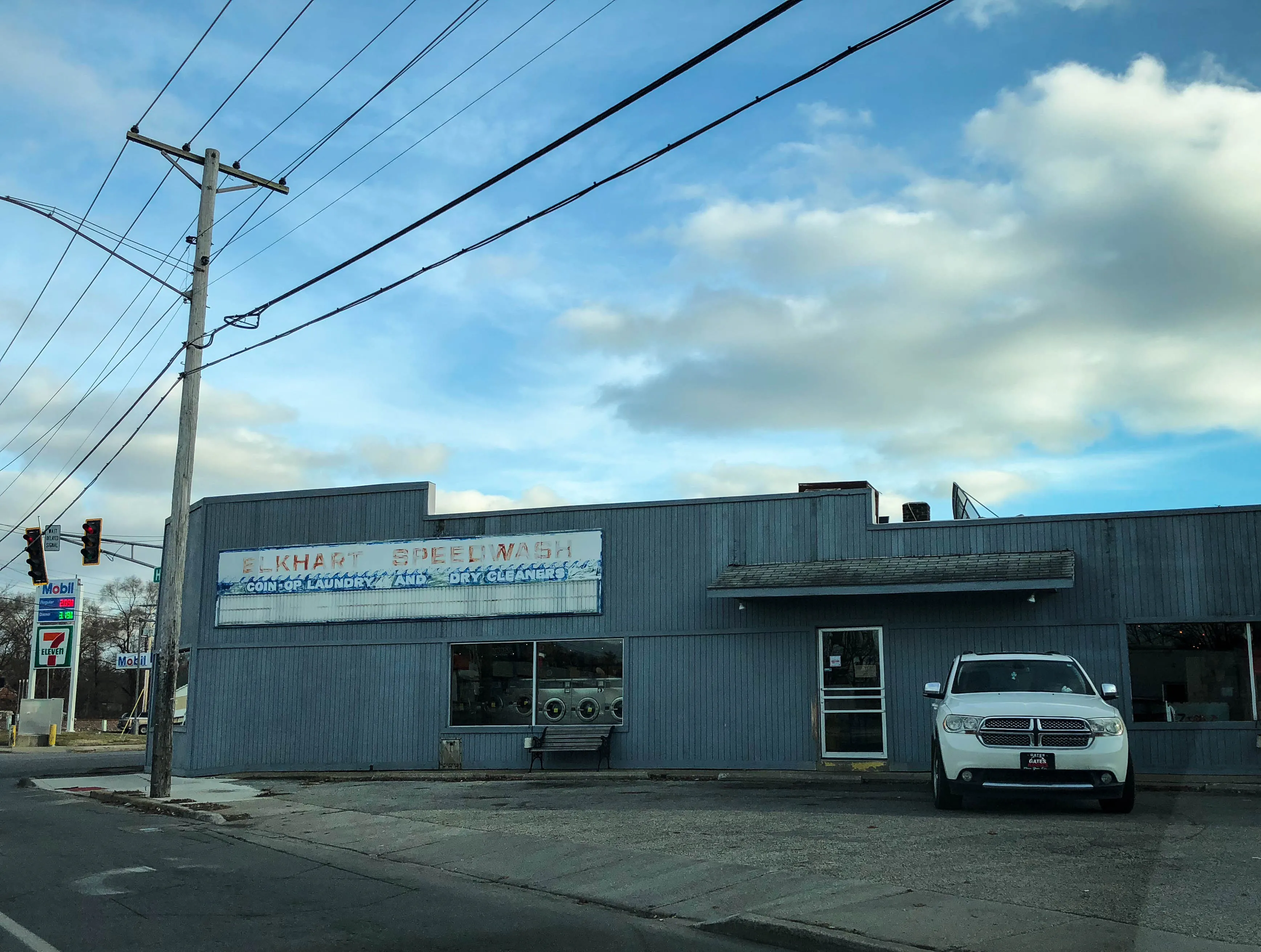
You can take the US-20 bypass to get between Elkhart and South Bend pretty quickly. I guess it’s not called the bypass anymore; it’s just US-20. But that didn’t exist in 1990, so I took Lincolnway east, which is now 933 aka “old 33” aka US-33 back then. That road isn’t quite a highway, and is mostly 35 MPH and winds through Mishawaka, then Osceola and into Elkhart. Like most of these drives, the bones of things are still there; there’s still a McDonalds and Taco Bell in the same place in Twin Branch, and the giant gas station at County Line Road. Signs change, the colors of houses sometimes change, and buildings vanish. But most of the drive is hauntingly familiar.


I really did not want to do this. But I had to do this.

I went to Concord Mall. The former Concord Mall. They are just started with the big transformation, which is gutting the mall and turning it into seven light industrial spaces. They have painted the vintage brick exterior a generic drab white, and chopped off the signage, awnings, and entrances, sealing things up in anonymous industrial doors. The JC Penney parking lot was full of heavy machinery, pallets of construction material, and various debris and jetsam from the construction work. The exterior entrance of the old McCrory’s was a gaping hole in the brick exterior. The Hobby Lobby, aka my Wards store, remains untouched. The Martin’s grocery, Concord 1 and 2 theater, and USA Fitness buildings are all in various states of disassembly or abandonment.

The front entrance, by what was once Super Sounds and Enzo pizza, was open, but had “no mall walking” signs on it. An optometrist was still operational, so I could go in the entrance. The interior was bleak. A chain-length fence blocked off most of the concourse, with a floor-to-ceiling wall of black plastic running the length of the hallway. I could hear water falling behind the plastic, and assumed they were doing asbestos abatement. Storefronts were all covered in plywood, but I could still see glimpses of the original brick, which was a signature of the mall, and will probably either be chipped out, covered in drywall, or painted an industrial battleship gray soon.

I didn’t stay long. I snapped a few pictures and got out of there. I went to Hobby Lobby to use their restroom and buy nothing, and on the way out, I realized something: they had the same fixtures as Wards, the same shelves and brackets, and they hadn’t been repainted. I painted all of those fixtures in the summer of 1988. It took me like a month to wash every one of them with turpentine, prime them, then roll them with a special shade of Wards-brand oil-based enamel. Examining one of those shelves, now filled with Jesus-based Christmas crap made in China, sort of freaked me out. It was a strange legacy for me to have in this town.


I did the rest of the tour: my old house in River Manor; the old runway that got turned into a subdivision in the 80s; my old abandoned Taco Bell where I worked my first job in 1987. I drove up main street and through downtown, and some of that strip is utter devastation. I don’t mean to keep shitting on Elkhart; I’ve done enough of that over the years, and it’s somewhat pointless now. But it’s just amazing how far it has fallen. I heard news while I was in town that the last movie theater closed, and the mall closed. The city is apparently buying the failed strip mall that was built when Pierre Moran got de-malled and doing… something with it, or not. There are long stretches of properties that have been abandoned for decades, or razed and left vacant. There are I think two major overpass/viaduct projects starting, and more businesses are closing and houses are being moved or demolished. The only growth industry in town seems to be Superfund sites.

Previously, these trips would give me heavy “you can never go back” vibes. Now, it’s just a big door closing. There’s nothing to be nostalgic about anymore. Everything is gone and done.


There are many reasons I could never go back to Indiana. And the Indiana I knew is rapidly vanishing. But sometimes I get a strong and strange feeling of deja vu I can’t entirely integrate.

I was walking across a parking lot the other night, and it hit me. There was something about the crisp winter air, the clouds overhead, the look of the sky. I was in the parking lot of a casino, but when I looked out, I saw fields plowed down for winter, and the one row of tall trees a quarter-mile in the distance, the leaves fallen in December, just century-old skeletons reaching into the sky. There’s something about the sparseness, the feel of the atmosphere, that gives me a deep base memory, a sense memory that goes deep into my bones. It reminds me of the holiday breaks of childhood, the feeling of being 16 and driving a beat-up Camaro to a friend’s house on the back country roads. It’s a very entrenched time machine and these memories aren’t about a specific event or person. They’re just a sense, a feeling. Not happy or sad, just a quick flood of memory about everything and nothing.

When I was on the second floor of IUSB, looking out a window across the parking lot, I had an incredibly strong memory of looking out the same window in 1990. It was a Friday, during a shift at the computer lab, in mid-December. The air was the same crisp cold, the clouds heavy, and I could feel in the air that it was going to start snowing. I knew I would mess around on the VAX computer or two or three more hours, go to the McDonald’s on McKinley, and listen to the same Queensrÿche album I listened to every day that school year as I ate my #2 meal on the long drive home. I knew that classes were over, and I’d spend the next two weeks indoors, at my girlfriend’s parents’ house in Ottawa Hills, or at my parents’ house. It was not good or bad or anything else, but that moment is so entrenched in my head, and it’s amazing that it instantly came back 33 years later.

Anyway. It’s Christmas morning and I’m in Milwaukee for the week. I should write about that next, but I have a few thouand calories to eat first.

Failing networks, forts, film

It’s Sunday again. Time to try to type something here.

Every time I log into Wordpress, it has a failed update and 19 plug-ins that need to be updated or were updated. It doesn’t matter how long ago I last logged in. I can log out for five minutes and this happens. I think I’ve been clear that I really do not like Wordpress. But I’ve also used static site generators, and I’m not into that, either. And I’m definitely not paying yet another monthly fee to switch to something else.

I think Facebook’s about done, too. A lot of my friends have fled, and right now, it’s doing this transient thing where it does not give me notifications on anything I post. It doesn’t tell me if someone reacts to a post or comment, and won’t tell me if someone comments on anything I write. It’s essentially useless now, at least from a dopamine hit standpoint. I’ve looked at going to Twitter, but Twitter seriously gives me PTSD. It’s just a wall of text, people screaming at each other whatever’s in the front of their head that second. I can’t follow the threads and cannot deal with it.

So, here we are.


I was thinking the other day about how obsessed I was about forts as a kid. I don’t even know if kids do this anymore, but I was really into the idea of getting a bunch of lumber and building a treehouse or a lean-to or a clubhouse or some other structure. Maybe this was from Hardy Boys books or Cub Scouts or something, I don’t know.

Part of this involved tree climbing, finding the perfect tree to scale. I had a tree in my side yard as a kid with a perfect branch sticking out at a 90-degree angle at maybe five feet off the ground. It was very easy to grab onto the branch, pull myself up, and sit there, thinking about how if I had a few boards, I could easily build a platform up there. It was also the right height to reenact the Empire Strikes Back scene of Luke letting go of the antenna on the bottom of Cloud City and falling. I think that tree died when I was in college, or maybe after. Anyway, I never built anything on it.

(It’s weird how a lot of the big trees from when I was a kid are not there anymore, but the area is still fairly wooded. Trees that were twigs when I left thirty-some years ago are now giant. I don’t know if this is natural progression, a tree disease, or some failure underground that happens when you put houses and septic tanks and roads in the middle of a woods and disrupt the root systems. Also, I don’t know why Amazon or Google haven’t named something “Cloud City,” except maybe Lucas would sue them.)

There was a lot of vacant land around my subdivision as a kid. Part of this was that the entire township was mostly farmland and woods, until they plowed it up in the sixties and seventies to plop down tract housing. The subdivision was done in “phases” and random plots were sometimes left open and then developed later. So for example we had “the woods” that was three lots down from us, and it was simply an empty wooded lot with a trail blazed through it so you could cut through and go to the next road over. A few years later, it was cleared out and another identical ranch house popped up there.

But there were larger chunks of land that were our stomping grounds, especially when I got a BMX bike and was more mobile.  A large chunk of land east of us extended back at least a quarter mile, maybe fifteen or twenty acres in the form of an isthmus surrounded by the Elkhart River. A series of trails cut through the thick woods in this area, and between the ages of about ten and twelve, my neighbors and I were constantly trying to find ways to build forts in this area.

I remember a lot of primitive lean-tos and pits dug in the ground and then covered with fallen trees. Sometimes, someone would dump some construction material and we’d find a decent piece of lumber or two. We never got very far with any of these, and I now realize we must have been annoying as hell to whoever actually owned this land.


A year or two later, I met my friend Jim, and he had an actual treehouse, I think built with his dad’s help, probably from leftover boards from when they built out three bedrooms in the basement of their ranch. There was a woods behind Jim’s that was rife with potential building material. That area had a lot of old houses that were destroyed by a tornado in 1967 and then left to nature to rot. Also, construction crews would sometimes dump junk out there, because there’s no harm in pouring motor oil, PCBs, and asbestos into the water table. This was the eighties in Indiana, who gives a shit.

We’d drag this stuff back to Jim’s and nail it into his treehouse, concocting grand plans of adding extra stories, rooms, stairs, hidden passages, and everything else. I built out a set of three rooms underneath the main platform, and Jim was building a drawbridge and a third floor on top of it. It was like we were constructing our own Winchester House in Jim’s parents’ yard.

Anyway, Jim’s dad got sick of his back yard looking like an M.C Escher masterwork built from garbage, and ordered Jim and his brothers to tear it all down. Shortly after, Jim got sent away to his first stint in juvie or rehab or some lockdown Christian reprogramming center, because he was probably either getting high or hiding shoplifted D&D books out in the fort. And by that time, I’d moved on to the Commodore 64 or something else.

It’s weird for me to think about this now, because I now see the connection between this and the desire to build a house out in Colorado. And I guess why I waste so much time on Townscaper.


Not much else is going on except I’m still trying to figure out this trip, which is the week after next. I thought about bringing a film camera and a dozen rolls of film just for kicks, but I don’t want to deal with the TSA and hand-checking film, especially given the current airport situation. I need to minimize the amount of hassle while things are still on edge, and probably just carry a single camera and maybe a spare lens.

Life and Death of the Pierre Moran Mall

IMG_8931

I watched the Jasper Mall documentary a few weeks ago. It was interesting, but there was something bugging me about it, and I couldn’t put my finger on it. A few days later, I figured it out: Jasper reminds me a lot of Pierre Moran Mall in Elkhart, Indiana where I grew up, but in an alternate universe where PMM didn’t get torn down in 2006 and somehow lived on.

I should take a deep dive on Pierre Moran Mall and brain dump what I still remember, while I still remember it. There’s a good (old) page on Labelscar about the mall, but not much more. In fact, I think the third or fourth result in a google search is one of my pages about Concord Mall. And that’s a good summary for the mall: a strange afterthought to Concord, the less-known sibling, that has now completely vanished.

The basics, partly cribbed from Labelscar: Pierre Moran started as a strip mall, opened in 1958, a row of shops on Hively between Benham and Prairie, just south of downtown. An indoor mall was built right next to this strip in about 1970, with about 400,000-some square feet, including anchors Sears and two other department/softlines stores that varied over the years. (The number of anchors is vague and arguable, I’ll get into that later.) This was Elkhart’s first real mall.

I remember this mall as a little kid only because it predated the Concord Mall by a few years, and was the closest mall to us. I lived in Edwardsburg, Michigan (just north of Elkhart), and we sometimes shopped at a Kroger that was attached to the south end of the original strip. We also visited the GL Perry store, which anchored the other end of the strip.

GL Perry was a small chain of five-and-dime department stores. They had maybe eight locations around Michiana. (Details are sparse, here’s an article from when they closed in 1997.) They were a typical variety store like a Woolworth or Ben Franklin: clothes you wouldn’t want to wear if you were cool, hobby supplies, candy, toys, records, and some other staples and sundries. We used to go there a lot, although I don’t know what my parents bought there - maybe gardening supplies or something. I remember being particularly fixated on the toy aisle, and later the records. They also had a great Halloween section, which is where I got my Spider-Man get-up in October of 77. Most of the functionality of GLP was later superseded by K-Mart, but we ended up there a lot as kids. (The GL Perry was previously a Grant’s, but that was way before my time.)

A note or two on the name Pierre Moran. He was an American Indian leader, of the Potawattomie tribe. He sold his land to Dr. Havilah Beardsley in 1832 and it became downtown Elkhart. I vaguely remember learning about him as a kid: someone bit off the end of his nose in battle. He was part of the siege against the white man at Fort Wayne. Our Indiana History classes were probably not as neutral as they could have been, so I don’t know how much of that is true. (See here for a good article on it.) The acceptance and denial of Native Americans sort of ebbs and flows over time in this region, and I guess in the early 60s, someone thought it wise to name a mall (and a neighboring school) after Pierre Moran, which was good. But they also decorated the mall with various Indian statues and logos on signs, which were both straight-up early-70s mall decor, and probably a bit more than politically incorrect (although people in the local nostalgia groups would heartily disagree.) I remember the Indian decor when I was a little kid, but I think they were gone by the time I was a teenager in the mid-80s.

After the enclosed mall was built, the interior was more or less a T-shaped concourse. Floor tiles were a solid dark maroon/brown, with lots of dark wood, no skylights or grandiose architecture inside. The center had a couple of wooden benches and a few spider plants in planters, but no real conversation pits or incidental decoration to speak of, aside from a wooden Indian with a somewhat grotesque face. They later put a small fountain in the middle and lightened the place up slightly, but this was always a somewhat dark and foreboding mall. And that original strip of stores didn’t connect to the internal mall. I’ve seen strip-mall-to-mall conversions where they built a second strip so all of the old external entrances were now internal, with a roof over it. (Aka Northgate in Seattle.) But these old stores all faced out, disconnected. They did build an entrance right in the middle of that strip leading into the mall, and a drug store did have a side door going into the mall, but that’s it.

Because of this strange construction, the mall had a very patched-together arrangement to it. Most mall concourses have long lines of similarly-sized stores, rows of identical spots next to each other. You know how malls like this would sometimes have an oddball store at the end of a hall with the entrance facing the wrong way and the interior footprint in the shape of a strange truncated triangle instead of a square? Every single store at this mall looked like this. It didn’t feel like any two stores in Pierre Moran were the same size, or even close to the same size. It looked like someone collated together a mall from discarded stores left over from other mall construction, maybe adding another store every other week when they could afford it, with no overall plan for continuity. Every store had a different front. Every wood front was a different shade of wood, the planks angled in a different direction. Every chunk of brick facing was a different color, a different shape of brick. Every section of the concourse had a different height roof. The hallways were too wide, and the storefronts were too narrow. It was almost disorienting how it was put together, and the general feeling every time I went was there is nothing here. And that’s when it was fully occupied.

The Sears was decent, as far as Sears goes. I remember shopping there with my mom for Tuffskins and getting the tires changed on the car at their auto center once. I think I first played the Atari 2600 there, the “Tele Play” version that Sears OEMed. When their record department closed out in the early 80s, I remember sifting through the 4-for-a-dollar remaindered 8-Tracks, struggling to find four things worth buying. I also knew a few folks that worked there when I was a teenager, and would swing by to bother them.

Other stores I remember:

  • The aforementioned Hooks drug store, which was a local chain that eventually got bought by CVS.
  • A photocopying/printing place called Skinner the Printer.
  • A coin shop that sold comic books and baseball cards.
  • A sad arcade without many machines.
  • A somewhat Christian book/card store.
  • A place called The Cookie Jar that sold giant hot cookies and was pretty decent.
  • A Finish Line shoe store, one of the few nationally-branded stores inside the mall.
  • A shoe store called The Leather Banana.
  • A sewing supply store.
  • Various “interior decor” stores, if you were decorating a home in deep Appalachia in the 1930s.
  • A sit-down restaurant. When I was a kid it was called Meeting Place and was a general cafe sort of place old people went after church. After I’d left for college, it became a 50s-style diner called Ally Oops. It was basically like a Johnny Rockets, with the checkered floors and jukeboxes and sundaes and whatnot. People in Elkhart loved this place, but people in Elkhart judge food by portion size, price, and how unhealthy it is, so I was pretty indifferent.
  • The outside-facing strip had a Rent-A-Center, a really grim-looking liquor store, and a barber shop for old men that used a suck-cut and where I got the worst haircut of my life in 1988. Just a guess that there was probably a dry cleaner and a jewelry store that bought gold there, too.
  • Next to Sears, there was a branch of the Elkhart Public Library, and I went there a lot as a kid. Around 1989 or 1990, they moved that branch into a dedicated building, and it became a car parts place.

The TL;DR is that there were almost no national-brand stores in the mall. It was a lot of one-offs and local chains. There was never a great shift of new up-and-coming stores moving in (like University Park), or a big die-off when leases timed out (like Concord). It just sort of stayed the same, year by year, decade by decade.

Aside from Sears, one of the other anchors was Kline’s, a local clothing/department store, which then became a similar store called Ziesel’s. The other anchor was I think a Carson Prairie Scott when I was a kid. These didn’t interest me when I was a child because my mom bought my clothes for me. When I was old enough to buy my own clothes, the anchors at PMM didn’t interest me because it wasn’t 1947 and I didn’t want to dress like an octogenarian in high school.

The one cool store there was World Records. It was a tiny, hole-in-the-wall record store not much bigger than a bedroom, with maybe three or four racks of albums, a display of car stereos, and a wall of t-shirts. I don’t know why or how, but World was an excellent record store. Two mulleted guys working the register knew a ton about obscure metal, and would get in all sorts of weird imports and immediately turn me onto them. Back when everyone in my high school was obsessed with Lisa Lisa and the Cult Jam or Milli Vanilli, this guy Rodney was selling me the Metallica Creeping Death/Jump in the Fire EP (UK import on Music for Nations, years before the US release) and talking my ear off about obscure Gary Moore solo albums. I think World Records was the only place in Elkhart County where one could get a Metallica shirt before the Black Album came out.

In about 1985, that C-P-S anchor turned into a Target. This was a pretty new chain for us in Indiana - Dayton-Hudson bought out Ayr-Way locations in Indiana and flipped them into new Target stores. I thought Target was awesome back then. It seemed much more bright and new and modern and 80s than a K-Mart or Wal-Mart. And they had a good mix of things I liked: music, video games, electronics, but also staples and candy and housewares-type things and whatnot. It seemed very un-Indiana to me at the time, which is silly now, but it was one of the only reasons I really went to that mall.

To cap off this random brain dump of stores, there are a few outparcels to mention. One is that there was a Hardee’s on the corner of Hively and Prairie. This was the old-school livery, brown and orange, and I think it may have been a Burger Chef before that. In the early 00s, this was torn down and the CVS moved from the mall to a freestanding building. There was also a Long John Silver by the Sears. An ever-changing bank that was primarily drive-through an ATMs hung onto the side of the GL Perry. It’s a Key Bank now, but I think it may have been a First National, and a few other brands over the years.

One other interesting one: there was a two-screen theater as a freestanding building near Sears. This was called the Holiday I and II. In the 80s, all of the movie theaters in Elkhart were owned by one man, Bill Miller. He also owned the Elco and Cinema I movie theaters downtown, the Holiday, the Concord I and II at Concord Mall, and the Encore 1-3 on Cassopolis Street. Bill Miller was killed at the Concord theater in 1987, shot by a disgruntled employee, apparently over the theft of concessions. By 1990, all of his theaters were sold to the GKC Theaters chain, and within a few years, all but the Encore would be closed. The Holiday was essentially split in half, with one half being a few fast food restaurants, one being a Subway. The other half became a Hollywood Video chain, which has since closed and been abandoned, and still has a vaporwave pink and teal interior you can see through the windows, forever trapped in 1993 regalia. [More on Bill Miller here.]


Two memories from the Holiday I+II. One, I saw Silence of the Lambs there on opening night. Two, I went to see Flatliners, and the late show was in the same auditorium as the early show of Young Guns 2. While we were there, a group of heavily-Aquanetted, acid-washed denim-wearing girls came in, thinking YG2 was on in the second time spot. They sat through an hour of Flatliners, loudly wondering where Christian Slater was and when Bon Jovi was going to make his appearance.


My time at Pierre Moran is divided into two phases. As a child, like I mentioned, we went to the Kroger, Sears, and GL Perry a lot. This was before I had any geospatial awareness and knew anything about the distance between us and various malls, and I only knew we went to this one less than others. And we seldom went inside the mall. The only times I remember, it was because some kind of craft fair or flea market or bazaar had sale stuff on card tables through the mall’s hallways. I wasn’t old enough to know better or shop elsewhere, and my only judgment was that aside from the toy aisle at GL Perry and the toy section in Sears, there was no toy store at the mall, while Concord and University Park had a KayBee Toys and a Walden Books that sold D&D stuff.

Also, my parents didn’t want to go to this mall that much, and I never understood why. It was just a silent “we don’t go to that mall” and I didn’t know why. I always thought it was just personal preference, but I figured out what “that mall” meant later.


When Pierre Moran was built, it was a pretty sleepy bucolic suburb south of Elkhart. Looking at a 1952 aerial, there’s at least a half-mile of farmland on every side of where the original strip mall was constructed. Very little housing was in that area, and the core of Elkhart’s population lived a mile or two north, in downtown Elkhart. But jumping to a 1967 aerial photo, most of the area surrounding the strip mall has been developed, with dense, serpentine roads snaking around artificial subdivisions of identical homes built on little token yards. Every house: exactly two bedrooms, exactly one bath, exactly 1000 square feet, on a yard that was exactly 10,000 square feet. A quick Zillow search shows this entire neighborhood being spun up in 1956-1957, probably right after the strip mall was added.

At this point, Pierre Moran was the suburb of Elkhart. And in the late 60s, the suburb pushed further south. In 1964, the Elkhart Housing Authority built Rosedale High-Rise, the first of EHA’s six public housing projects, about ten blocks north of Pierre Moran Mall. The older housing stock on the south side of Elkhart became more working-class as people fled further away for the suburbs.

Elkhart was and is predominantly white. I don’t know the census numbers from when I grew up, but in 2000, it was 71% white. Elkhart has seen an increase in Hispanic population since I left, mostly because of the large manufacturing base, and I wouldn’t doubt if that 71% was much higher when I was a kid. (Not to add fuel to this fire, but Goshen, the county seat just south of Elkhart, was a sundown town, with the Chamber of Commerce claiming it was 99.5% white-only as late as 1978.) Demographics of the area changed in the seventies and eighties, like they did in many Midwestern cities. The suburbs outside of the city grew with white exodus. Their school systems exploded with the new tax base. New malls (like Concord) signed sweetheart deals to grow tax-free, develop new super-stores, attract national brands, and pry away classic stores from the collapsing downtown district. The middle class fled the downtown. And malls like Pierre Moran were left behind. I’m not trying to spin some big revisionist history racial conspiracy theory about this. I’m not a historian. It’s just how it happened, or how I observed it to happen. As a little kid, I never noticed it. Now, it’s fairly obvious.


My family moved to Elkhart in 1978, when I was seven. We bought a tri-level in a subdivision a few miles south of Pierre Moran. The houses were about 50% bigger, the yards twice as big, and there were now four different floor plan templates to choose from for the nearly-identical dwellings. We had a new school. There was a big park nearby. Every neighbor had the typical 2.5 kids, all about my age, and it was a safe place to ride bikes all day and play sports and hang out.

I led a fairly sheltered childhood, and we almost never spent any time in downtown Elkhart. I have a strange gap in my personal history because of this. When I go to Facebook nostalgia groups, people talk about grocery stores and restaurants I never heard of. I don’t know anything about growing up in downtown Elkhart. I only knew the suburbs, our almost-new grade school, the Concord Mall.

The only thing I know about where we moved was it had “good schools.” After buying my first home 30-some years later, I found that “good schools” is code for something more than just having actual good schools.


After I got a car and a job in high school, I had a lot more freedom to see parts of the city I didn’t see before. It’s not like Elkhart is a giant metropolis - it was maybe 40,000 people then. But like I said, my parents never wandered much. We drove the same half-dozen routes every week, from our house to my relatives’ houses, to the same three stores, to the same school and church. With my own wheels, I got to explore a bit more. And even though I loved Concord Mall, I also worked there, and some days I needed to just go somewhere else.

I used to go to Pierre Moran every now and again mostly because of World Records, and then Target. My buddy Larry worked at that Kroger and we’d go harass him, and Tom Sample lived a few blocks up Prairie, and I was always there. It wasn’t much of a destination, though. Concord was the default; University Park was the place to go when you had a day to kill and you wanted to see other teenagers outside of your school’s ecosystem.

Pierre Moran was where you ended up. I remember my old friend Jim always wanted to go there because he was a recovering drug addict, and he said Pierre Moran was a mall so boring, you couldn’t even score drugs there. It was a place for old people to go to buy religious greeting cards, sewing supplies, and Dickies work clothes. It was an interesting novelty, but it was by no means cool.

In my second year of college, I lived at home and went to a regional branch of Indiana University. Because of this, I often drifted around town when everyone else was at work in the factories. I’d run errands - my drug store was the one in Pierre Moran - and wander around. So I’d often end up at Pierre Moran during the day. (Or late at night - the Hardee’s was open until like midnight, and I grabbed dinner there on the way home from school frequently.)

I think my love of dead malls developed greatly in that period. People think malls were all 167% busy in the early 90s, and that the dead mall is a recent development. If you’d ever been to a midwestern second-tier mall at 10:07 AM on a Tuesday in 1990, you know this wasn’t true. Malls were always empty on weekdays and mornings. I loved walking through a half-size mall that hadn’t been touched since 1974, the entire place to myself. It helped when the mall was such a bizarre place like Pierre Moran, where you couldn’t tell if it was light or dark or raining or snowing or January or July from inside, because there were no windows and it always looked dreary inside.

There’s something almost liberating about walking through every aisle of Target at eleven in the morning, seeing exactly zero shoppers, only the five or six stock clerks and cashiers working, and then spending an hour playing Tetris on the Game Boy display in electronics, without a single person talking to you. This imprinted something deep in my head that’s still there today. My friends hated that I always wanted to go to the mall back then. My friends who worked with me at the mall thought I was delusional when I spent my day off at a different mall wandering around, sometimes facing merchandise at a store I didn’t even work at out of instinct. Almost nobody understands why I still go to malls. But that’s something the Jasper Mall doc made me think about, that strange desolation and how it sparks the dopamine in my head. There’s a certain womb-like comfort I feel being in a gigantic hall of commerce, but being the only person there, like I was on the surface of the moon.


I never felt unsafe at Pierre Moran. I had a car stereo stolen a few blocks away, but it never felt like a gangland or an inner city slum or anything else. But that was the perception. My parents were always scared that I was hanging out near “The Projects.” Pierre Moran was the “other mall.” I never saw it, but there were always rumors about people getting carjacked, businesses getting stuck up, bank robberies and stolen cars. And just guessing, but maybe that’s what led to its downfall, its inability to attract more retailers: that rumor of unsafeness.

There was crime. Lots of shoplifting, thefts. High school students fighting each other, rumors of knives and guns. They added a police substation in the mall, which is never a good sign. It was a hotbed of cruising. (One of the only hits you can find on the mall is a listing of the bathroom on a cruising web site.) I don’t know if the level of crime or the perception of crime was higher, or maybe that the clientele of the only remaining stores was markedly more senior than the people who roamed the mall for fun.

There was a very high-profile murder in 1999 where a 19-year old African-American named Sasezley Richardson was killed by Jason Powell and Alex Witmer. Powell killed him in the Sears parking log as an initiation into the Aryan Brotherhood. This was in the papers for a long time, and was national news. Not to stir things up more, but killing a stranger to get into a white supremacist group was not considered a hate crime in an Indiana Supreme Court case. There’s a strong undercurrent in the city that I don’t even want to get into, but this was an obvious big issue.


I left Indiana in 1995, so other than the occasional visit, the final chapter of the mall was not on my radar. But it was typical: Target bugged out to build a larger-footprint store a few miles south of Concord Mall. The standard Target hypermart footprint was nothing like the aging 1985 store built in a 1970s shell of a department store. And there was a large no-mans-land between Elkhart and Goshen, where Wal-Mart plopped down a store and a handful of outparcel strip stores, then a Meijer followed, then Target. (This area’s siphoned off the majority of Concord Mall’s stores in recent years, but that’s another story.) The old Target became some kind of Mexican event hall that held rodeos and amateur wrestling shows on and off, but couldn’t attract another tenant.

Also, when you have local retailers, they’re owned by local people. And people get old, reach a certain age, they want to cash out and move to Florida or whatever. Or when retail models change, a national chain can funnel in money for a big remodel, spread the pain across hundreds of stores. A mom and pop can’t adapt.

At some point, they did that remodel with the new tiny fountain. Maybe this is when they removed all the remaining Indian stuff, I’m not sure. They also painted the brown awnings outside bright blue. None of this did too much.

There’s a dirty little secret about malls: they’re usually built as a tax dodge. Back in the Seventies, you could come to a town, ask for a tax break on developing a corn field into a mall under the premise of enhancing the neighboring subdivisions, and then your REIT could take twenty years of depreciation and write off their taxes. After the twenty years, your little town of 40,000 is trying to support two or four malls plus whatever Wal-Marts on the edge of the city are also prying loose the main-town merchants. That’s when the REIT dumps the mall on new owners for pennies on the dollar. The anchors signed sweetheart 99-year@$1/year leases in 1973 to prop up the small stores, so the mall has to double the rents on the mom-and-pops, and they’re now cash-hungry at the time when the mall needs a bunch of deferred maintenance and probably could use a facelift to trade the wooden Indians and brown tiles for a more vaporwave aesthetic, but half their stores are empty, and everyone would rather go to Wal-Mart and get everything in one stop for less. That’s when the jenga tower has all the bottom pieces pulled out from under it.

But, you could start over. Bulldoze everything, claim people want strip malls again, and reset the tax counter. De-mall. That’s what Pierre Moran did. No wait, it’s not Pierre Moran. It’s Woodland Crossing!

So here was the big plan in 2006: raze the entire interior of the mall, including the Target and the other anchor, which was last a US Factory Outlets, before they went under. Nuke the old Kroger. Keep the Sears, but seal off its mall entrance with a new set of exterior doors. Build a new Kroger, twice as big, along with a set of gas pumps. In a strange bit of irony, keep the original strip of stores, with some paint touch-ups, and add another row of small strip mall cubes of stores, so some cash-for-gold places and vape stores can make an occasional appearance.

You can guess how this went.


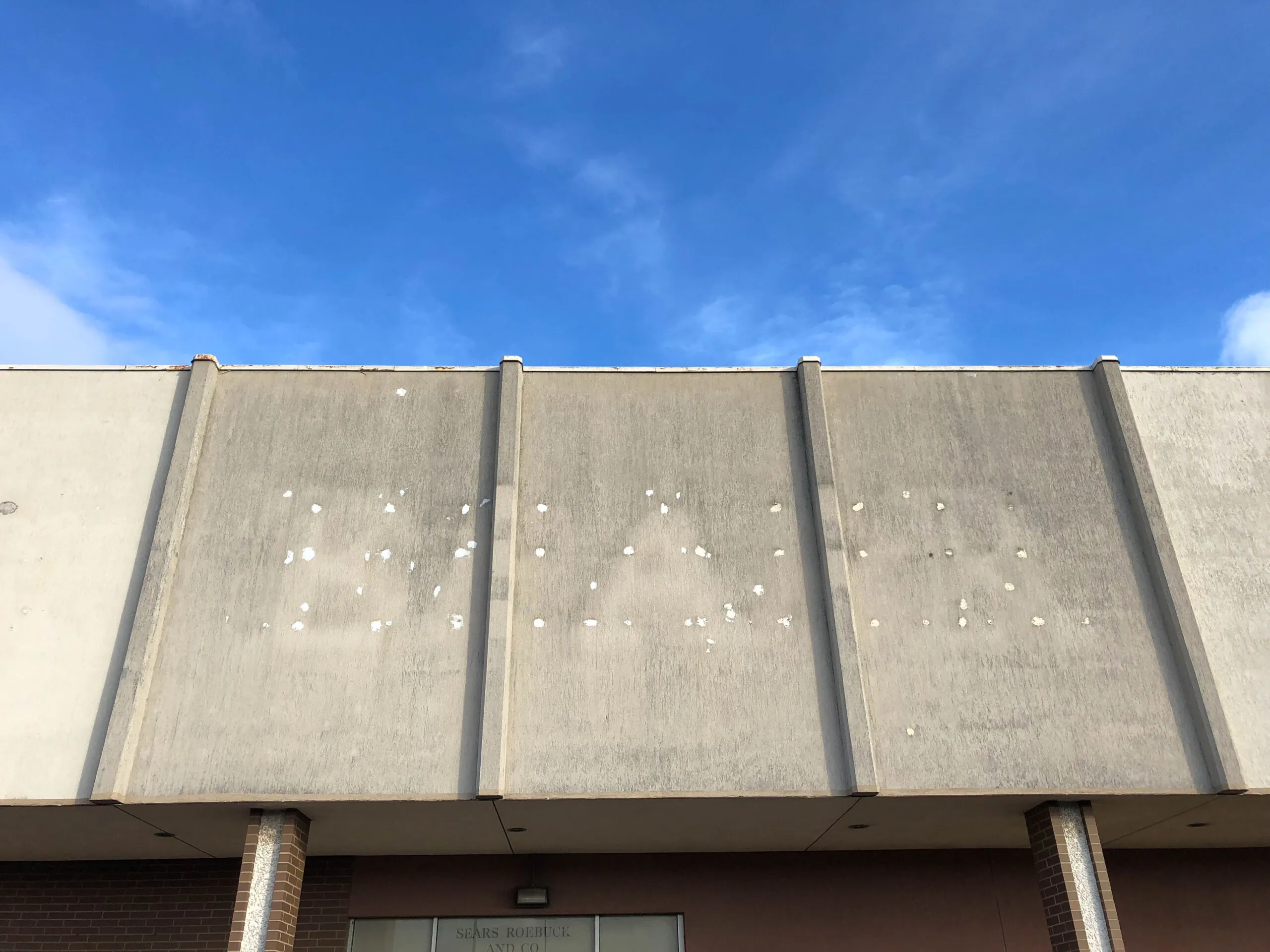
I visited Elkhart in 2018, and on Christmas Eve, I drove out to Pierre Moran Mall Woodland Crossing. It was cold as hell out, maybe in the teens. I parked my car in front of the Sears, at the entrance where I used to go with my parents to get my Garanimals and Toughskin jeans. The Sears closed the year before, going for over a decade in its decapitated state, before being killed off by Fast Eddie Lampert and his real-estate ponzi scheme gone wrong. Sears looked almost identical to the way it did in the Seventies. The labelscar above the door had both the faded remains of the old 70s logo and the newer 80s version.

IMG_8934

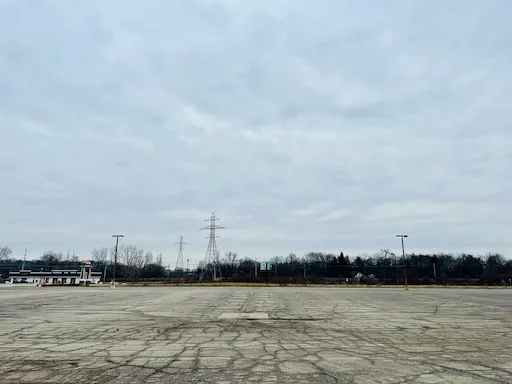
If you look at the photo above, that large chunk of asphalt is where the entire mall once was. I was standing with the Sears behind me, so this stretch of parking lot is where the entire concourse and interior stores once stood. I walked across the large parking lot, and tried to visualize where the mall used to connect to the Sears, how the distant space by the new gas pumps used to be Target. The row of old stores still stood in the same place. You can see the new strip of stores in this shot. There was a health clinic, and the rest were 100% vacant. The Long John Silver was closed. The Subway was gone. The weirdo empty Hollywood Video was frozen in time. I didn’t go in the new Kroger.

I did hop into the Big Lots. It was a typical Big Lots, full of weird liquidation merchandise, the place where you’d go to find Crystal Pepsi or brands of candy bars that were released for a week in an Ohio test market and then pulled. But the store still suspiciously looked like the old GL Perry, but with different merchandise. The windows were in the same places. The floor had the same worn Sixties linoleum on it. I could still imagine flipping through the row of records by the front registers, walking up and down the aisles by the toys, smelling the sweet chemical stench of Miracle-Gro contrasting the odor of 50-pound bags of Alpo stacked by the back door that was no longer there. I bought a drink for the road, then walked back to my rental car in the cold.

The desolation around the completely empty parking lot was surreal. A different kind of weird than walking around as a kid, but still bleak and dismal. I have a distinct memory, a fragment, of sitting in that Sears parking lot in 1987, playing an Anthrax tape for a fellow dishwasher named John, doing absolutely nothing but killing time. Then, the mall seemed like it was falling apart, a late 60s dream of friendly family shopping gone bad, but a place to do nothing. Now, it felt like a mid-00s version of the a similar dream, with a giant parking area carefully planned and sculpted with dividers, landscape islands, and token trees, designed for cars that never came.


I spent a lot of time scouring the web for any photos of Pierre Moran Mall while writing this, and there are few. It died at the perfect era for it to never be remembered, because it lived in a pre-web world, and the mall barely knocked a site together right before it died. This is true for a lot of malls of this pedigree. Newspaper searches are fruitless, as newspapers themselves die and lock off old archives behind paywalls. (The Elkhart Truth is useless for any research because of this.) These malls, and a large chunk of a cities’ history, will be completely forgotten in a decade.

What caught me is that the few photos I could find were all of community events. For example, go to wayback and check out this page. There’s a few shots of what looks like a birthday party, and a coin fair. I found a few other loose pictures showing a karate demonstration, a local history booth, a book signing for a local author. One of the only videos I could find was an Elvis impersonator putting on a performance in front of the Target in 1993.

My very first memory of this mall, probably from 1975 or so, was going to an indoor “sidewalk sale” with tables set up in the hallways, local flea market vendors selling their wares. That stuff was always going on at Pierre Moran: car shows, swap meets, Easter egg hunts, Humane Society adopt-a-pet events, indoor trick-or-treating, church fund-raiser bazaars. Regardless of how “bad” the neighborhood or the mall was, there was always this sense of community in the events held there.

De-malling a mall like this basically strips away that community, distills the mall into just a row of boxes where people go in, go out, and that’s it. I think my big takeaway is that these things are vanishing, and it further contributes to where we are right now.


One footnote I’ll add to this: there is a “donut effect” of migration, where people move outward from the core of a city, then move further out, abandoning the old ring of suburbs. But in some places, the young and hip will move back into the center of the city and save it. You see this in a lot of bigger Midwestern cities, in places like Chicago or Indianapolis. This hasn’t happened in Elkhart at all, but in neighboring Goshen, this transformation has completely taken place. Goshen is practically an arts district now, with a restored historic downtown full of antique shops, book stores, a newly-restored classic theater, even an old-school butcher shop and natural grocery. It’s strange and amazing that the Goshen that I remember as dismal in 1990 is now more Williamsburg than Indiana. They’ve reinstalled that sense of community. So maybe there is some hope.

Holes

IMG_8939

I’ve been back from Indiana for a while, but I’ve been thinking about something I can’t exactly shake, something I saw during my drives around old stomping grounds. This was further drilled into my head when my pal John Sheppard came out to Michiana for a day-long Konrath Reality Tour leading all through Elkhart, Mishawaka, and South Bend. As we drove around, and I pointed where things were, what used to be something else, I noticed a common theme: holes.

By holes, I mean a few things: abandoned properties, massively downsized operations, national-brand grocery stores that were now Mexican bingo halls only open a day a week, the endless regional-brand drug stores that are all a sad Dollar General now. There were also blighted properties, weather-beaten properties, faded and un-maintained properties. But beyond that, there were holes: Blighted properties that would never come back, or that had completely vanished, plowed under and destroyed, vacant lots that would probably remain vacant forever.

It was disheartening and depressing comparing the geography of my childhood in my mind to the current landscape and what still remained. For example, the area of Dunlap that was once the main drag when I was in high school is largely bulldozed and gone. The two-mile strip of US-33 from maybe CR-13 to Hively has lost a majority of its businesses. I’ve already covered Concord Mall a million times, but there’s that. Then there’s my old Taco Bell, sitting abandoned for years; the Arby’s next to it is a vacant lot; the tile place on the other side was torn down by the city because it was blighted. The Astrobowl bowling alley is leveled; the Shakey’s pizza is leveled. The Aldi’s grocery store was abandoned, then was briefly a Guatemalan fruit stand, but is now abandoned. The place next to it was I think a Goodwill; abandoned. Optical store, empty. Bank, empty. Martin’s grocery store, they started rehabbing it, hit asbestos and a leaky roof, and abandoned it half torn apart. Movie theater, abandoned. There’s a small strip mall that had a band instrument place and a furniture store; half the slots are empty, and it has a gold and pawn and a tattoo place. A long, long stretch of this highway was eminent domained to put in a US-20 bypass exit, and is eerily vacant, never redeveloped. This is all within two miles, and there are a lot of other parts of the city also pock-marked with similar holes.

I don’t want to get into a political argument about the wage situation or how Elkhart is being made great again by wage-labor jobs that will all vanish when gas hits four bucks a gallon again. That’s not the point; the point is, it seems like a lot of retail landmarks have vanished, and haven’t been replaced by anything. Some of this is because of Amazon, I’m sure. Some of it is Walmart killing off mom-and-pops. Same with big venture cap hostile takeovers to pick the old retail giants clean of any value and leave them for dead. (I’m talking about you, Sears.) Some of it is that the remaining nationals and regionals have moved to other locations, like the swath of businesses south of Elkhart, or the constant growth in Mishawaka and South Bend. There’s also the possible case that the area was just massively overdeveloped when I was a kid. In the pre-Reagan years, a good investment was developing real estate like malls and using accelerated depreciation to reap a greater tax deduction. (See also.) Elkhart may not have been a city big enough to support two malls, a vibrant downtown, and the suburban Dunlap retail corridor, all of which are gone now. (The two Walmarts are doing okay, though.)

Other reasons: a lot of gas stations of my youth are gone, scraped bare and vacant. That’s probably rusty underground tanks that were easier to abandon than clean up. A lot of these have also become used car lots, the u-work/u-drive type that quickly flip auction sale cars at predatory interest rates. But if it can’t become a car lot (or a church - lots of those there) it becomes a vacant lot. The same environmental issues are also an issue for rehabbing old architecture for new use. The Martin’s grocery store I mentioned is a prime example, and one that has happened many times. Asbestos, perpetually leaking roofs, piss-poor insulation and bad HVAC (try heating 100K square feet when it’s 45 below zero out, like this week), sinking and broken foundations that were laid on the cheap back during the construction boom. and just bad configuration and layout which would require more than just a full gut.

There’s also the “white flight donut” going on. In the Seventies, everyone left the inner city for the suburbs, where subdivisions were hastily built from plowed-up cornfields. (That’s where I spent my childhood.) When those quickly-assembled houses fell apart twenty or thirty years later and their owners retired, they moved further out into the country. In some American cities, when this happens, you get the “donut” effect, when the core downtown is gentrified by yuppies. (See also Chicago, or even Goshen.) This hasn’t happened in Elkhart, but the suburbs that were created when I was a kid aren’t as active as they used to be.

I recently read the book Obsolescence: An Architectural History by Daniel M. Abramson. It brought up this concept that I never really thought about, and is contrary to most of the old retail/dead mall/preservationist thought I see on various blogs. The thesis was that architecture has planned obsoleteness, just like that three-year-old phone of yours that won’t keep a charge anymore. There is an idea that a building or a house is built for forever, that it is a landmark that will last an eternity. But historically, starting in the Sixties, architects moved to a frame of thought that buildings had a shelf life. It was cheaper to make something that only lasted thirty years, and this also fit into the general tax code, as I mentioned above. But also, if you designed something trendy in 1961, it would be played out in 1991, and you’d level it and start over.

There’s two sides to this school of thought, and I’m sure this horrifies some people. Just the idea that something would be destroyed after one paid so much, both in money and ecological impact, would seem disturbing to some. But it’s something I think about a lot when I see these buildings that basically implode and vanish. There’s no money in rehabbing these buildings, replacing them with vibrant businesses. It’s more economically viable to leave them blighted. It’s a real paradigm change to think of housing and property to be a temporary investment, an expendable purchase, instead of something you buy forever. Most people can’t deal with the mental concept that a purchase like a phone or a car isn’t designed to last forever, so this school of thought is beyond them.

I guess the thing that’s sad to me is that it’s one thing to think that buildings become obsolete and should be replaced when their time is up. I see a lot of that here in Northern California, but here the movement is upward. Single-story houses are replaced by townhouses; single-floor stores are replaced by shopping centers. Old corporate headquarters buildings are torn down and replaced with modern ones that are several times the size. (See also my old office.) But the value of land here is so high, it’s a no-brainer, aside from the nostalgic component, to scrape an old building and replace it with a higher-grossing structure that can do more, hold more, make more money.

In Elkhart… that isn’t happening. Houses don’t get scraped like they do in Palo Alto. Commercial development doesn’t seem to be over the top. Maybe factories are expanding, but the retail corridors look vacant or underutilized. Like I said, there are probably numbers to counter that, but from what I saw, it was depressing. It makes me wonder what will still remain if I visit again in another ten or twenty years.