The Wrath of Kon

Dispatches, thoughts, and miscellanea from writer Jon Konrath

Tag: film

State of the cameras update
canon-on-instax

I already did a post in February about the current camera situation. That’s still evolving, and I’m procrastinating on my real writing, so let me ramble a bit.

First, the Sony a6400 ended up going off to KEH, as did all the lenses. End of experiment there. I know people love Sony, but it just did not work for me. At least I did not get completely swindled on the trade-in. (Thanks to KEH on that.)

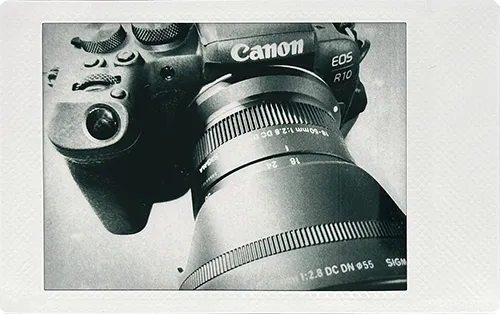
The Canon R10, I think I’m largely settled in on it. My only big complaints were lack of GPS and lenses. The GPS part: I was able to get the camera to talk to my phone and automatically grab GPS data and reset its clock when I change time zones. That’s handy, because I always forget, and end up with a swath of pictures that are out of sync with my phone pics. As far as lenses, I picked up Canon’s 16mm f/2.8 and Sigma’s 18-50mm f/2.8 Contemporary, both in RF mount. The 16 is very small and decent but the 18-50 has pretty much stayed on the camera full-time since I got it a few weeks ago. I didn’t want to invest in a ton of RF glass that I can’t use with my other cameras, but I also didn’t want to drag around giant pro lenses plus the adapter, and it looks a bit silly hanging off of such a tiny camera.

I’ve been shooting more film as of late. That slowed down after Iceland, but I’ve got a hoard of at least 50 rolls of film I should probably burn off. I shot a few rolls in Cambodia with the Olympus XA-2, which is such a great little camera. It’s pocketable, dead simple to use, and shoots amazing photos. I put a quick album of the Cambodia snaps over on Flickr. Only regret there is I didn’t take more pictures. I’ve also been dragging out the EOS 620 a bit more. I have the Canon 35mm f/2, which is incredibly sharp and has IS, but is a bit of a beast. Works great on this camera. Even better is when I drag out the 16-35mm f/4 L. That lens has such an amazing look when I’m using it wide open on a beach or mountain, just amazing dreamy vibes.

And yeah, I’m back on Flickr I guess. I nuked all my old albums and started fresh. There’s one album of my favorites from Iceland, but I’ve got to start over, basically. I burned a lot of cycles going back and forth on what to do about public photo hosting, and gave up. There’s not much of a community on Flickr anymore, but it’s one of the easiest ways to share out of Lightroom without sinking even deeper into the Adobe ecosystem, which I want to avoid. I’ll add more albums as I clean up and keyword old trips, which will happen most likely never, given current time constraints.

For some dumb reason, I thought it would be fun to try Kodak’s new half-frame camera, the Ektar H35N. It’s a “vintage look” point-and-shoot that shoots in portrait orientation, so you get 72 half-sized shots from a 36-shot roll. I got it, and it’s absolute junk. It’s roughly the same quality as a disposable camera, without the cardboard sleeve on the outside. Fixed shutter speed; fixed aperture; a built-in flash that might or might not work correctly. I loaded a roll into it, shot a dozen shots, and the dial was still reading S. I figured the film didn’t grab the teeth and wasn’t advancing, so I popped the door, and of course it was a dozen shots in and I ruined the roll. So this is going straight into the bin.

The other camera I got - and yes, why am I buying all these cameras? - is the Fujifilm Instax Mini EVO. This is a bizarre little thing, a “vintage looking” camera that’s really a combination of an Instax mini printer and a 2010-era 5MP digital camera. You point and shoot digitally, writing the images to a mini-SD card like you’re using an old Powershot, and you can spray-and-pray as many pics as you want without burning film. Later you review your takes, find the perfect shot, and flip the “film advance” thumb lever; the image gets printed on the mini-instant film. I’ve got an older Instax, and the usual drill is I take ten shots to burn up a pack of film, and maybe three are okay. Now I shoot twenty, thirty, and print the couple of keepers. And if I want to hand a copy to someone, I print two.

It shoots slightly better than the dumb version, but you also have a screen on the back to line up shots, instead of straining to look through a plastic-lens viewfinder. The camera also has ten film effects and ten lens effects, so you get a sort of cheap version of the Fujifilm emulation you’d find in an X100. I’d say there are maybe three of each that are acceptable, and it’s definitely not an Instagram-killer. You can also digital zoom a bit and play with the exposure compensation, the latter which is useful. It’s got a flash, too.

What is neat to me is that if you have the app on your phone, you can use the camera as a photo printer. Find a picture on your phone, and you can zap one or more copies straight to the camera and print them. This is an awesome feature, because I can take a super-sharp picture from the iPhone and it will make an amazing print on the white-border instant film. It’s both a modern not-plastic-lens shot and has the dreamy analog feel of instant camera film.

The Evo is slightly corny, and it’s slightly too big to be pocketable. Using it as a travel camera would be problematic, because it has this certain “look at me, I shop at Urban Outfitters” vibe to it, and I wouldn’t want it hanging around my neck all day, but it’s too big to stuff in a jeans pocket. Also, I’d expect any Instax film to get destroyed by TSA. “You can get them to hand-check your film” is right up there with “the airline will get you a hotel if you’re delayed” and “the free market will sort out retirement accounts.” Instax film packs are ISO 800, and the new stronger CT scanners are showing up everywhere. Of course, I could pop in a Target if I’m traveling domestically and buy some new film, or pack a lead bag with film packs. Or I guess I could just shoot away for a week and print what I want when I get home. But by that logic, I could just leave the whole thing behind and shoot on my phone.

Next two trips are booked. One is a quick one domestically in two weeks. The other is a much bigger thing in August. Stay tuned.
New camera: Canon EOS 620

canon-eos-620

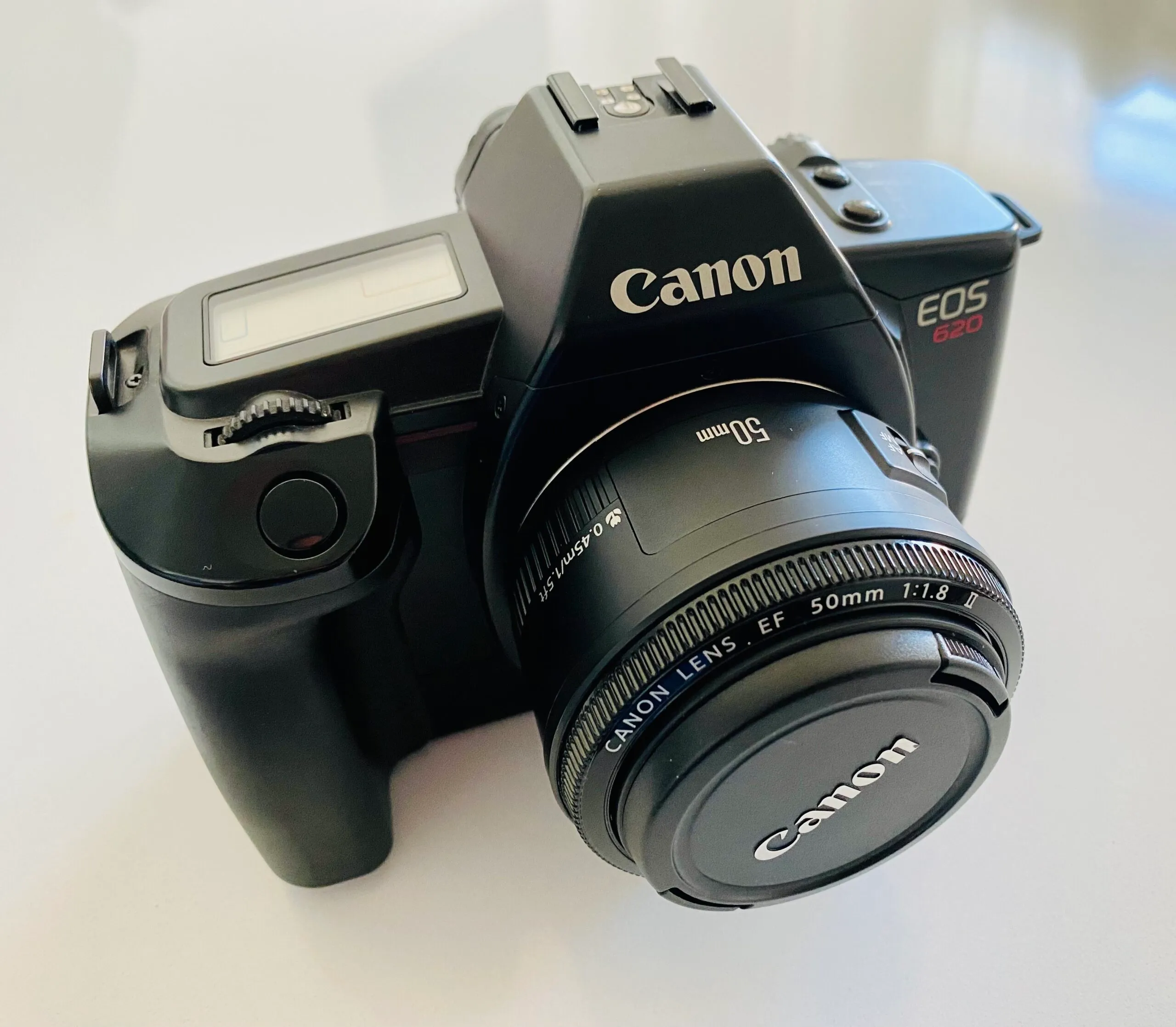
Because apparently I don’t have enough film cameras in the house, I got another one recently: the Canon EOS 620.

Film isn’t cheap right now, and some cameras are getting ridiculous. The Canonet QL17 rangefinder I bought in 2014, probably one of my best film cameras, costs roughly three times as much on the open market now. An Olympus XA2 you couldn’t give away for $20 back in the early 00s when digital hit could easily fetch $150 or more on the bay. Don’t even think about a used Leica.

But there’s a weird bubble at the end of the film era, where nobody wants those cameras. And that’s really interesting to me. I never had an SLR in college. Always wanted one, but wasn’t serious enough to drop the equivalent of a semester of tuition on a full kit. I could barely afford the hundred-dollar point-and-shoot Vivitar I bought in 1993. Now, these end-of-film-era cameras are going for cheap prices, maybe because they’re so similar to their digital counterparts.

Canon came out with the EOS 650 in 1987. (The EOS 620 came out a few months later, and added a faster shutter and some other minor improvements, despite the smaller model number.) The EOS was essentially a blank-slate start to an SLR, turning its back on the manual FD lens platform, and doing everything right the first time. Nikon was the choice of pros back then, and couldn’t turn their back on professionals who had massive investments in their existing lens system. Canon rolled the dice on this, and it was a good call.

The EOS 650 is built around the EF lens. EF stands for “Electro-Focus” and it’s an autofocus lens with no central mechanics in the camera itself. On previous systems, little gears levers or mechanical plungers were used between lenses and the body, so motors and other guts were kept in the camera itself. With an EF lens, there are seven little electrical contacts, and it’s all fly-by-wire. The lens contains any motors or electronics it needs to work. This was science fiction in 1987.

(Fun trivia: the very first image ever posted to the World Wide Web was taken with an EOS 650 and then scanned to a file. I’m not going to link to a Gizmodo story, but look it up.)

The EOS 650 (and 620) is also noteworthy because every EOS camera after it is based on the same essential design. I have the 620 and an EOS 750D sitting next to each other on my desk. The 620 is almost 30 years older, and the latter is a 24-megapixel digital camera that shoots video and has a fold-out screen. But there’s something in the basic design language that’s incredibly familiar with the two. Buttons are in the same place; the right grip feels similar; they both have a display on the upper right. The view through the viewfinder, the green aperture/shutter speed display below the image, looks almost identical. Obviously, one’s got no fold-out LCD screen and a little window that shows if the film is loaded, but they are very much from the same lineage.

The big attraction there is that the EOS 620 uses any EF lens from 1987 to present, and so do my DSLRs. I have a “nifty fifty” 50mm prime lens that I use a lot, and I slapped it on the 620, no problem. I’ve also got a nice 28-135 lens, and it works great on either.

(Minor nit: EF-S lenses made for crop-sensor APS-C digital cameras won’t work, and I’ve unfortunately got a lot of great EF-S lenses. Good news is EF lenses work great on APS-C cameras.)

(A less than minor nit: now that everyone’s going mirrorless, Canon’s introduced a new lens type called the RF. Mirrorless cameras with the RF mount can buy an optional adaptor and use their EF and EF-S lenses, but you can’t do the opposite. And there aren’t that many RF lenses yet. Also, this is the second time Canon’s tried this stunt. I have their older EOS-M, which used EF-M lenses, or an EF/EF-S adaptor. I’m not about to buy into this new system and have them change their mind a third time.)

Anyway, the EOS 620 is a strange shooting experience, because in many ways, it’s a normal shooting experience. It’s got a decent fast autofocus; a nice light meter; similar shooting modes and metering and exposure modes and all the usual stuff. Set it to P and shoot just like you would with a Canon Rebel. Swap to Tv or Av, same deal. Or shut off everything and go full manual. The one difference you’ll notice is the satisfying ca-chunk when you hit the shutter. It feels like a “real” camera.

There are some other advanced features I’d never expected in a film camera. The film loading is auto-everything, completely motorized. I guess my Vivitar point-shoot does this, but you drop in a cartridge, close the back, and it sucks in the film and tells you the frame number on the top. It’s fully motorized and fast (for the time), so you can set it on auto, hold down the shutter, and burn through three frames a second, much faster than simply lighting twenty-dollar bills on fire. And I never realized there were film cameras that did exposure bracketing, but if you want to shoot over/at/under a given exposure, set it to AEB and eat film three times as fast.

I think one thing that’s missing is there’s not any mystique or difference in the shooting experience versus using a modern DSLR. With a quirky camera like my Olympus Trip 35 or some vintage Polaroid, it’s so different from the typical experience, it’s like going from a Toyota Corolla to a Model T Ford with no roof. The 620 is like going from a 2015 Corolla to a 1995 Corolla. But try hand-cranking a Model T a few times, and you’ll see why a Corolla has its advantages. This won’t have any vintage vignetting or lens distortion like my toy cameras, but it will be nice to have something full-auto with no film loading drama involved.

Anyway, ran through a roll already, but let me do a few more and then get them off to the lab and see how it goes.

Related news: Kodak’s upping their film price by 25% in 2022. I’ve already started hoarding; I think I picked up 20 rolls since I heard that news.

Film, memoirs, rollovers

epson-img277

I just got back from another walk around NAS Alameda with two of my film cameras, the Vivitar point-and-shoot and the Canon QL-17. Nice weather for a walk, although there was some event going on and the west side of the island was far too busy for me. I should probably get used to that, because at some point, they’ll tear down the old barracks and put in live/work condos and it will always be this busy.

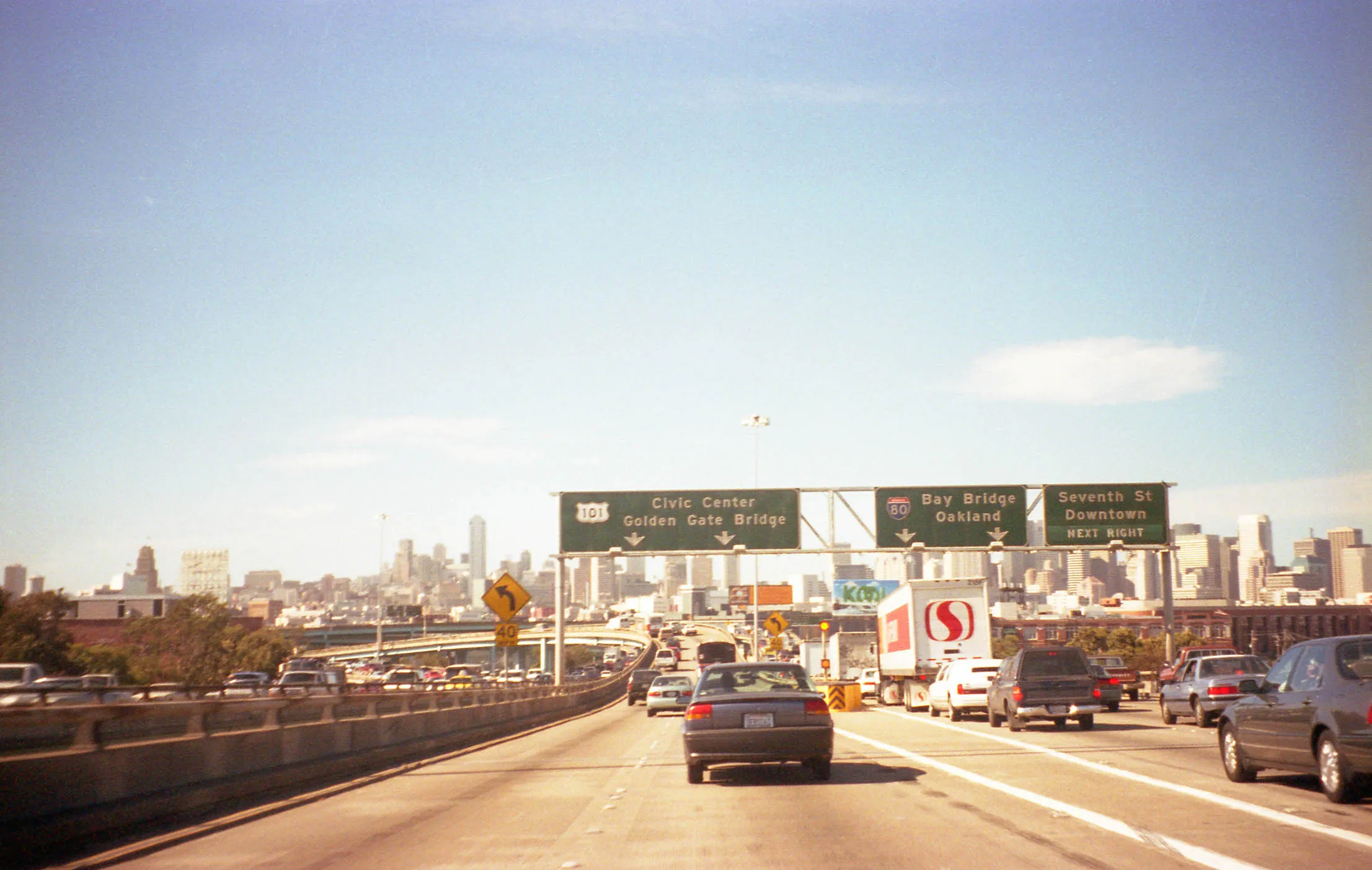
Shooting with that Vivitar is always weird, because sometimes I forget it isn’t the same one that I bought in 1993 and had back in the 90s. When I’m walking around the Bay Area with it, it’s a strong memory hole back to my first trip to California in 1996.  Looking at grainy, faded analog pictures (like the one above) reminds me so much of that trip, and the late 90s San Francisco, and it makes me wonder what it will be like in 2045, looking at 20-megapixel DSLR images on whatever crazy 3-D 200K screens we’ll be staring at by then. (Provided I still have vision in 25 years. And will still be alive.)

I made a vow to not buy any more film until I shot everything I have on hand, and I did that today, minus the 20-some shots of black-and-white still in the Canon. I’m expecting some crazy supply-chain stuff that’s going to completely throw that off, though. I haven’t bought any film since 2018, and I’m sure things have changed. I’ve got a dozen rolls waiting to be processed, so maybe when I drop those off at Mike’s Camera next weekend, I’ll see what they have in stock. Or, it’s off to eBay.


Writing is still going nowhere. This week, I was revisiting a book I started writing in 2012. I’ve tried a few times writing a book that is basically a Summer Rain prequel, that takes place in the summer of 1989, between high school and college. I’ve had at least two false starts totaling maybe 100,000 words between them, and they always die about halfway through. I started a very Raymond Federman-esque book in ‘12 that was about the attempts to write this book, and the problems therein. It came from reading Double or Nothing too many times.

I thought I’d revisit it, thinking about how I look back at that era as a 50-year-old, and all of the problems I have now with nostalgia. And maybe a meditation on the need to write a memoir, and why it’s a bad idea, or has been distorted or changed in recent years. I think when I was living in that era, and a bunch of stuff happened that summer, I always thought, “this would make a great book,” because it all lined up so exactly with the traditional novel plot curve, and the events were so extraordinary or traumatic or whatever. That was before I considered myself a writer, and back then, writing a book was a giant, insurmountable goal, like climbing a mountain or running a marathon. The idea of “getting published” was such a high bar, a lofty thing, and I always thought maybe someday I would.

Now, I’ve published so many books I can never remember how many and have to look it up any time someone asks. (It’s seventeen, more or less.) Anyone can publish their own book in five minutes. And the national zeitgeist isn’t about publishing a book, because nobody even reads books anymore. It’s about going viral, making a fifteen-second video that catches on, or whatever. Old man shakes fist at air, I know.

The other main reason I need to put this down is I know I have some deep, unsettled trauma about those years. It’s not like Trauma trauma, like I watched my parents get killed after going out to a movie and had to become a crime fighter dressed as a Chiroptera. But there’s some heavy unresolved something there, something that’s best left alone. Nothing specific, just generalized. I don’t want to spend my time going back anymore. But it’s a problem that when I’m faced with a blank page and no ideas, that’s where I go.


Nothing else. I wasted about half of today trying to figure out how to roll over an IRA from Schwab to E*Trade. That place I worked in Denver got bought by McAfee a long time ago, and I had like a month of 401K stuck there, which got moved to an IRA, and they mailed everything to my old address and it got lost. After much phone tag, I found it sitting in an account at Schwab, then promptly forgot all about it. I just remembered, and 25% of it is gone because of fees. I thought transferring it would involve actually finding a fax machine in 2021, but it appears they take a PDF by email. Fingers crossed.

New Project: Random Life

Screen-Shot-2012-09-08-at-9.11.52-AM

I’m starting a new video project. It is called Random Life.

TL;DR: Random Life

The long story:

I have always been a fan of Structural films, or minimalist filmmaking. This started with Richard Linklater’s movie Slacker, which I always liked because it captured the zeitgeist of a college campus at the end of the 80s/start of the 90s. I think a lot of people like the funny characters and weirdos of the movie, and I appreciate that, and the non-linear-but-really-linear structure, which was a big influence for my second book. But what really got me was how it captured the atmosphere of being on a campus in the summer. It trapped in amber that feeling, the sparseness and the undertone of it, the wide shots of off-campus housing and dive bars and Texas landscape.

Go backwards a step and you get to his earlier self-produced film, It’s Impossible to Learn to Plow by Reading Books. This is a largely non-narrative movie he shot on his own, about 90 minutes of Super-8 footage of him taking a trip on Amtrak to Montana to hang out with some friends. This is like Slacker minus the plot gimmick, and most people would think this is like watching paint dry, but I’ve probably watched it a hundred times. I sometimes leave it on a loop while I’m writing. It documents that exact time in history perfectly, the way it looked in 1987 or so, living in the dregs of student/dropout life.

The commentary of that movie led me to Structural films, like Michael Snow or George Landow, and then thanks to Linklater, I fell down a deep wormhole on minimalist James Benning. There’s a lot to be covered there, and it gets a little too art-school, especially in how it’s framed and explained for galleries. But at least there’s a formal name for it, and it’s a thing.

Another thing: I love “slow YouTube.” This started with Astronaut.io, which I’ve covered before, but is a great way to watch short clips from an endless list of random, no-traffic videos. Then I got into long videos, things I could run in the background. A couple of my favorites were a guy in the middle of nowhere in Sweden, building a log cabin by hand and a seven-hour train ride from Bergen to Oslo, Norway. These have a specific audience, and probably aren’t great for folks who expect a Pixar-perfect plot line in everything they watch, or if you have zero attention span. But I love this stuff.

I also love videos that are documentation. The classic example is Heavy Metal Parking Lot, but there are so many other gems out there, like this video of a 7-11 at 2:30 in the morning in 1987. Or Lyle Hiroshi Saxon has a YouTube channel that has videos going back 30 years of him wandering around Japan for hours, capturing nothing in particular but everything. And my absolute favorite of this genre is Nelson Sullivan. He dragged a full-size VHS camera and shoulder-luggable deck through Manhattan in the 80s, capturing tons and tons of footage of the club, arts, and drag scene back then. It’s awesome that he captured and documented a large amount of musical performances and shows, but the stuff I love is when he’s randomly taking a beat-up subway to Coney Island in the 80s.

Vlogging is common now. But today’s influencers are chasing viral attention and endorsements. Their short action-driven bits about product placement are meant to draw people in quick. Everything is overproduced and a two minute video will have three minutes of ads. I have no use for that. I want raw footage that goes nowhere.


So, the project.

I bought a camcorder in 1996. I don’t know why, maybe I thought I would Kevin Smith a film, or maybe a bonus check burning a hole in my pocket. I shot some random stuff with it, and used it a lot on my 1999 trip across the country. It was a huge pain in the ass to lug around, and I didn’t vacation much. But I shot maybe a dozen and a half tapes in the 90s. I never did anything with them because they had no narrative, and they also didn’t look great: grainy, blown-out colors, too much vignetting in  the lenses. Of course, now people download apps to specifically get that nineties look, so that liability is maybe an asset.

There was a gap there, but then in the late 00s, my point-and-shoot camera could suddenly take videos. And then my iPhone could, and starting in 2014, my DSLRs could shoot movie-grade video. Anyway, I have a ton of old footage I’ve never used, never cut, probably never even watched. And I need to do something with it.

That’s where Random Life comes in. I’m starting to dig through this, and post regularly to that channel. I’ve already started uploading and scheduling daily video drops, and will hopefully keep things good and random. I’ll also start shooting more now. What I shoot now won’t be important, but in ten years, it will be.

The focus: I’m just trying to document. No narrative, no voiceovers, no music, no jokes, no storytelling. I don’t want to appear in the videos, and I don’t want to film characters. No voiceovers. Just footage. AND NO ADS. I’ll probably keep each video short. The goal is to have a full playlist you can put on random and flip through each of these minute-long videos aimlessly. That’s what I want, anyway.

I might quit this in a week, but we’ll see. I have no idea about branding and marketing this thing, and don’t care, but subscribe if you want and let me know what you think.

Film, travel, whatever

2354669_2354669-R3-034-15A

I’ve been shooting more and more film. I got back my second batch of 35mm last weekend. I have this Canonet GL17 GIII rangefinder that I bought in 2014 that I haven’t been using, because I have some intangible hang-up about it. Maybe it needs a different strap or it’s too hard for me to focus, or I don’t like having that many manual controls, but I haven’t used it much. I shot a roll in Walnut Creek, and it amazes me how crisp it can look. (See the picture in this post as an example.) I always think of film as having a more blurry or vague quality as compared to the exactness of digital, but that camera is so sharp, it is eerie. I’ll need to sort through these and post the best of them. There’s an album on my flickr for analog stuff here.

And yeah, looks like Flickr is changing. Their free accounts are being limited to 1000 photos, and some other goofy stuff. I’ve always paid for a Pro account, so no change here. I’m old. I have like 12,000 photos on Flickr, and I haven’t even really tried to publish everything I have on Lightroom, which has like three times that. I hope I can keep using Flickr for a while. I’d hate to have to dumb down my collection to fit some new Web 3.0 paradigm or whatever.

I shot a roll of 120 film in my Diana F+, and when I got it back, it was all screwed up. I have an instant back for that camera, and I forgot to take out the little diopter you put in front of the lens inside the camera. So all the pictures were way out of focus and had weird stuff at the edges. I fixed that, and shot a few more rolls. I also, in a fit of stupidity, bought a Holga camera too, which is possibly even worse than the Diana. Shot a roll of B&W in that. We’ll see how it goes.

I think one of the reasons I like film is because when I shoot in digital, I take a picture, and then look at it, and see if it worked, which takes me out of the moment of actually shooting. With film, I can’t see anything, so any incremental improvement I have to take with successive shots is still in the moment, and involves a certain amount of faith in my abilities. It also puts me in the moment with my surroundings, because if I’m walking, I’m looking at everything around me and looking for a perfect shot. I’m not walking and shooting everything around me. That sounds pretentious and precious, but it’s something I’ve been thinking about, especially as I dump more and more money into this.

I booked my winter holiday travel, and will be back in Indiana for a week. I don’t know any details, except that I’m staying in South Bend, and like everyone back there is dying or something. So that will be interesting. Looking forward to taking a few more pictures of Concord Mall before it is imploded or whatever happens there. (There are currently no redevelopment plans. There were, but that’s old news. See also previous post on this.)

Nothing else. Trying to lay low until the election is over, because everything is horrible.