The Wrath of Kon

Dispatches, thoughts, and miscellanea from writer Jon Konrath

Tag: obsolete-technology

My first CD player

toshiba-xr-j9

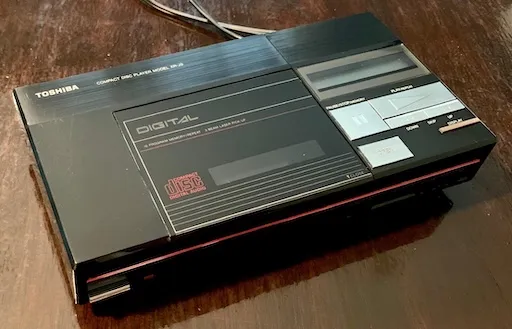
I had to rip a few CDs last week, which is a rare occurrence these days. I don’t even have a CD player at this point, and have to dig up an external optical drive for my Mac once or twice a year when this happens. It had me thinking about the rise and fall of CDs in my life, which brought me back to my first CD player ever, the Toshiba XR-J9.

So, 1987. The Compact Disc was released in Japan five years before, and audiophiles had been buying them in the US, but not so much in Elkhart, Indiana. The whole idea of digital audio was a thing of awe, total science fiction. Lasers! The ones and zeroes captured in the studio remained ones and zeroes until right before they hit your ears, with no degradation, no distortion, no mangling through resistance-bearing wires and analog amps. Some magazine article said if you dubbed a cassette from a CD, your copy would sound better than the professionally-duplicated one you bought in a store. I can’t even remember the first time I actually heard or touched a CD, and didn’t know anyone who had a player. I had to have one, of course. But I couldn’t spend a grand on a Sony home player, and didn’t really have the stereo to match, which would cost a few thousand more.

At that time, I had a Soundesign stereo, probably from Wards or Sears, which had tower speakers, sat in a wood rack with glass doors on the front, and was a single piece for the receiver, EQ, and double tape deck, but had grooves in the plastic face so it looked like a stack of individual components. It wasn’t exactly high fidelity, but it was better than the Sears all-in-one I had in grade school and junior high. And it had a pair of RCA connectors for Aux In, tempting me to add more.

I was out of the house more than I was in it back in high school, so cassette was my primary medium. In my pedestrian days, I ran through $20 Walkman clones on a regular basis, whatever I could pick up at Osco Drugs on a discount. Once I graduated to a car, it had a no-name tape deck in it. For a while, I would buy vinyl and record them to tapes, but I mostly bought cassettes, or dubbed friends’ albums onto blanks.

Every time I went to any store with audio gear, I’d ogle the various components, thinking about how someday when I was out of college and rich, my first priority (aside from a Commodore Amiga) would be to buy some esoteric system with gigantic speakers, two dozen bands of EQ, a DAT digital tape deck (what happened to those?), and of course a reference-quality CD player. There was a store in the Concord Mall called Templin’s that was half instruments, half audio gear. (Oddly, they also sold Atari home computers.) This was the place where they had separate listening rooms where you could go in and see full setups like the one in American Psycho, thousands of dollars of gear that was absolutely unobtainable to me.

In the summer of 1987, I started working my first “real” job at the Taco Bell across the highway from the Concord Mall. And right around then, CD player prices started dropping. They were like $1000, then hit $500, then $400 or $300. And around the time my first paycheck hit my pocket, I was in the K-Mart across the street from my ‘Bell, and there was this CD player that was a hundred dollars. I absolutely had to buy in, and I did. (For reference, $100 in 1987 is about $285 now. I made $3.35 an hour dealing with drive-through abuse and refried bean cooking at TB.)

The XR-J9 was an odd little beast. It was about twice the size of a battery-powered Sony Discman of that vintage, but way smaller than a component home CD player. It was a weird mix of the two, though. Like a Discman, it was a top-loader; you popped open a lid and put the disc directly on a hub, then closed the door to get the laser to start. (Laser! I now owned a Class 1 laser! 3-beam pickup, whatever that means! It even had a warning label on the bottom!)

Unlike the portable Discman, the Toshiba ran on mains only, with no provision for a battery. It also had a fixed set of RCA cables coming from the back, which would plug into a home receiver. It also had a headphone jack and volume slider on the front, but unless you had a Honda generator with you, it was in no way portable. And those cables weren’t removable, which bugged me.

The controls were spartan: a power button on the front; the usual play, pause, forward, and back buttons. You pressed in a corner of the lid and then it unlatched and popped open. It also had a Display button, which I think toggled the time versus the time remaining that showed on the small LCD display. Some buttons had multiple functions. If you pressed Forward once, it would skip a track; hold it and it would fast-forward through the track, playing a sliver of sound every five seconds. This was amazing coming from the tape world, because I swear I spent half my batteries jumping around tapes, and this was instant. Random access! There was also some elaborate combination of buttons you could mash to access a “memory” mode where you could program up to 16 tracks in any order to get a custom playlist, which was a huge pain in the ass to do, and then it immediately went away when you opened the player. I would very occasionally do this when listening to The Police - Synchronicity so I could skip track 4 (“Mother”) because I never felt like it matched the rest of the album. (Now I think it’s the best track.)

The obvious problem after sinking a whole paycheck into this thing was that I now needed music. I think at that time, a tape was like $7.99 and an LP was $9.99, but a CD was $15.99. Each title was an investment. I went to Super Sounds, my favorite record store ever in the Concord Mall, and went A-Z through their three or four racks of CDs, trying to figure this one. (At that time, CDs were in “long boxes” which were the same height and half the width of an LP, so stores could use the same vertical racks for the new format.)

My first purchase was the most recent Iron Maiden album, Somewhere in Time. I was way too into Maiden at the time, and this album was a perfect storm for me: it was Iron Maiden; it had this futuristic cyberpunk theme; it was what I thought at the time was super-modern, ultra-technical sounding; it was digitally mastered; it was Iron Maiden; it was loud, but precise. It was also almost an hour long, so it was like twice as long as if I’d just bought a Boston album or whatever. I remember bringing the CD home, listening to the whole thing on headphones, and there was this one part on the song “Deja-Vu” where Nicko McBrain is playing this snare volley right before the chorus comes back in, and I could suddenly hear that he was also tapping out time on the hi-hat, which wasn’t audible on the cassette. It absolutely blew my 16-year-old mind.

Of course, I had no more money, so I had to go sling tacos and wait two more weeks to get something else. I don’t remember why, but I got the ELP album Trilogy next. A headphone listen also bewildered me. The first song starts with a beating heart, then Emerson doodling away on keyboards, which sounded incredibly crisp, compared to a muddy cassette. After two minutes, the rest of the band suddenly came crashing in, and the dynamic range demonstrated by the sudden change was incredible.

I can’t remember what was the third disc, but I did waver on whether I wanted the high quality of a CD or having twice as many at-bats by sticking to tape. By that fall when I started working at Wards and moved to weekly paychecks, I vowed to myself that I’d buy a tape every week, if not more. I pretty much stopped buying CDs for a while, until maybe my senior year, when I discovered the Columbia House and BMG CD clubs.

About twenty years later, the CD thing came to an end, with just shy of a thousand titles in my collection. I’d slowly been ripping things to MP3 when the 21st century started. Once the iPod hit, CDs became a temporary medium I used until I could rip the tracks to a hard drive, then became a backup in storage in case my computer died. On November 22, 2005, I made my first purchase on iTunes, and that was the beginning of the end. Now, almost everything is added from Apple Music or bought from Bandcamp.

(Oddly enough, the first track I ever bought online was Harry Nilsson’s “Remember.” The reason I suddenly needed to hear it again was a memory of the Michiana student TV show Beyond Our Control, which closed each episode with the song.)

That Toshiba lasted until maybe 1992, when it mysteriously died, stopped loading up discs. I bought a Kenwood portable player that summer (this was described in Summer Rain) and that unit suddenly became my main CD player for a few years until I bought a Kenwood 6+1 changer at the start of 1994. The Kenwood portable never really got used as a portable, because it drained AA batteries so fast, and this was before the anti-skip memory thing was out, so it was fairly useless on the go. I never considered CD as a portable medium, using the MiniDisc from the late 90s until the iPod showed up. I didn’t own a car with a CD player until 2007, when the format was dead. My 2014 car had a CD player that I think I used once. I honestly could not remember if my 2025 car even has one, and I guess it doesn’t.

All of this is so strange to think about, because that 1987 dream of someday having a gigantic reference system in my home is long gone. (So’s that desire for a new Amiga, but that’s another story.) MP3 wasn’t even a dream back then. I listen to 99% of my music on AirPods these days. I don’t have a room full of racks of CDs. I could afford to go buy any stereo I want, but what would I even buy? I bought a pair of near-field monitors for my desk literally a month before the pandemic started and I had to go to pure headphones for the locked-in-the-same-apartment 24/7 thing. I think I have two different Kenwood receivers in storage, and use a $200 sound bar in the living room for the TV. Music is still important, and I’m listening to stuff every day. But the technology has changed and the meaning of where it is in my life has too. Is that good or bad?
State of the cameras update

canon-on-instax

I already did a post in February about the current camera situation. That’s still evolving, and I’m procrastinating on my real writing, so let me ramble a bit.

First, the Sony a6400 ended up going off to KEH, as did all the lenses. End of experiment there. I know people love Sony, but it just did not work for me. At least I did not get completely swindled on the trade-in. (Thanks to KEH on that.)

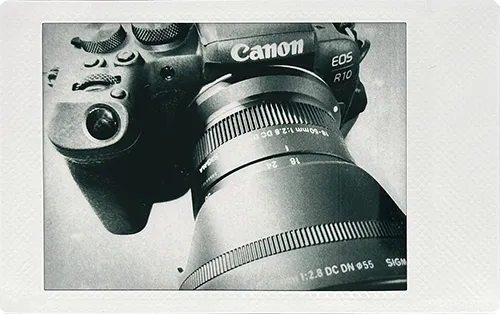
The Canon R10, I think I’m largely settled in on it. My only big complaints were lack of GPS and lenses. The GPS part: I was able to get the camera to talk to my phone and automatically grab GPS data and reset its clock when I change time zones. That’s handy, because I always forget, and end up with a swath of pictures that are out of sync with my phone pics. As far as lenses, I picked up Canon’s 16mm f/2.8 and Sigma’s 18-50mm f/2.8 Contemporary, both in RF mount. The 16 is very small and decent but the 18-50 has pretty much stayed on the camera full-time since I got it a few weeks ago. I didn’t want to invest in a ton of RF glass that I can’t use with my other cameras, but I also didn’t want to drag around giant pro lenses plus the adapter, and it looks a bit silly hanging off of such a tiny camera.

I’ve been shooting more film as of late. That slowed down after Iceland, but I’ve got a hoard of at least 50 rolls of film I should probably burn off. I shot a few rolls in Cambodia with the Olympus XA-2, which is such a great little camera. It’s pocketable, dead simple to use, and shoots amazing photos. I put a quick album of the Cambodia snaps over on Flickr. Only regret there is I didn’t take more pictures. I’ve also been dragging out the EOS 620 a bit more. I have the Canon 35mm f/2, which is incredibly sharp and has IS, but is a bit of a beast. Works great on this camera. Even better is when I drag out the 16-35mm f/4 L. That lens has such an amazing look when I’m using it wide open on a beach or mountain, just amazing dreamy vibes.

And yeah, I’m back on Flickr I guess. I nuked all my old albums and started fresh. There’s one album of my favorites from Iceland, but I’ve got to start over, basically. I burned a lot of cycles going back and forth on what to do about public photo hosting, and gave up. There’s not much of a community on Flickr anymore, but it’s one of the easiest ways to share out of Lightroom without sinking even deeper into the Adobe ecosystem, which I want to avoid. I’ll add more albums as I clean up and keyword old trips, which will happen most likely never, given current time constraints.

For some dumb reason, I thought it would be fun to try Kodak’s new half-frame camera, the Ektar H35N. It’s a “vintage look” point-and-shoot that shoots in portrait orientation, so you get 72 half-sized shots from a 36-shot roll. I got it, and it’s absolute junk. It’s roughly the same quality as a disposable camera, without the cardboard sleeve on the outside. Fixed shutter speed; fixed aperture; a built-in flash that might or might not work correctly. I loaded a roll into it, shot a dozen shots, and the dial was still reading S. I figured the film didn’t grab the teeth and wasn’t advancing, so I popped the door, and of course it was a dozen shots in and I ruined the roll. So this is going straight into the bin.

The other camera I got - and yes, why am I buying all these cameras? - is the Fujifilm Instax Mini EVO. This is a bizarre little thing, a “vintage looking” camera that’s really a combination of an Instax mini printer and a 2010-era 5MP digital camera. You point and shoot digitally, writing the images to a mini-SD card like you’re using an old Powershot, and you can spray-and-pray as many pics as you want without burning film. Later you review your takes, find the perfect shot, and flip the “film advance” thumb lever; the image gets printed on the mini-instant film. I’ve got an older Instax, and the usual drill is I take ten shots to burn up a pack of film, and maybe three are okay. Now I shoot twenty, thirty, and print the couple of keepers. And if I want to hand a copy to someone, I print two.

It shoots slightly better than the dumb version, but you also have a screen on the back to line up shots, instead of straining to look through a plastic-lens viewfinder. The camera also has ten film effects and ten lens effects, so you get a sort of cheap version of the Fujifilm emulation you’d find in an X100. I’d say there are maybe three of each that are acceptable, and it’s definitely not an Instagram-killer. You can also digital zoom a bit and play with the exposure compensation, the latter which is useful. It’s got a flash, too.

What is neat to me is that if you have the app on your phone, you can use the camera as a photo printer. Find a picture on your phone, and you can zap one or more copies straight to the camera and print them. This is an awesome feature, because I can take a super-sharp picture from the iPhone and it will make an amazing print on the white-border instant film. It’s both a modern not-plastic-lens shot and has the dreamy analog feel of instant camera film.

The Evo is slightly corny, and it’s slightly too big to be pocketable. Using it as a travel camera would be problematic, because it has this certain “look at me, I shop at Urban Outfitters” vibe to it, and I wouldn’t want it hanging around my neck all day, but it’s too big to stuff in a jeans pocket. Also, I’d expect any Instax film to get destroyed by TSA. “You can get them to hand-check your film” is right up there with “the airline will get you a hotel if you’re delayed” and “the free market will sort out retirement accounts.” Instax film packs are ISO 800, and the new stronger CT scanners are showing up everywhere. Of course, I could pop in a Target if I’m traveling domestically and buy some new film, or pack a lead bag with film packs. Or I guess I could just shoot away for a week and print what I want when I get home. But by that logic, I could just leave the whole thing behind and shoot on my phone.

Next two trips are booked. One is a quick one domestically in two weeks. The other is a much bigger thing in August. Stay tuned.

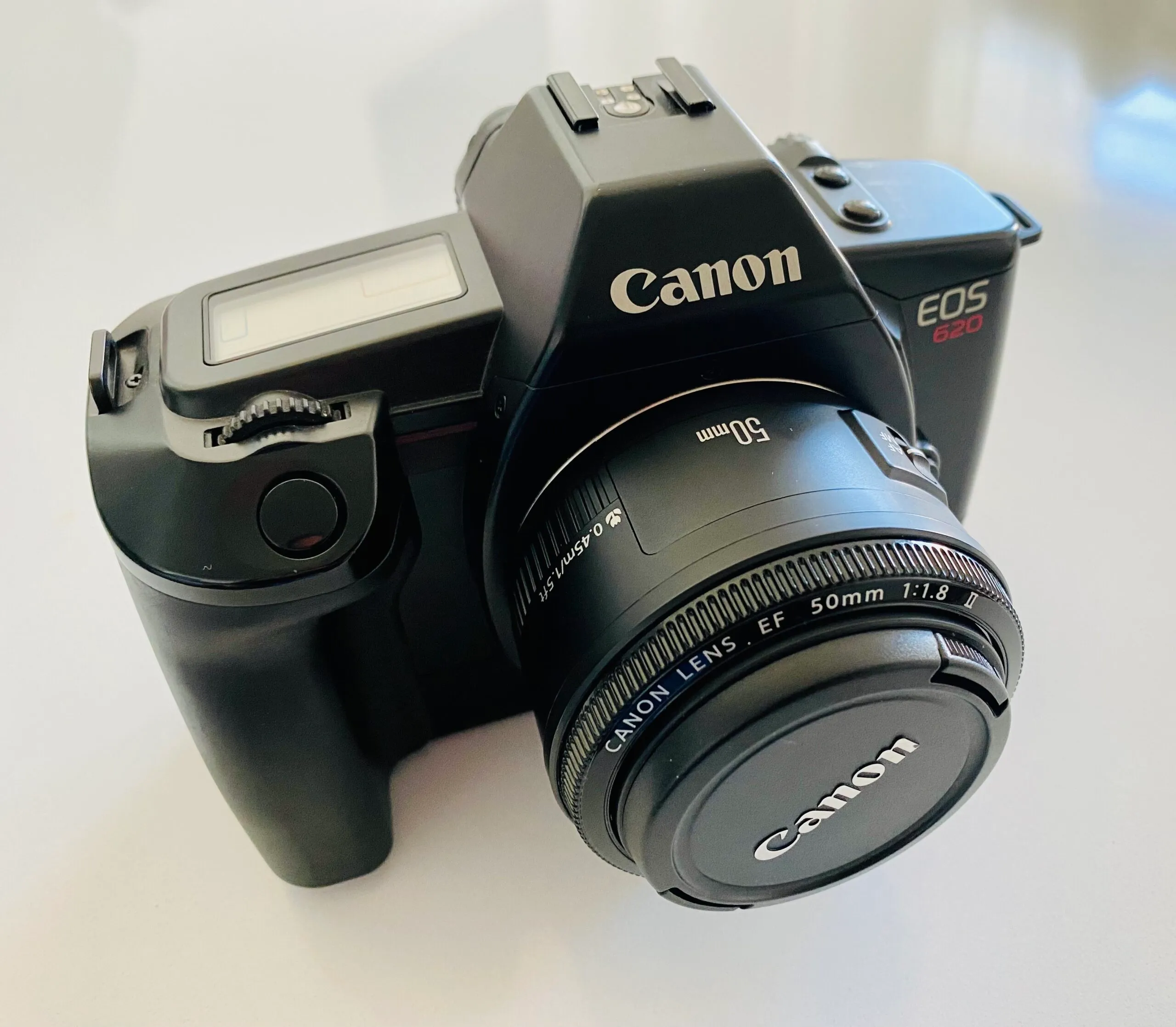
New camera: Canon EOS 620

canon-eos-620

Because apparently I don’t have enough film cameras in the house, I got another one recently: the Canon EOS 620.

Film isn’t cheap right now, and some cameras are getting ridiculous. The Canonet QL17 rangefinder I bought in 2014, probably one of my best film cameras, costs roughly three times as much on the open market now. An Olympus XA2 you couldn’t give away for $20 back in the early 00s when digital hit could easily fetch $150 or more on the bay. Don’t even think about a used Leica.

But there’s a weird bubble at the end of the film era, where nobody wants those cameras. And that’s really interesting to me. I never had an SLR in college. Always wanted one, but wasn’t serious enough to drop the equivalent of a semester of tuition on a full kit. I could barely afford the hundred-dollar point-and-shoot Vivitar I bought in 1993. Now, these end-of-film-era cameras are going for cheap prices, maybe because they’re so similar to their digital counterparts.

Canon came out with the EOS 650 in 1987. (The EOS 620 came out a few months later, and added a faster shutter and some other minor improvements, despite the smaller model number.) The EOS was essentially a blank-slate start to an SLR, turning its back on the manual FD lens platform, and doing everything right the first time. Nikon was the choice of pros back then, and couldn’t turn their back on professionals who had massive investments in their existing lens system. Canon rolled the dice on this, and it was a good call.

The EOS 650 is built around the EF lens. EF stands for “Electro-Focus” and it’s an autofocus lens with no central mechanics in the camera itself. On previous systems, little gears levers or mechanical plungers were used between lenses and the body, so motors and other guts were kept in the camera itself. With an EF lens, there are seven little electrical contacts, and it’s all fly-by-wire. The lens contains any motors or electronics it needs to work. This was science fiction in 1987.

(Fun trivia: the very first image ever posted to the World Wide Web was taken with an EOS 650 and then scanned to a file. I’m not going to link to a Gizmodo story, but look it up.)

The EOS 650 (and 620) is also noteworthy because every EOS camera after it is based on the same essential design. I have the 620 and an EOS 750D sitting next to each other on my desk. The 620 is almost 30 years older, and the latter is a 24-megapixel digital camera that shoots video and has a fold-out screen. But there’s something in the basic design language that’s incredibly familiar with the two. Buttons are in the same place; the right grip feels similar; they both have a display on the upper right. The view through the viewfinder, the green aperture/shutter speed display below the image, looks almost identical. Obviously, one’s got no fold-out LCD screen and a little window that shows if the film is loaded, but they are very much from the same lineage.

The big attraction there is that the EOS 620 uses any EF lens from 1987 to present, and so do my DSLRs. I have a “nifty fifty” 50mm prime lens that I use a lot, and I slapped it on the 620, no problem. I’ve also got a nice 28-135 lens, and it works great on either.

(Minor nit: EF-S lenses made for crop-sensor APS-C digital cameras won’t work, and I’ve unfortunately got a lot of great EF-S lenses. Good news is EF lenses work great on APS-C cameras.)

(A less than minor nit: now that everyone’s going mirrorless, Canon’s introduced a new lens type called the RF. Mirrorless cameras with the RF mount can buy an optional adaptor and use their EF and EF-S lenses, but you can’t do the opposite. And there aren’t that many RF lenses yet. Also, this is the second time Canon’s tried this stunt. I have their older EOS-M, which used EF-M lenses, or an EF/EF-S adaptor. I’m not about to buy into this new system and have them change their mind a third time.)

Anyway, the EOS 620 is a strange shooting experience, because in many ways, it’s a normal shooting experience. It’s got a decent fast autofocus; a nice light meter; similar shooting modes and metering and exposure modes and all the usual stuff. Set it to P and shoot just like you would with a Canon Rebel. Swap to Tv or Av, same deal. Or shut off everything and go full manual. The one difference you’ll notice is the satisfying ca-chunk when you hit the shutter. It feels like a “real” camera.

There are some other advanced features I’d never expected in a film camera. The film loading is auto-everything, completely motorized. I guess my Vivitar point-shoot does this, but you drop in a cartridge, close the back, and it sucks in the film and tells you the frame number on the top. It’s fully motorized and fast (for the time), so you can set it on auto, hold down the shutter, and burn through three frames a second, much faster than simply lighting twenty-dollar bills on fire. And I never realized there were film cameras that did exposure bracketing, but if you want to shoot over/at/under a given exposure, set it to AEB and eat film three times as fast.

I think one thing that’s missing is there’s not any mystique or difference in the shooting experience versus using a modern DSLR. With a quirky camera like my Olympus Trip 35 or some vintage Polaroid, it’s so different from the typical experience, it’s like going from a Toyota Corolla to a Model T Ford with no roof. The 620 is like going from a 2015 Corolla to a 1995 Corolla. But try hand-cranking a Model T a few times, and you’ll see why a Corolla has its advantages. This won’t have any vintage vignetting or lens distortion like my toy cameras, but it will be nice to have something full-auto with no film loading drama involved.

Anyway, ran through a roll already, but let me do a few more and then get them off to the lab and see how it goes.

Related news: Kodak’s upping their film price by 25% in 2022. I’ve already started hoarding; I think I picked up 20 rolls since I heard that news.

videos, writing, programming, pocket computer

DSCF2089

I am sort of done with the Random Life project. There are 100 videos there now. It was fun digging through some old stuff, but I got almost zero reaction from anyone out of it, and maybe it was a dumb idea. Oh well. Maybe in two or three years, I’ll look at it again and it will be interesting.

Been insanely busy with a big work release, and that’s finally done, but I haven’t been back on the horse with anything writing since then. It’s the time of year where I start to panic about not getting a book published this year, since the last year I had nothing published was 2010. But I’m in a weird place right now, where I am having a lot of trouble writing anything cohesive. I am just repeating myself at this point, and I really don’t like what I’ve been doing the last few books. And a lot of people agree, based on my sales numbers. So who knows what I will do. Maybe I will pull something together in the next 96 days. Or maybe I will pick up this writing thing after I retire. I really don’t know.

      • For whatever reason, I started programming again. One of the three projects I always take up when I think I’m going to learn programming is writing a Zork-like game, a text-based RPG. Yes, I could just use Twine or some other game engine to do this. I mean, I could just play Zork. This is mostly just a dumb hobby for me to do because I can’t write, I don’t want to spend two thousand dollars on a gaming PC, and I am not about to start playing golf.

So I started writing this game in straight vanilla C, with nothing but the standard library. I still know a remarkable amount of C, given that I think I learned it thirty years ago. What I didn’t remember is that C is such a pain in the ass to work with. Every data structure that isn’t an integer requires you to either write or steal a library to do it. Dynamic arrays? DIY. Binary trees? You’re on your own. It all involves pointers and malloc’ing memory, and every time I would write ten lines of code, I’d think, “well, that’s going to break in actual use” or “that’s completely insecure.” I got a few hundred lines into the thing before I decided to switch to using Ruby.

I guess Ruby is now an inherently uncool language. All the cool kids use Rust, or JavaScript, or maybe Python. I first started messing with Ruby in the context of Rails development in 2006 or 2007, and spent a couple of years doing a ton of it, on a brief  sabbatical from tech writing. Haven’t done much since then, but I thought maybe I’d do this game in Ruby, no Rails, no ActiveRecord, no crazy gem dependencies. I think it took me about 25 minutes to redo the couple of days of work I did in C.

It was easy to get lost in this, but I also ran into a few issues. The first is the constant though of “nobody uses Ruby anymore.” The other is thinking that some bit of code is a very un-Ruby way to do things. I started reading more about Ruby, and it sort of drove me nuts because the Ruby way to do stuff is usually inherently unreadable. It’s neat and cool, but in my mind, doing a “if this thing is nil, do something else” is more readable than “do something else unless this thing is nil.” I realize I’m probably losing all of you non-programmers here, and I’m being pedantic, but I have some basic fear of writing this thing, publishing it on GitHub, and then having a seasoned veteran look at it like I’d look at a Reddit DIY post about some idiot who proudly enlarged their living room by removing every load-bearing interior wall in their house.

Also I get to the “why are you even doing this?” point. And the fact that I’m relaxing after a dozen of hours of hacking away at unreadable garbage in the Atom editor and pushing it to GitHub by spending a few hours hacking away at unreadable garbage in the Atom editor and pushing it to GitHub. So, yeah. How much does golf cost?


I bought this “Pocket Computer” - a Sharp PC-E500S. It came out in 1995, and has 32KB of memory. It’s roughly half the size of an iPad lengthwise, about 9x4 inches, maybe 3/4-inch thick. It has a 4x40-character display, LCD, and more or less a full QWERTY keyboard, except plastic little keys like a calculator. You can write BASIC programs in it, but it also has a bunch of crazy engineering software in it, so you can do integral calculus or pull up a periodic table of elements. It runs forever on four AAA batteries.

I don’t really know what I’ll do with it. I won it on a lark - made a hail mary offer on it on eBay, and the seller accepted. It has a serial port that uses a connector I’ve never seen, and a cartridge port for proprietary memory cards that are impossible to find. It is slightly more useful and interesting than the Casio FX-7000GA I have from 1990, which currently spends its time in a storage container in my closet. I need to keep in mind that buying things doesn’t really give me the joy I think it will.


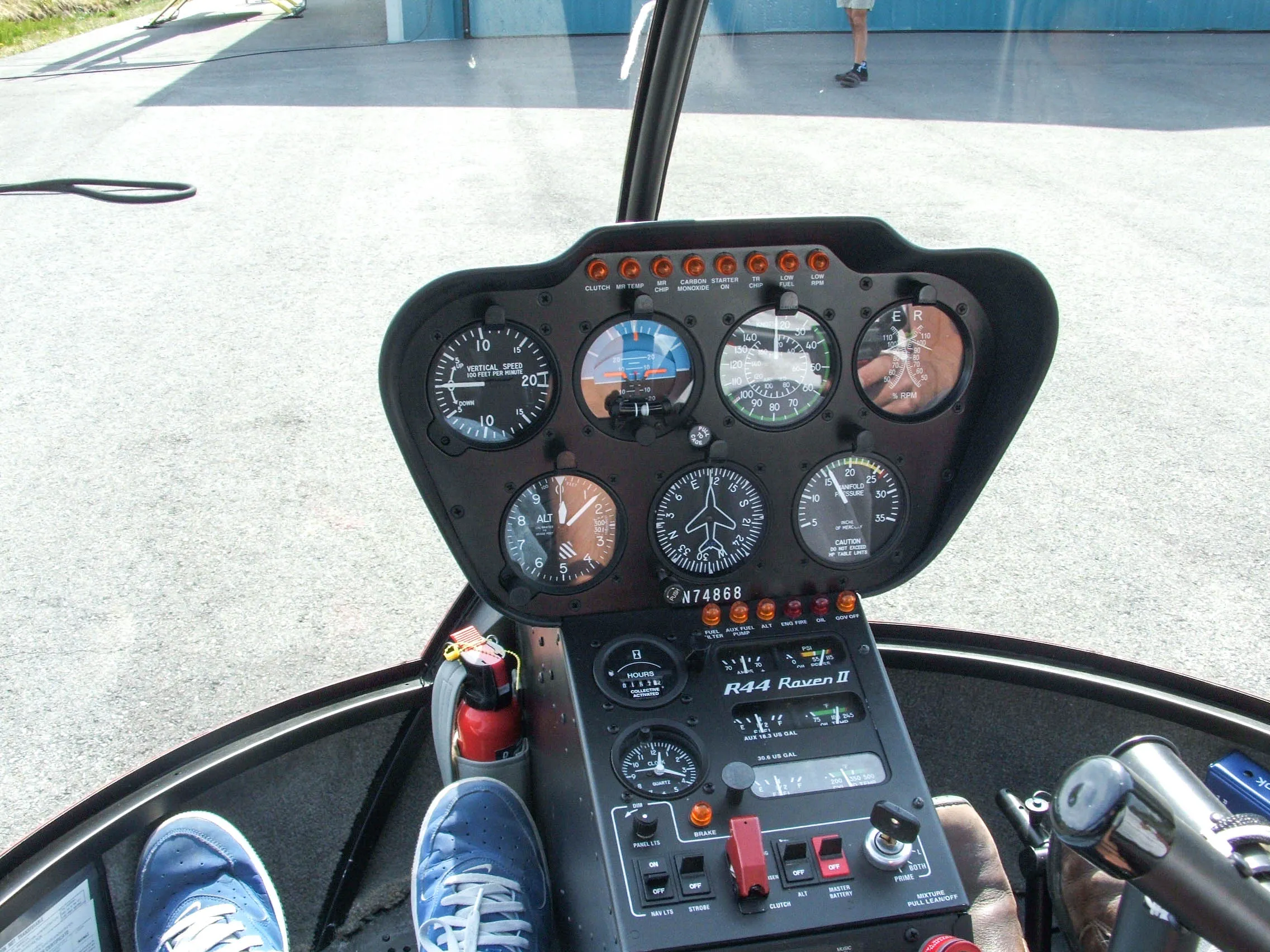
The helicopter picture above is apropos of nothing. It’s from my Alaska trip in 2006. I think I’m at the point where I want to go back to Alaska, and I’m currently stuck with a bunch of Alaska Air credits I can’t use, but who knows when it will be safe to get back up there. I sometimes think it would be cool to go further north, head up to Fairbanks, but I don’t know the logistics of it. Maybe at some point.

The Death of the Good Internet

Screen-Shot-2017-04-10-at-12.32.13-PM

I’ve been meaning to write a post about this forever, but someone else at The Ringer did such a great job of it. Check it:

The Day the Good Internet Died

The one thing I find interesting about this article is the thought that maybe it wasn’t that the death of Google Reader killed off blogging, but that the death of blogging killed off Google Reader. It’s true that we all devolved into social media doom-scrolling instead of actually reading, but another factor is that Google was pushing people into Google Plus, and the asinine assumption that people would rather find what they wanted to read by scrolling through eleventy million messages rather than going to a list of exactly what they wanted to read. (What Google actually meant was that they wanted you to scroll through eleventy billion messages, with every fourth message being an ad someone paid them to run.)

I’m old enough to remember the first wave of blogs and interesting/time-wasting web sites, because I spent a lot of the late 90s and early 00s paging through them while I was at work or sitting at home without cable TV. But in that pre-Reader era, I did it by having folders of bookmarks. I’d go to my “daily” folder and sequentially click through each bookmark, trying to remember where I left off the day before. This was a great way to waste time, but not user-friendly, and it required me to remember where I left off. (I still had a memory then, which did help.)

Compared to this, Google Reader was amazing. I could keep track of everything in one place, and read the things in order, with counts of unread articles, and indications of what I already did see. All of this was possible because of RSS, which was a perfect example of the interoperable web. The closely-related iGoogle also had the ability to make a widget based on a web page’s RSS feed, and RSS was very integral to the advent of the podcast. It was so mind-blowing and vital at the time, that I hacked together a script that would output RSS for the pre-WordPress version of this blog, which was hacked together with a bunch of homebrew shell scripts, emacs extensions, PHP, and gaffer’s tape.

After the death of GR, I went on to Feedly, but every blog I read either died a high-profile death, or stagnated with no new posts. I keep hearing about these revival of blogging things and people saying Medium or or Longreads or Substack or whatever the hell else is the next big thing. And no matter what it is, it devolves into people selling Tony Robbins-esque bullshit classes on how to get rich in real estate. There are still a ton of people blogging, but “blogs” are now the things hanging off the side of dentists’ web sites and posting daily listicles about proper gum care to increase their SEO.

I used to bitch about how the money people and con men would fuck up the web long before the web even existed. I started throwing letters into this void (ala usenet) before AOL’s Eternal September started. In 1995, at my first real job. I was writing docs for one of the first web browsers that added SSL, while a marketing drone stood in front of my desk barking about how they needed to ship this immediately so they could sell fifty-dollar t-shirts on the web for the first time ever, and I thought this is not going to end well. And it didn’t.

And now, every time Google drops a vital service or Facebook decides they want me to look at stuff in a new inconvenient way, I always have a first thought: maybe I’m just too old for this stuff, and when I lose my shit because I’m forced to watch a TikTok video to figure out how to change my refrigerator’s water filter, I’m doing the same thing my parents did in 1987 when they had an aneurysm and started screaming about the Japanese taking over because channel 16 suddenly moved to channel 34. But then I always remember: follow the money. Google Reader got killed so we could be forced to watch more ads. The Facebook algorithm is set up to force us to watch more ads. Amazon stopped putting the names of products in their receipts because Google was using them to sell more ads. Everything is because of money. I was right. The money people ruin everything.

Baker’s article brings up an old Alex Balk article, which says the following:

Here I will impart to you Balk’s Third Law: “If you think The Internet is terrible now, just wait a while.” The moment you were just in was as good as it got. The stuff you shake your head about now will seem like fucking Shakespeare in 2016.

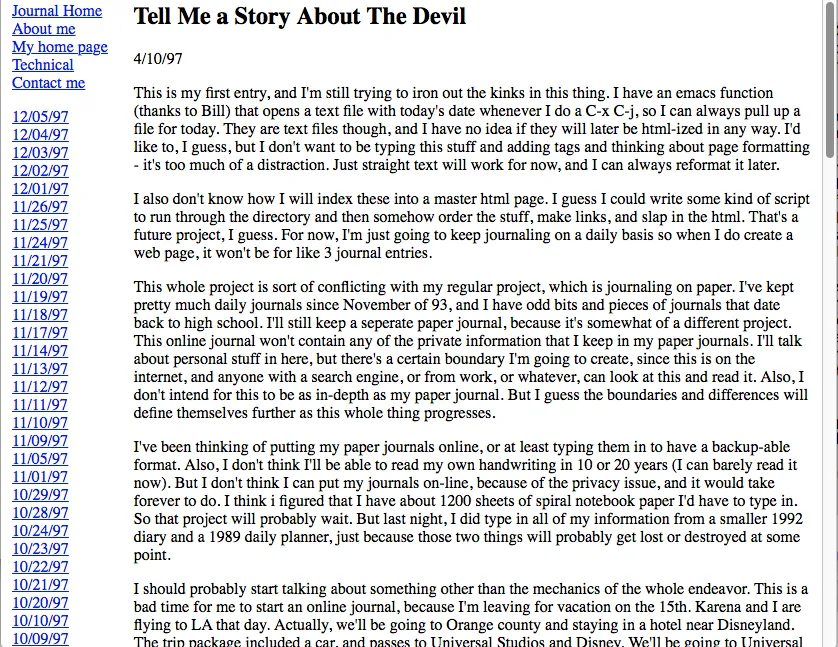
This is so fucking true it hurts. I blogged almost every day in 2010-2011, frequently wishing blogging was as good as it was in 2004, which is when I was bitching about how much better personal journals (the predecessor to blogs) were back when I started this stupid site in 1996. Now I wish things were as good as 2011.

I always wonder if there will be another era of Good Internet, or if we’re in the middle of it and I don’t realize it. All I know is blogging is still important to me, because I know as long as I keep paying my bills, I can still keep my stuff here, even if nobody can find it anymore.