The Wrath of Kon

Dispatches, thoughts, and miscellanea from writer Jon Konrath

Tag: photography

Sunday, travel, dental, driving randomly
colma

Now that I’ve posted here the last few Sundays, I feel like I need to post here every Sunday. That would be a good routine to get into, although I don’t always have anything to talk about, especially when I’m too busy all week and do nothing but work and try to sleep. So, here we are.

I might not update next Sunday because I’ll be in the Midwest. This is a quick trip back for a wedding. No Indiana; this is in Illinois. I’m being somewhat vague about my actual travel plans, because who knows how much they’ll shift, and I don’t want to make solid promises on anything. I haven’t flown in two years, and have no idea how this will go. I am going to bring a single camera, my main DSLR, and maybe an extra lens, but maybe not. I’m not going to mess with a backup or a film camera or whatever else. My backup is my iPhone.

That main camera - the Canon Rebel T6i - has been getting a ton of mileage on it. I mentioned hitting 8000 shots the other day. In the last 11 days, I’ve shot another 1600 pictures. If I don’t cross the 10,000 line by the time I leave this week, I definitely will when I’m gone. It’s funny that my biggest year by volume was in 2010 when I shot just under 4000 shots across all of my cameras. In the first four months of 2022, I’ve shot over 5000 shots. Gotta keep the rhythm going. (If you’re curious, the best of this stuff is slowly getting posted over at my Instagram.)


True to brand, I managed to crack a tooth right before vacation. Actually, I should have done it while on vacation, but I got a head start on it. It’s fairly minor, no pain and just a little edge next to a filling that’s chipped. I went to the dentist yesterday, and he said it needs a crown, but filed it off a bit to get me sorted in the short term. I’ll go back the day after I return and get it all tore down and set up, then spend a few weeks on protein shakes and soft foods.

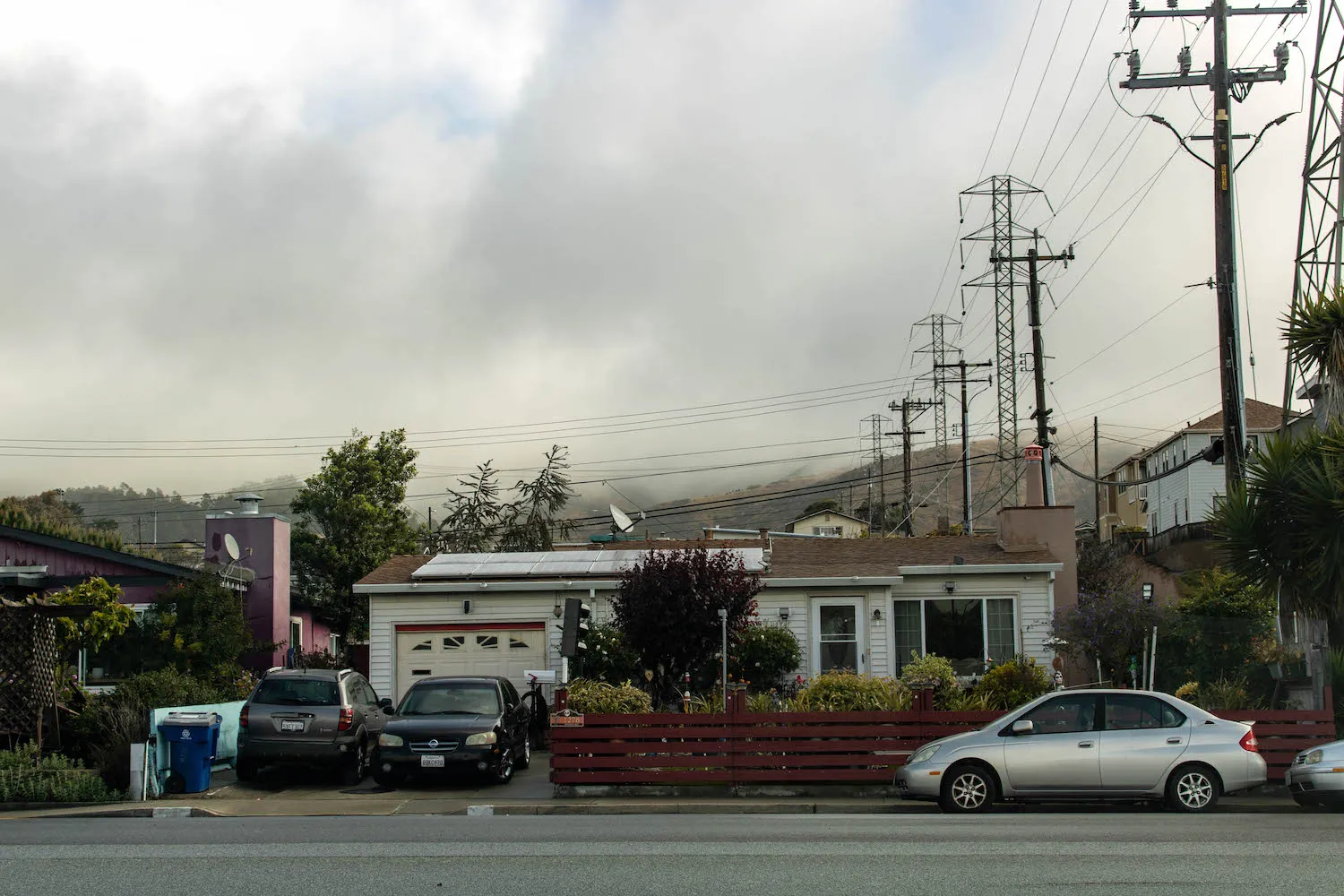
I got finished with the dental appointment down in San Bruno at about 9:30 in the morning Saturday. It was raining, just a sprinkle, and a fog had socked in most of the hills in South San Francisco and Daly City. I drove around the peninsula, stopping here and there to snap a few shots with the mist in the distance, which was harder than I thought. Every time I would see a perfect scene, I’d then try to park the car somewhere, run out, and realize it didn’t look as grand, or the wind would shift and the fog was gone or the clouds moved. I need more practice with this, or a good map and some research.

Daly City is the little boxes made of ticky-tacky as made famous by the Malvina Reynolds song. (Or Pete Seeger, or the theme song from Weeds, depending on your age.) So I was driving around there, trying to capture a good line of little pastel houses with a dense fog in the background, and did only so-so with that. I also drove to Thornton State Beach. I was more excited about that one, because by the time I turned onto Skyline, I was basically driving through a gray cloud. But when I got to the beach, it was closed to the public, and I could only walk on one little trail to a roundabout and take some distance shots of the ocean from there. Lots of choppy waves and low-hanging clouds off the water, but I didn’t have the right spot or the right light to get anything too grandiose.

I did a quick lap at the Serramonte Center mall, then got home by noon. Decent field trip.


I have been making more of an effort to drive around randomly without a GPS. I did that today, too. Exited the highway near Moraga, and just drove, winding through hills and looking for places where I could shoot a photo or two. I used to do a lot of this as a kid in Indiana. When I first got a car, I would drive everywhere, going to places I never usually traversed as a kid, finding different routes and seeing new things.

I can remember many a weekend in Seattle doing the same thing, just aimlessly driving up and down the isthmus, heading parallel to I-5, avoiding traffic by taking side streets and getting lost in parts of Echo Lake or Ballard or whatever, driving in a direction I thought might be east, trying to get back to a highway or a Denny’s or something I recognized.

Back then I only had the laminated tri-fold map, Seattle’s grid/numbering system, and the mnemonic “Jesus Christ Made Seattle Under Protest.” (Jefferson, James, Cherry, Columbia, Marion, Madison, Spring, Seneca, University, Union, Pike, Pine.) This is how I vaguely figured out the city, found a lot of weird record stores, and burned a lot of time. It’s a bit of a lost art now, since I only drive from A to B and follow the road Google tells me to follow. I’m trying to break myself of that on Sundays to find new places to shoot.


Not much else. I have an abbreviated work week and a lot to do, plus figure out packing. Provided this trip goes okay, I think I need to take another trip in June, but I have no idea where. Not the Midwest, not Vegas. I was thinking Seattle, but I am not sure. I’ll have to pull up Amex travel and see what’s cheap, what I’m willing to deal with. But first, I have to see if I have any travel-size toiletries that haven’t turned into solids in the last two years. (And Target was closed on Easter? That’s surprising, at least out here.)
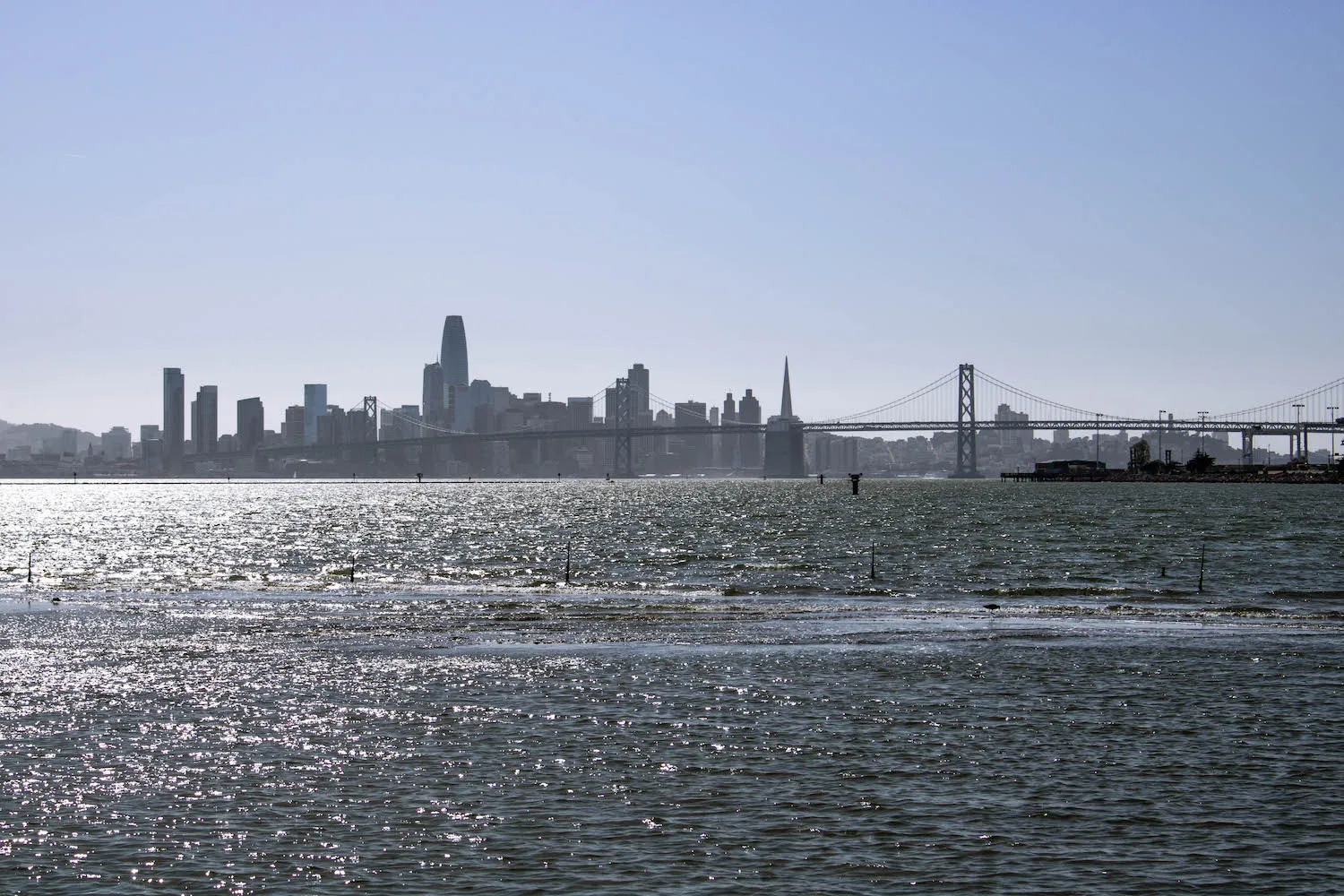
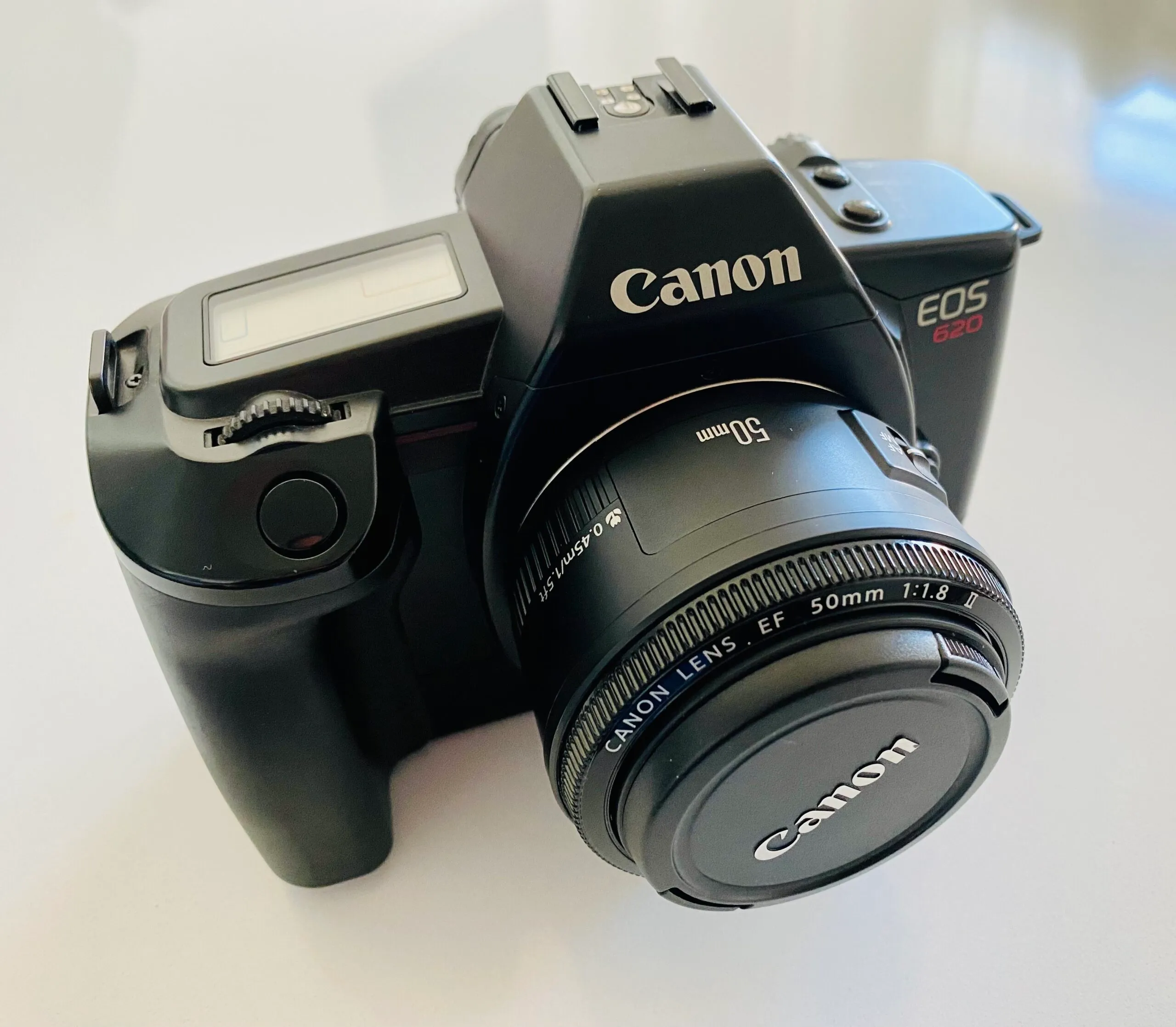
Photo numbers: a history

IMG_8000

Yesterday, I took the 8000th picture with my Canon T6i. It was nothing spectacular, just a quick snap at the park by my house in a series of a hundred-some pictures of a park where I’ve taken way too many photos over the years. The sun was wrong and the glare was a bit much, but I hit hit a big round number on the odometer, a curiosity, but something I’ve been slightly obsessed with.

I’m not sure what is considered a lot of photos. I think wedding photographers take maybe two or three thousand per event. Baseball photographers are about the same. I think an average outing for me is about 100 shots an hour. Turn on bracketing and I take three times as many. I haven’t shot a baseball game in forever, but that’s when I turn on continuous shooting and burst through a dozen shots at once.

My Lightroom catalog currently has 47548 photos in it. Maybe 200 of them were taken by others, childhood photos. My pre-digital film history is about 600 pictures, plus or minus whatever I haven’t scanned yet. After I got my first digital camera at the end of 2000, the magic of EXIF metadata takes over, and it’s very easy to track my output.

I got an Olympus D-460 in the final days of the year 2000. 1.2 MP, a 3x optical zoom, SmartMedia cards, and a odd-sized disposable lithium battery (CR-V3 - try finding that on vacation). The camera was small, but not pocketable. It was similar to film cameras in that you consciously had to carry them with you, in a special case or pouch, along with special cables and card readers and batteries and accessories.

From 2000-2005, I took 2817 photos with the Olympus camera. That includes I think eight Vegas trips, two Florida trips, a Hawaii trip, and some other oddball jaunts, plus everything around town. A week out of town would typically mean maybe 150 photos, with about 20% of them being blurry or dark. It was definitely behind the curve technology-wise, but I managed some great pictures with it. An example album: my 2003 Hawaii trip.

In 2005, I was about to go to Hawaii for the second time, and wanted a better camera. I picked up a Fujifilm FinePix S3100, which was an oddball hybrid point-and-shoot. It looked almost like a baby DSLR with the side grip and larger 6x (non-removable) lens, but it was only 4MP, and definitely not pocketable. It did use AA batteries, but sported the oddball xD memory card, so I needed yet another card reader. This camera was capable of taking better pictures, but it was also notoriously bad about botching things in automatic mode.

The Fuji saw 4044 shutter activations from when I bought it in 2005 to when TSA broke the zoom lens in the fall of 2007. It went to Hawaii, Berlin, Amsterdam, Alaska, a few Wisconsin and Indiana trips, and made the move to Colorado. I just about doubled my annual pace with this one. Example albums: Amsterdam 2005 and Berlin 2006.

In 2007, right as we were entering Rocktober and I was going to many baseball games, I picked up a Canon PowerShot A570. My dad had a similar camera, and Canon seemed to be ticking a lot of boxes with the PowerShot series: a bit bigger than a deck of cards; standard AA batteries; standard SD cards; a decent (4x) optical zoom; 7 MP; manual modes; optical viewfinder (this was when they were vanishing from smaller cameras and you had to hold it at arms’ length and squint to look at the LCD screen you couldn’t see in the sun), and about two hundred bucks. It even shot video. This camera wasn’t perfect and it wasn’t pro, but I loved it.

I got 2093 shots out of the A570 in the 15 months I had it. It went through the end of the 2007 baseball season, went to the Bahamas on our honeymoon, and covered our move to LA and then to the Bay Area. And then on a Christmas trip to Milwaukee in 2008, I dropped it in the toilet at the Harley-Davidson museum, and that was that. An example album from before its subermersion: Bahamas 2007.

I quickly ordered the next iteration of the PowerShot, the A590. It was mostly the same camera, with a 1 MP bump up, and weighing about an ounce less. I still have that camera (somewhere) but it effectively was used only in the year 2009. Two things happened: the addition of a DSLR for a main workhorse, and the addition of an iPhone, which meant my day-to-day shooting pictures of cats and walks at work and whatnot now happened on the camera always in my pocket. Regardless, the A590 got 1838 shots in a year. Example album: Mexico 2009.

My first DSLR was a Canon Rebel XS, which I got for my birthday in 2010. This completely exploded the amount of photos I took. There were two baseball games that August in Denver where I took more pictures in 18 innings than I did in the entire 2007 season. Part of that was burst mode, and part of it was a constant need to change lenses. Due to the DSLR, my more frequent use of the iPhone, and my return to film in 2014, I quadrupled my output in this era. My total shutter count on that camera is 10873. It went about everywhere in the six years it was my main camera: London, Berlin, Nuremberg twice, Frankfurt, a few Hawaii trips, a bunch of Midwest holiday runs, and I’m sure more I’m forgetting. There’s lots of the XS on my Flickr, but a good example is Hawaii 2013.

I tried going to the EOS M mirrorless, but it didn’t take, Right before my trip to London, I upgraded to the T6i I use now. I used it on that first London trip, my last Alaska trip, some Vegas weeks, and other odd stuff, but I didn’t put a lot of mileage on it. It also didn’t get much use at the start of the pandemic. Total shots from 2016 to last fall was about 2500. I’m still using it, but a good example album would be Memphis and Graceland 2016.

So I’ve about tripled that in the last three months, and I need to continue. I don’t think I’m a great photographer, and I don’t know if the number of times the shutter clicks is any indicator of progress. But that’s the goal right now, to get as many pixels into memory and try to look at them, learn, correct, and keep going.

New camera: Canon EOS 620

canon-eos-620

Because apparently I don’t have enough film cameras in the house, I got another one recently: the Canon EOS 620.

Film isn’t cheap right now, and some cameras are getting ridiculous. The Canonet QL17 rangefinder I bought in 2014, probably one of my best film cameras, costs roughly three times as much on the open market now. An Olympus XA2 you couldn’t give away for $20 back in the early 00s when digital hit could easily fetch $150 or more on the bay. Don’t even think about a used Leica.

But there’s a weird bubble at the end of the film era, where nobody wants those cameras. And that’s really interesting to me. I never had an SLR in college. Always wanted one, but wasn’t serious enough to drop the equivalent of a semester of tuition on a full kit. I could barely afford the hundred-dollar point-and-shoot Vivitar I bought in 1993. Now, these end-of-film-era cameras are going for cheap prices, maybe because they’re so similar to their digital counterparts.

Canon came out with the EOS 650 in 1987. (The EOS 620 came out a few months later, and added a faster shutter and some other minor improvements, despite the smaller model number.) The EOS was essentially a blank-slate start to an SLR, turning its back on the manual FD lens platform, and doing everything right the first time. Nikon was the choice of pros back then, and couldn’t turn their back on professionals who had massive investments in their existing lens system. Canon rolled the dice on this, and it was a good call.

The EOS 650 is built around the EF lens. EF stands for “Electro-Focus” and it’s an autofocus lens with no central mechanics in the camera itself. On previous systems, little gears levers or mechanical plungers were used between lenses and the body, so motors and other guts were kept in the camera itself. With an EF lens, there are seven little electrical contacts, and it’s all fly-by-wire. The lens contains any motors or electronics it needs to work. This was science fiction in 1987.

(Fun trivia: the very first image ever posted to the World Wide Web was taken with an EOS 650 and then scanned to a file. I’m not going to link to a Gizmodo story, but look it up.)

The EOS 650 (and 620) is also noteworthy because every EOS camera after it is based on the same essential design. I have the 620 and an EOS 750D sitting next to each other on my desk. The 620 is almost 30 years older, and the latter is a 24-megapixel digital camera that shoots video and has a fold-out screen. But there’s something in the basic design language that’s incredibly familiar with the two. Buttons are in the same place; the right grip feels similar; they both have a display on the upper right. The view through the viewfinder, the green aperture/shutter speed display below the image, looks almost identical. Obviously, one’s got no fold-out LCD screen and a little window that shows if the film is loaded, but they are very much from the same lineage.

The big attraction there is that the EOS 620 uses any EF lens from 1987 to present, and so do my DSLRs. I have a “nifty fifty” 50mm prime lens that I use a lot, and I slapped it on the 620, no problem. I’ve also got a nice 28-135 lens, and it works great on either.

(Minor nit: EF-S lenses made for crop-sensor APS-C digital cameras won’t work, and I’ve unfortunately got a lot of great EF-S lenses. Good news is EF lenses work great on APS-C cameras.)

(A less than minor nit: now that everyone’s going mirrorless, Canon’s introduced a new lens type called the RF. Mirrorless cameras with the RF mount can buy an optional adaptor and use their EF and EF-S lenses, but you can’t do the opposite. And there aren’t that many RF lenses yet. Also, this is the second time Canon’s tried this stunt. I have their older EOS-M, which used EF-M lenses, or an EF/EF-S adaptor. I’m not about to buy into this new system and have them change their mind a third time.)

Anyway, the EOS 620 is a strange shooting experience, because in many ways, it’s a normal shooting experience. It’s got a decent fast autofocus; a nice light meter; similar shooting modes and metering and exposure modes and all the usual stuff. Set it to P and shoot just like you would with a Canon Rebel. Swap to Tv or Av, same deal. Or shut off everything and go full manual. The one difference you’ll notice is the satisfying ca-chunk when you hit the shutter. It feels like a “real” camera.

There are some other advanced features I’d never expected in a film camera. The film loading is auto-everything, completely motorized. I guess my Vivitar point-shoot does this, but you drop in a cartridge, close the back, and it sucks in the film and tells you the frame number on the top. It’s fully motorized and fast (for the time), so you can set it on auto, hold down the shutter, and burn through three frames a second, much faster than simply lighting twenty-dollar bills on fire. And I never realized there were film cameras that did exposure bracketing, but if you want to shoot over/at/under a given exposure, set it to AEB and eat film three times as fast.

I think one thing that’s missing is there’s not any mystique or difference in the shooting experience versus using a modern DSLR. With a quirky camera like my Olympus Trip 35 or some vintage Polaroid, it’s so different from the typical experience, it’s like going from a Toyota Corolla to a Model T Ford with no roof. The 620 is like going from a 2015 Corolla to a 1995 Corolla. But try hand-cranking a Model T a few times, and you’ll see why a Corolla has its advantages. This won’t have any vintage vignetting or lens distortion like my toy cameras, but it will be nice to have something full-auto with no film loading drama involved.

Anyway, ran through a roll already, but let me do a few more and then get them off to the lab and see how it goes.

Related news: Kodak’s upping their film price by 25% in 2022. I’ve already started hoarding; I think I picked up 20 rolls since I heard that news.

Photo book, film, rain

TheHipstamaticYears

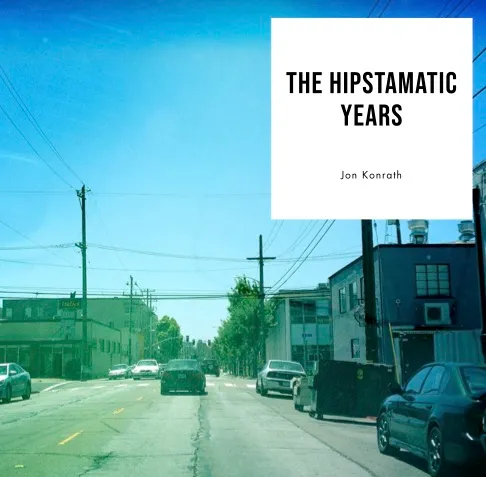
I have a new photo book out. It is prohibitively expensive, but was fun to do. I enjoy making photo books on Blurb, but I don’t expect to sell any of them. It’s great to do if you want a few copies to have around the house, but like I said, Blurb’s prices are a bit insane, and just got worse. If you’re really interested, it’s available here, but I won’t be offended if it sells zero copies, so no pressure.

The book started as a dumb collection of my old Hipstamatic images, taken starting in about 2010, when that app was still A Thing. Then Instagram got bought by Facebook, and it all ended for them. But there was that brief era when it was fun to take pictures that looked like ancient film snapshots. And it was at the same time that I always had an iPhone with me, and photography went from something I only did on vacations or specific photo safari missions to an activity I did any time I was wandering from point A to point B and saw something interesting. Anyway, the book started as just a dumping ground of images, but the story of Hipstamatic and my memories of it gave it a through line, and I wrote a few hundred words about it in there. Maybe I will post the text here later. I definitely am not doing an eBook version, because Blurb would probably set the minimum price at ten dollars for a 24-page PDF.


I have been doing a lot more photography lately. I’m at the point where I’m hoarding film and trying to sort and order and edit and post things here and there on Instagram. (Yes, I now use them, even though they killed off Hipstamatic.)

I don’t consider myself a great or even a good photographer. I think the best pictures I’ve taken were accidents. I mostly try to capture memories as best I can. I feel like I need to do more of it to get better, so that’s where I am with it.

And it’s a distraction. I need more distractions. I have been trying to practice bass, and take pictures. I’ve been scaling back on everything else. More on that later, maybe.


It is pouring rain outside. We got more rain today than we did from March to October. So, this is winter for us. Dark, windy, and time to dig out the full-spectrum light. The concrete walls in the garage are weeping, and it looks like some biblical miracle where people flock to a remote corner of France to see a “crying stone” or whatever. So that’s going on.

Film, memoirs, rollovers

epson-img277

I just got back from another walk around NAS Alameda with two of my film cameras, the Vivitar point-and-shoot and the Canon QL-17. Nice weather for a walk, although there was some event going on and the west side of the island was far too busy for me. I should probably get used to that, because at some point, they’ll tear down the old barracks and put in live/work condos and it will always be this busy.

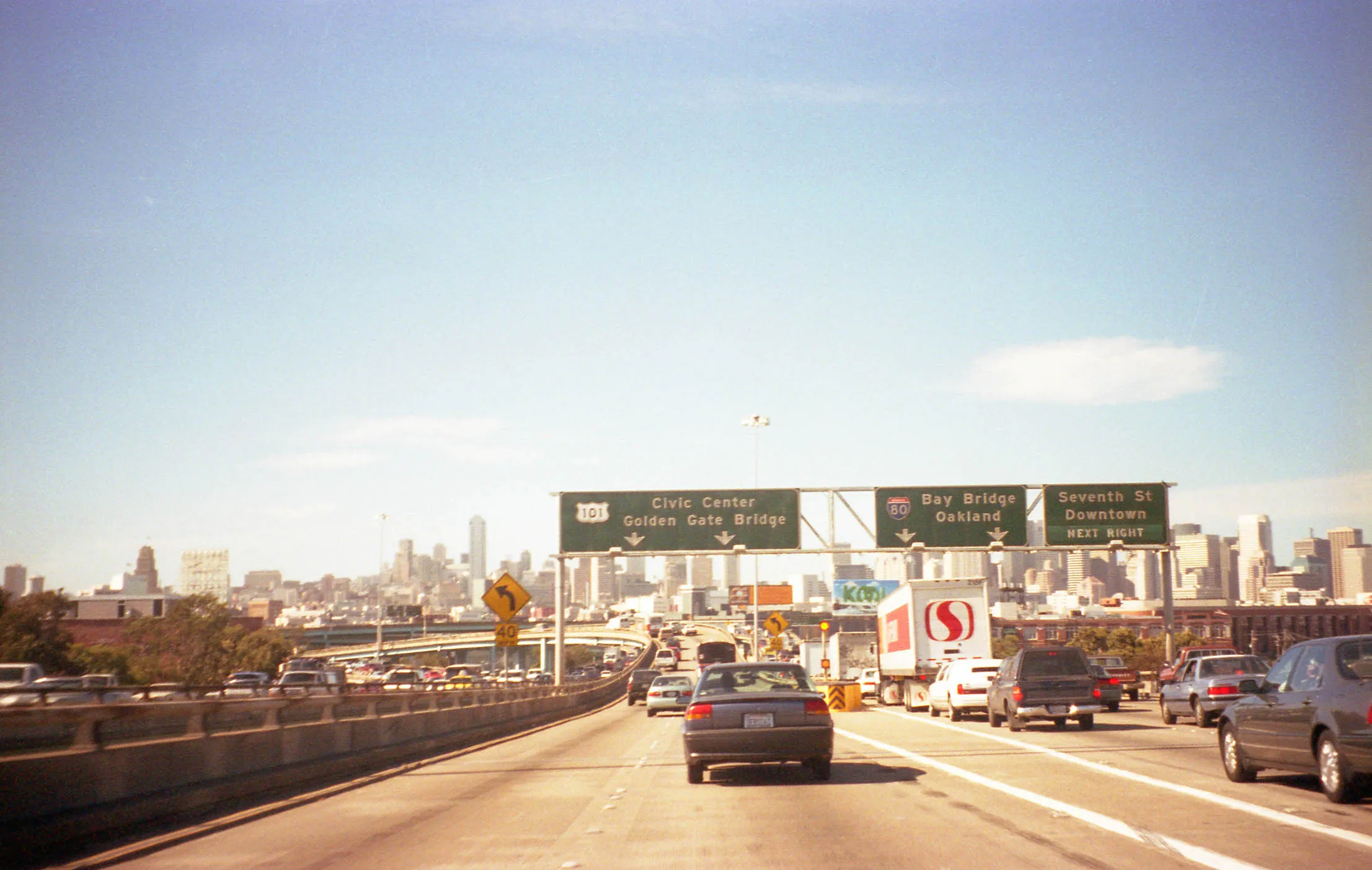
Shooting with that Vivitar is always weird, because sometimes I forget it isn’t the same one that I bought in 1993 and had back in the 90s. When I’m walking around the Bay Area with it, it’s a strong memory hole back to my first trip to California in 1996.  Looking at grainy, faded analog pictures (like the one above) reminds me so much of that trip, and the late 90s San Francisco, and it makes me wonder what it will be like in 2045, looking at 20-megapixel DSLR images on whatever crazy 3-D 200K screens we’ll be staring at by then. (Provided I still have vision in 25 years. And will still be alive.)

I made a vow to not buy any more film until I shot everything I have on hand, and I did that today, minus the 20-some shots of black-and-white still in the Canon. I’m expecting some crazy supply-chain stuff that’s going to completely throw that off, though. I haven’t bought any film since 2018, and I’m sure things have changed. I’ve got a dozen rolls waiting to be processed, so maybe when I drop those off at Mike’s Camera next weekend, I’ll see what they have in stock. Or, it’s off to eBay.


Writing is still going nowhere. This week, I was revisiting a book I started writing in 2012. I’ve tried a few times writing a book that is basically a Summer Rain prequel, that takes place in the summer of 1989, between high school and college. I’ve had at least two false starts totaling maybe 100,000 words between them, and they always die about halfway through. I started a very Raymond Federman-esque book in ‘12 that was about the attempts to write this book, and the problems therein. It came from reading Double or Nothing too many times.

I thought I’d revisit it, thinking about how I look back at that era as a 50-year-old, and all of the problems I have now with nostalgia. And maybe a meditation on the need to write a memoir, and why it’s a bad idea, or has been distorted or changed in recent years. I think when I was living in that era, and a bunch of stuff happened that summer, I always thought, “this would make a great book,” because it all lined up so exactly with the traditional novel plot curve, and the events were so extraordinary or traumatic or whatever. That was before I considered myself a writer, and back then, writing a book was a giant, insurmountable goal, like climbing a mountain or running a marathon. The idea of “getting published” was such a high bar, a lofty thing, and I always thought maybe someday I would.

Now, I’ve published so many books I can never remember how many and have to look it up any time someone asks. (It’s seventeen, more or less.) Anyone can publish their own book in five minutes. And the national zeitgeist isn’t about publishing a book, because nobody even reads books anymore. It’s about going viral, making a fifteen-second video that catches on, or whatever. Old man shakes fist at air, I know.

The other main reason I need to put this down is I know I have some deep, unsettled trauma about those years. It’s not like Trauma trauma, like I watched my parents get killed after going out to a movie and had to become a crime fighter dressed as a Chiroptera. But there’s some heavy unresolved something there, something that’s best left alone. Nothing specific, just generalized. I don’t want to spend my time going back anymore. But it’s a problem that when I’m faced with a blank page and no ideas, that’s where I go.


Nothing else. I wasted about half of today trying to figure out how to roll over an IRA from Schwab to E*Trade. That place I worked in Denver got bought by McAfee a long time ago, and I had like a month of 401K stuck there, which got moved to an IRA, and they mailed everything to my old address and it got lost. After much phone tag, I found it sitting in an account at Schwab, then promptly forgot all about it. I just remembered, and 25% of it is gone because of fees. I thought transferring it would involve actually finding a fax machine in 2021, but it appears they take a PDF by email. Fingers crossed.