The Wrath of Kon

Dispatches, thoughts, and miscellanea from writer Jon Konrath

2021

Fight club, family trees, newspapers, bass

DJI_0409-HDR

Christ, it’s been a month since I updated. So much for the “blog more” thing. I started the new job, but first rule of fight club. Things have been much more sane, but the pessimist in me is always waiting for the other shoe to drop. And I still have these weird bureaucratic nightmares (usually when I take Benadryl, which is too much this allergy season) where I’m like endlessly trying to sort a giant spreadsheet or I have some problem where I ask person A what to do and they say “ask B” and B says “ask C” and C says “ask A or B” and repeat. This was much worse when this was my actual work environment for twelve hours. After I was free and clear from the last job, I thought about starting a thread about all of the stupid stuff that went down over the last ten years, and then I (coincidentally) got a boilerplate letter from their legal that they send to all former employees, reminding me of the employee agreement I signed in 2010 and how I can’t disclose trade secrets. So, next topic.

I’ve fallen down the genealogy k-hole again, which is largely John’s fault, but it’s also something I do every few years. It’s ironic because it is something that obsesses me, even though I pretty much don’t talk to most of my family anymore. I debated using Ancestry versus MyHeritage and heard the latter was better for European records, so I signed up and then found out that it isn’t. I found out some rudimentary things that were wrong, like incorrect years and an incorrect last name that was throwing off all previous attempts to go back more than three generations. So it’s interesting, but it’s gotten boring, and like I said, it’s not like I’m going to suddenly find long-lost seventh cousins fourteen times removed that I’m really interested in talking to.

The other thing I did which I am obsessed with but probably need to quit is I got a full-on subscription to Newspapers dot com. (They have a variety of tiers: useless, mostly useless, and expensive.) I know I’ve bitched constantly about the bait-and-switch with newspaper archives: you used to be able to hit everything on Google, and then in the media landscape consolidation/race-to-the-bottom, everything went paywall. Well, I didn’t know this, but if you get the full-blown Newspapers account, there is a ton of old information on there.

What’s problematic with my family research is that the Elkhart Truth (sic) does not participate in this program. But the South Bend Tribune does. When I grew up, the SBT was a “real” newspaper, and the Truth was sort of half-ass, but way more local information. Anyway, most obituaries and so on are covered there. My dad’s side of the family lived in Edwardsburg, which is covered well under the Herald-Palladium paper (and its four pre-merger papers) so there’s a lot there. The other side of the family is in Chicago, and the Tribune has an extensive archive, but that family has an extremely common last name, and apparently some genetic predisposition for not even knowing how to spell their own kids’ names, according to census papers I found. Anyway.

The family stuff - I won’t go into it, but I found a lot there. And then I started plugging in various dead malls, and holy shit.

I wrote this big thing about Pierre Moran Mall recently, and really had to scrape to find even the most basic dates. I plugged this into the search for the South Bend Tribune, and found a ton of stuff, including pictures, store open and close dates, articles about events at the mall, the expansion and enclosing of the mall, the failed attempt to turn the old Target into a Christian event hall… way too much to process.

I want to someday write an article on the Scottsdale Mall in South Bend like the one I wrote on PMM. I didn’t spend as much time there as a kid, but I spent a lot of time there in 1990-1991 when I went to IUSB. Anyway, I started searching, and the South Bend Tribune did an entire section on the grand opening of the mall, with an article per store, and in most cases an ad from the same store (probably why they did this, to gin up future ad sales) and of course a ton of pictures. When I mean every store, they even did a piece on the local pretzel stand in the mall.

On to Concord Mall: I found articles going back to years before the mall opened, when they planned on plowing up the farmland in Dunlap and putting some bridges across the Yellow River to get things started. They also did a similar send-up with plenty of articles about the stores moving from downtown to the new shopping center. It looked like the article about Wards was largely boilerplate - I think corporate sent the same copy to the paper for both the South Bend and Elkhart stores, which both opened the same year.

Other interesting things I found out: one is that the original plan for Concord was to include 200 apartments on the property. That would have been a fun little futuristic utopia, living and working in the same building, eating Karmelkorn for dinner every night, going on dates in the JC Penney.

Another weird one was there was a study and a plan done on building yet another mall in Goshen. That area was over-malled with four malls in the seventies already. Goshen was decimated by Concord going in, because almost all of their downtown shops fled, and that place was a ghost town for decades. Building a fifth mall in a city of maybe 15,000 back then was a real hail mary to try to keep shopping dollars in the city, and someone probably ran the numbers and decided it wasn’t worth giving the developer a fat tax break on it. So nothing happened, and then of course Wal-Mart came in and built two super-stores and completely finished off the downtown. (The good news is that it’s become somewhat hipster-gentrified, which is good to see, actually.)

The newspaper thing was a real problem, scraping up the serotonin and eating up my time. It was like when Google first came out and I spent weeks searching on everything I could think of, wasting way too much time reading dumb articles about abandoned military bases or ghost towns in Colorado or whatever I was into at that point. It is amazing, and totally hit the nostalgia nerve, and I should probably cancel my subscription soon. Luckily, there aren’t any Bloomington newspapers on there.

The Panera by my house closed. Like I think I ate there a week ago, and on Friday, it was completely stripped down, all the signs and lights and awnings gone. I’m currently in food jail, so that’s probably a good thing; I got into a bad habit of ordering from there every week or so. You can probably eat healthy there, but the bread part kills me. Anyway, it’s become this dumb inside joke/meme, and like all of my dumb inside joke/memes, I’m hopelessly sick of it, but the same three people that make the same dumb jokes on every single thing I post on Facebook won’t let it go. I really need to delete my Facebook.

No progress whatsoever on writing these days. After the overwhelming non-success of the last book, I think maybe I should buy the next PlayStation and just work on that for the next ten years, like I did from 2001-2010. Good thing I can’t actually find one. I’m trying to get back into playing bass again, so that’s good. I bought a Palmer Bass Pocket Amp which is a great piece of kit for practicing with headphones. Now I just need to get back up to speed on it.
End of an era

IMG_4446

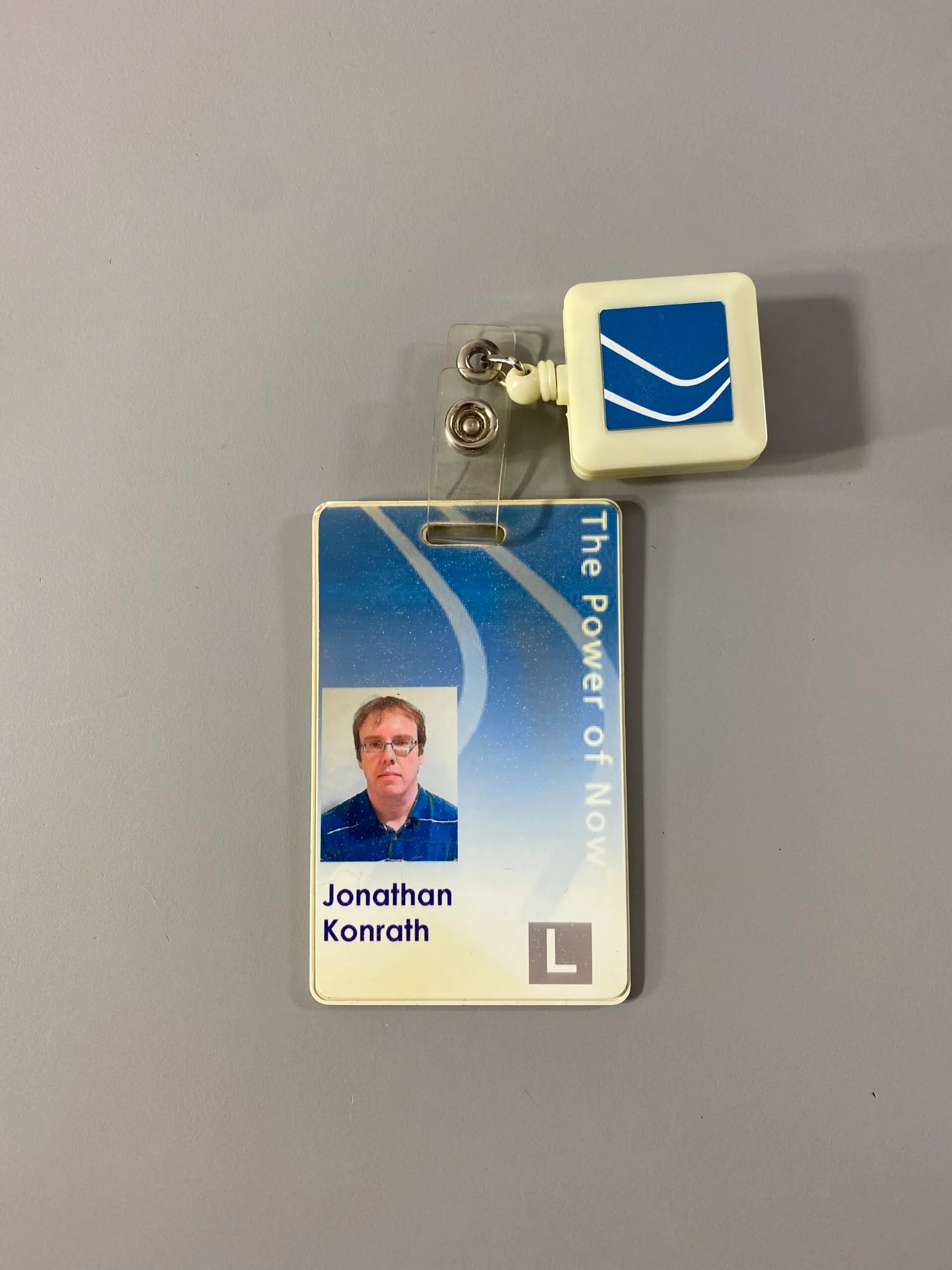
Last day at the old job was Wednesday. I had two early calls, and then was done by nine. I spent about two hours cleaning up after myself, and by eleven, I was done done, and couldn’t think of anything else to do except look at really old wiki pages and make myself depressed. By that time, everyone in India was asleep, and I don’t work with too many people in the US anymore, so I did one last look, then shut everything down, threw my two computers in a bag, and drove straight to FedEx. I gave them the company’s account number, bought two computer boxes, filled them up with obsolete laptops and my name badge, and that was that. End of an era.

Like I said last post, no cake, no dragging me to Chotchkie’s and telling the server it’s my birthday so the whole kitchen staff comes out and sings. This job did Agile (sort of), and that means you work with everyone, and you work with nobody. If I wanted to tell everyone I was leaving, I would have had to hit 79 different slack channels. And I’ve been in our Palo Alto office maybe a dozen times in twelve years, and I currently know exactly one person who still works there. And physically, he doesn’t, until the pandemic is over. So the goodbye situation was a bit weird.


Actually, not to get too into it, but the main office at this place was a bit abnormal. I mean it was, at its peak, four different two-story buildings with the distinct architectural style known as “Silicon Valley, 2002.” They were nice enough buildings, but almost everyone had an office with a door, and it was incredibly quiet there. I’d wander the halls after lunch, and it felt absolutely dead. The only people I’d see were people I didn’t know. It always felt like when I have a dream that’s set in a generic tech office building that’s an amalgam of every place I’ve worked and a bunch of office sets from TV or movies. It never felt like my office. It’s also weird that I haven’t been there since maybe December 2019, and I’ll likely never go there again. And the company is in the process of downsizing to another office somewhere else, so I definitely won’t be back.

The place reminded me of when I worked at Samsung and had to visit developers at other companies, or when I worked for Frankov and tagged along when he pitched his start-up. In both situations, I’d go to these random tech companies, and they would look like this, like if you were making a movie about a tech company. Like they always reminded me of the office to Playtronic Toys in the movie Sneakers. It was like a strange sense of deja vu, like you could tell just by looking at the chairs and cubicles and white boards and Polycom speaker phones in every meeting room that it was a tech company, and if you grabbed a random individual (one not wearing a shirt with a collar) you could probably ask them how to back out a change in git and they could tell you. Almost all tech companies look like this, although ones that are in big cities and not in office park sprawl usually also have one wall that’s exposed brick, which tells you that they are Disruptors and Think Outside The Box.


Come to think of it, we had an exposed brick wall when I was a kid, like behind our wood burning stove. Not much Disruption or Synergy went on there. No stand-up comedy, either.


Walking away from that job was more depressing than I thought. I spent the day in a funk, which wasn’t helped by the rain storm we got. (Oddly enough, it rained on my last day at Samsung.) It was much more about leaving behind the first half of that job, all of the people I worked with on the old New York team. All of them left in 2015 or so, and that was depressing then, but it all sort of hit me again, all at once. I wallowed in that for the afternoon, but then made the decision to move on. I have a real problem with nostalgia like this, and I can either simmer in it forever, or try to do something else. So, I went to the mall, and stopped thinking about it.

I was also looking for patterns and coincidences, like how I left Samsung at about the same time in 2010, and also how I left Denver in late February 2008. And we moved to Denver around then in 2007, so my original departure from DataSynapse and New York was at almost the same time of year as the end of my second tour. Another one that popped out at me was how in March 1999, I’d left my last Seattle job and was spending a few weeks of voluntary unemployment packing and mailing boxes all day, and writing on Summer Rain at night. I probably should have spent my four days of unemployment this week frantically writing, but I spent much of it digging around the back of my desk, which I will talk about now.


I’ve been getting ready for the new job, which I start tomorrow. I spent the weekend rewiring everything on my desk, swapping things out, managing cables, getting things ready for two Macs on the same workspace. The process started with the addition of an LG 4K 27-inch monitor. It’s maybe two inches wider, and about the same height, but with smaller bezels all around. The native resolution is twice as much in each direction. That means I can keep it at 1920x1080 and have the same size as before, but incredibly clear. Or I can crank it up to like 3360x1890 on my Mac, which is roughly four times as big, but would make me go blind after an hour of reading the tiny text. Mousing across the screen also takes like a day, and I’m sure the fan will start blowing like a jet engine running at combat power. Setting it to like 2560x1440 is a good compromise, I guess. The monitor has much more rich colors and all that stuff, and a set of built-in speakers I will never use. There’s also the Thunderbolt cable thing, where I can plug one cable from my computer to the monitor, then plug my mouse and keyboard into the monitor, and the peripherals and the charging and video will all work over the one cord. I haven’t messed with that one, and just use a single HDMI.

I also bought a new KVM switch, which was a huge pain. This is the third one I’ve bought in 2021, and it luckily seems to work. Nobody even knows what a KVM is or does anymore, and when you mention running two computers in a computer forum or subreddit, everyone tells you that you should just get a second bedroom and set up another desk and monitor in there, or just use your phone for everything, who needs two computers, you’re holding it wrong, etc. Most KVM switches on the market were designed in like 1947 and don’t support monitors from ten years ago, let alone all of the crazy ultra-wide, XDR, 4K, Retina-whatever stuff out there. Don’t even try to find one supporting multiple monitors.

Anyway, after days of research, I got this KVM. It supports 4K resolution over HDMI, and supports EDID, which basically tricks your computer into thinking it still has a monitor attached when you switch to the other computer, so the first computer doesn’t freak out, uninstall the drivers to your mouse and keyboard, go to sleep, move all of the windows, and so on. So now I can run two Macs into that switch, and hook up my monitor, keyboard, and mouse to it. I then can use a remote or the button on the thing and switch back and forth between computers. It doesn’t appear to have any delay or weirdness with the computers falling asleep randomly or whatever. Famous last words.

The DST shift messed with me last night, mostly because half of our various time sources changed, but half didn’t. I had an early appointment today, and was almost late because I didn’t know if I should be looking at my desk clock (which doesn’t change) or my watch (which does). So, maybe I need a nap now.

The Deal (2021 edition)

20050317-004

So. It’s time to write another post like this one from 2010. It’s not LinkedIn official yet, but I’m leaving my current job, and going to a new one. And that’s always a good way to rustle the various nostalgic bits of the brain, especially when as much time has passed as it has with the current employer.

I don’t like to cross the streams and won’t discuss the specifics of either job here. But the old gig is the one I started in September of 2010. And I did a previous tour with this company from 2001 to 2007. So that’s a grand total of almost sixteen and a half years of service between the two, which is insane.

This job started almost on a lark. I was working in Silicon Valley and doing the big commute and wasn’t entirely into my gig. Joel, my old boss, asked me if I wanted to come back. I said nah, I owned a house out here, wasn’t about to move back to New York. He said I could work remote. I said, okay let’s do this, and I was officially a full-time work-from-home worker, ten years before everyone else did the same.

There are two distinct eras to the job, and the nostalgia for the first half is much heavier. I really liked working on my old products, and loved working with Joel and the old crew. All of us who were there from the start-up days had basically gone to war together, and had an entire vocabulary of our own, plus total knowledge of what was where, how things worked, how to get stuff done. We were all introverts, and a decade before Slack became a thing, we all used an internal IRC server for air traffic control and general water cooler bullshitting. Nobody ever used the phone. I didn’t even have a phone; the company gave me one in the Palo Alto office, and then promptly gave my cube to someone else when I never came in. There was a lot of general insanity, a small company running within a giant one, but I really enjoyed that five year chunk of time.

I also liked that it was a strange virtual conduit back to my old life in New York. At that point, half of the team was still at our old office at Bleecker and Broadway, and the other half was up in Boston. But I worked in New York, from Oakland. I time-shifted three hours earlier to match their hours, and kept up with all of the gossip and the general zeitgeist of working for a New York company, even though I technically worked for a Palo Alto company. I went back to New York three times during that first few years, which was always a bizarre deja vu experience. Like the first time, I came into the office at 632, went right back to my old desk, and it had been vacant for the last three years. All of my old files were still in the filing cabinet. It was like I’d never left. And on another trip, I stayed at a hotel a few blocks from my last apartment. I’d walk the same exact route from the Lower East Side to the office, and it felt like I had traveled time back to 2006.

The parent company got bought out by venture cap, and everything shifted after that. Pretty much the entire team left. I got moved to another team in Palo Alto, and a new product, but I still had the old product. But we went through a big “push to cloud” where the old product was put out to pasture, and I spent much less time on it. I also started managing people, and working on this new cloud thing. I really missed my old team, and 2015 was an extremely depressing year for me.

I probably shouldn’t go into any details of the second half of my tenure. I started managing people, and loved doing that, up until the point when I had to start doing layoffs. That’s brutal, and the only thing worse than firing people who have been very loyal is getting invited to random meetings with HR and not knowing if it’s to fire people or to get fired yourself.

Anyway, don’t want to get into that stuff.

One of the things I have liked about my work situation is that the time-shifting means I have a few hours in the afternoon to write. And I pretty much floundered and was not consistent in my writing in the 00s, and figured I needed to focus and get more regular writing done after I took this gig. I’ve published twelve books in that time, and 30-some articles, plus everything written here and in other random places. I’m not sure what my work schedule will be like in the future, and I think I’m done with this constant grind of trying to publish a book every year.

The new job is in San Francisco, but given the situation, I’ll still be home until at least the fall, and I don’t think any of us are ever going to be back to five days a week in the office. (Famous last words.) The big weird thing about this job will be that I don’t switch desks. I’ll still be in my home office, have the same chair, same monitor, same keyboard. I’ll just be swapping out my old Lenovo for a new Mac. And what’s weird about that is it’s identical to the Mac I have at home.

What’s also strange is that in the pandemic, there’s no goodbye. I mean, no cake, no lunch, or anything else. I’m not big on goodbyes, and I’ve hated that I’ve have to force myself to end conversations this last week without saying “talk to you later.” But my boss is in the UK. My workers are in the midwest, the east, and India. My teams are scattered. There would be no lunch at Chotchkie’s and gift card to Starbucks, even if we were allowed to eat in restaurants. I just realized the other day that I have never physically met any of the people I currently manage. Sarah said the other day, “I feel so bad you talk about N__ and A__ every day and I never got to meet them!” And I said, “well, neither did I.”

Anyway. Old job ends on the 10th, and new one on the 15th. So I get a four-day weekend to FedEx computers back and clean out behind my desk to redo the cables and maybe sleep a bit. Then on to the next era. Should be fun.

The age of adapters

Two disparate conversations got intermingled in my head this week. One was a long discussion about the days of AM radio and only AM radio in cars, and the other was a day where multiple people asked about various dongle issues, USB-C vs. USB3 vs. Thunderbolt or Thunderbird or whatever the hell Apple calls USB-C now. Anyway, both of these things make me think of how in general, we’re so adapter-free now, and can generally shoot music and videos and photos straight through the air at each other, at the cloud, at machines like TVs and printers and coffee machines. I promise this isn’t the usual “these damn kids don’t know what it’s like to hunt for the right DB-9 to DB-25 RS232 cable” old man rant, but these two things made me think of the ubiquity of adapters in the seventies and eighties as the landscape of tech rapidly changed.


Example one: car stereos. For decades, the standard was AM radio, and that’s it. In the US, the AOR FM stations started their reign in the late 60s, but it wasn’t until 1978 that there were more FM stations than AM, and a lot of them were simulcast stations of the same programming. I think by the time I was sentient enough to have my own radio and listen to my own music, the top-40 stations in my area were FM, but FM radios were still an upgrade option for most cars back then.

I remember my former stepdad had an old Buick, maybe a 71 or 72, and it had the stock AM radio. But he’d upgraded this for the bold new future of AOR programming by buying a little Radio Shack box, a Realistic FM tuner. It sat below the all-metal skull-crusher dashboard of this giant beast of a car, somehow spliced into the old wiring, so it would pump high-fidelity FM stereo sound into a single three-inch paper speaker. Seems like it would have been easier to rip out the stock radio and slap in a Krako tape deck with an AM/FM tuner, but maybe that cost an extra ten dollars. Also, leaving in the old radio wouldn’t lower the value of the vintage $500 vehicle, I guess.

Another big thing was that in the late sixties/early seventies, nobody could decide on what physical media format was the king of mobile applications. Spoiler alert: the cassette won, and there were suddenly millions of vehicles on the road that couldn’t play them. One “adapter” approach was to go to Radio Shack or K-Mart and pick up an under-dash tape player, much like the external FM tuner, and wire that up so you could play your Barry Manilow cassettes through your stock sound system.

What I always found funny, although I never saw one in person (I did read a lot of Radio Shack and JC Whitney catalogs as a kid, so I knew of them) were the 8-Track to cassette adapters. If you were an early adopter of the bigger and quickly obsoleted tape system, you could buy a plug-in adapter, which looked like a really long 8-Track tape, but the part that stuck out of the dash had a cassette player mounted horizontally in it.

(For a quick look at all of these options, take a gander at this 1976 Radio Shack catalog.)

I never really bought into this adapter madness — I either went to the junk yard and bought a tape deck out of a junked car for twenty bucks, or just brought a jambox and put it in the passenger seat. But that was when I was still spry enough to crawl around under the dashboard of a subcompact. Maybe I’d think differently now that my back is out, who knows.


Much later, the cassette was dethroned from the top of the heap of the physical media world, and then the argument resurfaced on how you get your various iPods and DiscMans and whatever to talk to your tape-only car stereo.

The very first time I bought a portable CD player in 1992, it actually shipped with the solution in the box: a little fake cassette with a cord dangling out of it that plugged in the headphone jack of the CD player. I used a system like this for years, first for that CD player, but later for the MiniDisc and iPod. I didn’t have a car during the heyday of in-car CD players in the early 00s, but I rented cars quite a bit on vacation. And of course, I’d always forget that damn adapter and would have to buy another one for twice as much at an airport. So I have a big collection of those things in storage somewhere.

There was also a much worse adapter for cars that didn’t have tape decks. It was basically a Mr. Microphone but it took the signal from a headphone cable and broadcast it over channel 88.1 with like a milliwatt of power, so you could tune in a car radio and magically listen to your CDs.

I got stuck with one of these when I was Hawaii in 2003. It was basically like this scene in Spinal Tap. I’d be driving around the island, happily listening to an album on MiniDisc, and I’d zip by some volcano park or whatever the hell that would blast out weather advisories at a million megawatts on the same exact channel as the adapter, interrupting my song for the next few minutes. I finally gave up and bought a Skynard CD at a gas station and listened to that for the rest of the trip.


The adapter thing was also big in the beginning of personal computers. Both Atari and Mattel had popular game systems, and then Apple and Commodore came out with home computers. The popular thinking of parents at that time was that kids needed to learn about computers so that by like 1995 when paper was obsolete and the world was run by artificially-intelligent mainframes, the kids would be able to get good jobs to afford flying cars and robot butlers. So why buy a gaming system and later buy a home computer, when you could take your existing gaming system and magically turn it into a home computer with a plug-in box like that FM radio tuner?

Atari had a few different approaches. They came out with a BASIC cartridge, which was laughably bad, given it could only use 64 characters of memory for programs, and you had to type in programs with gamepads. Next they tried to release the Atari Graduate for the 2600/VCS gaming console. It plugged into the cartridge port and had a membrane keyboard that sat on top of the 2600, adding 8K of RAM and the ability to hook up peripherals like a tape deck, a modem, and a printer. This was supposed to be a $79 add-on, but never shipped because (allegedly) of some arguments between Atari management and the third-party team developing it. There was also a third-party thing called the CompuMate that shipped, but didn’t take the world by storm, probably because you can’t do much with a 10x12 character screen.

Mattel was a bit more infamous about this, because they promised a computer add-on and never delivered, which got the FTC to slap a $10,000 a day fine on them, and lit the fire to for them to come out with anything that could legally be called a computer and dumped on a small test market at a loss, which is exactly what happened.

The Entertainment Computer System was an add-on home computer for the Intellivision, which was a small external chicklet keyboard and a box that plugged into the side of the Intellivision, and was probably 75% the size of the actual Intellivision, and had its own power supply. The thing added BASIC, 2K of RAM (but you couldn’t use all 2K for your programs), another sound chip, extra controller ports, and the interface for a cassette recorder. They also came out with an add-on synthesizer keyboard — this was the heyday of Mattel’s Synsonics instruments. The whole thing got the FTC off their backs, but didn’t entirely catch on, and then Mattel imploded a year later.

Coleco also did this with the Adam computer, which was available as a standalone or as an adapter that plugged into the ColecoVision console. I don’t know the architecture of the add-on or how well it worked, because the only things I ever heard about were the Adam’s other major shortcomings, like the gunfire-loud printer; the fact that the power supply was in the printer so when the printer died, the whole system died; and the slow cassette system built into the main unit, and a burst of EMF at start-up would nuke any tape in the drive, even though the instructions told you to put the BASIC tape in the drive when you booted.

The more interesting one was that Coleco came out with an adapter that would enable your ColecoVision to play Atari 2600 games. This wasn’t some kind of sophisticated emulator or anything; it was functionally an entire reverse-engineered Atari 2600 that hooked onto the front of the ColecoVision and used nothing more than the video connection and power from the ColecoVision. The expander has a 6507 CPU, memory, and the whole deal. You had to unplug your Coleco joysticks and plug them into the expander (or I guess buy some Atari sticks, if you wanted the same feel.) Coleco got sued by Atari about this and Atari lost.

Likewise, Mattel also had an Atari compatibility “adapter” that was also a near-complete 2600 that plugged into an Intellivision. And Atari did the same thing themselves with a near-complete Atari 2600 that plugged into the Atari 5200. These were major marketing coups in that they radically increased the other systems’ library size. The downside was they increased their libraries with really bad games. I don’t think people remember how bad Atari 2600 games were, even compared to the 5200 or Intellivision.

The whole thing is bizarre though. It reminds me of in the 1950s, the Air Force built this giant B-36 bomber, and when they decided there was no way to bolt enough guns onto the 200-ton behemoth, they thought, “hey, let’s just hang entire fighter planes on the big plane and have the best of both worlds.” (That never really worked out, BTW.)


Now we’ve solved the upgradeability problem: everything is sealed shut with glue, and when you want a better version with newer features, you throw the old one in a landfill. Sometimes I wonder if this adapter fetish of last century was some holdout to the days when a TV or a radio was a piece of furniture you kept forever and serviced with in-home repairmen, like a furnace or a car. Maybe people thought they would invest in a system and then it would slowly grow and evolve over time.

(Oddly enough, Apple embraced this for a time, and you could upgrade early Apple machines with an upgrade kit that replaced the logic board, but kept the old case. For example an Apple IIe could be upgraded to a IIgs, or a Mac 128 could be upgraded to a Mac Plus. I don’t know who did this, and you were basically replacing the entire machine but keeping the old yellowed case, so why not just pay more and get the whole thing. Maybe schools did it. I could see a school administration making a bone-headed investment like that. I bet I’m still paying off tax bonds from when my local school did this in 1977.)

I think these various false starts caused the adapter appeal to dwindle. The last one I really remember is the Sega 32X, which was a stopgap measure to put two high-speed CPUs, a GPU, and more memory onto the 16-bit Genesis, which allowed it to run… well, virtually no games, because nobody supported it. Anyway, it seems like now the thing is to own one of every console, or just run the things on your phone. People aren’t as up in arms about o “teaching computers” to kids like they did when they thought “computer technician” was a vocational skill like a cabinet maker or TV repair person. Everyone seems to know how to use a computer off the bat, or instinctively know how to move a mouse or swipe a screen. And our homes are filled with computers, whether we know it or not. The webcam sitting on my monitor probably has a CPU orders of magnitude faster than some of the mainframes I used in college. Just let the kid screw with the old iPad, and they’ll figure it out, I guess.


Anyway. Dongles: USB-C is a subset of Thunderbolt 3. They use the same size connector, but TB3 can be twice as fast and use half the power, depending on the device and the cable. That’s all. Enjoy not having to buy another device that costs 90% of your first device to play another manufacturer’s games.

plotless brain dump

I never update this thing, because I don’t know what I should be writing anymore, and I don’t have the energy to write any “bloggy” sort of articles, like a listicle of top ten weird google earth photos and a deep-dive on why Indiana built nuclear missile silos in the fifties. (They did, BTW.) I also think that Pierre Moran Mall article burned me out. So did writing a book almost nobody read last year. Anyway, time for a plotless brain dump.


Had another death in the family recently, an aunt. I’m hesitant to write any details about it, because I don’t want this entry to be the first result when someone googles her name, and I don’t want any family members to take any eulogy out of context, which will inevitably happen. I’ve had two aunts die since the start of COVID (but neither one from COVID) and the whole ritual now puts the zap on me because I couldn’t travel for either of them, and the only family reunions we have now are funerals. Also, now that I’m in my second half-century, I’m starting to see more people die. I mean, I lost my last grandparent twenty-five years ago, but the aunts and uncles are all in their seventies and eighties so, yeah. I can’t really unpack this, especially in public, but it’s something hanging in low orbit, and sending cards and flowers and looking at a Zoom doesn’t really solve things.


There is a actually a documentary I found the other night that’s (indirectly) about my grandfather’s death. He’s not in the documentary — I mean, I haven’t seen it yet, but I’m assuming he wasn’t. He died during that massive Chicago heatwave of 1995. He was 84 and had leukemia and looked like death when I saw him the last time a few months before that, so it wasn’t like he died directly from the heatwave. But he died because he was an 84-year-old with leukemia who lived in a brownstone with no air conditioning and refused to leave the house because he was afraid of being robbed. Anyway.


(This was the same grandfather who was in a Steven Seagal movie, BTW.)


Still struggling to find things to do that don’t involve writing, malls, or doom-scrolling through politics garbage. I spent some gift cards on Amazon to buy some flash photography stuff, like a good knockoff speedlite and some remote triggers. I spent like a week playing with macro photography, because most of my photography has been travel stuff, and we can’t travel, so I thought it would be good to get all of the gear to sit around the house and take close-up pictures of objects or bugs or something. Then I remembered I do not have the patience for stuff like that, spending an hour setting up a tripod and focus-stacking a million exposures and finding out they were lit wrong and starting over. Also, everything in my house is covered in microscopic super-fine cat hair, and I spent more time dusting than photographing.

I also had this wise idea to get another synthesizer and start making weird music or something, and spent way too much on a Teenage Engineering OP-1, and I’ve done very little with it. I actually have a better Arturia controller and would rather use Logic Pro and 19 different plug-ins to make Chihei Hatakeyama ripoff ambient stuff, but I’m too lazy. I have like 13 minutes of an album or EP or whatever done, but I don’t know that it’s ready for public consumption or anything. (Actually one of the songs is already in the wild, as a soundtrack for a dumb short movie I made.)

I think I’ve only taken the drone out twice this year. It was too cold, and now it’s too rainy. At least the grass will be somewhat green when I get back out in a few weeks.

I took a break from writing after the last book, which is completely unnatural for me and has been leading to more panic and dread, so I’m back to it, but not sure what’s going on. I’d like to figure that out, but I’d like to figure a lot of things out.


Just read Alright, Alright, Alright: The Oral History of Richard Linklater’s Dazed and Confused. I’m sort of meh about Dazed, because i have little nostalgia for 1976 culture. The stuff about the creation of the movie is great though. Also, I do have a memory (which I might be confusing with another time) about watching it in one of my last nights in Bloomington in 1995, and it having some reverberation with my leaving town forever.

The part of this book I enjoyed most was the discussion about Slacker and Linklater’s early attempts at film. It’s amazing how he worked on an oil rig for a few years, saved all of his cash, and then went to Austin and shared a house with a bunch of people and did nothing but watch movies and write and hang out with punks and slackers for most of a decade. That reminds me of Bloomington in the late 80s/early 90s, or the Bloomington I wish I knew, had I not spent all my time going into debt and flunking out of school. I didn’t really start writing until most of my friends had already graduated and left, and I didn’t have a community anymore, other than work buddies.

Slacker captured this, but the real fun one to check out is his movie right before this, It’s Impossible to Learn to Plow by Reading Books. I’ve written about this before (here and here) but the movie is worth watching, if you can deal with a plotless movie with minimal dialogue. (It’s on youtube here, or with commentary here.) It’s such an excellent plotless burn, grainy Super-8 footage of traveling around the country in 1988.


I have the day off today, but have nothing planned except going to the doctor to get my feet scanned and probably ending up at a mall. At least it’s not work.