The Replay
I’ve been dreading this post for years, but it’s a band-aid I need to rip off.
I was at this acupuncturist in Berkeley a year ago, in some stupid last-ditch attempt at getting rid of my allergies. (It did not work.) And I remember laying on his table, with a dozen needles in my arms and feet and face, thinking, “I really should post something today, but I don’t want to regurgitate the same old shit, and it’s only the nine year anniversary. I’ll wait for an even ten.” And it’s now ten years, and everyone is either waving their flags and beating their chest and ringin’ them bells, or they’re talking about the folly of spending two billion dollars a day to catch a man that’s already dead. And every show on TV this weekend is trying to get their spin on it, about how the world of cooking shows or pet rescue or hillbilly alligator hunting was forever changed on this day.
Seriously, fuck all of that.
It all makes me replay the day, and I do that a lot, but I don’t really think about who I was on September 10th, 2001, and what really did change. And I play this game a lot, with a lot of other arbitrary dates. I pull up old pictures or dig through old emails, wondering what person I was on 9/11/01 or 7/4/92 or 1/20/97 or any other date. And I try to reconstruct it, and I always find information I’d totally forgotten.
Here’s how it ended: I’d been sober a year, more or less. No meetings, no steps; I just quit drinking. But that night, my power was out, not because I lived in lower Manhattan, but because my stupid landlord had my entire apartment on two 15-watt breakers, and I was watching the news coverage on NY1 as I was running my computer and cooking in the microwave, and I blew a fuse. And the fuse box was in a locked box in the basement, and my landlord was in Italy for a month. So I had no power, in half my apartment, and ConEd had bigger problems on their hands, so I walked to Rob’s and he offered me a beer, and I started slamming them away. It wasn’t because, like usual, I needed to be the life of the party and get blotto and do stupid things to make everyone else laugh. It was because I thought if there’s ever a time to fall off the wagon, watching thousands of people die and two skyscrapers collapse was probably that day.
---
What I know about the weekend before: I just switched jobs, and I thought it was a huge mistake. I was in way over my head, working as a lone writer surrounded by people who were 18 steps ahead of me. I think I was the only person in my section of the cube sea that didn’t have a PhD. I’d moved to New York to be in a relationship, and that ended; I’d found this job at Juno, which started out pretty awesome, and that ended. I forgot all about this, but I’d emailed Frankov that weekend and asked him if there was anything going on out in SF, if I should pack it in and move out there. This was post-NASDAQ crash, and he said don’t do it unless you can line something up, and that he lost his job and his apartment, and was now couch-surfing and stringing together a bunch of scraps of contract work to keep alive. I don’t remember why I wanted to move to San Francisco, except that I wanted to leave New York, and I wanted a lot of different things, depending on the time of day.
I finished my first book the year before, and it didn’t really sell. I was struggling with finishing my second book, and in this weird funk where I didn’t know how it would ever end. I was constantly printing drafts and editing them on the train and putting the pieces on index cards and rearranging them on the floor of my apartment and dumping the whole thing into spreadsheets to try and untangle this mess of a book into a cohesive 200 pages. I’d start with a fresh printout, and read the first page, and think it was perfect, then move to the second, and by the 3rd or 7th or 12th page, I would get sick of the whole thing. So the first page was damn near perfect, and pages 150-200 were unbearable.
The first page, the first section of the book starts with a scene where all of lower Manhattan was accidentally blown up by a nuclear bomb.
---
So on the 10th, it was a Monday. I spent all weekend trying to buy a car on eBay. I had a good lead on a 1980 Z-28 that some kid in Queens was trying to unload. It had no exhaust, and there was no way it would pass a NYS emissions test. He would reply to my emails in all caps, but not answer my questions. I bid on an AMC Gremlin in Staten Island, but got outbid. I also looked at a 1982 VW Rabbit convertible. I owned one in ‘92, the one in Summer Rain. I bought a second one in ‘98, when I was writing said book. Why not a third? But I figured Ray and Larry would give me unending shit if I bought a sorority chick car. And I didn’t have a place to park a vehicle, and had no need for one, except for that desire to do what I did as a kid and hit the road when I got depressed, drive for one side of the tape, flip it over, drive back.
I wanted to go to Iceland. No passport, too expensive. I spent two weeks in Florida that summer, doing nothing in a motel room, trying to write, sleeping all day, taking long walks at night. It just barely scratched the itch, and I needed more. I talked to A about coming back to Bloomington to do a book reading, but I couldn’t get away with coming back to Indiana and not visiting my family, which I really didn’t want to do. I thought about taking a flight to Nebraska, finding a Motel 6, locking myself in with no internet and nothing but the laptop, and finishing this damn book.
That afternoon, it poured rain. I bought a lunch at this crap Chinese place downstairs, and it was inedible, so I went to Wendy’s, and it wasn’t much better. I gave up on lunch, and went to the JetBlue web site, trying to find a vacation for October. For some reason, I bought a plane ticket to New Orleans. I didn’t know where I would stay or what I would do, so I emailed Suzanne and Chuck, the two people who I knew who spent some time down there. (I don’t know why I didn’t email Bart, who later became the face of Katrina for a lot of us.)
Chuck’s dead now. I dug through all of his old emails when he died in 2007, and saw that he was one of the many people that emailed me on the 11th and 12th asking if I was still alive.
---
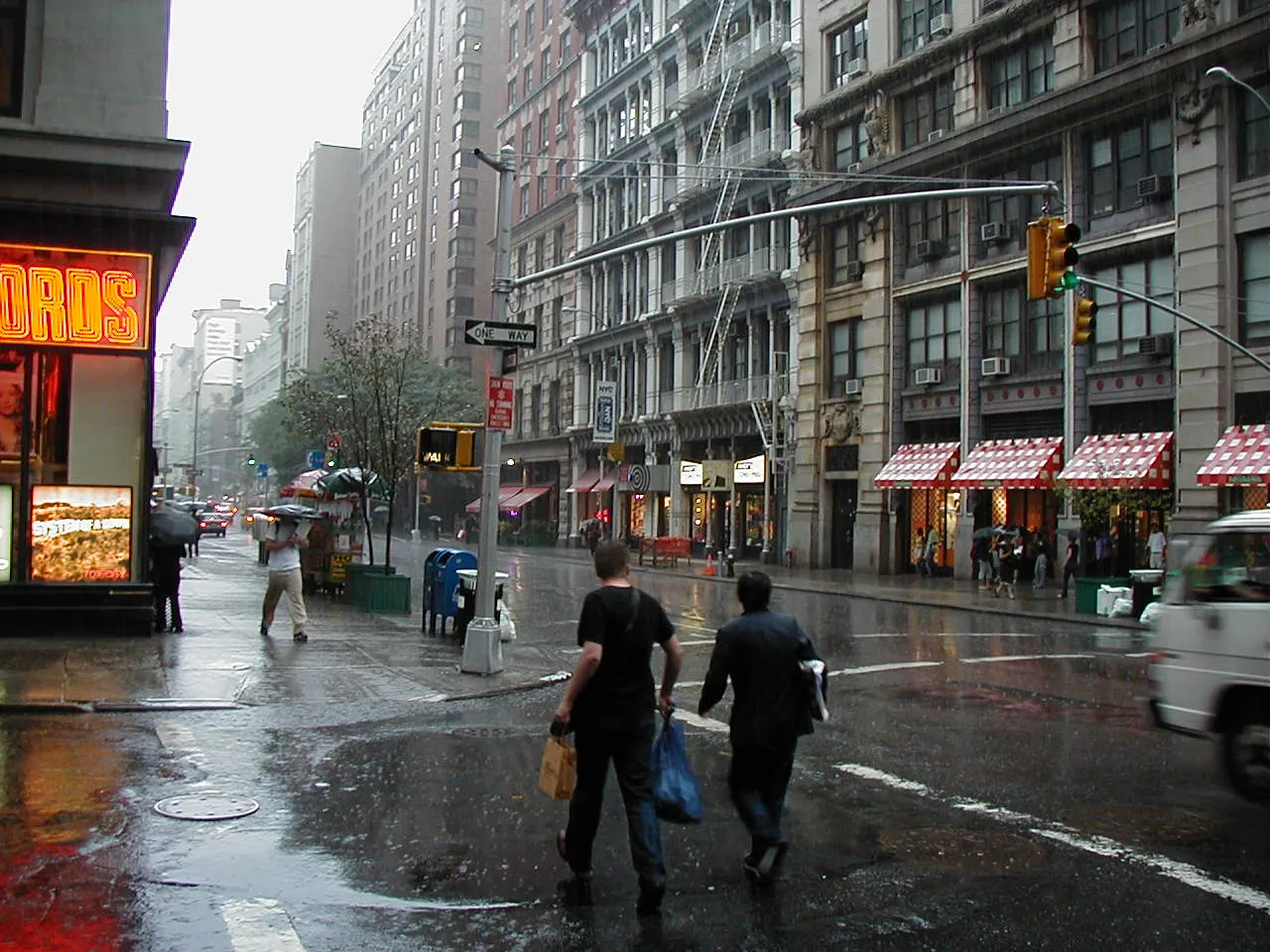
Everyone worked at this new place until 6, 7 at night. Startup mode. I stayed until 7, then walked in the rain, and took some pictures of people on the street, up by the Tower Records at Astor Place. One of those pictures ended up being the first cover for Rumored to Exist. I walked to Kiev, the Ukrainian greasy spoon diner, one of my favorite places to eat, and red-penned a draft of Rumored. I got through the entire draft while eating pierogies, then set off to catch the N back to Astoria.
Right outside of Kiev, I ran into John, this guy I used to work with at Juno. He said he was on the way to see a play, because he got a job reviewing theater for some random newspaper, and asked me to tag along. We walked through the East Village to get to this Alphabet City theater, one of those hundred-seaters that’s probably a cupcake bakery now. On the way, it poured rain, the standing-in-the-shower-fully-dressed kind of rain. When we got to the theater, I took off my new dress shoes and literally poured out a half-liter of water.
The play was insanely boring, and I left after the first act. When I got to the train, I realized that my draft of the book, filled with comments, had turned into a chunk of runny pulp, all of the precious corrections now a smear of pink nothingness. I got home and took everything out of the bag: my digital camera, the minidisc player, all of my books and papers, and decided to straighten it all out in the morning.
For the record: Kiev is gone. The Tower Records is gone. The company I worked for is moving out of their office this month.
---
Digging through the old emails, I had a couple of online dating prospects going on. One was a theater actress who would later go on to be Neighbor #2 in a Law and Order episode. The other, who I really liked, was an artist and trained dogs. We met up once, and I really did like her, but we never connected, and in all of our later emails, she kept talking about how she was trying to leave town because we were going to get hit with another attack any second now, which was always awkward.
---
Tuesday morning: my dress shoes were warped and damp and completely unwearable, but I put them on anyway. I only needed to walk to the train station, then I could take them off and let them dry. My bag was still wet. I threw out the pulpy Rumored draft, and decided to leave behind my digital camera. I always brought it to snap pictures of New York streets, but I figured I wouldn’t miss anything if I left it home for a day.
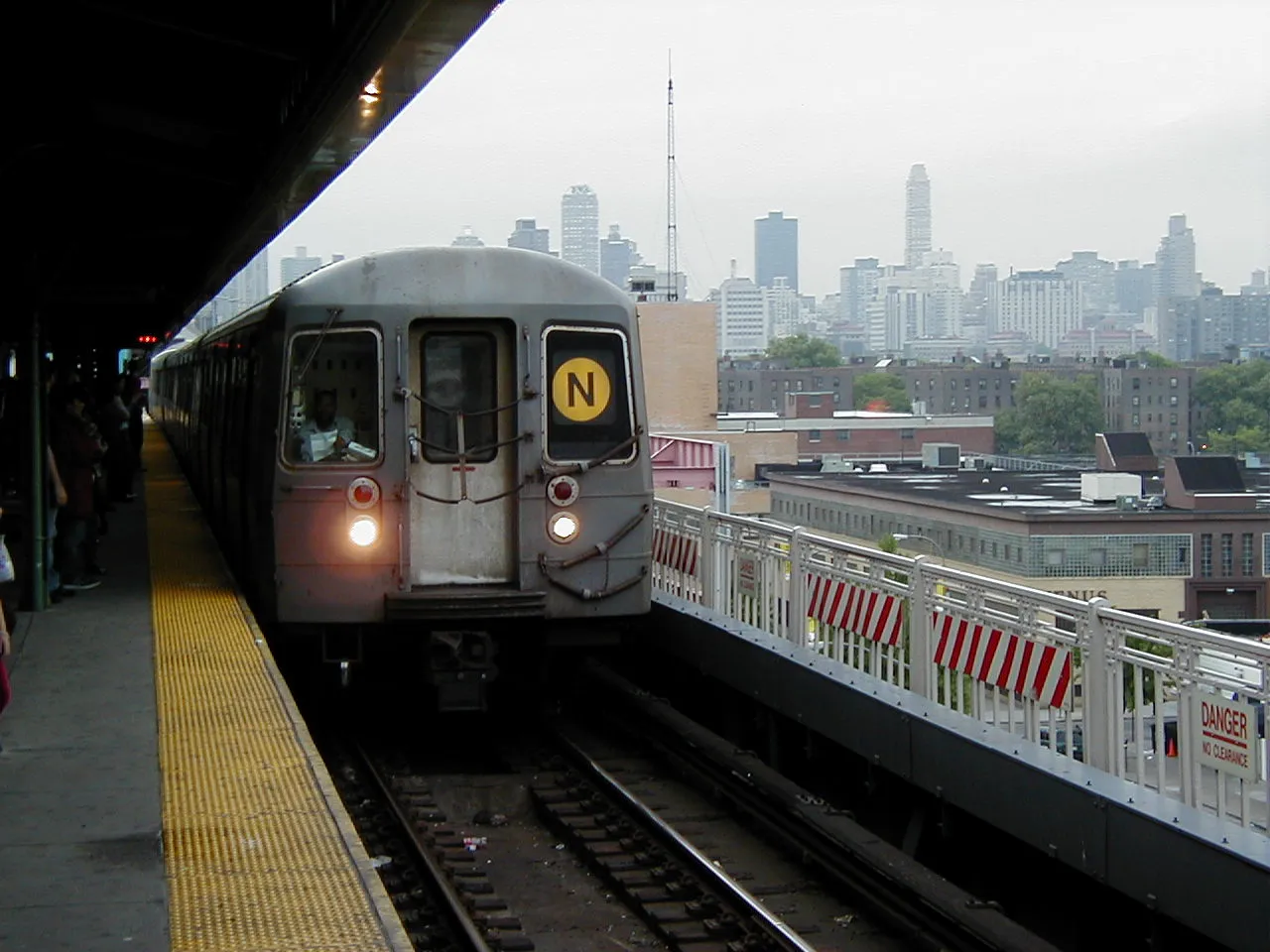
I got on the N train. I hated the N, and they just changed the schedule, adding this W train that skipped stops and ran express and made it more difficult to get to work. The N crept into the city, and once we got past Lex, it kept getting held up at each station. I figured it was this god damned schedule change, that the MTA had fucked it all over, and my commute would be forever filled with these delays. It’s maybe ten till 9:00, and I was hoping to get to work by 9:00, but it’s obvious that’s not going to happen.
It’s about 9:00, and the train is being held at Union Square. Someone gets on the train, a hispanic guy, and starts talking to me, but I have my headphones on. Nobody ever talks to anybody on the train; it’s like using a urinal: you don’t talk to the person next to you. I realized this was not a panhandling attempt, and took off my headphones.
“Someone flew a plane into the World Trade Center,” he said. “They stole a plane and crashed it.”
The train was full of murmurs and misinformation. I remember once reading about how a B-25 crashed into the Empire State Building during World War 2. It took out a whole floor, killed a couple of people. I figured someone stole a little Cessna or something, broke out a bunch of windows and started a big fire. I think this happened a few years before, a kid stole a Bonanza prop plane in Florida or something and flew it into his work building in the suburbs. I wonder how they get a plane out of a building when it’s a hundred stories up? They can’t use a crane. I started playing engineering scenarios in my head, how to disassemble a plane with cutting torches, when the subway doors closed and the train slowly ambled south.
The N train, the train I was on, went to the WTC. It stopped at Cortlandt Street, and you could take a tunnel into the lower concourse, and end up at the big underground mall. When it was cold in the winter, I used to take the train there and go to the Borders at the WTC all the time. Rob worked there, and would get me his employee discount, so I bought many a Bukowski book in that store. That Borders is obviously gone. And now all Borders are gone.
---
Just after 9:00, the train stopped again at 8th. I anticipated another long wait, so I got out and started walking south on Broadway, to the office. Gary, the company’s CPA, is outside of the office frantic, red-faced, looking like he’s about ten seconds from a massive heart attack. He tells me that a bunch of people from the company are at a meeting on the 106th floor of the North tower. The office is just north of Houston and Broadway, and I see a huge plume of smoke in the air.
The office is chaos. Nobody has a TV; someone is trying to find a radio; our phones are alternating between working and a fast busy signal. Nobody knows who’s at the meeting and who is en route and who hasn’t left home yet. Nobody knows if tower 1 is the north tower or tower 2. Someone reports that a second plane hit the other tower. Some people are outside watching; some are trying to get their computers to work to pull up a news page. CNN, MSNBC, and every other news site is completely unreachable. Google still worked, and they put a one-paragraph note on their minimalist index screen. (This would end up being the birth of the Google News page.)
---
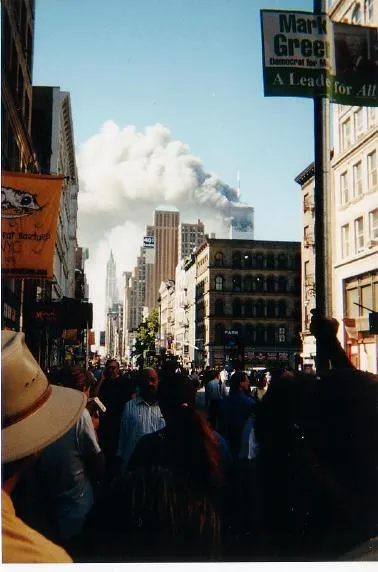
I realize I don’t have my camera. I walk across the street to one of those film developing/passport photo/lotto ticket places, and buy two disposable cameras. I start walking south on Broadway, taking pictures. I’m still thinking, “How do they put out a fire that high up? How are they going to repair this?” For some reason, the WTC on fire reminds me of the image of King Kong on top of the towers in that horrible 1976 remake.
I see an unmarked cop car, black tinted windows, speed up Broadway the wrong way, sirens blazing, lights on. It’s covered in about three inches of powdery grey dust. It looks like the dust you used to see in Mt. St. Helen’s footage in the 80s.
I walked south, took pictures. Some people were walking away from the scene, walking north. Some police were trying to block roads, but there was so much disorganization, nobody knew what was happening. I saw an F-15 fly over the Hudson river, at a ridiculously low altitude, maybe a few hundred feet, on its side, probably approaching Mach. I’d never seen a fighter jet fly that low, that fast, even at air shows.
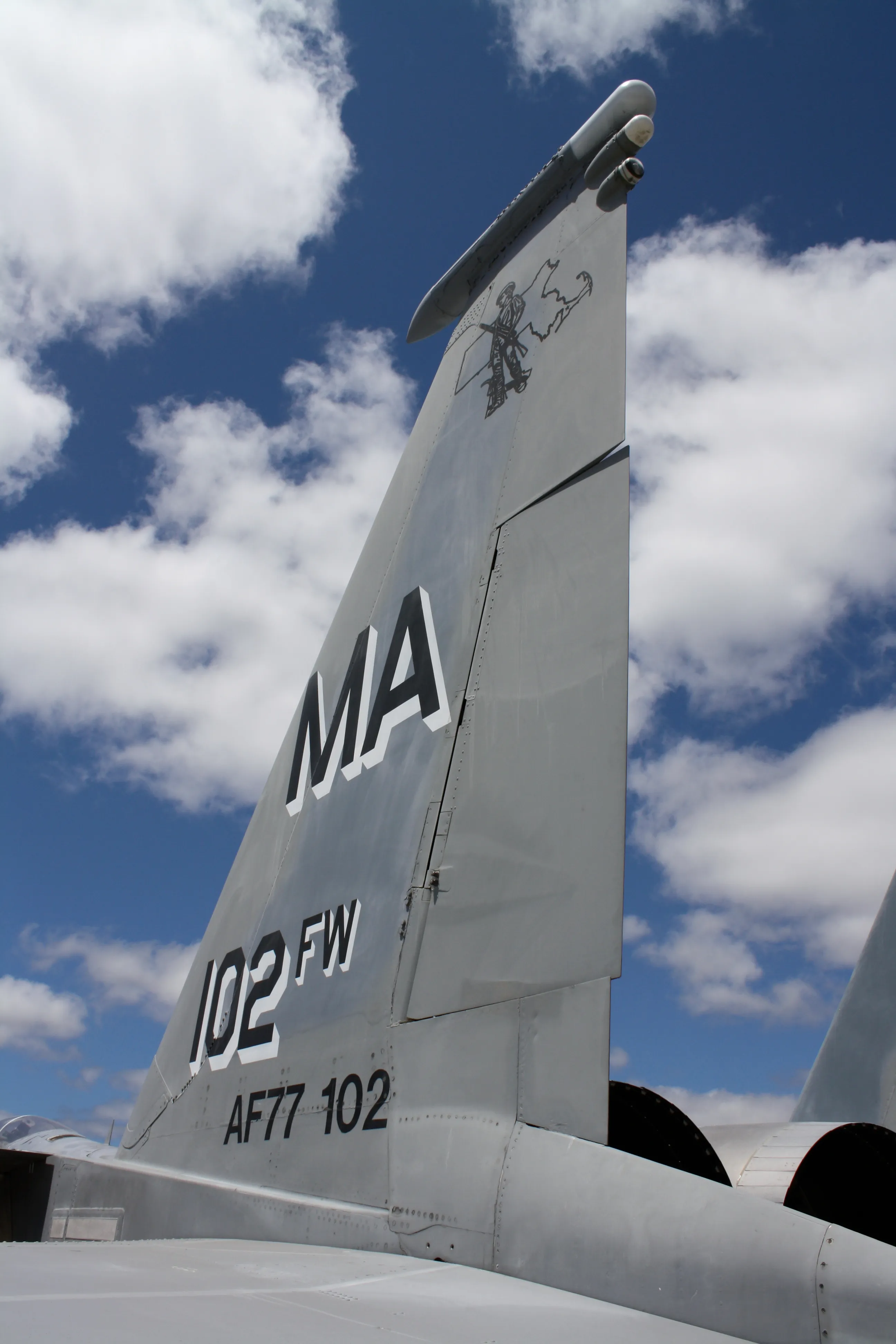
Almost ten years later, I’d see that same exact jet, same serial number, same markings, now retired and at an air museum here in California. I touched its grey camouflage paint, the metal skin on the side by the cockpit, and instantly remembered all of this.
---
I went south, past Canal, snaking down West Broadway, and reached Finn Square. By that time, the cops had completely blocked off the streets. The towers had just collapsed. I didn’t actually see it happen; I just saw this giant grey cloud where the towers used to be. I walked back to the office, and I remember sitting in my cube for about an hour, trying to send off emails. This is the email I sent to a bunch of people:
I’m OK. The World Trade Center isn’t. I think two or three hijacked planes hit it, and it’s gone. The WTC is maybe a mile? south of where I work. I was in the subway when the planes hit. The news makes it look like it’s mt st helens with all of the raining ash, but it’s not that bad unless you are right on wall street. I just bought two disposable cameras and walked to maybe 10 blocks north. I saw the second tower on fire, and it was one of the most bizarre things I’ve seen in my life. Right after I took pictures, it collapsed, but I didn’t see it happen because of the smoke. The subways are closed, and I think the bridges are too. I will probably sit here at work for a while, or maybe just fill my backpack with bottled water and walk home. (it’s only like 3 miles, so it’s not horrific). As far as the people from work, it wasn’t the CEO, but it was three others. They had a meeting on the 106th floor of the second tower that went, so nobody knows what happened. To say that things are freaked out here in the office would be a major understatement. The phones are sporadic so calls are timing out or getting a fast busy. You can try me at 212 842 8848 but don’t be alarmed if that doesn’t work. Pass on the word that I’m OK, and I’ll let you know more when I know more. -Jon
There was nothing anyone could do, so I started walking home. I realized my feet were completely mangled from walking a few miles in these wet dress shoes, and I hadn’t eaten anything since that Kiev the night before. I walked to the Astor Place K-Mart, dropped off the film at the one-hour counter to get it developed, then went to the second floor to buy a cheap pair of tennis shoes. Fifty women in dress clothes were doing the same exact thing. I sat in the Big K Cafe with a couple of corn dogs and fries, and tried to get my cell phone to work. Then I realized the closest cell tower was probably on the roof of one of the two buildings.
I got my film, and the woman working at the counter was all pissed off that they were in a mad rush of film processing, and everyone had tried to get pictures of the people jumping off the towers. I hadn’t heard about that until then. They were saying 6,000 people probably died.
---
I walked to 34th Street, and the trains started running out of the city. I got home, contemplated taking a nap. I went to register.com and checked if kill-binladen.com was taken, and it wasn’t. I don’t know how I knew already that it was him, if the news was saying it or if I made the connection myself, or what.
I had to get rubbing alcohol to clean my scanner to scan the pictures. The closest drug store was in this part of Astoria that’s basically an Arab neighborhood. There’s a mosque there, all of the hookah places, and a bunch of Pakistani and Egyptian restaurants. I remember looking at all of the people, and seeing the nervousness on their faces, that this white guy was going to show up and start shit. I imagined all of the store windows broken within 24 hours, people beaten up by local kids wearing American flag muscle shirts. I thought there’s probably going to be a lot more of this in the near future.
Inside the drug store, they had on an AM radio to the news. They were interviewing some guy at a flight school in Florida, who was saying a bunch of Saudis took classes that summer, wanting to learn how to take off and not land. I realized that this flight school was almost exactly where I was staying that summer. It was the same exact time. I even looked at taking some flight lessons when I was there. I probably ate lunch at the same Denny’s as one of the hijackers and didn’t know it.
---
I scanned the pictures, fielded some frantic phone calls, but could not call anyone because my phone was all messed up. I couldn’t make outgoing calls, but sometimes a random incoming call would make it. Every time I started to take a nap, another call would come in from a worried relative. I stayed glued to CNN. I blew out the fuse and lost my power. I went to Rob’s, drank beer, came home. I wrote a lot of emails, including an email to someone I dated earlier that summer that probably said a lot of stuff I shouldn’t have said, and was pretty much akin to playing a game of poker and laying every card you had face-up. The next day, my DSL internet went out, because of course the closest colo was in the Verizon building in lower Manhattan, which had no power, and all of their generators ran out of gas.
I didn’t go back to work for a week. Four people died. I didn’t know how to feel about any of this, because I just started the job, and didn’t really know anybody at the company. We had to go to grief counseling, but it was a joke. I became this weird conduit for all of these people in the Midwest, because I was their link to the tragedies. New York became a ghost town; the city I wanted to leave really became a place to abandon. I cancelled my trip to New Orleans, because I didn’t even know if there was going to be an airline industry anymore. I went to a shrink and told him to give me whatever he could, and I started taking Effexor. That gave me something else to focus on: crippling headaches and nausea. Within a few weeks, that went away, the drugs took over, and I got back to work, back to writing, back to bitching about my lack of a dating situation. I’d survive.
---
I just realized I started by saying I didn’t want to write about this, and I’ve now written about 3500 words about it. I have no nice ending or message to wrap this up with, except the uneasy feeling that there will never be any real closure on this, because the event will forever be fetishized. I’m constantly told what I should think about this, and it never is what I think. I guess that’s the big takeaway, that it’s not something that can be pigeonholed into a nice, succinct bumper sticker-sized motto or slogan.
Okay, time to turn off the TV for the weekend and go on with life.