The Wrath of Kon

Dispatches, thoughts, and miscellanea from writer Jon Konrath

Tag: memories

The gaps of summer

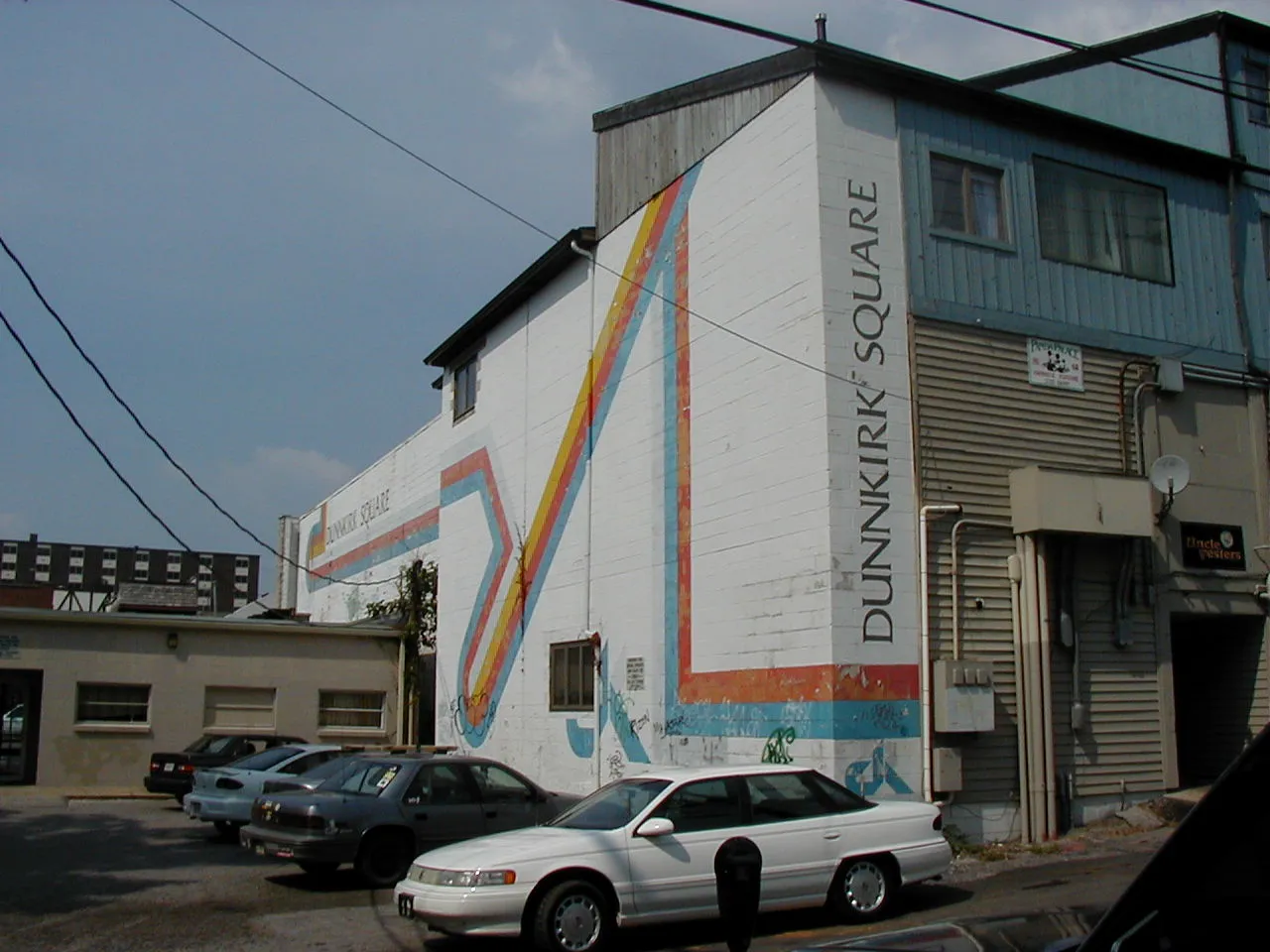
p8010002

I find myself thinking about Summer Rain a lot lately, which is ultimately dangerous, I think.  Next year will be 20 years since the Bloomington summer I fictionalized, and ten years since I actually last set foot in the college town.  I think about the book because it’s a default way of writing for me, fictionalizing my past, and I often wonder if I should write another similar book talking about the other pockets of time in Indiana, or Seattle, or whatever.  I actually wrote a good chunk of a novel that fictionalized the end of my high school experience, and the battle to get the hell out of my small town in Indiana, back in the late 80s.  It’s about 50,000 words, but ultimately plotless and would be difficult to spin into anything useful.

I pulled the original Summer Rain manuscript into Scrivener, with thoughts about cleaning it up and doing an ebook version, but it was absolutely painful for me to look at some of that old writing.  It screams “first book” and makes me want to dive into it and rewrite everything, which is the danger.  That’s a huge rabbit hole to fall into, and one without much reward.  I’ve often thought about going back to rewrite the whole thing from scratch, or maybe come back and rewrite it as a book told by a person twice as old as the original character, returning to the town he lived in half a life ago and comparing the pieces of that past with what really happened in his life.  The John Knowles book A Separate Peace was an unlikely inspiration for me, and he frames his book in a similar way.

One of the things that I ponder sometimes is all of the stuff I left out of the book.  There were a few story lines and characters that ultimately did not add anything to the book and were left out, and there are bits of that summer that I later recall that simply didn’t relate to the rest of it and never made the manuscript.  Sometimes I’ll see something that reminds me of the era, and I’ll then remember it never made the book, and is just a lost, unassimilated memory that I should probably catalog and use elsewhere.

One of those memories involves driving in a tornado.  I was at the College Mall, before a shift at the radio station, wandering the concourses and hallways with no real purpose except to kill a few hours until I went on the air.  It started pouring rain, which was no big surprise - one of the central themes of the original short story which morphed into the book was how it rained every single time I had a radio show, and I’d spend those lazy summer nights in this shithole college radio station, listening to death metal and watching the rain fall on the downtown in the darkness.  But while I was at the mall, the sirens went off, those air raid sirens that typically denote the start of a nuclear war or godzilla attack.  Someone came on the PA and said everyone had to go to the mall basement because a tornado had been spotted.  This amazed me, because I did not know the mall had a PA system or a basement.

As everyone shuffled into the basement of this mall, I thought for some stupid reason that it was my duty to get to the station and broadcast news about the tornado.  Never mind that nobody listened to the station, and I didn’t have a ticker tape or news feed or national weather service thingee to give me any data other than what I could see outside my window; I felt some need to get to the station, as opposed to being trapped in a basement with a bunch of strangers.  So I ran out to the parking lot, and drove.  And I got to the station, there was no news, no destruction, end of story.  But the experience of driving in this near-tornado weather was surreal, the darkness and the quiet of the two pressure fronts, punctuated with the sounds of rain dropping like pellets of stone onto my windshield, the low howl of the wind, and the feeling that my little toy car would go airborne at any given time.  It wasn’t enough of a story to become an actual story, but when I see a tornado on the news, that’s what entered my head.

There was also this entire subplot that I couldn’t get into words about this girl that I tutored who I had a horrible crush on, and who it turns out had a horrible crush on me, and of course nothing became of it, except I spent a summer trying to explain Motorola assembly code to someone who probably should have changed majors.  She also had this absolutely gorgeous roommate, who I never talked to, and then one night had an hour-long spontaneous conversation with her and found out she was a manic-depressive and we shared the same psychiatrist.  And she had broken up with her boyfriend the day before, and was going to Europe the next week, and it was one of those things where I thought if everything was different, I would have had a shot with her.

Years later the tutor-ee converted to the Baha’i faith, and convinced me to come to a meeting with her.  I had little interest in converting to a new religion, but still had some kind of feelings for her, and agreed.  And I found the Baha’i religion fascinating, how they believe that all religions are essentially true, and believe in all of god’s messengers.  All of the people were friendly, and there was no heavy dogma or evangelical angle.  But there was still the whole belief in a god thing, which I couldn’t do.  Also, no premarital sex was a deal-breaker.

There’s something psychologically stopping me from writing about these things, and I don’t know how to quantify it, other than to say I don’t care about it anymore.  Bloomington seems so distant, and the present seems so dull, so I feel a need to write about something completely synthesized.  There are a lot of things like that, things that I no longer give a shit about that were once almost religious battles for me.  The Coke versus Pepsi sort of battles in life are things I just honestly do not care about anymore.  That’s not a problem in the sense that I don’t throw a fit when I go to a restaurant and they don’t have my brand of fizzy water.  But does it cause a problem in that all writing needs to be, in some way, about unresolved conflict?

The Third (and Fourth) Eye

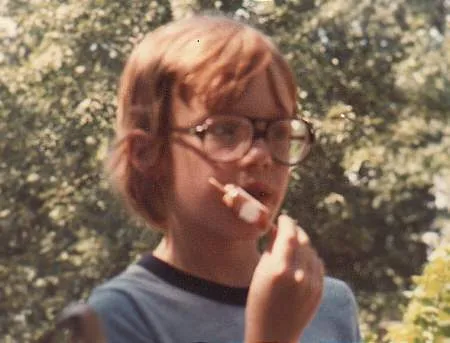
Jonkid-1

I don’t know if I believe in luck or fate or karma, but of course my glasses had to break the day before an eye appointment.  I’m working off of a migraine-inducing old pair for today, and trying to figure out if they can temporarily fix the old ones, because even if I buy a new set today, I have to wait until they can deorbit a space telescope in order to appropriate the correct size lenses to fill my prescription.

(And no, this isn’t a matter of just getting a replacement screw and a tiny screwdriver at the drug store.  I have more tiny screwdrivers than a restaurant has silverware.  And the spring-loaded hinge itself actually snapped, and does not appear to be a serviceable part.  I’d need an entirely new temple for it.)

Glasses have always been a huge pain in the ass for me.  I first got fitted for them when I was in the first grade, so I officially became “that kid with glasses” first. I got my glasses at the Elkhart Clinic, which is like a very small step up from that place where you donate your old frames and they give them to kids in Haiti.  I have severe astigmatism, so my glasses always had freakishly thick plastic lenses, until they came out with high-index lenses, at which time they went from freakishly thick to abnormally thick.

I spent a lot of high school and college going back and forth on contact lenses.  They didn’t used to be able to correct astigmatism with contact lenses, and they didn’t make a disposable lens in my prescription for a long time.  The cleaning regimen always bugged me, and I could never make it a full 20-hour day in college with a set of soft lenses, so I never stuck with the regimen, and always returned to glasses.  And looking back at some of the frames I had in the 80s and 90s, they were all truly horrendous.  Someone must have told me at some point that a bigger lens was better, or that a small lens would cost a dollar more or something, because I always got these lenses that were roughly the size of a small dinner plate.

When I was in Seattle, I tried again with contacts, and the optometrist introduced me to Torek lenses, which are designed to correct for astigmatism.  I remember the first time I wore the new pair, driving from downtown Seattle to Factoria, and everything was astoundingly clear and corrected.  Glasses don’t give you true 3-D sight; they just present a 2-D corrected portal, which means everything in your peripheral vision is not corrected.  But with Torek lenses, everything looked clearer than it ever did, probably since before Kindergarten, before my eyes started going south.  Unfortunately, they did not have disposable lenses yet, and Torek lenses are even harder to put in your eyes, because you can put them in upside-down.  I also had all of the extended-wear issues, especially since I spend all day in front of a computer.

I think they now make a disposable Torek lens for my prescription, but I have so many allergy-related eye issues, I’m not sure I would be able to withstand them.  I also thought about lasik surgery (it’s hard not to in New York - every subway car has an ad for it) but I got the initial consult, and my corneas are too thin.  There is a new procedure where they essentially implant a tiny contact lens under your cornea, but that doesn’t correct astigmatism.  They have a torek version of the implantable lens, but it hasn’t passed FDA testing, and flying to Canada to pay $10,000 for an essentially untested surgery on my eyes doesn’t seem like the best idea.

I think my nearsightedness has largely stabilized in recent years.  But I think I’m slowly getting farsighted, and find myself taking off my glasses to read fine print on things.  I don’t know if that will mean bifocals or dedicated reading glasses, since I spend all day at the computer.  I also think they can fix farsightedness with a laser.  But I will need to throw more money at new hardware.

I also don’t know what frames to get.  When I look at frames, they all look virtually identical.  It’s like when I watch one of those Heidi Klum fashion reality shows - I have no idea what looks good or bad.  And I absolutely detest that geeky looking glasses are suddenly “in”, and fashion models are wearing these nerdy, thick black frames.  This means that if I choose a pair like this, they will go out of style roughly 500 milliseconds later, and I’ll be stuck with them for another year or two.

At least this is my chance to catch up on my large-print Reader’s Digest reading.  My eye doctor caters to the glaucoma demographic, so their reading material is limited.  It’s always fun to go somewhere where I’m the youngest person there by a good two or three decades.

Dot Matrix and Word Processors

I was writing about something completely different the other day, and went on this side diversion about dot-matrix printers, and thought about how a giant subset of the population (like everyone born after about 1985) never had to deal with them, while I spent far too many hours fighting them in computer labs, pulling apart the intricate pieces to pry loose jammed scraps of paper that got worked into the machinery.

There’s so many distinctive features of this whole era of printing that are long forgotten.  Dot matrix printers usually used eight little pins to stamp a ribbon as the print head jumped across the page.  My friend Matt had one of these, the Commodore 801, and the thing I remember most about it was that it was unidirectional; the little print head would zip across the page at a breakneck 50 characters per second, then the page would move up a line, and the head would return to the left.  But it didn’t print on the sweep back to the left, which meant it was half as fast as the expensive printers that would print on both passes.

The printers were also tractor-feed back then.  The paper had those little perforated runners hanging off of each end, little strips with holes in them, and the box of paper was fan-fold, so you could feed in the sheet and it would continuously chew through the giant thousand-page sheet of paper in a carton.  Then, after you spent 20 minutes staring at the printer, hoping the thing got through your term paper in one pass, you then had to fold and tear apart each page, then tear off the feed strips on either side.

And, of course, that never worked right.  If you didn’t line up the paper exactly, turning the little knob on the side of the printer, the end of the physical page would not match up with what the computer thought was the end of the page, and you’d get this mangled mess with a blank strip of what was supposed to be the top and bottom margins in the middle of the printed page.  The whole operation of aligning and feeding and advancing paper was a precision thing, and if the paper got folded or creased or otherwise fucked up, the printer would have no mercy and create an origami disaster out of your precious schoolwork.

The output of a dot-matrix looked like shit, and they did a lot of little tricks to get it to resemble actual type.  Like some printers had this “near letter quality” feature, where they’d do multiple passes on the same line to get a higher resolution, and they started adding more pins.  When I was at IUSB, we had armies of these Panasonic KPX-1124 printers, which had 24 pins instead of 8.  These pieces of shit were the bane of my existence back in 1991, and I spent untold hours tearing jammed paper out of these while some dumpy housewife screamed at me about her Psych 101 paper getting trashed.  (If you ever did time around one of these, watch this video and tell me if the clunking sound of that print head slamming into the left margin over and over doesn’t make you go full postal.)

It seems like everyone forgets the other bastard child of that era that made perfect typewritten letters, at the sake of glacial speeds and 120-decibel print runs.  The daisy wheel printer had a hub with a bunch of little spokes coming off of it, each one carrying a little type letter.  It could spin the wheel with a servo motor and then hammer it against the ribbon with a solenoid, making an ink impression that looked exactly like a typewritten page.  These were a big deal if you were printing out things like college admission letters, or you had an English teacher that had a hair up their ass about dot-matrix printers and wanted you to hunt down a selectric and hammer out the damn thing the old fashioned way.  Daisy wheel printers were louder than fuck, and a low-end model typically cost more than your entire computer.

But not everyone had computers.  When I was in high school, I had this “word processor” which was a glorified typewriter, except it had a single line of an LCD display, and it used a thermal print head.  It took these cartridges of some kind of crap that it could transfer to a page with a set of heated pins.  If you have one of those label maker machines, it was a similar deal, but masquerading as a desktop machine.  I think you could only type in one line at a time, and then hit return and wait a minute for it to etch onto the paper.  This wasn’t the best machine for stream-of-consciousness writing, but it was way faster than hunt-pecking on the K-Mart manual typewriter I got at a garage sale as a kid, where you’d type any faster than three characters a minute and all of the little hammers would get wrapped around each other and jam.

I somehow lucked into finding this girl in my freshman year of college that thought I was some kind of writing genius, and got her to type my papers for a semester.  I guess that sounds sort of chauvinistic, but that’s an arrangement that I feel sorry the current generation won’t find themselves in.  The “can you help me type my W131 paper?” pickup line has gone the way of the dodo.

After I wasn’t able to fully seal that deal, I dated someone who bought one of those Brother word processors, which were a very brief halfway-house between a typewriter and a computer.  It was this huge microwave oven-sized thing that was a fusion of a printer, a tiny CRT monitor, a keyboard, and the Notepad.exe program in ROM.  You could type a few pages at a time and then save them to a floppy disk (which was totally incompatible with any other computer) and then when you got it all situated and edited, you pressed a key and it would spit out the creation on actual paper.  My roommate Kirk later had one of these beasts, and I think I remember Larry working off of one for a while.  Here is a nice video of one in action.

Now, computers are cheap as hell, something it seems that most people forget, and laser printers or nice inkjets are everywhere, and we don’t really think about stuff like this.  But I remember the smell of the fine paper dust inside of a monster line printer on campus, one of these washing machine sized beasts that would mass-print thousands of pages off of VAX computers, so long as one of us consultants hooked it up with the occasional corrugated cardboard box of 17” wide tractor feed paper, that cream and light green-lined stuff.  Every now and again, some idiot would send an ASCII-art dragon to the printer, a giant picture rendered in letters that would print banner-style across three dozen pages of paper, over the course of an hour.  (Even better, when you’re sitting in a public lab and someone in a dorm sends through a picture of a Penthouse Pet done up ASCII-style.)  That was all infinitely better than when someone would accidentally dump a binary file to the DEC LG06 in the library, and it would spit out page after page of random junk until you could get an operator in the machine room to kill the queue.

My last hurrah with dot matrix was about five years ago, when I bought a Tandy 100 off of eBay.  The guy threw in a bunch of other random crap, including a Radio Shack printer from circa 1985, with some bizarro serial cable and no chance in hell of ever working with a machine produced this century.  It went straight to the dumpster, but I probably should have videotaped it going off of a four-story building, or getting it Office Space style with a baseball bat.

The Replay

I’ve been dreading this post for years, but it’s a band-aid I need to rip off.

I was at this acupuncturist in Berkeley a year ago, in some stupid last-ditch attempt at getting rid of my allergies.  (It did not work.)  And I remember laying on his table, with a dozen needles in my arms and feet and face, thinking, “I really should post something today, but I don’t want to regurgitate the same old shit, and it’s only the nine year anniversary.  I’ll wait for an even ten.”  And it’s now ten years, and everyone is either waving their flags and beating their chest and ringin’ them bells, or they’re talking about the folly of spending two billion dollars a day to catch a man that’s already dead.  And every show on TV this weekend is trying to get their spin on it, about how the world of cooking shows or pet rescue or hillbilly alligator hunting was forever changed on this day.

Seriously, fuck all of that.

It all makes me replay the day, and I do that a lot, but I don’t really think about who I was on September 10th, 2001, and what really did change.  And I play this game a lot, with a lot of other arbitrary dates.  I pull up old pictures or dig through old emails, wondering what person I was on 9/11/01 or 7/4/92 or 1/20/97 or any other date.  And I try to reconstruct it, and I always find information I’d totally forgotten.

Here’s how it ended:  I’d been sober a year, more or less.  No meetings, no steps; I just quit drinking.  But that night, my power was out, not because I lived in lower Manhattan, but because my stupid landlord had my entire apartment on two 15-watt breakers, and I was watching the news coverage on NY1 as I was running my computer and cooking in the microwave, and I blew a fuse.  And the fuse box was in a locked box in the basement, and my landlord was in Italy for a month.  So I had no power, in half my apartment, and ConEd had bigger problems on their hands, so I walked to Rob’s and he offered me a beer, and I started slamming them away.  It wasn’t because, like usual, I needed to be the life of the party and get blotto and do stupid things to make everyone else laugh.  It was because I thought if there’s ever a time to fall off the wagon, watching thousands of people die and two skyscrapers collapse was probably that day.

---

What I know about the weekend before: I just switched jobs, and I thought it was a huge mistake.  I was in way over my head, working as a lone writer surrounded by people who were 18 steps ahead of me.  I think I was the only person in my section of the cube sea that didn’t have a PhD.  I’d moved to New York to be in a relationship, and that ended; I’d found this job at Juno, which started out pretty awesome, and that ended.  I forgot all about this, but I’d emailed Frankov that weekend and asked him if there was anything going on out in SF, if I should pack it in and move out there.  This was post-NASDAQ crash, and he said don’t do it unless you can line something up, and that he lost his job and his apartment, and was now couch-surfing and stringing together a bunch of scraps of contract work to keep alive.  I don’t remember why I wanted to move to San Francisco, except that I wanted to leave New York, and I wanted a lot of different things, depending on the time of day.

I finished my first book the year before, and it didn’t really sell.  I was struggling with finishing my second book, and in this weird funk where I didn’t know how it would ever end.  I was constantly printing drafts and editing them on the train and putting the pieces on index cards and rearranging them on the floor of my apartment and dumping the whole thing into spreadsheets to try and untangle this mess of a book into a cohesive 200 pages.  I’d start with a fresh printout, and read the first page, and think it was perfect, then move to the second, and by the 3rd or 7th or 12th page, I would get sick of the whole thing.  So the first page was damn near perfect, and pages 150-200 were unbearable.

The first page, the first section of the book starts with a scene where all of lower Manhattan was accidentally blown up by a nuclear bomb.

---

So on the 10th, it was a Monday.  I spent all weekend trying to buy a car on eBay.  I had a good lead on a 1980 Z-28 that some kid in Queens was trying to unload.  It had no exhaust, and there was no way it would pass a NYS emissions test.  He would reply to my emails in all caps, but not answer my questions.  I bid on an AMC Gremlin in Staten Island, but got outbid.  I also looked at a 1982 VW Rabbit convertible.  I owned one in ‘92, the one in Summer Rain.  I bought a second one in ‘98, when I was writing said book.  Why not a third?  But I figured Ray and Larry would give me unending shit if I bought a sorority chick car.  And I didn’t have a place to park a vehicle, and had no need for one, except for that desire to do what I did as a kid and hit the road when I got depressed, drive for one side of the tape, flip it over, drive back.

I wanted to go to Iceland.  No passport, too expensive.  I spent two weeks in Florida that summer, doing nothing in a motel room, trying to write, sleeping all day, taking long walks at night.  It just barely scratched the itch, and I needed more.  I talked to A about coming back to Bloomington to do a book reading, but I couldn’t get away with coming back to Indiana and not visiting my family, which I really didn’t want to do.  I thought about taking a flight to Nebraska, finding a Motel 6, locking myself in with no internet and nothing but the laptop, and finishing this damn book.

That afternoon, it poured rain.  I bought a lunch at this crap Chinese place downstairs, and it was inedible, so I went to Wendy’s, and it wasn’t much better.  I gave up on lunch, and went to the JetBlue web site, trying to find a vacation for October. For some reason, I bought a plane ticket to New Orleans.  I didn’t know where I would stay or what I would do, so I emailed Suzanne and Chuck, the two people who I knew who spent some time down there.  (I don’t know why I didn’t email Bart, who later became the face of Katrina for a lot of us.)

Chuck’s dead now.  I dug through all of his old emails when he died in 2007, and saw that he was one of the many people that emailed me on the 11th and 12th asking if I was still alive.

---

P9100027

Everyone worked at this new place until 6, 7 at night.  Startup mode.  I stayed until 7, then walked in the rain, and took some pictures of people on the street, up by the Tower Records at Astor Place.  One of those pictures ended up being the first cover for Rumored to Exist.  I walked to Kiev, the Ukrainian greasy spoon diner, one of my favorite places to eat, and red-penned a draft of Rumored.  I got through the entire draft while eating pierogies, then set off to catch the N back to Astoria.

Right outside of Kiev, I ran into John, this guy I used to work with at Juno.  He said he was on the way to see a play, because he got a job reviewing theater for some random newspaper, and asked me to tag along.  We walked through the East Village to get to this Alphabet City theater, one of those hundred-seaters that’s probably a cupcake bakery now.  On the way, it poured rain, the standing-in-the-shower-fully-dressed kind of rain.  When we got to the theater, I took off my new dress shoes and literally poured out a half-liter of water.

The play was insanely boring, and I left after the first act.  When I got to the train, I realized that my draft of the book, filled with comments, had turned into a chunk of runny pulp, all of the precious corrections now a smear of pink nothingness.  I got home and took everything out of the bag: my digital camera, the minidisc player, all of my books and papers, and decided to straighten it all out in the morning.

For the record: Kiev is gone.  The Tower Records is gone.  The company I worked for is moving out of their office this month.

---

Digging through the old emails, I had a couple of online dating prospects going on.  One was a theater actress who would later go on to be Neighbor #2 in a Law and Order episode.  The other, who I really liked, was an artist and trained dogs.  We met up once, and I really did like her, but we never connected, and in all of our later emails, she kept talking about how she was trying to leave town because we were going to get hit with another attack any second now, which was always awkward.

---

Tuesday morning: my dress shoes were warped and damp and completely unwearable, but I put them on anyway.  I only needed to walk to the train station, then I could take them off and let them dry.  My bag was still wet. I threw out the pulpy Rumored draft, and decided to leave behind my digital camera.  I always brought it to snap pictures of New York streets, but I figured I wouldn’t miss anything if I left it home for a day.

I got on the N train.  I hated the N, and they just changed the schedule, adding this W train that skipped stops and ran express and made it more difficult to get to work.  The N crept into the city, and once we got past Lex, it kept getting held up at each station.  I figured it was this god damned schedule change, that the MTA had fucked it all over, and my commute would be forever filled with these delays.  It’s maybe ten till 9

, and I was hoping to get to work by 9
, but it’s obvious that’s not going to happen.

It’s about 9

, and the train is being held at Union Square.  Someone gets on the train, a hispanic guy, and starts talking to me, but I have my headphones on.  Nobody ever talks to anybody on the train; it’s like using a urinal: you don’t talk to the person next to you.  I realized this was not a panhandling attempt, and took off my headphones.

“Someone flew a plane into the World Trade Center,” he said.  “They stole a plane and crashed it.”

The train was full of murmurs and misinformation.  I remember once reading about how a B-25 crashed into the Empire State Building during World War 2.  It took out a whole floor, killed a couple of people.  I figured someone stole a little Cessna or something, broke out a bunch of windows and started a big fire. I think this happened a few years before, a kid stole a Bonanza prop plane in Florida or something and flew it into his work building in the suburbs.  I wonder how they get a plane out of a building when it’s a hundred stories up?  They can’t use a crane.  I started playing engineering scenarios in my head, how to disassemble a plane with cutting torches, when the subway doors closed and the train slowly ambled south.

The N train, the train I was on, went to the WTC.  It stopped at Cortlandt Street, and you could take a tunnel into the lower concourse, and end up at the big underground mall.  When it was cold in the winter, I used to take the train there and go to the Borders at the WTC all the time.  Rob worked there, and would get me his employee discount, so I bought many a Bukowski book in that store.  That Borders is obviously gone.  And now all Borders are gone.

---

Just after 9

, the train stopped again at 8th.  I anticipated another long wait, so I got out and started walking south on Broadway, to the office.  Gary, the company’s CPA, is outside of the office frantic, red-faced, looking like he’s about ten seconds from a massive heart attack.  He tells me that a bunch of people from the company are at a meeting on the 106th floor of the North tower.  The office is just north of Houston and Broadway, and I see a huge plume of smoke in the air.

The office is chaos.  Nobody has a TV; someone is trying to find a radio; our phones are alternating between working and a fast busy signal.  Nobody knows who’s at the meeting and who is en route and who hasn’t left home yet.  Nobody knows if tower 1 is the north tower or tower 2.  Someone reports that a second plane hit the other tower.  Some people are outside watching; some are trying to get their computers to work to pull up a news page.  CNN, MSNBC, and every other news site is completely unreachable. Google still worked, and they put a one-paragraph note on their minimalist index screen. (This would end up being the birth of the Google News page.)

---

save0057_1

I realize I don’t have my camera.  I walk across the street to one of those film developing/passport photo/lotto ticket places, and buy two disposable cameras.  I start walking south on Broadway, taking pictures.  I’m still thinking, “How do they put out a fire that high up? How are they going to repair this?”  For some reason, the WTC on fire reminds me of the image of King Kong on top of the towers in that horrible 1976 remake.

I see an unmarked cop car, black tinted windows, speed up Broadway the wrong way, sirens blazing, lights on.  It’s covered in about three inches of powdery grey dust.  It looks like the dust you used to see in Mt. St. Helen’s footage in the 80s.

I walked south, took pictures.  Some people were walking away from the scene, walking north.  Some police were trying to block roads, but there was so much disorganization, nobody knew what was happening.  I saw an F-15 fly over the Hudson river, at a ridiculously low altitude, maybe a few hundred feet, on its side, probably approaching Mach.  I’d never seen a fighter jet fly that low, that fast, even at air shows.

IMG_5646

Almost ten years later, I’d see that same exact jet, same serial number, same markings, now retired and at an air museum here in California.  I touched its grey camouflage paint, the metal skin on the side by the cockpit, and instantly remembered all of this.

---

I went south, past Canal, snaking down West Broadway, and reached Finn Square.  By that time, the cops had completely blocked off the streets.  The towers had just collapsed.  I didn’t actually see it happen; I just saw this giant grey cloud where the towers used to be.  I walked back to the office, and I remember sitting in my cube for about an hour, trying to send off emails.  This is the email I sent to a bunch of people:

I’m OK.  The World Trade Center isn’t.  I think two or three hijacked planes hit it, and it’s gone.  The WTC is maybe a mile? south of where I work.  I was in the subway when the planes hit. The news makes it look like it’s mt st helens with all of the raining ash, but it’s not that bad unless you are right on wall street.  I just bought two disposable cameras and walked to maybe 10 blocks north.  I saw the second tower on fire, and it was one of the most bizarre things I’ve seen in my life.  Right after I took pictures, it collapsed, but I didn’t see it happen because of the smoke. The subways are closed, and I think the bridges are too.  I will probably sit here at work for a while, or maybe just fill my backpack with bottled water and walk home.  (it’s only like 3 miles, so it’s not horrific). As far as the people from work, it wasn’t the CEO, but it was three others.  They had a meeting on the 106th floor of the second tower that went, so nobody knows what happened.  To say that things are freaked out here in the office would be a major understatement. The phones are sporadic so calls are timing out or getting a fast busy.  You can try me at 212 842 8848 but don’t be alarmed if that doesn’t work.  Pass on the word that I’m OK, and I’ll let you know more when I know more. -Jon

There was nothing anyone could do, so I started walking home.  I realized my feet were completely mangled from walking a few miles in these wet dress shoes, and I hadn’t eaten anything since that Kiev the night before.  I walked to the Astor Place K-Mart, dropped off the film at the one-hour counter to get it developed, then went to the second floor to buy a cheap pair of tennis shoes.  Fifty women in dress clothes were doing the same exact thing.  I sat in the Big K Cafe with a couple of corn dogs and fries, and tried to get my cell phone to work.  Then I realized the closest cell tower was probably on the roof of one of the two buildings.

I got my film, and the woman working at the counter was all pissed off that they were in a mad rush of film processing, and everyone had tried to get pictures of the people jumping off the towers.  I hadn’t heard about that until then.  They were saying 6,000 people probably died.

---

I walked to 34th Street, and the trains started running out of the city.  I got home, contemplated taking a nap.  I went to register.com and checked if kill-binladen.com was taken, and it wasn’t.  I don’t know how I knew already that it was him, if the news was saying it or if I made the connection myself, or what.

I had to get rubbing alcohol to clean my scanner to scan the pictures.  The closest drug store was in this part of Astoria that’s basically an Arab neighborhood.  There’s a mosque there, all of the hookah places, and a bunch of Pakistani and Egyptian restaurants.  I remember looking at all of the people, and seeing the nervousness on their faces, that this white guy was going to show up and start shit.  I imagined all of the store windows broken within 24 hours, people beaten up by local kids wearing American flag muscle shirts.  I thought there’s probably going to be a lot more of this in the near future.

Inside the drug store, they had on an AM radio to the news.  They were interviewing some guy at a flight school in Florida, who was saying a bunch of Saudis took classes that summer, wanting to learn how to take off and not land.  I realized that this flight school was almost exactly where I was staying that summer.  It was the same exact time.  I even looked at taking some flight lessons when I was there.  I probably ate lunch at the same Denny’s as one of the hijackers and didn’t know it.

---

I scanned the pictures, fielded some frantic phone calls, but could not call anyone because my phone was all messed up.  I couldn’t make outgoing calls, but sometimes a random incoming call would make it. Every time I started to take a nap, another call would come in from a worried relative.  I stayed glued to CNN.  I blew out the fuse and lost my power.  I went to Rob’s, drank beer, came home.  I wrote a lot of emails, including an email to someone I dated earlier that summer that probably said a lot of stuff I shouldn’t have said, and was pretty much akin to playing a game of poker and laying every card you had face-up.  The next day, my DSL internet went out, because of course the closest colo was in the Verizon building in lower Manhattan, which had no power, and all of their generators ran out of gas.

I didn’t go back to work for a week.  Four people died.  I didn’t know how to feel about any of this, because I just started the job, and didn’t really know anybody at the company.  We had to go to grief counseling, but it was a joke. I became this weird conduit for all of these people in the Midwest, because I was their link to the tragedies.  New York became a ghost town; the city I wanted to leave really became a place to abandon.  I cancelled my trip to New Orleans, because I didn’t even know if there was going to be an airline industry anymore.  I went to a shrink and told him to give me whatever he could, and I started taking Effexor.  That gave me something else to focus on: crippling headaches and nausea.  Within a few weeks, that went away, the drugs took over, and I got back to work, back to writing, back to bitching about my lack of a dating situation.  I’d survive.

---

I just realized I started by saying I didn’t want to write about this, and I’ve now written about 3500 words about it.  I have no nice ending or message to wrap this up with, except the uneasy feeling that there will never be any real closure on this, because the event will forever be fetishized.  I’m constantly told what I should think about this, and it never is what I think.  I guess that’s the big takeaway, that it’s not something that can be pigeonholed into a nice, succinct bumper sticker-sized motto or slogan.

Okay, time to turn off the TV for the weekend and go on with life.

The Death of Palm

visorphone

In a serious WTF move yesterday, HP announced they were ditching their hardware manufacturing business, and abandoning their work on WebOS devices.  HP just bought Palm a little over a year ago for 1.2 billion dollars.  Their big splash was the iPad killer tablet, the HP TouchPad, which sold roughly as well as the Edsel in the year before its demise. It’s a sad end to Palm, and evidence that doubling down doesn’t always pay off.

I have a long history with Palm, mostly because I’ve always wanted some kind of little portable machine to store my “brain” of vital info and capture little bits of writing ideas as I’m away from my desk.  I remember first hearing about Palm back in 1996, when I was still at my first job in Seattle.  At that time, the gold standard of portables was the Apple Newton, which were nice, but cost somewhere around a grand.  US Robotics rolled out their new device for only $300 for the low-end model, and they were way smaller and lighter than the Newton.  When I first stumbled across this new product on the web, they had a little Palm Pilot simulator you could download, which let you walk through the various screens of the PDA, albeit without the touch-screen area for a pen stylus.  I was 90% sold on this initial model, but 10% of me had serious doubts.  (And 100% of me didn’t have $300 burning a hole in my pocket.)

The thing that was most offputting to me was that the Newton was essentially a shrunk-down computer. You could put cards in it and it had its own file system that you could fill with apps and documents and whatever else.  But PalmOS was based on this alien concept that you carried a mirror of your important data, a copy, that got synced when you plugged the device back into the mothership of your home PC.  It was a sort of parasite, like one of those little helicopters on the decks of huge yachts, and wasn’t a “real” computer.  I don’t know why that bothered me, but it was new at the time, and I didn’t like it.  (It’s the same stumbling block a lot of Windows people have about the iPad, and why you see tons of people in message boards yelling “IT DOESNT HAVE A PCMCIA SLOT!  I CANT RUN VISUAL STUDIO ON IT!  HOW AM I SUPPOSED TO CUT BROADCAST-QUALITY HD VIDEO ON THAT THING?”)

So I didn’t get one. In the meantime, a bunch of people I worked with at my next job bought into a lot of bleeding-edge PDAs that have since left our collective consciousness.  Some of them were Newton or MessagePad die-hards, and a couple bought into the Magic Cap platform.  Windows CE devices also started appearing, which I thought was absolutely ridiculous at the time.  I spent my cash elsewhere, mostly on this other portable reading system better known as paper books, and patiently waited until Moore’s Law kicked in.

After I moved to New York, though, I foresaw a future of sitting on subway trains for a good chunk of my day. So I went down to J&R’s Music World, which is like the East-coast version of Fry’s electronics stores crowded with off-brands and flashy bright pricetags. I bought a Palm IIIx, which I think set me back $200 or so, and then figured out all of the cryptic mumbo-jumbo I needed to get it to talk to a linux machine.  (It probably involved recompiling the kernel five times.)

My use of the Palm fluctuated, and went through phases.  I’d go through periods when I downloaded a ton of ebooks, tried to keep a journal, and jotted down everything I saw or thought of, in hopes of eventually rolling it into my own writing.  I’d play dope wars forever (“you found two hits of acid on a dead dude in the subway!”) and remember reading that Bruce Sterling book The Hacker Crackdown and a good chunk of the Unabomber manifesto on that little 160x160 greenish LCD.  I never got the hang of writing in graffiti, the shorthand system of scratching on the little input area; I can barely print in Latin letters, let alone a system I haven’t been using for decades.

Everyone had a Palm back then.  When I worked at Juno, I think every single person on my team had a Palm III or V, except for one dude that had a Handspring Visor.  (One of the Directors also had the ultra-expensive Palm VII, which had an antenna hanging off of it, and could pull down the amount of web traffic you’d consume in about 60 seconds now over the course of a month, all for $14.95.) One of the project managers on my team found a hangman game you could play wirelessly over the IR ports, and our meeting productivity suddenly dropped 100%.  I’d get on the train and see dozens of people clicking with their little styluses on the charcoal or silver boxes, all of them drowning in crazy NASDAQ money as the tech bubble continued to expand like a huge zit on a teenager’s face.

I never fully sunk into the system, though.  Part of it was that it wasn’t 100% of what I needed to do with the damn thing.  I couldn’t really write on it; I couldn’t run totally kick-ass games with it.  There was no camera, no web browser, no way to send emails on the go.  I couldn’t write my own programs for it.  I could barely get the damn thing to sync with my PC, and would only plug it in maybe once or twice a month.  There was also the issue that I had a cell phone that could do about 23% of what I wanted, and this Palm that could do maybe 41%, and then I carried around a MiniDisc player, which totally solved the music issue, but only for the discs I remembered to shove in my pocket that morning.  I really needed some device that would do all of this and more, but that would be almost a decade away.  In the meantime, I assembled this mess of cables and adaptors to plug the Palm into the ass-end of this Samsung feature phone I had back then, so I could use the phone as a modem and dial in to a modem when I was on vacation, which almost worked.

Around 2001 or 2002, I took a half-step in that general direction, and upgraded to a Handspring Visor Prism, and got the Visorphone. The Visors had this cartridge port on them called the Springboard port, and the Visorphone was this sick attachment that  snapped on the back and essentially turned it into a cell phone.  And the Visor could use the phone for data, so you could fire it up and get SMS messages on your phone, or send out an email.  The Visorphone sounded like the coolest thing since the Boba Fett action figure with the shooting rocket pack that some stupid fucking kid shot down his throat and got the whole thing banned, but it was a total piece of shit.  It had its own battery in it, and you had to charge it separately from the main unit.  The software was barely integrated correctly, so it almost worked as well as one of those piece of shit Jitterbug phones.  And your monthly bill of 40 or 50 bucks came with just enough minutes to download and delete about four of your spam email messages.  Plus it got me locked into a T-Mobile contract, which was absolutely craptastic.  I did use the Prism for a while, and it was a nice step up from the IIIx, but I did miss the sleekness of the old Palm, the little fliptop case that reminded me of a Star Trek communicator, and the fact that it ran forever on AAA batteries.

I also owned Palm stock briefly.  I probably don’t need to explain how that went.

I sold the Handspring to a coworker, and jumped to a Sidekick, which, despite the fact that it was designed for emo 14-year-olds, had its shit together as far as data integration.  It was essentially useless as a phone, but I don’t like talking on the phone, and preferred getting the data-only unlimited plan and spending all day in AIM or browsing the web.  I did briefly consider getting a Treo when everyone else got Treo fever, but talked myself out of it.  Years later, when I was at the big S, we got a couple of Palm Pre units when they came out, and I spent twenty minutes screwing with one, long enough to lock it up two or three times.  I’d already moved to the iPhone by then, and it was the perfect solution I’d waited ten years for, so I was pretty nonplussed.  The WebOS UI had some nice features, but in a world where everyone had Ataris and Commodores, I didn’t want to buy a Coleco Adam because it had a neat keyboard.

I was thinking about all of this, and what happened to all of my old Palm files, and I remembered I used a program called jpilot on linux to sync my old devices.  It made a .jpilot directory, and it turns out I have two full backups of my old Palm’s filesystem, one from 2000 and another from 2001.  It is a total mindfuck to see what I carried on the thing back then.  I’ve got a list of DVDs I wanted to buy; a list of books to research later; and there’s an attempt at a journal that’s mostly a list sorted by date of when I was having panic attacks.  There’s an itinerary from a February 2000 trip to San Diego, and a copy of an early draft of my second book in PDB format.  I have all of the applications that were installed too, from a universal remote app to an R2D2 sound generator to some app that takes a Manhattan street address and tells you the cross streets.

Sometimes I wish I never kept things like this, because now I’m going to spend the next two hours digging through these files.