The Wrath of Kon

Dispatches, thoughts, and miscellanea from writer Jon Konrath

Tag: memories

Killed by Death

Hard to believe the news I heard last night: Lemmy is dead. I knew it was coming, but I expected a long, slow decline, and not the sudden shutdown from a cancer just found a few days ago. I knew he had health problems, and I’d heard he was moving a bit slower, using a cane, not able to make some recent tour dates. He also didn’t sound great on Maron’s podcast recently. But shit, it’s easy to think of that medical decline as the same calculated swagger a rode-hard-put-away-wet aging rock start like Keith Richards also sports. It seemed like Lemmy would plow on forever.

Like many, my first memory of Motörhead is seeing them on the show The Young Ones, back when MTV showed the reruns late Sunday night. This must have been like my freshman year of high school, so it was years after the first era of the band, right before Lemmy moved to LA to start the second round. There were a lot of great bands on that show (The Damned were another standout for me) but “Ace of Spades” was the one that hooked me. My metal diet at the time consisted of a lot of Metallica and Iron Maiden, so it made sense that Motörhead would click with me.

I asked my buddy Ray about the band, since he was the only one of my friends into anything cool metal-wise at that point. He immediately loaned me his two-tape copy of No Remorse, and I dubbed them onto a C-90, which I memorized over the course of a few thousand listens. I admit I didn’t do much exploration of their back catalog (not that it would have been easy in that pre-internet era) but I did listen to both sides of that tape constantly. I remember many a time walking across the IU campus with that thing in my walkman, wearing my leather jacket, wishing I had a Harley (even though Lemmy didn’t really ride motorcycles.)

The one album that really burned in for me was 1916. I bought it when it came out in 1991, and listened to it constantly. It was a year I was commuting to the IUSB campus from Elkhart, and would fit in a complete listen each day, for months. I also hung out with Ray a lot in that spring semester, and it was permanently stuck in his tape player, too. I got my VW Rabbit that spring, and I think 1916 was the only tape I listened to for the first six months I had the car.

I was dating someone in Bloomington while I worked in Elkhart in the summer of 1991. Every other weekend or so, I’d finish my second-shift duties at midnight on Friday night, take a quick shower, then hit the road for the four-hour drive down the middle of the state, that tape blaring in the little VW. “Nightmare/The Dreamtime” is the eerie song that still reminds me of driving wide-open-throttle through the darkness on the way down there.

Another big memory of Motörhead was when internet commerce and my collection fetish really geared up in the late 90s. Right around then, Castle reissued all the old Motörhead albums on CD, all remastered with new bonus tracks and b-sides and whatnot. And of course, I immediately had to have all of them. I bought a lot at Silver Platter records in Seattle, but also used to shop online at I think CD Connection, or one of the other early online sites (which have all long since died.) But searching the used bins and scouring all the new CD stores in the greater Seattle area was a constant process I remember well.

I haven’t followed the band as much as of late. It’s no fault of theirs; just that I haven’t been following music as much as I drift into the great Midlife and become much less enthused about anything new coming out. It feels much better to put on No Remorse and think about tooling around in my beat-up Camaro back in high school than it does clicking the Buy button on iTunes and making the somehow unsatisfying purchase — actually “lease” — of some songs out in the cloud I will only listen to twice because, life. I think the last physical purchase I made of theirs was 2004’s Inferno, and I couldn’t name a single song on it. But, I could tell you exactly what points drop out of that original C-90 tape I played a million times in the last 30 years. Funny how that works.

I didn’t know much about Lemmy in the early days of no wikipedia and shitty J-cards with no text inside them in the old releases of tapes. I only knew him from his image, his swagger, and the way he talked in Decline of Western Civilization 2 (which he apparently hated). I found out more about him later, from the internet and his book White Line Fever. It always amazed me that Lemmy seemed like the ultimate persona someone would invent, especially in the era of guys like Alice Cooper or Gwar or King Diamond creating an outward appearance as a representation of their work. No offense to any of those acts, but no “act” could ever keep up the the act 24/7 for decades, especially as times changed over the years. Kiss dropped the makeup; the big hair bands lost the hair and turned to “unplugged” shows and ballads. But Lemmy was always Lemmy. When music was about punk and speed metal in the early 80s, he was Lemmy; it moved to heavy metal, and he was Lemmy. When grunge killed everything, he was still Lemmy. You could never group Lemmy into another category - he was always just Lemmy. A lot has been said in the last day about how much of a badass he was, how much he drank, how loud the music was, and all that is true. But the biggest takeaway for me was that he did what he wanted, even when that was something that the popular trend didn’t want, and he was what he did. That amazes me.

There was some Lemmy quote that I can’t find about not eulogizing the dead, so I won’t. I think he’ll always be alive as long as we still have his music, so that’s where I’ll leave it.

New (Old) Kindle

FullSizeRender

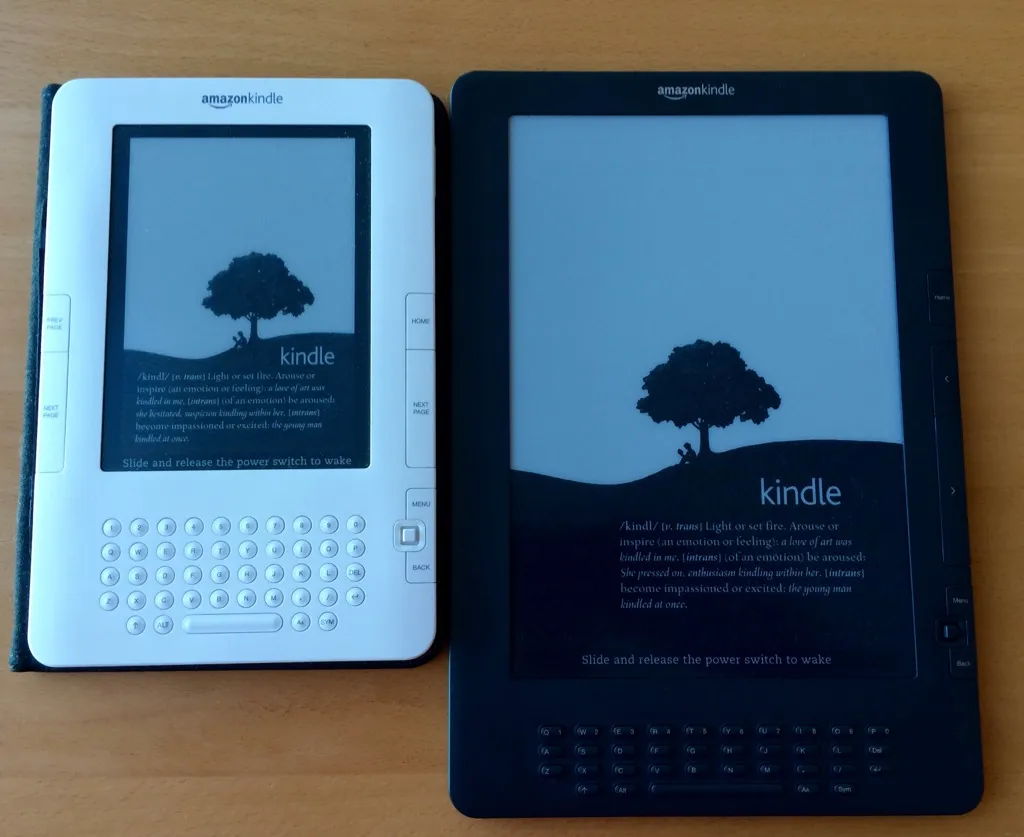
I bought a new Kindle, but an old Kindle. It’s actually a Kindle DX, the large-screen variety, which is long discontinued, but for some reason, Amazon occasionally has them in stock, through “Amazon Warehouse,” whatever that is.

I am not really a fan of ebooks. I gave it an honest go back in 2010 or so, bought a lot of my favorite published authors at crazy markup prices, like buying Vonnegut classics at ten bucks a pop. But I found reading fiction to be difficult on a Kindle. Because everything is the same font, and the device always has the same feel, the same heft in your hand, it removes the experience of reading the book, and I typically retain nothing I read on a Kindle. I went back to paper, and I’m fine with that, mostly. There are more titles available, it’s often cheaper in the long run, and there’s something about going to a physical book store that I miss when I’m simply e-hoarding books online.

But, there’s a big problem with space, and allergies. I’m finding that old books, ones infested with dust and mites, make me incredibly sick. I simply cannot buy a fifty-year-old paperback from a used book store, because the moment I open the browning pages, I have a horrible allergy attack. Yes, I take the medicine and I get the shots, but I’ve pretty much exhausted the medical possibilities. I just can’t read old books. And now, I’m finding my “new” books are all old. I pulled a Kerouac book of letters the other day, just for a quick skim, and it made me sick. And I “just” bought that book, but when I checked the receipt stashed inside, and it’s twenty years old. So I don’t know what to do about that.

It’s nice to not have the clutter involved with collections. I was religious about collecting CDs and DVDs, and they took up a good amount of my apartment when I was single. After I got married, and after the technology of MP3s and streaming video took off, I ripped everything, and junked or stored away all optical media. I don’t really miss it, and I’m glad I have the space. But books are more difficult for me.

I have issues with current e-readers, too. I love e-ink displays. The first few iterations of Kindle had less refined screens, a lower PPI count, the weird black-flashing issue with a slow refresh speed, and some slight ghosting of old images. There are new ones with higher PPI, better resolution, and backlighting. But they’re all the smaller screens. As my eyes go, I really want a big screen. Ideally, I would want an 8.5x11 screen. This also helps with PDFs, which you really want to not get downscaled or zoomed weird.

But, the big-screen e-ink readers just don’t exist. Sony has one in Japan, that’s insanely expensive, like $800 or something. And there are one or two cheapie made-in-China ones that are half-broke, hard to buy, and still pretty pricy. Every year, there are CES rumors of a big-screen reader, but these are always vaporware, and — huge pet peeve of mine — put out the idea that there are big-screen readers. But what you see at CES is never what you get, and they simply aren’t out there.

I don’t think the masses want a paperwhite e-ink display. They want a tablet, something like an iPad that can play games, show a video, and do things best left to a color screen that eats batteries. I have an iPad, and they’re great, but I can’t read on it. It causes too much eyestrain, and I’m also convinced that heavy use of a screen right before bed causes bad sleep hygiene. Almost all of my reading takes place in the hour or two before sleep, so I can’t deal with an iPad. That’s where paper has been great, and where a big e-ink display could be helpful.

So I hunted down the Kindle DX, and I found this one on Amazon. It was only $140, which was a steal, compared to the original $400-ish list price five years ago. This is the Kindle DX Graphite, which has the 3G connection, no WiFi, and the second-gen DX display, which is “50% improved.” It has roughly the same lineage as the third-gen Kindle Keyboard, but less RAM inside. No backlighting, no apps, no touchscreen.

Although the Amazon page made it sound like this was a used model or maybe a refurb, this was a new-in-sealed-box model, with plastic on it and everything. The only snags I found was that it did not come with an AC adaptor, just the USB cable. (Not a problem, I have 784 110V-to-USB adapters around here.) But it also would not register to the Whispernet network, and the wireless appeared dead. I gave them a call, they asked me for the serial number and a few other things (IMEI, something else) and then after a reboot, it connected wirelessly and all my stuff was ready to go.

My main use for this, at least initially, is to read PDFs. I have a giant archive of UFO docs and conspiracy theory stuff, FOIA requests and declassified government reports, and it will be nice to plop all those onto this thing. The screen is 5.5x8, so almost the size of a paperback book. It’s much easier to read than the original one I have. So I will give it another go.

It’s oddly nostalgic for me to look back at the documents that were waiting for me on the Kindle. I got my original Kindle in 2009, and toward the end of my Samsung tenure, spent a lot of my lunch time reading science fiction books on it. Also, when I started my allergy shot regimen in 2010, I would bring the Kindle and get a lot of reading done there. I had horrible writer’s block then, didn’t know what would be next for my writing, so I was reading a lot of Philip K. Dick books for inspiration, and also a lot of schlocky how-to-write books, which were useless. The Kindle font, and the general layout of the thing, the dark grey letters and the LCD-like background color, remind me so much of reading those books. But I can’t really remember much about them. So, we’ll see how this works out.

Bridge of Spies

When I was a kid, maybe ten or so, I got a book at the school book fair called Is James Bond Dead? Great Spy Stories. It was a little 64-page book with an illustration at the start of each chapter, about various true spy tales, such as the story of Mata Hari, and Operation Mincemeat, where the allies planted a body of a dead “spy” with false information on the D-Day invasion for the Axis to “capture.” But one of the stories that stuck in my head was that of Rudolf Abel, a Soviet spy during the Cold War, who hid microdots in hollow nickels and planted them in dead drops all over Manhattan, while posing as a painter and ham radio enthusiast. He was captured, prosecuted, and later exchanged for Frances Gary Powers, the U-2 pilot shot down over the USSR.

I’ve fallen down the Abel k-hole a few times, as well as all things black-op spy plane related, and apparently so has Hollywood. Bridge of Spies is a Spielberg-produced Tom Hanks film, written by British relative newcomer Matt Charman, and punched up by the Coen brothers. The movie ties together three (or four) stories with one pivotal event.

First, there’s the Abel story, told in a vintage late-50s New York (which was partly filmed in my old hood of Astoria, which doubles for nearly everything these days.) The other leg is Francis Gary Powers, the secret overflights with spy planes, and his capture. It’s joined together by lawyer James Donovan (Hanks) who was first asked to defend Abel in his espionage case, but who later brokered the hostage exchange, which took place in East/West Germany. A side story involves Frederic Pryor, an American economics student who was captured by East Berlin and held on suspicion of espionage, who was also released with Powers.

The movie itself is a predictable and lukewarm meander through the usual tropes of spy stuff and “let’s be like Mad Men” throwback nostalgia. The Donovan kids are shown duck and cover films in school and cry accordingly; everyone reacts to those goddamn reds who want to nuke us, and so on. There are attempts at chuckles thrown in, making the film something your mother-in-law will enjoy, but ultimately making it a whitewashed PG-13 maybe-historical drama, and not a dark thriller. The Germany sets look like a Hollywood backlot that was used for a Band of Brothers shoot, with the Nazi flags hastily replaced with GDR black, red, and gold. It’s not badly done, but it’s not excellent, either.

The history isn’t horribly mangled, although it is very compressed. There’s great on-ground footage of the U-2 in the hanger, ala a training/introduction montage that teach us all about the high-altitude spy plane, but the film squishes the timeline so it appears Powers is shot down on the plane’s maiden flight. In reality, there was a long test period at Groom Lake (aka Area 51) with three pilot deaths, and 23 missions over five years prior to Powers and the May 1960 shootdown. Abel’s timeline is similarly compressed; no facts are greatly changed or even omitted, but Abel was arrested in 1957 and didn’t get released until 1962. The film makes the five-year saga seem like a couple of months of time.

I didn’t know anything about Donovan prior to seeing the film, so it’s interesting to read about him. The Pryor thing is also an odd footnote that I knew almost nothing about. It’s also difficult to find anything describing his involvement or arrest. Pretty much any mention of him is the same single sentence wedged into discussion of the exchange, and I can’t tell what he really did to get arrested, if there was any backstory at all. Maybe there’s some Stasi paperwork on this (that got shredded, probably.) Given the situation, it would not be unfathomable that someone from the CIA pulled him aside in a cafe and told him to snap a few pictures of a building for a few bucks. Or it was a wrong place/wrong time thing. Who knows.

I liked the film in that it was an endless stream of things I later read about. It’s very easy for me to take off from the various points on this and read about the Stasi, the Prior situation, East Berlin, the Glienicke Bridge, U-2 planes, Lockheed’s Skunk Works, Area 51 — the list is endless.

(An interesting sidenote: the movie mostly wrote out the involvement of Milan Miskovsky, the CIA agent who was largely instrumental to the exchange. After retirement, Miskovsky was appointed to lead an investigation about the 1967 Detroit riot for the Kerner Commission. He interviewed MLK and other leaders, and wrote a report concluding the US was transitioning into two societies that were greatly unequal, which is an interesting deep-dive if you’re up for reading about civil liberties in the sixties.)

I didn’t like the Spielberg-ization of the movie, though. The film was agonizingly long (141 minutes) and meandered and shuffled through the plot slowly. There were places where he chose to smash-cut between the subplots at a fast clip, but too many other places where he vegetated and made the movie an hour too long. Hanks had a weird Bosom Buddies comedy slant to his character, which didn’t help. And the general sterility of the experience soured it for me. If the Schindler’s List Spielberg, or even the Munich Spielberg direct this, it would have held my interest a bit more. Instead, we got Catch Me If You Can Spielberg, which was meh for me.

the changing range of nostalgia

I got an observation/question in email from Larry about this (and I’m paraphrasing): back when we were in high school in the mid/late-80s, there were a couple of kids who had old cars, “classic” cars like the ’57 Chevy, and that was a big deal, because they were 30 years old and “antique.” Or back then, the twenty-year-old range put you into classic muscle cars, like the ’69 Z-28 or Mustang Mach 1.

Now, a thirty-year-old car lands you in the mid-80s. And he posits, are kids now impressed with a 1985 car with a bad tape deck the way we lusted after old Bel Airs and T-Birds?

Oddly enough, that’s true to some extent. I read a reddit for project cars (which makes total sense, because I don’t have a garage, or time, or money, or patience, so I waste tons of time looking at pictures of people restoring old cars.) And the year range of what I consider “classic” is now insanely out of reach. Every baby boomer who has cashed in and is in The Crisis is searching for that ’66 Stingray or ’69 GTO they couldn’t get back in high school, which has made the prices skyrocket. Even the completely fucked and destroyed shell of an old Camaro convertible is going to cost more than my 2014 Toyota did new.

So, the kids of now are looking back to “old” cars that I still mentally consider “new.” Like on that reddit, two of the most popular resto-mod projects are old Fox-era Mustangs (’79-’93) and first-gen Miatas (’89-’97.) When I was in high school with a falling-apart rust bucket of a 1976 car, I was given endless shit by kids whose parents bought them a new car, and the one in vogue was the ’88 or ’89 Mustang 5.0 GT. That to me is a “new” car, but now they’re almost 30 years old.

If you were looking for a cheap project, you can buy one of those mid-80s Mustangs for a grand or two, with a beat-apart four-banger engine. This was right before computerization and fuel injection took over the engine bay of modern vehicles, so it’s not hard to tear out that engine and rebuild a pick-and-pull 351 V-8 for a grand or so. You can get all the Edelbrock bolt-on stuff like an intake manifold or headers online, and head over to Tire Rack to get running gear UPSed to your door. But yeah, kids now see those as “old” cars, and are into the retro aspect as much as they are into vinyl records.

I’ve also noticed this in another k-hole I fall down, which is retro computing. I also browse through a reddit for vintage computers. When eBay first came out, I went through this thing where I had to buy an old Atari 2600, which I never had as a kid, and also re-buy a new Commodore 64 and relive the past glory of my first real computer. And people still do that, and there’s a big community of folks with old Amigas and ColecoVisions and all that. But now, I’m also seeing a lot of kids restoring “retro” machines like 386 and 486 PCs.

My first reaction to this, seeing someone fighting with a 486DX-33 and a Windows 3.1 install was “wait, what?” Because those aren’t vintage, they just came out… well… okay, twenty-some years ago. If you pull an old 486 out of the garbage and have no memory of these beasts, it’s going to seem radically different from your new PC. It will have floppy drives, a 40-Meg disk drive that’s IDE if you’re lucky, or maybe even an MFM or RLL interface. There won’t be a DVD or CD drive, USB, any sort of memory card reader, and it probably won’t have a network card. (It might have an old 10 Base T Ethernet card, if it was from an office.) It would hopefully have a VGA card, but good luck if it was Hercules or mono. And prepare for that gigantic space heater power supply used to spin up the massively loud hard drive to have bulged and leaking capacitors that need replacement.

It’s an odd thing, because in some senses, a computer from 1992 is going to be much harder to deal with than one from 1982. That pre-internet era is not as documented as it could be, and most parts and spares went into the garbage. It was also the wild west as far as standardization. Only one company made TI computers; there were dozens of Taiwanese shops knocking out PCs in the early 90s, all using only vaguely compatible pieces, and most of them are vanished and unknown. Now, every computer looks absolutely identical, but then, even the same manufacturer might have a dozen differently-cased computers, each with entirely incompatible parts. Try finding a replacement front bezel for a Leading Edge computer - your only real hope is finding another complete Model D to cannibalize.

And these “old” computers seem like they are five minutes in my past. When I started this site, I had just upgraded from a 486DX-33 to a 486-DX120. I had the same beige mini-tower case from 1992 to I think 2002, and incrementally updated bits and pieces of the system when I got a few bucks. I wrote my first two books on computers shoehorned into that box, and it doesn’t seem like it was that long ago. But 1992, that was 23 years go.

I should add the disclaimer here, so I’m not completely Andy Rooneying this, is that I don’t see anything “bad” about current computers, in a “they don’t build them like they used to” way. Same with cars - you can buy a $10,000 car and drive it for a hundred thousand miles easy, only changing the oil and maybe getting a set of tires or two. You don’t screw with distributor points and cam timing and cleaning spark plugs any more. I haven’t had to change jumpers on a computer in a long time, haven’t needed to run to the store for some random ribbon cable to get this to talk to that. They’re appliances now, and maybe something is gone in the tinkering, but I’ve got too much shit to do to mess with that now.

Still — christ, I’m getting old.

bones and memories

I visited Indiana recently - actually, it wasn’t that recent, but I meant to write about it at the time, and now two months have passed. It was an interesting quick trip, for a few good and bad reasons, so I wanted to play catch-up and get a few words down on it.

I booked a quick solo trip at the beginning of August, partly because of my sister’s birthday, and partly because I had to cancel a family trip to Florida in the spring and felt bad about that. I got an out-on-Wednesday, back-on-Monday long weekend, which seemed to work well for me. Time was at a bit of a premium, but it’s a bit like visiting Vegas; a week is overkill, but a weekend is not enough.

Not to dwell on the bad, but here goes: first, I screwed up my rental car reservation. Arrived in Chicago, and had a car waiting for me in South Bend, when I really needed a car in Chicago to drive to South Bend. Second, on Friday, at about 5

, one of my crowns came off. After much panic and calling a bunch of phone numbers, I found a dentist nearby who opened back up and glued the crown back in, which was awesome. I still ate mostly liquid for the rest of the trip, until I could get back home and have my dentist permanently glue in the tooth. Also, on the last day of the trip, I lost my credit card, and while at the airport waiting for a very late flight, I found out and had to cancel it. So that’s the bad.

I stayed in an extended stay hotel in Mishawaka, right near the University Park mall. It was on Main and Douglas, which was mostly vacant when I left Indiana, but since, a second main drag of big box stores and restaurants has started there, one big street over from the Grape Road arterial of the same sorts of big boxes. It’s always odd and nostalgic and weird for me to stay right by the mall where I spent so much time as a teen, but it’s a newer hotel, close to everything, and that works for me.

Every time I go back, it’s amazing to me that the default routes and streets and terrain immediately pop back into my head. A lot of Indiana hasn’t changed, or at least the “bones” have not. If you asked me to drive from UP mall to the IUSB campus, I could do it without thinking, just on muscle memory. Never mind that the IUSB campus has basically doubled, and every store in UP mall has changed hands, but the roads and turns are still the same.

Indiana does change, but on a very slow scale. I think people find a certain comfort in that, and it’s understandable. There are changes, and things fade and vanish, plus simple economics dictate amendments and revisions. Some chains die, and some mom-and-pop businesses go away with time, but new ones pop up. Sometimes things are completely bulldozed, like the Scottsdale and Pierre Moran malls, which were both torn down and “de-malled” into plazas of freestanding stores. But other things still have the same “bones” for better or for worse. Old first-generation Taco Bells get painted blue and turned into Chinese buffets. The UP mall got additions and food courts and new Barnes and Noble grafted onto its front, with the concourses updated and the tenants being bumped up in scale and stature. (Like the tiny Software Etc. is long gone, but across the way, there’s a giant new Apple store.) I walked the mall and tried to think of what was where, back in the day, but I couldn’t spot any one store that was the same, aside from the big Sears and JC Penney anchor stores.

Driving, though - driving from Mishawaka to Edwardsburg, Elkhart to Millersburg, those things all looked almost identical. The amber waves of grain were still amber waves of grain. A few were turned into new industrial parks or large retirement communities, but for the most part, it looked like Indiana had aged two California years in the last 25. And normally, a twenty-something me would have found this disgusting, that all of the state should get off their ass and progress at a rapid rate. But like I said, part of me sees the comfort in this, the idea that things wouldn’t change. I’ve always thought that many people in that area feared change, and I think there’s some truth in that. When I was 18, that pissed me off beyond end. As a 44-year-old, I could see why someone might like that.

Some things, though, have atrophied beyond belief. I went to the Concord Mall, which was a mile from my house, my default mall as a kid. When I was a teenager and worked in that mall, I practically lived there. I would go to the store and hang out even on my days off. Now, it looks like nothing has been done to the mall at all since the last time I punched out at the time clock in 1993. The Wards store where I worked is gone, converted into a Hobby Lobby that has locked itself off from the rest of the mall with huge glass doors. Almost every store in the mall has closed; most are covered in plywood. The old Osco’s drug store was converted to a food court, and every stall is currently empty, except for a single, lonely Subway sandwich shop. Some shops have these weird, temporary businesses in them, like a vacant store with a bouncy castle set up inside it, or the horribly sad dollar stores with nothing worth a dollar in them. There are multiple churches in the mall now; it seems like every business in Elkhart that goes bust turns into a church or a Mexican bodega. There was even a “church” that just beamed in the services from a megachurch in Kansas or Nebraska, and of course took your money. The mall itself was almost abandoned, nobody in sight, like an empty shopping center in a zombie movie. After seeing that, I made it a point to not do anything else in Elkhart, dredge up any more memories or see the old subdivision or school or anything else.

Not all of the region was that destitute, though. The UP mall was filled with customers, even on a weeknight. And I went to Goshen one day, and it was actually transformed from what I remember. Most of the main street was art galleries, and small mom-and-pop businesses, a wave of hipsterization running through there. In 1990, I had a girlfriend who lived on Main Street, and at that time, it was largely abandoned, boarded up and done. Now, there are these brewpubs and artisanal butcher shops and groceries, almost like something I’d see in the hippest part of a college town like Bloomington.

The thing that struck me the most was the feeling, the weather, the atmosphere. I haven’t visited Indiana outside of Christmas in years, decades. I think in the late 90s, I made a trip or two in October, and I drove through Indiana in April of 99, during my Seattle to New York move. But I don’t remember an August in Indiana probably since 1994, the year before I left. I’m very sensitive to temperatures and weather and the feeling of a place at a certain time of year, much more than I could ever describe it. And when I was there, the air held the same feeling as the summer before I first left for college, in 1989.

I so distinctly remember that summer, because it would be hot in the day, maybe in the 80s, but then at night, it would cool to the 60s. I was working days in a department store, just started dating someone, and we’d meet up at 9

every night, when the mall closed, to drive around aimlessly, stay up all night, go from Perkins to Bob Evans to Big Boy’s, making the loop of the few 24-hour places in Elkhart at that time. And I’d come home late at night, or early in the morning, and feel the summer’s humidity converted to a light mist, to dew on the grass. The summer had a certain freedom, of the end of high school, a brief period where I almost thought I had my life together and was leaving behind the shroud of depression that blanketed me throughout my four years there. But there was also the uncertainty and excitement and fear of packing up my entire life and moving it off to campus in a few short weeks.

Each day of the visit, I did the family stuff during the day, and it was good to see all of them. But then I’d return to the hotel, and either drive around by the mall, or walk at night, and just feel that weather, the cool evenings and the dew on my sneakers. (That’s another thing - there were no sidewalks by the hotel, and everyone was staring at me for walking, like wondering what happened that resulted in me not having a car.) Or I would sit in the hotel writing, with the windows open, feeling the air outside.

I spent a lot of time wondering if I could ever go back. There’s a part of me, as I plummet into The Crisis that has hit at this age, that wishes I had a three-bedroom ranch and a garage and a lawn and everything else, working on an old car or a boat or something. I know I could never live in Indiana because of the politics and money and career. And the crippling nostalgia of being back there would consume me. But it was interesting to see it for a moment.