The Wrath of Kon

Dispatches, thoughts, and miscellanea from writer Jon Konrath

Tag: memories

piano nostalgia

I recently reached the five-year mark at my day job, which is another topic entirely. But as a result of this, I was given an opportunity to order a bonus gift from a loyalty-type catalog online. These are usually a mixed bag, in my previous experience, SkyMall-style gadgets I don’t need like wine fridges and socket sets.

At Samsung, they did this at the end of every year, but the gifts were maybe four or five Samsung items that had dropped off the market, like the remaining stock of last year’s hot tablet. One year, I got a netbook that was sort of cute and decent for travel, but painfully slow and cheap. I took it apart to upgrade something, and ended up breaking it. The next year, I got a 40-inch TV, probably the last generation without the “smart” features, which is fine by me. They also had smaller gift things, like for merit-based recognition, and the gifts were much worse. I think once I got a fanny pack, and another time, I got some no-name bluetooth headphones that worked once.

Anyway, the work gifts were slightly better than that, but there wasn’t much I really needed or wanted. I didn’t really need another low-end point-shoot camera or a charcoal grill. I ended up ordering a Yamaha electric piano keyboard, and then sort of forgetting about it. It showed up yesterday, and I unboxed it and got into a strange nostalgia mode about the idea of piano.

When I was in high school and worked as a stagehand at the Performing Arts Center, I was around pianos constantly. I think we had like a dozen of them; there was a flawless Steinway concert grand, and a really nice Yamaha upright. But there were also other uprights of various manufacture in pretty much every practice room in the music department, along with other floaters that moved around everywhere. Some of these were decent. Some had survived elementary schools and were latex painted bright orange and barely stayed in tune. I never played piano, but I moved a lot of them, cleaned them, and spent a lot of time polishing the Steinway, like it was a sports car. The idea of piano intrigued me, especially after being around so many people who could play.

In my senior year, they started teaching a piano for non-music-majors class, and got a lab full of really nice Yamaha digital pianos. I took the class in my final semester, and about eight of us sat in the little room, plinking away and learning basic chords and how to use both of our hands at the same time. It was neat to me, because this was in 1989, the height of MIDI and pop music using Korg M1s and Yamaha DX7s in everything. The keyboards we used had very convincing sampled sound, maybe a dozen instruments, like a pipe organ and marimba, along with concert grand and electric pianos. They had weighted keys and felt very nice, at least to a person like me with no experience whatsoever.

They were also wired together in a network. We each had our own headphones to hear ourselves, but the teacher could share his audio to all of us, to play examples. He could also snoop on each of us during our free practice time. We had a similar setup in the new Apple II lab that I practically lived in. This was the very start of a networked world, which has now become unimaginably huge. Teachers can share and network and spy and monitor more than I could have ever dreamed in 1989. I’m not harping on the spying stuff; I just find it interesting that I lived most of high school in an era when there was no technology beyond overhead projectors with transparencies and ditto machines, and saw the very first edge of interconnected machines used in learning. I even helped perpetuate this - my first programming job ever was writing a schedule-maker program for sports teams, so a coach could enter all the home and away games and practices on a calendar, then save it to disk for later and print a handout for all the players’ families.

The piano class was fun. I mean, I took it because I’d finished all but one class before my last semester, and took all fuck-off classes for the most part: two study halls (one to work in the theater), a drafting class where I worked on whatever I wanted, a computer class where I did all the assignments in the first week and spent the rest of the year working on that schedule program or playing chess. I’d never played a musical instrument, and just getting to the point where I could play a chord and a melody in straight time and almost read music was an enjoyable challenge that made me use a different part of my brain. I also ended up meeting someone I briefly dated and went to prom with, so that’s another memory that came out of it.

I did buy a cheap Casio keyboard at the time, one with mid-sized plastic keys and a bunch of cheap sounds, but I never religiously practiced outside of school. There was some invisible wall for me, aside from my own brain issues. I’m not really that musically inclined, but also piano was never seriously “cool” to me. There are occasional bits and bobs of interesting keyboard music, like I remember buying a Journey songbook and trying to plink out the song “Faithfully,” but that was already five or six years behind the curve. I ended up starting bass guitar shortly after that, and then drifting away from that as college got underway.

At IU though, it seemed like everyone I knew had some degree of literacy with piano. I mean, it’s the biggest and best music school in the world, and you have to take keyboard proficiency as an undergrad. There were also pianos everywhere; I worked in the Musical Arts Center and was constantly moving pianos, plus every practice room had one; every dorm lounge had one or two; the basement of my dorm had its own practice rooms, too. It always amazed me when someone who wasn’t a music major, like some economics major friend, was suddenly presented with a piano, and would do the “oh, I had to take it as a kid” and then could belt out “The Entertainer” or some random Billy Joel riff ten times better than I ever could.

I would sometimes sneak into a practice room and mess around. This was fairly easy the year I was at IUSB, because I worked late and had keys and 24-hour access. It was both cathartic and frustrating, because I’d quickly run through the four or five stupid tunes I knew, Christmas songs and “Camptown Races” and whatever else, then drift into stupid experimental free-form garbage, just banging on keys until something sounded right for a second, and wishing I had the ability to do more.

So now I have this new keyboard in front of me. It’s got 41 full-sized keys, but they’re cheap plastic and not weighted, and not touch sensitive. It also has no MIDI or USB out, just a headphone jack, so no way to use it as a synth with my computer. It has the usual 300-some styles, some cheesy and some decent, and some built-in demo songs and drum patterns and other junk I’ll never use. It could be a fun toy to plink around with. But, I’ve got other musical instruments here I’m not learning well, and too many other things taking up my time. And I’ve got so much junk in the house lately. Maybe I will buy a dummies book and give it a month, see what I can learn. Maybe it will go to a more worthy home. We’ll see.

My occasional history with film

scan2

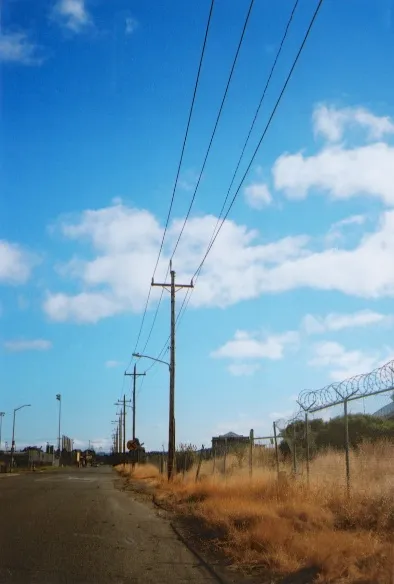
I’m still thinking about film a lot, maybe too much. I’ve ended up buying two 35mm cameras on eBay this week, a Canonet QL17 rangefinder and an Olympus Trip 35 point/shoot.  I ran the first roll of film through the Trip (see attached picture) and I love it.  I need to take more pictures, figure out a good workflow for developing, scanning, and posting things, and determine what I’m really doing with photography. Mostly, I need to learn, and I feel like there’s a deep rabbit-hole of things out there to master. And the whole thing has me falling down a deep nostalgia hole, thinking about previous experiences with analog film.

A couple of years ago, I bought a photo book by the parents of Christopher McCandless, the guy that died in Alaska, described in the book and movie Into the Wild. His parents self-pubbed Back Into the Wild, which contained his journals, letters, and snapshots.  The book had a strong impact on me, not because I particularly admire his story and plight, but because it was a strong link to a nostalgic period of the recent past.

All of the guy’s photos were taken with cheap 35mm cameras, the point-and-shoot variety now largely forgotten.  The book also included copies of post cards and envelopes, with old stamps and cancellation/postmarkings that also reminded me of the early 90s.  I did so much mail for the zine around that time, and the look of those old 22-cent stamps and the cancellations, with their little public-service messages (“end breast cancer!” or whatever) draw me back instantly.  I still have old paper mail in storage, pieces in their well-creased envelopes, and it all reminds me of that period so much.

But the film, the cameras - they mentioned a few of the makes and models, and I googled these, wanting to see what gear he brought along on his adventures.  In the 80s and 90s, there were so many junk cameras, so many different brands.  it was like that with any electronics, too. Today, if you wanted a CD player, you’d have a choice of maybe three or four brands (Sony, Panasonic, Samsung, and some no-name Chinese thing) and maybe three or four models for each brand, and each one would be very similar to the other, aside from a differentiating feature like Surround Sound or digital output.  But back in the 80s, if you wanted, say, a VCR, there were dozens of brands, all of these different major Asian players shelling out radically different versions, competing with a dozen different American firms, with factories in San Jose or Dallas, plus all of the no-name Korean brands imported and given an American label, like the JC Penney brands or Sears versions.  And they were all so completely different, not identical in any way.

I remember I used to go through a lot of jam box tape players, because for a long period, I didn’t have a good car stereo, and would instead go to a pawn shop and buy a $50 jam box and then wire a 12-volt adapter in the car and use that until it got stolen a few months later.  And at the pawn shop, that $50 would buy so many different types, with removable speakers, various space-age plastic chrome finishes and grilles, fabric-covered woofers, and mystical buttons that offered hi-fi settings or switched on LCD power meters that measured nothing from a scientific standpoint, but would light and rise and fall with the volume of the music.  And they all had different EQ types and tone knobs or “boost” switches and different tape counters and ejection mechanisms, and the feel of the mechanical buttons was always different.

Cameras were the same way.  There were the high-end SLRs, which were all too expensive for my blood, but I had a friend or two, usually working for the yearbook club, who would learn how to work a good Canon or Nikon, and maybe borrow one from the school. SLRs all looked similar, but had weird differences, and there were the usual Pepsi/Coke religious wars about which one was best, although it was a ten-front war back then, not just Nikon/Canon.  There were also the low-end things, the Kodak 110s and disc cameras, and cheap Polaroid one-shots with no controls at all, just a dust cover, a trigger button, and a place to plug in the flip-flash with the exploding bulbs that would cost a fortune and smell of burning plastic after they ignited.  My parents liked these cameras, the ones with no settings, the Brownie or the 126, with nothing but maybe a film advance lever to manually crank through the roll after each shot.  And there were also a wide variety of cameras between the two, with some advanced features, some things missing, and some fully automated.

When I was a kid, I won one of the cheap-o cameras at the company picnic for my dad’s job.  It was a Kodak 110 kit, a little rectangle with the lid that pivoted open and worked as a sort of handle, hanging off to one side.  It was as thick as one of the plastic film cartridges, and had a little eyehole to look through, to frame shots.  This model had a “zoom” lens, a glass piece that slid back and forth on a track, so you could snap it into place and increase the range by a small factor.  Everything else was manual, with no focus, no aperture setting, just a film advance lever and a shutter button.  It would take me a year to take a dozen shots, carefully framing them, snapping a picture, and then not knowing for months if it turned out or not.  As a ten-year-old, I never had money for a flash, and would shoot everything in daylight with fingers crossed.  When done, the exposed film got thrown in a junk drawer, with pens and checkbooks and broken calculators and instruction books to appliances.  If we were lucky, a third of the film I shot as a kid was developed.  It always looked bad, with faded colors, grainy prints, and half of the shots underexposed or dark.  Everyone had red eyes, and all of the macro photography I attempted with Star Wars models never looked anything like the films.  It was disappointing, and not a hobby for me to get into, so I didn’t.

In high school, on a lark, I bought another 110 camera.  This was a small “spy” camera, a tiny piece of plastic that clipped over a 110 cartridge, leaving most of the film case exposed on the outside, not much more than a lens and advancing mechanism that clipped over the film cart.  I don’t remember if it had a flash, but I do remember it had no viewfinder, just a small plastic rectangle that clicked up on the top.  I bought this in October of my senior year, right before visiting Canada for the first time.  I took a few rolls of shots with this, and paid to develop them myself, since the $3.45/hour wages at my job afforded me this luxury.  The quality wasn’t much better, but there was more immediacy, and I took a lot of pictures of things.  I knew I’d leave town in a year, and want to remember old friends and my old car and my old house, so I captured it all to film.  And that Canada trip yielded a few good shots, too.  The film quality was still bad, lots of reds to the color mix, and the plastic-lens camera was total garbage.  But the small size, the novelty, and the budget to actually develop photos made it a decent experience.

In my freshman year of college, I had a few bucks of christmas money to blow on the after-holiday sales, and bought a 35mm camera at an Osco drug store.  It was some semi-known name, like Vivitar, but was a low-end, all-manual affair, similar to the ones McCandless used.  This was my first foray into a middle ground that existed, with the pro film format (35mm) but the cheap and easy to use camera that offered no settings or adjustments.  It did have a cheap built-in flash, and it maybe had an aperture setting (a little lever with an icon of the sun and another of a cloud).  And it may have had a similar focus (picture of a mountain, picture of a person’s head.)  But it had no zoom, no focus ring, no tripod mount, none of that.  It also had a manual film advance, and you had to load the film by hand, stretching the first flap out of the film canister across a set of sprockets before closing the back door.

This camera only lasted a few weeks, before the film spool broke, the cheap plastic splitting apart, in an unrepairable way that instantly let in the light, making the $25 gadget useless.  But I got two rolls of film through it; one while I was still home, and one at school.  The school roll had some great shots on it.  I walked a loop of the campus during the day, and the January sun and blue sky made for some great shots of the old limestone buildings, a perfect capture of the 1990 glory of Indiana University.  The home set of snaps had a couple of good pictures of Tom Sample at New Year’s, and the only picture of first college girlfriend Angie I still have.  (A horrible picture of her in my mom’s car.)

I did not have another camera until the middle of 1993, when I was home for the summer  I don’t know what compelled me to dip back into photography, but I think it was from working on the zine, the idea that I would take pictures at shows.  I spent close to $100 on another 35mm camera, once again one of those fixed-focus things.  This one was closer to a DSLR in its general shape, and it did have a motorized zoom lens, along with a better flash, and a motorized auto-load, the kind where you would put in a can of film and it would quickly suck up the end after you closed the back door.  And then at the end of the roll, it would suck the film back into the canister for you, instead of spending minutes cranking on a small dial or lever manually.

I got really into the idea of becoming “a photographer” even though it was a cheap and cheesy all-plastic camera.  I’d buy expensive film, like 1600 ISO Fujifilm or Kodachrome, and keep it in the fridge and get it developed at the one-hour place, always asking for matte prints.  I went to a lot of shows that summer for the zine, getting in for free by talking to record labels, and I’d always ask for a “photo pass” to try and get better access.  I never got any good pictures at shows, just blurry, poorly-lit snaps of Glen Benton or Cannibal Corpse, completely unusable stuff. I took some decent snapshots though, artsy pictures of Goshen College, some pictures of friends, along with a roll or two of the Milwaukee Metalfest, although none that were actually of the bands, just the booths and the drive there and back.  I also got the last few shots of the Mitchell House before I moved out, the only pictures I have of that place.

The camera went into “occasional mode” after that, only getting pulled out on a whim here and there, for parties or trips.  I wish I would have taken far more photos back then, many more shots of people and places, images capturing the Bloomington of 1994 and 1995.  I never knew the importance of these things, that I’d want to write about them, and I got a few good shots, but not enough.  I did a little more later, but I’ve taken more digital pictures in the last three months than the grand total of every frame I ran through that cheap 35mm.

That camera followed me to Seattle, chronicling that voyage.  I didn’t travel much when I was living in Jet City, but it made a few trips down to California. And then after K and I broke up, there was a period where I wanted to be a “photographer” again and went around taking pictures of cemeteries and airplanes and lakes.  It also went with on my long trip from Seattle to New York in 99. Once I got to NY, maybe a roll or two went through it, shots of my apartment, or maybe Times Square.  I’d switched to video for the most part by then, which is bad because the quality is so low, and the camcorder was bulky enough, I didn’t shoot as much.    By the time I started to take vacations, like my first trips to Vegas, it was 2000, and I had my first digital camera, so the film went away forever.

Anyway, the McCandless book reminded me of this, because he took these shots of the desert, the wide open spaces of Alaska, the plains states, and everywhere else off the beaten path of the early 1990s America.  And his pictures, the feel of film going through the low-end optics of a cheap import camera, I could feel the places he visited, much more so than if he’d just snapped some Instagram pics with his iPhone.  That particular type of shot, the lenses or the grain of the film or whatever else, just screamed 1990, the same way my dad’s old slide film 135 shots from when he was in the service are easily IDed as being from the late 1960s.  They just had a certain feel to them.

I made that journey across the desert in 1999, driving through New Mexico and Arizona and Nevada and Texas, on some of the same roads as him, and pulled over many times to walk across the flats and look at dry riverbeds and take a few shots with my cheap camera.  And his pictures remind me of my pictures.  And my pictures remind me of standing there alone, feeling the nature and lack of mankind around me, in a way that a hundred snaps from a camphone would not.  That era is so close to us now, only a few years ago, but it seems like a lifetime away.  And when I pick up a film print I took from them, or look at the copies of his, it makes me jump from my life back to that one.

Anyway, enough rambling.  More film will be shot.  And I have a huge project I dread, involving scans and restoration of these giant tupperware storage bins of negatives and prints, before they all rot into rancid chemicals and fade into nothing.  I should get on that.

Mission

save0129

There is a level in Modern Warfare 3 called “Mission” and everybody seems to love it, because every time I’m playing and “Mission” and any other level other than “Terminal” or “Dome” comes up, everyone votes for “Mission.”  (“Dome” is one of those tiny levels where everyone shoots everyone and the maximum score limit is reached in about 122 seconds; “Terminal” is from MW2 and everybody’s memorized the map very well and knows where to stand and snipe and camp and plant claymores.)  I personally hate “Mission” and I don’t know why.

The word “Mission” reminds me of two things.  One is the song “The Mission” from the Queensryche album Operation: Mindcrime, which I pretty much memorized in 1988.  It has this weird chanting part, and one time my mom ran downstairs and told me to shut it off because it “sounded like Satanism.”  The other is The Mission, as in the neighborhood in San Francisco, which I only knew about prior to moving here because of the concept of mission-style burritos.

I don’t know what legally constitutes a mission-style burrito.  In college, there was this place on the second floor of a building on Kirkwood that made alleged mission-style burritos, which they advertised as “burritos as big as your head.”  I don’t think they were technically as big as your head in a volumetric sense.  They were potentially as long or wide as your head, but not as big as your entire skull, at least not mine.  (Of course, I have a giant head, and the biggest fitted cap you can buy at an MLB ball park barely fits me.)  I never ate there much, but a few of the people that spent all of their time at Lindley Hall used to eat there constantly, and I went a few times.

One night, I was leaving for Canada, and my roommate came home from the burritos as big as your head place as I was packing, and took a shit that filled the townhouse like a tear gas grenade thrown in your face at a protest.  We had to open the windows and it still felt like getting hit in the face with pepper spray.  I threw everything in my bag as fast as possible so we could hit the road, leaving town for another country at nine or ten at night, going to one of those stupid programming contest things where we always thought we’d smoke the other teams, but we ended up maybe finishing one of the twenty programs and wasting our time and money and effort, but at least we’d end up getting blotto in some new town.

I sat in the back of this Bronco truck, still depressed over some breakup that happened a week or two before, one of those relationships I thought was perfect and pure and forever until it got up to speed and then exploded like a car with no oil in the crankcase.  Leaving for another country with promises of exchanging funny money for many alcoholic beverages was just the thing for this kind of funk, except I knew that it never really worked.

We raced across Indiana and Michigan, hoping to outrun a snowstorm, and got to the border in Windsor some time after midnight.  The customs agent asked if we had any guns, and I yelled from the back, “WHAT DO YOU NEED?”  They still didn’t search us, and we drove into the great white north.  Hours later, we stayed at one of the worst hotels imaginable, and I slept on the floor of a closet, wooden paneling everywhere, a crying clown painting on the wall, the smell of mildew and dust mites everywhere.

I don’t think we ate any burritos in Canada.  I drank too much, mostly Molson.  We did not answer any of the problems.  I wonder if any of the people who did solve the problems ended up working on any of the Modern Warfare video games.  I don’t know.  All I do know is that I feel like a sober alcoholic at a liquor store every time I boot up that game, wasting away my hours trying to get to the next level instead of writing, or thinking of writing.  If writing were as addictive as video games, I would be Leo fucking Tolstoy at this point.  I am not.

The Evil Pink Mistress

Trying to shake a benadryl hangover, the evil pink mistress clogging every mental channel in my head with dizziness, apathy, and the dark grey dread and doubt and apathy that logjams any serious attempts at life. I remember waking at two or three, after the cursed recurring dream of being back in high school again, decades after escaping that hell, and spending hours in the parking lot, trying to find my car, the kind of realistic dreamscape that makes me worry if my car got towed or stolen for twenty minutes after waking, until I can convince myself that the torture of being back in Bighikistan and dealing with the preppies and assholes and evangelical christian taliban groups is nothing but an evil burn pulled on my conscious mind by the demons of my subconscious.

And then I did the infamous dizzying mental math of “it’s three, and my alarm goes off until seven, and this pill fucks me up for eight hours, but maybe I can cut it in half, and then shotgun coke zeroes when the alarm tries to fracture my sleeping brain.” And benadryl knocks me the fuck out, but plays with those REM dream settings, steps on them and fucks them so I sleep too deep, and skip the important step, the one where my subconscious plays, let loose on the playground with no recess monitors, just a blank brainscape occasionally jarred by the footsteps of a nocturnal cat that wants her breakfast four hours early. I can’t do this stuff every day.

I remember a fragment of a dream last night, where I returned to 414 Mitchell, and met some guy that lived there, tried explaining to him my previous tenure at the boarding house. He looked like one of those meathead hippy types, like the old bass player from Van Halen, a stocky guy with a mullety hairdo and a Jack Daniel’s obsession, who listened to jam bands seriously and called strangers “brah”. He acted antagonizing when we first traded words, but became a guarded friend when I mentioned my residence there decades before. He asked me why I left, implying some greater community at the house now, a fraternal bonding among the roommates, a utopian kinship. I started to explain the problems when I was there, the infighting and thefts and hostility, a dozen people living a dozen disparate lives under a single roof, endlessly at war with each other like a score of micronations feuding over a single set of vital resources. His look of doubt and hurt made me realize something changed in the last dozen years, either some transformation in the membership of the house, or more likely, a social failing in my own interpersonal skills. I left without pursuing it further, went off to find whatever the dream brought me to find, a distant landscape a common trope for my unconscious rambling.

But the night I first took Huperzine A — three nights ago — the dreams were markedly different. The shrink recommended the supplement, an ancient Chinese moss said to improve cognition, and I ordered a small vial from Amazon. The tiny pill, a 200 microgram dose, went on top of the usual gabapentin (the anticonvulsant probably causing my memory problems) but with no benadryl. The night’s sleep furtive, I couldn’t tell if I was asleep or awake for hours of the slumber, except my dreamscape was completely abnormal.

My usual boring dreams always take place in familiar scenery, the parental house or the aforementioned high school, or the constant theme of working at Wards. But this time, the altered sets were completely unfamiliar, an unrecognizable stage. I worked at an Alaskan factory, far north of the Arctic circle, making guns or weapons of some sort, and had a long conversation with a secretary about the kinds of doors required in an environment where it snowed eight feet a month. Then I took a car service in a city melded from Bloomington and Denver, a strange grey Vauxhall car with mini side wings like a Star Wars rebel ship. Inside, my co-rider started massaging the driver, a therapeutic massage tracing the various degenerative disk damage a frequent driver would have. The dreams continued like this, a lucid state between life and unconsciousness, and I woke untired, but also unrested, wondering if the drug would always have the effect, wondering how I could capture these dream-slips onto paper.

What happened to hypercard?

Hypercard was released 25 damn years ago.  Has it been that long?

Back in college, I spent a lot of time screwing around on the Mac, and there were certain programs that welded that old-school 68K Classic Mac experience in my mind.  One of them was Aldus PageMaker, which was the desktop publishing program of the day. This was in the very early 90s, in the days of DOS and WordPerfect 5.1, when the most advanced publishing work you could do on the WinTel side of things was using italics.  But the Mac had this funky and advanced program that enabled you to create page layouts and cool newsletters and even newspapers.  I saw many a journalism student slaving away on those old black-and-white Apples with the tiny grey screens, tweaking layouts and dumping fantastic publications to postscript printers.  I later learned PageMaker by doing the last issue of my old zine Xenocide in it, spending months tweaking page borders and reflowing columns.

The other program I messed with endlessly was HyperCard.  This was something included on all of the old Macs, and it was incredibly interesting to me.  Basically, you created a stack of cards, and each card could have a mix of text and clip art graphics on it.  But you could also plop controls on the cards, like links or text boxes.  You could then hook up those controls to link cards to each other, or do other freaky stuff like run scripts.

This sounds pretty pedestrian compared to what we do daily on the web.  And it sounds disturbingly like PowerPoint, which is probably one of the most evil things created in the business world. But back then, in the late 80s and early 90s, these concepts were absolutely revolutionary.  And even better, the interface to HyperCard was not that intimidating.  If you could make basic art in MacPaint or write a paper in WordPerfect, you could easily create a HyperCard stack.

I remember spending a lot of time at work creating a choose-your-own-adventure game using HyperCard.  I forget exactly what it was - I think it was a game about trying to score drugs on a college campus, and you could click on various pictures to move around.  It wasn’t exactly as sophisticated as the Zork series, but it was something I could do at work, under the guise of “learning more about HyperCard.”  I never learned much about the scripting language, but I did work with some people who did pretty sophisticated stacks.  The system was widely used by education majors, I guess to develop learning tools for kids.  I guess the original Myst on the Mac was written in Hypercard, each of the worlds a Hypercard stack, interlaced with heavy-duty graphics and audio, presented with custom plug-ins.

Like I said, the web came along, and HyperCard more or less vanished.  It was one of the products developed by Claris, which was spun off from Apple and then later re-merged.  The last version of HyperCard came out in 1996, but it was one of the projects killed by Steve Jobs after his return.  You could run old versions for a while, but it did not survive the jump from OS9 to OSX.  You could get it to work in Classic emulation on newer systems, but it only worked on PPC Macs.  On today’s Intel-based machines running later versions of OSX, it doesn’t work at all.

Its one big legacy on the Mac is that the HyperTalk scripting language was adapted and added to System 7, and called AppleScript.  It’s still around in modern versions of OS X, and is even more interesting, now that you can run unix commands from within AppleScript.  It influenced the development of HTTP, JavaScript, and Ward Cunningham said the whole idea of wikis goes back to using HyperText.

To me, HyperCard was always a bit of a missed opportunity.  I think it would be very easy for casual users to create HyperCard stacks and then use some kind of tool to push them to a web site; it would potentially be easier to create high-quality interactive web sites with something like that.  There are probably many programs that you could buy to do that, but none that come with your operating system and follow its UI paradigm.  It would also be great to develop mobile apps.  I could see creating a stack, testing it out on your computer, then pushing it through a compiler and shooting out a binary that could be run on a phone or tablet.  You couldn’t write the next Skyrim that way, but for simple stuff, like interactive kid’s books or multimedia guides, it would be great.  Same thing for interactive books on the Kindle or iPad.

I know you can do all of these things with XCode or by hand or whatever, but there’s something about the ease of use by a non-programmer, and the availability on every Mac, that make this a different paradigm.  There are some conspiracy theories that Jobs killed Hypercard in order to solidify the division between creator and consumer.  I don’t know if that’s true; I think he killed it because Apple had eleventy billion disparate things going on when he returned, and none of them were getting the company closer to profitable hardware sales or a decent operating system.  It’s too bad we don’t have something like this anymore.