The Wrath of Kon

Dispatches, thoughts, and miscellanea from writer Jon Konrath

Tag: nostalgia

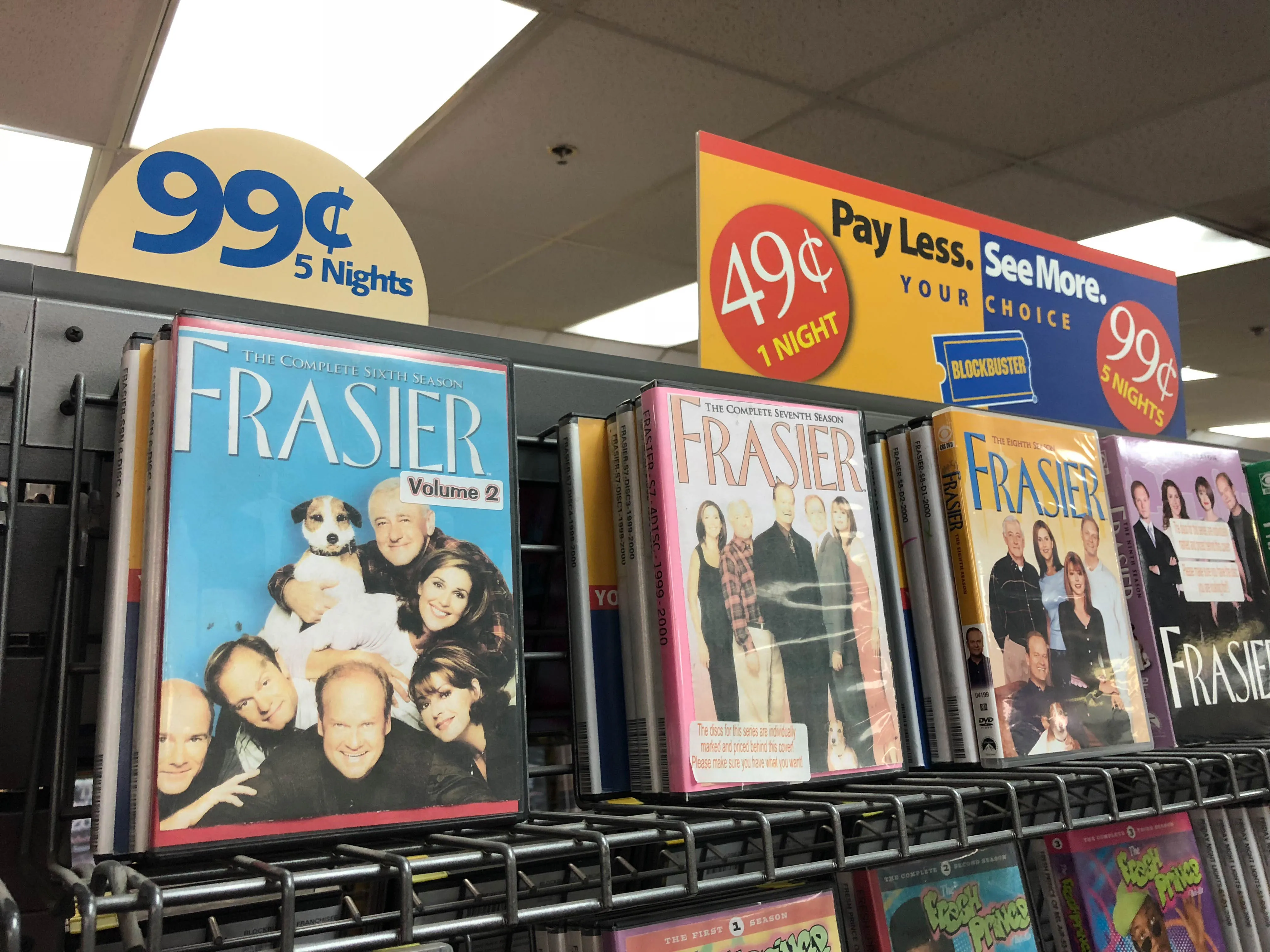
The Death of Blockbuster

IMG_7317

Here’s an interesting long read over at Retail Dive on the death of Blockbuster Video:

Who Really Killed Blockbuster?

A couple of interesting (to me) takeaways. First, I like that this article gives all the details other than just saying “Netflix, duh” because that’s not what happened. The thing that annoys the hell out of me in death-of-malls or death-of- is that they always say it’s Amazon, and it almost never is just Amazon. (I.e. venture cap choke-out run by a fervent Ayn Rand acolyte; tax scam by REIT not paying off anymore; etc.)

Like one of the factors the article mentions that most people forget: VHS tapes were damn expensive, and that was partially hidden to the consumer. Yes, you could buy a priced-to-own copy of Wayne’s World for twenty bucks during a certain limited sales cycle. But if you’ve had the good fortune of losing a copy of Apocalypse Now from a rental place, it probably cost you eighty bucks to replace it. They ran this two-tier pricing scheme for decades, and then when DVDs came out, the studios decided to go with low daily prices across the board, plus they flooded the channel at Wal-Mart and Target with cheap five-buck releases and multi-packs of their back catalog. That’s only one of the nails in the coffin, but that’s an interesting one.

The other thing, and this came up in discussion when I posted this article on FB, is that Blockbuster wasn’t that great of a place for customers anyway. There are a lot of folks nostalgic for the Nineties who were born in like 1998 and don’t remember how crappy some of it was, and Blockbuster was a good example. Like they were borderline predatory about their late fees, and good luck if you got sent to their collections department. They drove a lot of mom-and-pop rental places out of business. And their prices weren’t always great, compared to the non-chain places.

One of the things that always bugged me about Blockbuster was their family-friendly video selection. They were big on promoting mediocre big-budget movies and avoiding cult or obscure cinema. And they were incredibly vocal on not carrying anything beyond an R rating, or controversial movies. I went on a semi-boycott of Blockbuster for years because they refused to carry The Last Temptation of Christ. If you wanted obscure, it’s Not at The Block. If you need a copy of Day For Night, forget it. But they’d have plenty of copies of that new Will Smith movie.

Blockbuster was occasionally a necessary evil when I was in a small town. I really loved local rental stores that had obscure stuff, and of course you had to go to one of those places for the best horror movies. The clerks were always cool, the prices were lower, they didn’t give you as much of a hassle about membership, and sometimes you’d find weird stuff. Like there was a video place in downtown Bloomington — I wish I could remember the name. They never recycled out their old stock. Me and Larry used to go every week and find the most bizarre stuff, faded boxes that were completely forgotten. Like I remember never ever being able to find a copy of Johnny Got His Gun (probably because Metallica bought the rights to it and sat on them) and of course they had it. And I remember renting Deranged: Confessions of a Necrophile, the (bad) Canadian horror movie loosely based on Ed Gein, and it also had the short documentary Ed Gein: American Maniac slapped on the end of the VHS. It was a weird homemade doc consisting of blurry found footage, narrated by some dude in a basement recording on a Bell and Howell mono tape recorder stolen from an elementary school or something. It was awesome. (And it’s on YouTube!) You’d never, ever find that at Blockbuster.

That puts Blockbuster nostalgia in a weird place for me, much like Barnes and Noble. I’m a bit sad B&N is on the verge of shuttering, but back in the day, they were the chain to hate, because they pushed mom-and-pop stores out of business. (And deep analysis that I’m too lazy to do might show a story that independent booksellers were pushed out by someone else in the 80s/90s, like the rise of Ingram or the changes in book printing after NAFTA, or some damn thing.)

I visited one of the last Blockbusters in Anchorage a year and a half ago. (Yes it was the one with the Gladiator jockstrap. No, it wasn’t there yet when I visited.) It gave me a strange and sad feeling, not specifically because it was Blockbuster, but because it was a video store, period. It was all DVD, but wandering the aisles reminded me of the weekly exercise of going from A to Z on a Friday night to find what I’d watch.

That entire era is gone, replaced with a button on my TV remote that lets me scroll through thousands of titles. But something’s missing, with the lack of the Tarantino-esque clerk telling me what I really need to watch, and the tactile experience of pacing the aisles. We now have great convenience and instant access, but it is at a cost that’s hard to quantify, and it’s definitely felt by those who do remember.

The Death of Northgate

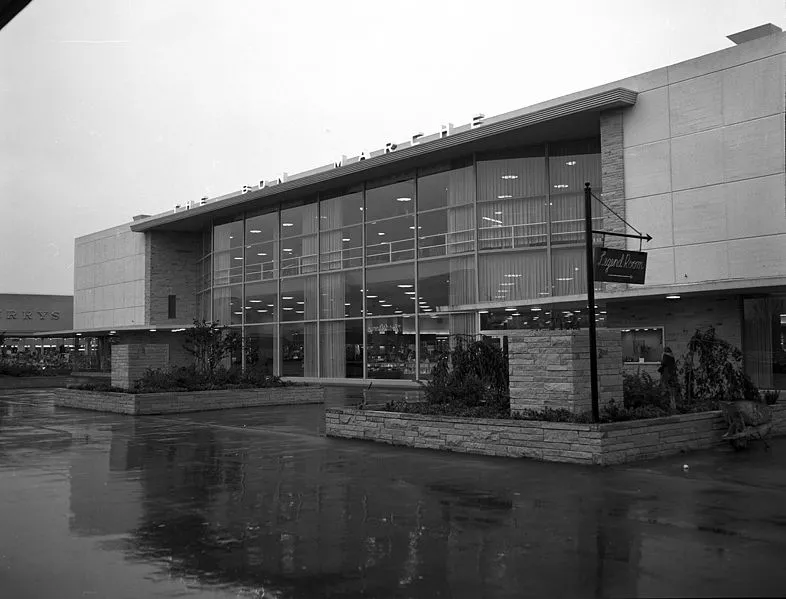
786px-Bon_Marche_at_Northgate_1950

Bon Marche at Northgate, 1950 (Credit: Seattle Municipal Archives from Seattle, WA [CC BY 2.0 (https://creativecommons.org/licenses/by/2.0)\])

Looks like Northgate mall in Seattle is quickly winding down. The JC Penney already closed, and the Macy’s and Nordstrom are in the process of shutting their doors. The plan is to demolish the main stretch of the mall, leave some of the external “village” buildings that were tacked onto the front in the mid-00s, and then build an NHL practice facility and some housing. I hate being nostalgic about this place or any mall in general, and I have mixed feelings for a few reasons.

When I lived in Seattle from 1995 to 1999, Northgate was sort of my default mall. It wasn’t my favorite mall, and it wasn’t the best one in the area, but it was the closest to my house, and I ended up there at least once a week. When I first moved to Seattle, I stayed at my friend Bill’s place in Mountlake Terrace for a month, and took the bus down I-5 every day for work. And every day, we’d pass this sprawling shopping center, just off the highway. One thing I remember clearly is it had a giant two-screen movie theater on the north side, with a changing-letter marquee where the words were taller than me, advertising the movies Clueless and Apollo 13. So when I got a car and had some time on a weekend, it’s the first mall in Seattle I visited.

After I moved to First Hill, this mall was a straight shot up the highway for me. Hop on I-5, drive a hundred blocks, exit, done. Even though I worked next to the much smaller Factoria mall across the lake, I ended up driving to Northgate pretty much constantly. Between the Denny’s and a smaller local pancake place, I always had a default diner there too, so every Saturday was spent at this mall, more or less.

Northgate is arguably the first mall in America. There are like a half-dozen different malls that claim this, and I’m too lazy to research which one is right. But they built two strips of stores in 1950, then covered it with a “sky shield” and eventually sealed off the whole thing in the early 70s, making it an enclosed mall. They later built one of the first Nordstrom stores, the big two-screen theater, and the other anchors. Later additions while I was there in the late Nineties included a Toys R Us, a food court, and a general remodel. In the 00s, Simon did their usual “lifestyle addition” thing with a Potemkin village of outward-facing smaller anchors on the west side of the mall (one of them always being an Ulta Beauty), and removal of the theater (and the giant totem pole that was in front of it.) A Target and Best Buy went in across the street, and the surrounding landscape of the area has completely changed five times since I left. There were also various anchor and store flips in the last twenty years. I wasn’t there, you can look it up.

I honestly found the architecture and layout of Northgate to be a bit boring, and deceiving. It looks small, but it’s gigantic. When I lived there, they had four anchors, all of them softlines, which bored me. (JCP, Nordstrom, Lamonts, Bon Marche.) And the entire mall was a single hallway, a straight 1,500-foot shot with stores on either side. It didn’t have a winding floor plan, so it seemed smaller, but if you walked from anchor to anchor twice, that’s over a mile. It had no vintage charm, just high ceilings and faded white everywhere, like an airport concourse. It also had few stores where I really shopped. But I still ended up there a lot, and spent an insane amount of time walking up and down that long hallway, looking for… I don’t know what. The drab non-decor was replaced during the 97-98 remodel with fake-ass timber accents on the high ceilings that made it look like a ski lodge, which was all the vogue in the time in the PNW.

What attracted me, other than the proximity to my house, was that Simon malls all had this universal emotional antiseptic feeling to me. Wandering that place felt very similar to walking through College Mall in Bloomington, or University Park Mall in South Bend, even if they layout and the stores were different. Especially in my first year there, I was extraordinarily depressed, missed Bloomington a lot, knew almost nobody, didn’t know where anything was, didn’t have a TV, and was always broke. I later found other malls further out, and other stores to buy music and books and food. But it became a default place to mope around, walk a few laps, and then go home and try to write.

I didn’t buy stuff in that mall much. I only went to that movie theater a few times (I remember seeing Event Horizon there) and I used to pop in the B. Dalton every time I visited. Bon Marche had a Vans shoes section, and I’d buy a pair each year like clockwork. A Wizards of the Coast store was always worth a browse, even though I didn’t play D&D or Magic at the time. An office supply/craft store provided me with a lot of fancy pens I’d later lose. The mall had an attached drug store where I’d frequently load up on cold medicine, and a QFC grocery was good for a frozen dinner or two. After Toys R Us arrived, I’d pop in there for Nintendo 64 games. But more of my shopping was around the area, like the Silver Platter records just south of there.

Aside from the strange nostalgia for the place, and the fact that it will all be gone soon, is the fact that the coverage around the remodel sort of pisses me off. People in Seattle have always hated malls, it seems. They’ve always talked about how horrible Northgate was, even when it was a top-grossing mall. Now, the YIMBY crowd is super excited about the death of the mall, mostly because we’re all supposed to ride bicycles and something with a parking lot somehow triggers them. I don’t follow Seattle redevelopment news much, but we have our own vocal YIMBY contingent here, so I imagine the more-housing-at-any-cost crowd is celebrating the mall’s death enthusiastically. Seattle has 100% changed since I left, and I get it — cities change. Since I left, Amazon has hired more people than my home town has, period. So, housing crunch, people hate malls, yada yada, you already know the rest.

It’s been over twenty years since I saw that place, or any of Seattle. I still miss it, because it was such a key time in my life, my first four years out of college, which felt more like a decade. But it’s an extreme case of “you can never go back,” because so much of the city has changed.

Wish I had some old pictures of the place, but that was in the film era. I do have some pictures of my VW in the parking lot, and you can almost sort of see the east entrance of the mall in the background of one shot. I used one of the pictures for the third edition cover of Summer Rain, but you can’t see anything but the pavement in the zoomed-in shot. (And fun fact: the license plate in the pic is a photoshop job. And Indiana didn’t had front license plates in 1992, so that’s wrong, too.) Anyway…

Teeth, SSF, etc.

For whatever reason, I recently went back and read Air in the Paragraph #5. (I need a better place for these to live, especially since Scribd has turned into a paid-service scam. I’ve temporarily put it here.) A lot of my writing from 1996 is pretty cringe-inducing, but I always liked this particular issue of the zine, because it was a seamless narrative from start to finish, with a solid through line that pulled you through the trip report, book reviews, writing news, and day-to-day stuff of the last month or two. This was just before I started an online journal, which later took the place of this for the day-to-day stuff. Now, I don’t do that, either. I should, but not a lot is going on outside of work.

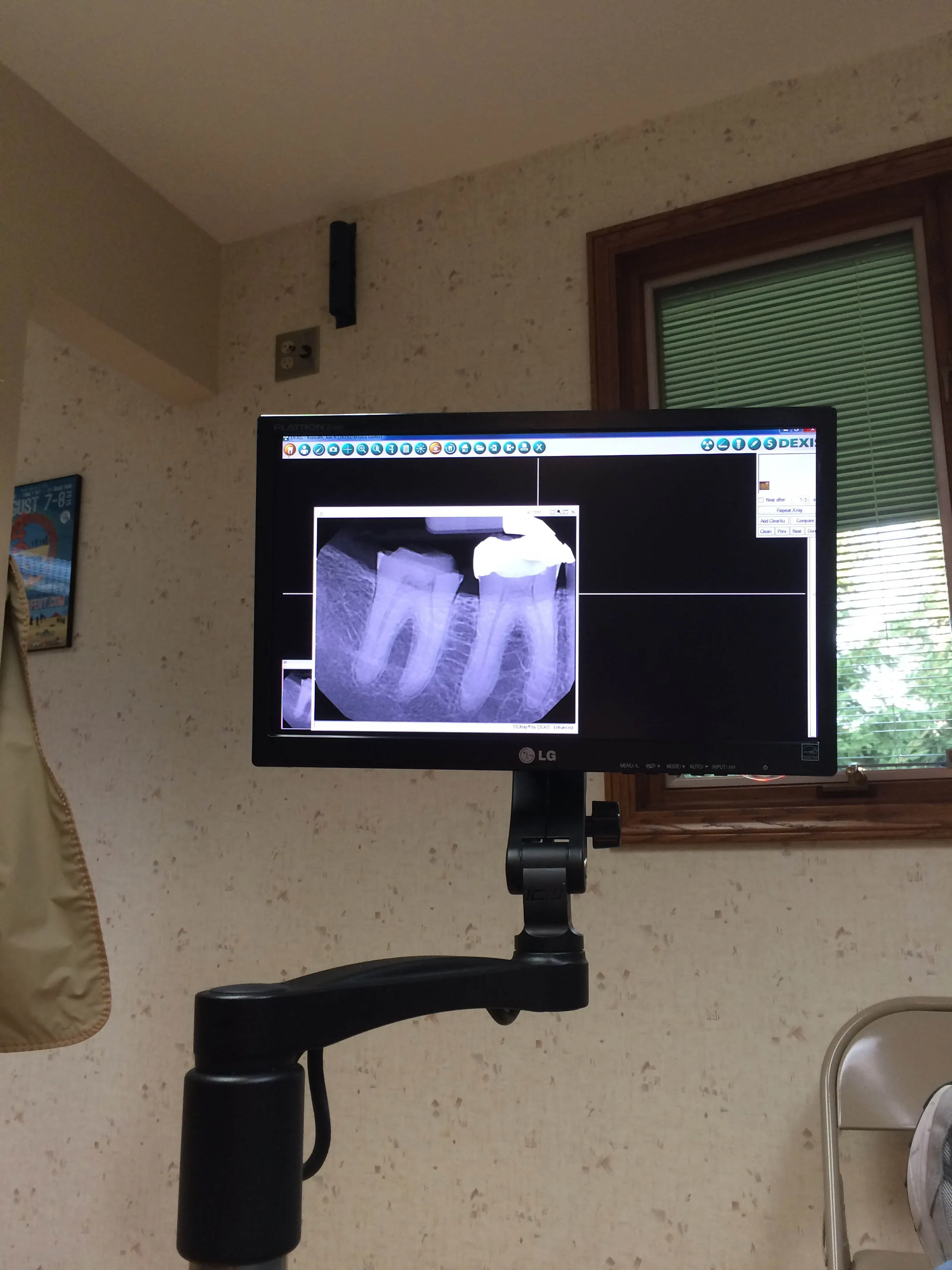
IMG_1054

I’ve had a bunch of dental malady stuff as of late. First, I can’t find a good dentist that takes my insurance in Oakland. The dentist I’ve had for the last five or six years isn’t that great, and sort of pawned me off on his new partner, who rushes through procedures and completely triggers my dental trauma anxiety, and is completely drill-happy. Last time I saw her, she immediately priced out two dozen things I needed done, so I walked. I went back to my old dentist in South San Francisco, who is much more low-tech, but very relaxing and low key, does good work, and has Saturday hours. It’s a drive to get there, but whatever. He also takes my insurance.

After a routine cleaning, he told me he’d have to root canal and crown one of my front-ish teeth. If you think of what tooth would be a vampire fang in a Dracula get-up, it’s the tooth immediately behind that on the bottom. This was, unfortunately, a three-step process. One Saturday, he tore off the top of the old tooth and started the root canal, then sent me home with a temp crown. Next week, he did a post buildup after more root canal work, and once again, temp crown. Then two weeks later, I got the replacement crown.

This essentially meant I could not eat solids for three weeks. That’s not entirely true, but the bulk of my diet was meal replacement shakes. I later found I could eat macaroni and cheese if I let it cool a bit, and I could eat various puddings and cheeses and whatnot. Oatmeal was problematic, because it was too grainy and had bits of nuts in it. Soup is sort of bullshit. Boiled eggs worked. Those shelf-stable pad thai noodles worked if I left off the toppings. At some point about a week and a half in, I sort of snapped, went to Burger King, and smashed a thing of chicken fries to a paste-like consistency and ate it without chewing. It was horrible. The whole thing was horrible. All I could think of was the time in LA when I had the tooth next to it on a temp crown, and on the first day, it popped off, and I spent two weeks fucking around with drug store adhesives, which only half-worked and lasted a day max and made me realize why everyone with false teeth is a grumpy piece of shit.

Anyway, the crown is back as of yesterday. Still a little nervous eating on it, and the gumline around it will take a few days, but it’s pretty solid. The only hard part will be paying  the bill, which will probably be like a grand after insurance.

(There’s also an AITPL connection in there, sort of - after I wrapped up that zine and started blogging online, I had a ton of dental work done. I have horrible teeth, go ahead and be classist and make fun of me now, but I survived a childhood of well water, an addiction to soda, and a long run on lithium, and that was the magic trifecta to fuck me up dentally. So the first time I had real dental insurance, I found a (crappy) dentist, and we went from 1 to 32, drilling and filling and bonding. It’s probably the reason I have such a high tolerance to novocaine these days. I usually need five or six shots to get any work done. Anyway.)

Another bit of nostalgia overload is that this dentist is located at the Tanforan Mall, in my old neighborhood where I lived from 2008-2009. I haven’t gone back there in a while, and even though I only lived there less than a year, there’s a really strong set of memories there. It was my first place in the Bay Area, and it was also the same apartment company as my place in LA, same exact buildings, same blueprints, pretty much the same apartment, but flipped the opposite way. Being in the area reminds me a lot of that era of working for Samsung, driving back and forth from SSF to San Jose every day, spending the weekends running errands around Tanforan. I had an old Weight Watchers meeting there; I saw a lot of movies at the big 20-screen at the small mall; I went to the drug store and the Blockbuster (RIP) and the Safeway and the Target and all the other routine stuff I could see in any other city, but for whatever reason, that layout triggers memories and makes me think and feel and blah blah blah.

Yesterday, it was insanely sunny and warm — maybe like 72 degrees — so I took a long walk before my appointment. There’s a movie theater there that died right before I moved there in 2008, and has been sitting vacant since then. It’s called Century Plaza 10, and it’s a weird little abandoned vaporwave slice of time. (Go google street view it.) There are palm trees out front, a big red movie sign that’s faded to a magenta-pink, and these domes at each corner, like a miniature Taj Mahal, minus the main dome. The first film shown there was Back to the Future, and the theater totally captures that 1985 vibe. The outside is very well preserved, but the inside is toxic, infested with black mold so dangerous. you’d need a full moon suit and respirator to survive. The whole area is mostly low-rise, office parks and big-box stores, gentle hills in the background. A lot of it hasn’t changed since I left (except the Arby’s with the old-school hat sign is gone) and it not only reminds me of then, but of the first time I visited the bay in 1996. (Another callback to AITPL, although I think that was issue 4.)

Anyway, nothing else going on but work. I’m trying to take a week off next month, and haven’t booked anything yet because I was expecting the plans to collapse. Should get on that.

Holes

IMG_8939

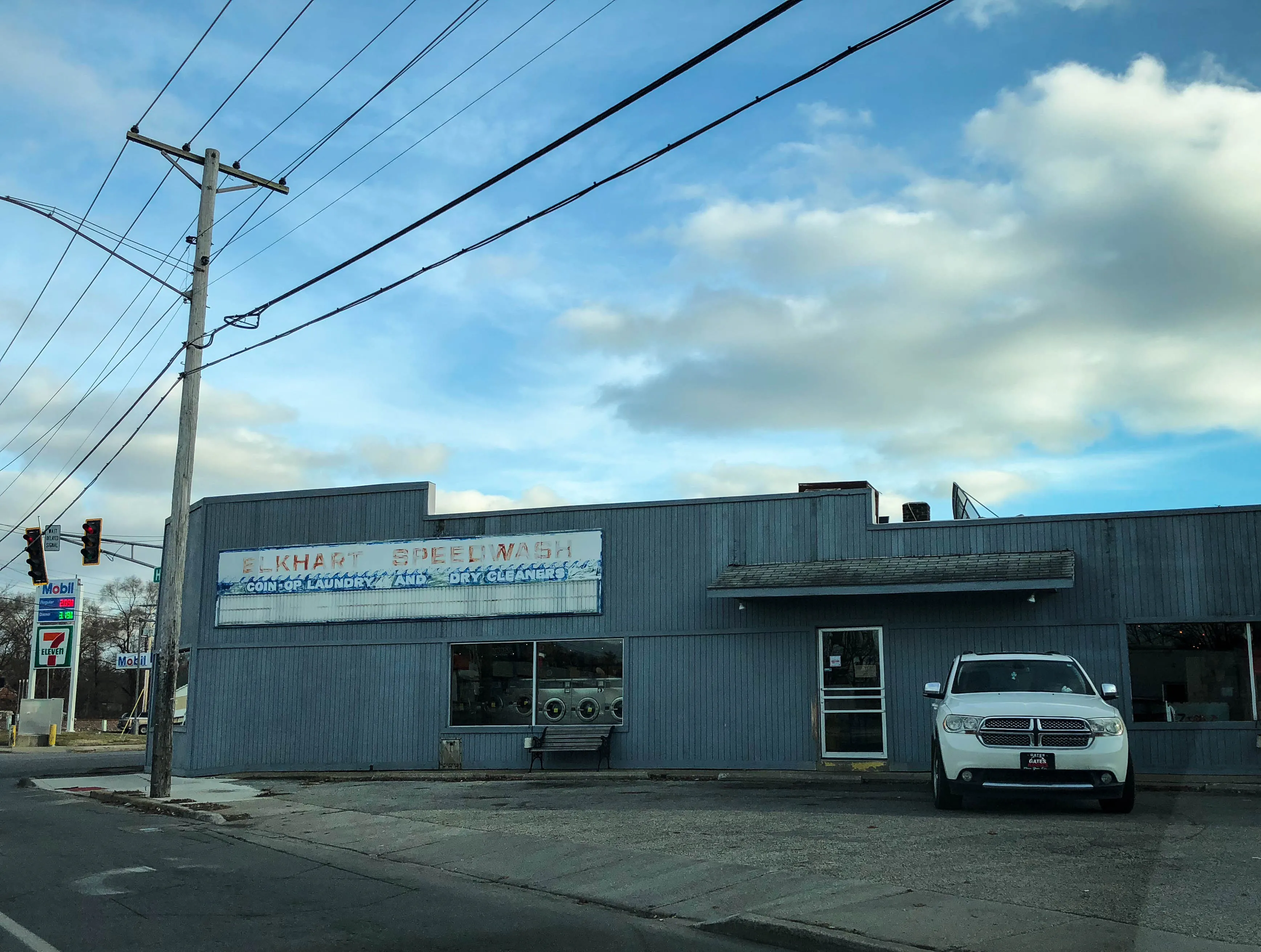
I’ve been back from Indiana for a while, but I’ve been thinking about something I can’t exactly shake, something I saw during my drives around old stomping grounds. This was further drilled into my head when my pal John Sheppard came out to Michiana for a day-long Konrath Reality Tour leading all through Elkhart, Mishawaka, and South Bend. As we drove around, and I pointed where things were, what used to be something else, I noticed a common theme: holes.

By holes, I mean a few things: abandoned properties, massively downsized operations, national-brand grocery stores that were now Mexican bingo halls only open a day a week, the endless regional-brand drug stores that are all a sad Dollar General now. There were also blighted properties, weather-beaten properties, faded and un-maintained properties. But beyond that, there were holes: Blighted properties that would never come back, or that had completely vanished, plowed under and destroyed, vacant lots that would probably remain vacant forever.

It was disheartening and depressing comparing the geography of my childhood in my mind to the current landscape and what still remained. For example, the area of Dunlap that was once the main drag when I was in high school is largely bulldozed and gone. The two-mile strip of US-33 from maybe CR-13 to Hively has lost a majority of its businesses. I’ve already covered Concord Mall a million times, but there’s that. Then there’s my old Taco Bell, sitting abandoned for years; the Arby’s next to it is a vacant lot; the tile place on the other side was torn down by the city because it was blighted. The Astrobowl bowling alley is leveled; the Shakey’s pizza is leveled. The Aldi’s grocery store was abandoned, then was briefly a Guatemalan fruit stand, but is now abandoned. The place next to it was I think a Goodwill; abandoned. Optical store, empty. Bank, empty. Martin’s grocery store, they started rehabbing it, hit asbestos and a leaky roof, and abandoned it half torn apart. Movie theater, abandoned. There’s a small strip mall that had a band instrument place and a furniture store; half the slots are empty, and it has a gold and pawn and a tattoo place. A long, long stretch of this highway was eminent domained to put in a US-20 bypass exit, and is eerily vacant, never redeveloped. This is all within two miles, and there are a lot of other parts of the city also pock-marked with similar holes.

I don’t want to get into a political argument about the wage situation or how Elkhart is being made great again by wage-labor jobs that will all vanish when gas hits four bucks a gallon again. That’s not the point; the point is, it seems like a lot of retail landmarks have vanished, and haven’t been replaced by anything. Some of this is because of Amazon, I’m sure. Some of it is Walmart killing off mom-and-pops. Same with big venture cap hostile takeovers to pick the old retail giants clean of any value and leave them for dead. (I’m talking about you, Sears.) Some of it is that the remaining nationals and regionals have moved to other locations, like the swath of businesses south of Elkhart, or the constant growth in Mishawaka and South Bend. There’s also the possible case that the area was just massively overdeveloped when I was a kid. In the pre-Reagan years, a good investment was developing real estate like malls and using accelerated depreciation to reap a greater tax deduction. (See also.) Elkhart may not have been a city big enough to support two malls, a vibrant downtown, and the suburban Dunlap retail corridor, all of which are gone now. (The two Walmarts are doing okay, though.)

Other reasons: a lot of gas stations of my youth are gone, scraped bare and vacant. That’s probably rusty underground tanks that were easier to abandon than clean up. A lot of these have also become used car lots, the u-work/u-drive type that quickly flip auction sale cars at predatory interest rates. But if it can’t become a car lot (or a church - lots of those there) it becomes a vacant lot. The same environmental issues are also an issue for rehabbing old architecture for new use. The Martin’s grocery store I mentioned is a prime example, and one that has happened many times. Asbestos, perpetually leaking roofs, piss-poor insulation and bad HVAC (try heating 100K square feet when it’s 45 below zero out, like this week), sinking and broken foundations that were laid on the cheap back during the construction boom. and just bad configuration and layout which would require more than just a full gut.

There’s also the “white flight donut” going on. In the Seventies, everyone left the inner city for the suburbs, where subdivisions were hastily built from plowed-up cornfields. (That’s where I spent my childhood.) When those quickly-assembled houses fell apart twenty or thirty years later and their owners retired, they moved further out into the country. In some American cities, when this happens, you get the “donut” effect, when the core downtown is gentrified by yuppies. (See also Chicago, or even Goshen.) This hasn’t happened in Elkhart, but the suburbs that were created when I was a kid aren’t as active as they used to be.

I recently read the book Obsolescence: An Architectural History by Daniel M. Abramson. It brought up this concept that I never really thought about, and is contrary to most of the old retail/dead mall/preservationist thought I see on various blogs. The thesis was that architecture has planned obsoleteness, just like that three-year-old phone of yours that won’t keep a charge anymore. There is an idea that a building or a house is built for forever, that it is a landmark that will last an eternity. But historically, starting in the Sixties, architects moved to a frame of thought that buildings had a shelf life. It was cheaper to make something that only lasted thirty years, and this also fit into the general tax code, as I mentioned above. But also, if you designed something trendy in 1961, it would be played out in 1991, and you’d level it and start over.

There’s two sides to this school of thought, and I’m sure this horrifies some people. Just the idea that something would be destroyed after one paid so much, both in money and ecological impact, would seem disturbing to some. But it’s something I think about a lot when I see these buildings that basically implode and vanish. There’s no money in rehabbing these buildings, replacing them with vibrant businesses. It’s more economically viable to leave them blighted. It’s a real paradigm change to think of housing and property to be a temporary investment, an expendable purchase, instead of something you buy forever. Most people can’t deal with the mental concept that a purchase like a phone or a car isn’t designed to last forever, so this school of thought is beyond them.

I guess the thing that’s sad to me is that it’s one thing to think that buildings become obsolete and should be replaced when their time is up. I see a lot of that here in Northern California, but here the movement is upward. Single-story houses are replaced by townhouses; single-floor stores are replaced by shopping centers. Old corporate headquarters buildings are torn down and replaced with modern ones that are several times the size. (See also my old office.) But the value of land here is so high, it’s a no-brainer, aside from the nostalgic component, to scrape an old building and replace it with a higher-grossing structure that can do more, hold more, make more money.

In Elkhart… that isn’t happening. Houses don’t get scraped like they do in Palo Alto. Commercial development doesn’t seem to be over the top. Maybe factories are expanding, but the retail corridors look vacant or underutilized. Like I said, there are probably numbers to counter that, but from what I saw, it was depressing. It makes me wonder what will still remain if I visit again in another ten or twenty years.

End of 2018

I’ve been back from Indiana for a few days now. Been slightly sick, working on unpacking, cleaning, resetting, all the usual crap before I get back to work on Wednesday.

The trip was probably my longest visit to Indiana since I left in 1995. I was there from Friday night to the following Saturday morning, with all of it in Indiana (save a quick spin through Edwardsburg and an afternoon in Dowagiac.) I had family stuff pretty much every day, and we tried to find new and neat things to do during the week, museums and other things I’d never seen. But I also had a lot of time by myself, and the heavy nostalgia thing I mentioned in my last post was problematic.

As far as stuff to do, we went to the Studebaker museum, which I’d seen years ago, but has since moved to a new building they share with a South Bend history museum. Spent some time downtown and went to The Griffon, which is an old RPG/D&D game store I last went to in maybe 1990, and it’s great they are still up and running. Went to the old Orbit Records in its new location a few slots over, and the whole vinyl thing has kept them running. Ate at Tippecanoe Place, a giant mansion turned restaurant, which I last visited on the night of my senior prom. Dinner buffet on Christmas night at the new Four Winds casino in South Bend was solid. Didn’t play anything, and then my sister played a slot machine for like two minutes and won $260. Also visited the history museum in Dowagiac. And malls. Lots of malls.

John Sheppard came out for a day, and we did the whole Jon Konrath Reality Tour, visiting every place I lived and shopped and worked and whatever else back in the day. The highlight was stepping into a completely vacant Concord Mall, which was like breaking into a tomb that had been sealed shut a thousand years before.

We started off our day by visiting fellow writer Steve Lowe, who now owns and operates South Bend Brew Werks. Had a great lunch, took the tour of their brewing operations, and saw a great example of how downtown South Bend is on the upswing. At the end of the tour, we hit Bruno’s for a pizza after walking around University Park mall, which seems like it has doubled in size since I left, with almost no vacant stores and every single thing except JCP and Sears replaced by a higher-end chain. It was a stark contrast to Elkhart, where things have closed and not been replaced.

The rest of the trip was me going stir crazy, walking around the mall, wondering what would have happened if I never left Indiana, and wondering what there was to do except eat, watch TV, or spend money. Family stuff, I guess, but I have this conversation with myself every time I go back, and it never goes well. Anyway, I’m back home, away from the snow, so there’s that.


End of year crap - don’t really want to get into that. I quit Goodreads, so I can’t tell you how much I read. I did exercise every day, although my total distance walked wasn’t as high, and I ended up gaining almost six pounds over the year. So I need to work on that. All the usual new year new me crap. Stop reading news. Stop obsessing over nostalgia. Write more. Whatever.

This year will be tough on the nostalgia front, because it’s thirty years since I graduated high school. and there are lots of various anniversaries there for me to obsess over. I need to find some writing project to distract me from this crap. Maybe I’ll blog more, although I don’t know what I’ll write about. I have a project that’s maybe 80% done, but stalled. Maybe I’ll take up knitting. I have no idea.

OK, going out to dinner in a minute. I’ll probably be asleep by ten. Hope you all have a good new year.