The Wrath of Kon

Dispatches, thoughts, and miscellanea from writer Jon Konrath

Tag: obsolete-technology

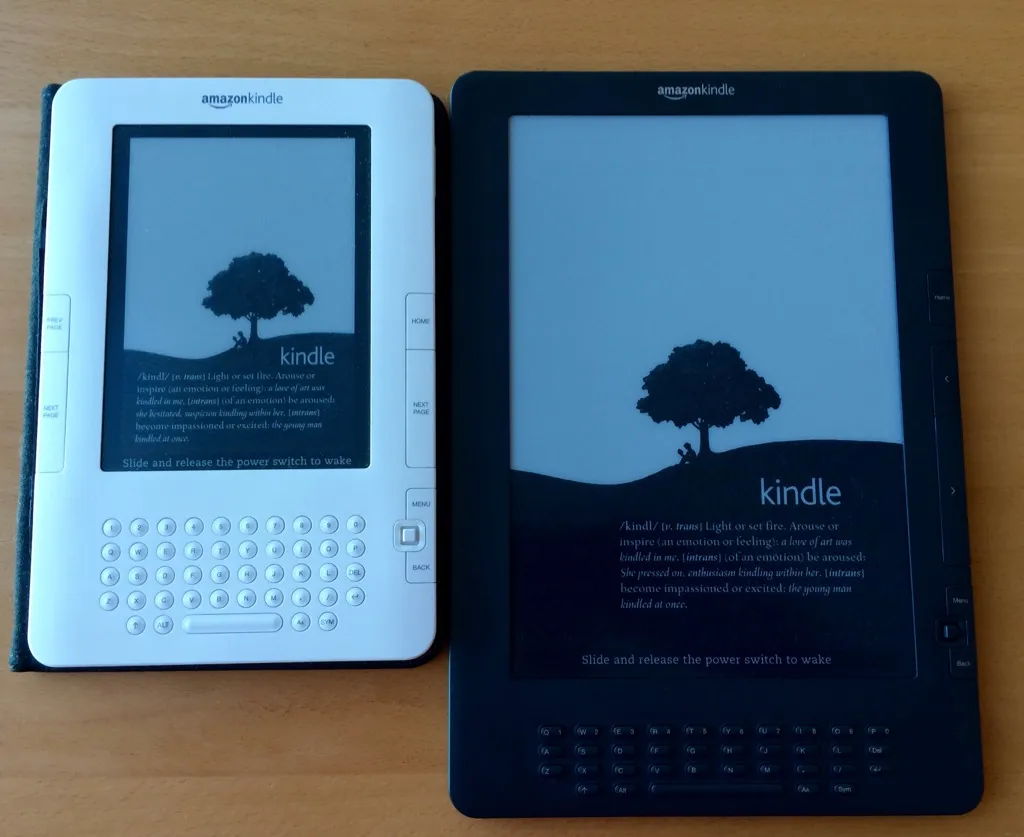
New (Old) Kindle

FullSizeRender

I bought a new Kindle, but an old Kindle. It’s actually a Kindle DX, the large-screen variety, which is long discontinued, but for some reason, Amazon occasionally has them in stock, through “Amazon Warehouse,” whatever that is.

I am not really a fan of ebooks. I gave it an honest go back in 2010 or so, bought a lot of my favorite published authors at crazy markup prices, like buying Vonnegut classics at ten bucks a pop. But I found reading fiction to be difficult on a Kindle. Because everything is the same font, and the device always has the same feel, the same heft in your hand, it removes the experience of reading the book, and I typically retain nothing I read on a Kindle. I went back to paper, and I’m fine with that, mostly. There are more titles available, it’s often cheaper in the long run, and there’s something about going to a physical book store that I miss when I’m simply e-hoarding books online.

But, there’s a big problem with space, and allergies. I’m finding that old books, ones infested with dust and mites, make me incredibly sick. I simply cannot buy a fifty-year-old paperback from a used book store, because the moment I open the browning pages, I have a horrible allergy attack. Yes, I take the medicine and I get the shots, but I’ve pretty much exhausted the medical possibilities. I just can’t read old books. And now, I’m finding my “new” books are all old. I pulled a Kerouac book of letters the other day, just for a quick skim, and it made me sick. And I “just” bought that book, but when I checked the receipt stashed inside, and it’s twenty years old. So I don’t know what to do about that.

It’s nice to not have the clutter involved with collections. I was religious about collecting CDs and DVDs, and they took up a good amount of my apartment when I was single. After I got married, and after the technology of MP3s and streaming video took off, I ripped everything, and junked or stored away all optical media. I don’t really miss it, and I’m glad I have the space. But books are more difficult for me.

I have issues with current e-readers, too. I love e-ink displays. The first few iterations of Kindle had less refined screens, a lower PPI count, the weird black-flashing issue with a slow refresh speed, and some slight ghosting of old images. There are new ones with higher PPI, better resolution, and backlighting. But they’re all the smaller screens. As my eyes go, I really want a big screen. Ideally, I would want an 8.5x11 screen. This also helps with PDFs, which you really want to not get downscaled or zoomed weird.

But, the big-screen e-ink readers just don’t exist. Sony has one in Japan, that’s insanely expensive, like $800 or something. And there are one or two cheapie made-in-China ones that are half-broke, hard to buy, and still pretty pricy. Every year, there are CES rumors of a big-screen reader, but these are always vaporware, and — huge pet peeve of mine — put out the idea that there are big-screen readers. But what you see at CES is never what you get, and they simply aren’t out there.

I don’t think the masses want a paperwhite e-ink display. They want a tablet, something like an iPad that can play games, show a video, and do things best left to a color screen that eats batteries. I have an iPad, and they’re great, but I can’t read on it. It causes too much eyestrain, and I’m also convinced that heavy use of a screen right before bed causes bad sleep hygiene. Almost all of my reading takes place in the hour or two before sleep, so I can’t deal with an iPad. That’s where paper has been great, and where a big e-ink display could be helpful.

So I hunted down the Kindle DX, and I found this one on Amazon. It was only $140, which was a steal, compared to the original $400-ish list price five years ago. This is the Kindle DX Graphite, which has the 3G connection, no WiFi, and the second-gen DX display, which is “50% improved.” It has roughly the same lineage as the third-gen Kindle Keyboard, but less RAM inside. No backlighting, no apps, no touchscreen.

Although the Amazon page made it sound like this was a used model or maybe a refurb, this was a new-in-sealed-box model, with plastic on it and everything. The only snags I found was that it did not come with an AC adaptor, just the USB cable. (Not a problem, I have 784 110V-to-USB adapters around here.) But it also would not register to the Whispernet network, and the wireless appeared dead. I gave them a call, they asked me for the serial number and a few other things (IMEI, something else) and then after a reboot, it connected wirelessly and all my stuff was ready to go.

My main use for this, at least initially, is to read PDFs. I have a giant archive of UFO docs and conspiracy theory stuff, FOIA requests and declassified government reports, and it will be nice to plop all those onto this thing. The screen is 5.5x8, so almost the size of a paperback book. It’s much easier to read than the original one I have. So I will give it another go.

It’s oddly nostalgic for me to look back at the documents that were waiting for me on the Kindle. I got my original Kindle in 2009, and toward the end of my Samsung tenure, spent a lot of my lunch time reading science fiction books on it. Also, when I started my allergy shot regimen in 2010, I would bring the Kindle and get a lot of reading done there. I had horrible writer’s block then, didn’t know what would be next for my writing, so I was reading a lot of Philip K. Dick books for inspiration, and also a lot of schlocky how-to-write books, which were useless. The Kindle font, and the general layout of the thing, the dark grey letters and the LCD-like background color, remind me so much of reading those books. But I can’t really remember much about them. So, we’ll see how this works out.
the changing range of nostalgia

I got an observation/question in email from Larry about this (and I’m paraphrasing): back when we were in high school in the mid/late-80s, there were a couple of kids who had old cars, “classic” cars like the ’57 Chevy, and that was a big deal, because they were 30 years old and “antique.” Or back then, the twenty-year-old range put you into classic muscle cars, like the ’69 Z-28 or Mustang Mach 1.

Now, a thirty-year-old car lands you in the mid-80s. And he posits, are kids now impressed with a 1985 car with a bad tape deck the way we lusted after old Bel Airs and T-Birds?

Oddly enough, that’s true to some extent. I read a reddit for project cars (which makes total sense, because I don’t have a garage, or time, or money, or patience, so I waste tons of time looking at pictures of people restoring old cars.) And the year range of what I consider “classic” is now insanely out of reach. Every baby boomer who has cashed in and is in The Crisis is searching for that ’66 Stingray or ’69 GTO they couldn’t get back in high school, which has made the prices skyrocket. Even the completely fucked and destroyed shell of an old Camaro convertible is going to cost more than my 2014 Toyota did new.

So, the kids of now are looking back to “old” cars that I still mentally consider “new.” Like on that reddit, two of the most popular resto-mod projects are old Fox-era Mustangs (’79-’93) and first-gen Miatas (’89-’97.) When I was in high school with a falling-apart rust bucket of a 1976 car, I was given endless shit by kids whose parents bought them a new car, and the one in vogue was the ’88 or ’89 Mustang 5.0 GT. That to me is a “new” car, but now they’re almost 30 years old.

If you were looking for a cheap project, you can buy one of those mid-80s Mustangs for a grand or two, with a beat-apart four-banger engine. This was right before computerization and fuel injection took over the engine bay of modern vehicles, so it’s not hard to tear out that engine and rebuild a pick-and-pull 351 V-8 for a grand or so. You can get all the Edelbrock bolt-on stuff like an intake manifold or headers online, and head over to Tire Rack to get running gear UPSed to your door. But yeah, kids now see those as “old” cars, and are into the retro aspect as much as they are into vinyl records.

I’ve also noticed this in another k-hole I fall down, which is retro computing. I also browse through a reddit for vintage computers. When eBay first came out, I went through this thing where I had to buy an old Atari 2600, which I never had as a kid, and also re-buy a new Commodore 64 and relive the past glory of my first real computer. And people still do that, and there’s a big community of folks with old Amigas and ColecoVisions and all that. But now, I’m also seeing a lot of kids restoring “retro” machines like 386 and 486 PCs.

My first reaction to this, seeing someone fighting with a 486DX-33 and a Windows 3.1 install was “wait, what?” Because those aren’t vintage, they just came out… well… okay, twenty-some years ago. If you pull an old 486 out of the garbage and have no memory of these beasts, it’s going to seem radically different from your new PC. It will have floppy drives, a 40-Meg disk drive that’s IDE if you’re lucky, or maybe even an MFM or RLL interface. There won’t be a DVD or CD drive, USB, any sort of memory card reader, and it probably won’t have a network card. (It might have an old 10 Base T Ethernet card, if it was from an office.) It would hopefully have a VGA card, but good luck if it was Hercules or mono. And prepare for that gigantic space heater power supply used to spin up the massively loud hard drive to have bulged and leaking capacitors that need replacement.

It’s an odd thing, because in some senses, a computer from 1992 is going to be much harder to deal with than one from 1982. That pre-internet era is not as documented as it could be, and most parts and spares went into the garbage. It was also the wild west as far as standardization. Only one company made TI computers; there were dozens of Taiwanese shops knocking out PCs in the early 90s, all using only vaguely compatible pieces, and most of them are vanished and unknown. Now, every computer looks absolutely identical, but then, even the same manufacturer might have a dozen differently-cased computers, each with entirely incompatible parts. Try finding a replacement front bezel for a Leading Edge computer - your only real hope is finding another complete Model D to cannibalize.

And these “old” computers seem like they are five minutes in my past. When I started this site, I had just upgraded from a 486DX-33 to a 486-DX120. I had the same beige mini-tower case from 1992 to I think 2002, and incrementally updated bits and pieces of the system when I got a few bucks. I wrote my first two books on computers shoehorned into that box, and it doesn’t seem like it was that long ago. But 1992, that was 23 years go.

I should add the disclaimer here, so I’m not completely Andy Rooneying this, is that I don’t see anything “bad” about current computers, in a “they don’t build them like they used to” way. Same with cars - you can buy a $10,000 car and drive it for a hundred thousand miles easy, only changing the oil and maybe getting a set of tires or two. You don’t screw with distributor points and cam timing and cleaning spark plugs any more. I haven’t had to change jumpers on a computer in a long time, haven’t needed to run to the store for some random ribbon cable to get this to talk to that. They’re appliances now, and maybe something is gone in the tinkering, but I’ve got too much shit to do to mess with that now.

Still — christ, I’m getting old.

The Death of Aperture

So Apple has killed off Aperture, the photo program I’ve been using for the last few years to slog around the 30,000-some pictures I’ve taken. iPhoto is going to die soon, too. They’re replacing both with Photos, a dumbed-down port of the featureless picture program that’s on the iPhone. Oh, but that has The Cloud, so I’ll be able to dump 100 gigs of photos, pay $4 a month rent on them, and then live in fear that I’ll accidentally have some switch flipped in a system update and burn through my monthly data cap when it tries to sync all of that stuff to my phone seven times every time I leave the house.

I know, “why don’t you just put all of your pictures in a big hierarchy of folders on a hard drive and not keep them in a database?”  Because I actually need to find shit, and it’s not 1997 anymore.

I moved everything from Aperture to Lightroom yesterday. There’s a plugin for Lightroom that does most of the deal for you. I bitched about this endlessly, and it ate up a few days of my time, but I guess it wasn’t as bad as it could have been. Here’s the various observations and gotchas:

  • It helps if you clean up your Aperture library first. I found I had an insane number of scans that were impossibly huge and didn’t need to be, and a lot of RAW files of dumb stuff that I didn’t need. I like to keep RAW files of Hawaii sunsets, but if it’s a picture of a dumb sign or a Taco Bell, I can smash it into a JPG and still sleep at night. My library was about 140 GB, and I got it down to about 85 GB before import.
  • You basically need your library size in free space on a drive to do the conversion, so good luck with that. I chose to convert in-place, so I freed up about 100 GB, put the new Lightroom in ~/Pictures/Lightroom* and then moved my old library off of my machine to a backup when I was done.
  • Back up your shit before you start. Back up your machine in general. Clone your entire drive regularly, not just your documents.
  • Lightroom puts all of your master photos in a hierarchical tree, just like I made fun of, and then keeps a separate database of metadata and non-destructive edits. The database itself isn’t that big. It keeps a previews database, too, and that can get big, depending on how big you make your previews.
  • Lightroom Folders = the hierarchy where stuff is stored in the above. I used Aperture folders projects as the “hard” dividers of what photos were captured in my library, although those are just virtual and you can move them around.
  • All of my photos ended up in a folder tree like this: LightroomMasters/YYYY/MM/YYYY-MM-DD/files* I don’t know how it decided on that hierarchy. I think it’s based on actual imports into my Aperture library, and not capture time or EXIF data or projects. I guess that format works for me.
  • Your tree in the left panel thing for Folders won’t look right. Right-click on the folders and do “Show parent” endlessly until it looks right.  (I.e. show the parent of the three levels of the hierarchy. Is there a faster way? I can’t find one. You only have to do this once, though, I hope.)
  • An Aperture Library = a Lightroom Catalog. I only had one Aperture Library. If you keep multiple Libraries, I don’t know what to tell you.
  • Aperture albums and projects are converted into Lightroom Collections. I.e. a Collection is a “virtual” collection of photos from your folders, and if you add or remove things to a Collection, you aren’t touching your stuff in folders.
  • If you edit the Collections made from your Aperture projects, you aren’t actually moving your masters in your folders. That’s a huge pain in the ass for me. Like I found a bunch of scans I took in 2006 that were pictures from, like, 1979. They should be in the folder for 1979, and they aren’t, so I had to find the pictures, then move them into the right folders.
  • All of your Aperture Smart Albums are broken. You can possibly use Smart Collections to replicate that, but you need to do it over.
  • All of your Aperture edits are gone. If you did edits, static preview images of the edits were imported, but you need to start over using Lightroom’s tools to do them again.
  • Any of those edited images will not have a Capture Time in them. The default grid view in Lightroom is sorted by Capture Time. So you’ll have a big mess there, and have to spend some time with the Metadata > Edit Capture Time settings.
  • I don’t even know what happened to shared albums. I don’t even care. I’ll start over. Nobody looks at my Flickr page anyway.
  • You end up with a huge shitstorm of dummy Collections with nothing in them. This is probably my fault, but I had to do a bunch of cleaning there.
  • At this point, this bulleted list is longer than I wanted and nobody’s reading, so figure the rest out. It will 90% work, but you’ll probably spend a weekend futzing with it after import.
  • Back all of your shit up again after you do all of this, and not on top of the old backup.
  • Do all of your imports in Lightroom. Don’t just dump images into your Masters directory or Lightroom won’t know they are there. If you want to dump them to a folder because you have a piece of shit phone without a modern sync, you can make Lightroom watch a folder and auto-import it. You can also do various schemes like watch a Dropbox folder and dump pictures there, like screenshots or your security cameras or whatever.

Here’s the main problem with Lightroom: there is no good way to sync with an iPhone (or iPad.)  You can set it up so when you plug in your phone and Lightroom will start and go directly to the Import screen and then import your photos, which is mostly how Aperture worked. (You could also just mount your phone and drag the files to your ~/Pictures directory if you are an idiot and want to lose all of your metadata and spend hours dealing with duplicates and creating new subdirectories and moving files around and whatever else.) So import is fine.

But there’s no real way to export and sync files to your phone. There are half-assed ways, but you can’t use iTunes to do it automatically anymore. It used to be in iTunes, I could say this:

  • Go to my iPhoto/Aperture library
  • Get my last X months of pictures, plus these other Albums I’ve selected
  • Sync those to the phone, and also clean up the ones that aren’t in the above, so my phone doesn’t slowly fill up and I end up trying to sync and I have 62GB of pictures on my 64GB phone and I have to spend a weekend deciding what to kill, and then the fucking thing will try to resync the 62GB anyway.
  • Do all of the above without me thinking at all, with no interaction, without opening iPhoto or Aperture, because life is too short.

There’s no way to do any of this in Lightroom. The closest I can think of is this:

  • Tell iTunes to sync from a folder.
  • In Lightroom, create a Publish Service that dumps a Smart Collection to a directory.
  • Remember to open Lightroom and click Publish before every time you sync your phone.
  • I don’t know how this handles duplicates or if it deletes old images. I haven’t tried it.
  • This is horrible.

There are some various plusses to Lightroom, I guess:

  • My library size dramatically dropped. I went from about 85 GB to about 70 GB. It’s possible that I just haven’t generated previews for everything and that will slowly climb.
  • Lightroom processing tools are supposed to be better. I haven’t gotten into that yet, but I spent a few minutes futzing with some RAW images, and it’s not bad.

So there’s what I did for the last few days instead of writing.

My occasional history with film

scan2

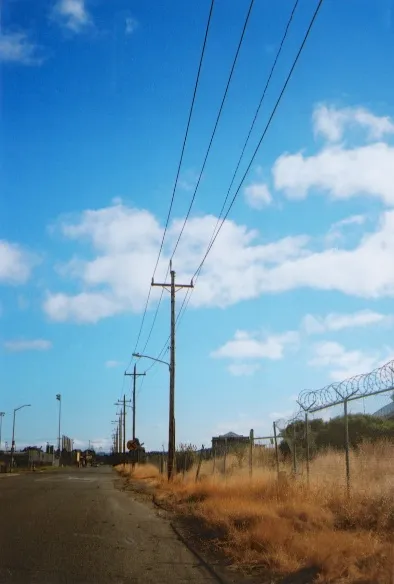
I’m still thinking about film a lot, maybe too much. I’ve ended up buying two 35mm cameras on eBay this week, a Canonet QL17 rangefinder and an Olympus Trip 35 point/shoot.  I ran the first roll of film through the Trip (see attached picture) and I love it.  I need to take more pictures, figure out a good workflow for developing, scanning, and posting things, and determine what I’m really doing with photography. Mostly, I need to learn, and I feel like there’s a deep rabbit-hole of things out there to master. And the whole thing has me falling down a deep nostalgia hole, thinking about previous experiences with analog film.

A couple of years ago, I bought a photo book by the parents of Christopher McCandless, the guy that died in Alaska, described in the book and movie Into the Wild. His parents self-pubbed Back Into the Wild, which contained his journals, letters, and snapshots.  The book had a strong impact on me, not because I particularly admire his story and plight, but because it was a strong link to a nostalgic period of the recent past.

All of the guy’s photos were taken with cheap 35mm cameras, the point-and-shoot variety now largely forgotten.  The book also included copies of post cards and envelopes, with old stamps and cancellation/postmarkings that also reminded me of the early 90s.  I did so much mail for the zine around that time, and the look of those old 22-cent stamps and the cancellations, with their little public-service messages (“end breast cancer!” or whatever) draw me back instantly.  I still have old paper mail in storage, pieces in their well-creased envelopes, and it all reminds me of that period so much.

But the film, the cameras - they mentioned a few of the makes and models, and I googled these, wanting to see what gear he brought along on his adventures.  In the 80s and 90s, there were so many junk cameras, so many different brands.  it was like that with any electronics, too. Today, if you wanted a CD player, you’d have a choice of maybe three or four brands (Sony, Panasonic, Samsung, and some no-name Chinese thing) and maybe three or four models for each brand, and each one would be very similar to the other, aside from a differentiating feature like Surround Sound or digital output.  But back in the 80s, if you wanted, say, a VCR, there were dozens of brands, all of these different major Asian players shelling out radically different versions, competing with a dozen different American firms, with factories in San Jose or Dallas, plus all of the no-name Korean brands imported and given an American label, like the JC Penney brands or Sears versions.  And they were all so completely different, not identical in any way.

I remember I used to go through a lot of jam box tape players, because for a long period, I didn’t have a good car stereo, and would instead go to a pawn shop and buy a $50 jam box and then wire a 12-volt adapter in the car and use that until it got stolen a few months later.  And at the pawn shop, that $50 would buy so many different types, with removable speakers, various space-age plastic chrome finishes and grilles, fabric-covered woofers, and mystical buttons that offered hi-fi settings or switched on LCD power meters that measured nothing from a scientific standpoint, but would light and rise and fall with the volume of the music.  And they all had different EQ types and tone knobs or “boost” switches and different tape counters and ejection mechanisms, and the feel of the mechanical buttons was always different.

Cameras were the same way.  There were the high-end SLRs, which were all too expensive for my blood, but I had a friend or two, usually working for the yearbook club, who would learn how to work a good Canon or Nikon, and maybe borrow one from the school. SLRs all looked similar, but had weird differences, and there were the usual Pepsi/Coke religious wars about which one was best, although it was a ten-front war back then, not just Nikon/Canon.  There were also the low-end things, the Kodak 110s and disc cameras, and cheap Polaroid one-shots with no controls at all, just a dust cover, a trigger button, and a place to plug in the flip-flash with the exploding bulbs that would cost a fortune and smell of burning plastic after they ignited.  My parents liked these cameras, the ones with no settings, the Brownie or the 126, with nothing but maybe a film advance lever to manually crank through the roll after each shot.  And there were also a wide variety of cameras between the two, with some advanced features, some things missing, and some fully automated.

When I was a kid, I won one of the cheap-o cameras at the company picnic for my dad’s job.  It was a Kodak 110 kit, a little rectangle with the lid that pivoted open and worked as a sort of handle, hanging off to one side.  It was as thick as one of the plastic film cartridges, and had a little eyehole to look through, to frame shots.  This model had a “zoom” lens, a glass piece that slid back and forth on a track, so you could snap it into place and increase the range by a small factor.  Everything else was manual, with no focus, no aperture setting, just a film advance lever and a shutter button.  It would take me a year to take a dozen shots, carefully framing them, snapping a picture, and then not knowing for months if it turned out or not.  As a ten-year-old, I never had money for a flash, and would shoot everything in daylight with fingers crossed.  When done, the exposed film got thrown in a junk drawer, with pens and checkbooks and broken calculators and instruction books to appliances.  If we were lucky, a third of the film I shot as a kid was developed.  It always looked bad, with faded colors, grainy prints, and half of the shots underexposed or dark.  Everyone had red eyes, and all of the macro photography I attempted with Star Wars models never looked anything like the films.  It was disappointing, and not a hobby for me to get into, so I didn’t.

In high school, on a lark, I bought another 110 camera.  This was a small “spy” camera, a tiny piece of plastic that clipped over a 110 cartridge, leaving most of the film case exposed on the outside, not much more than a lens and advancing mechanism that clipped over the film cart.  I don’t remember if it had a flash, but I do remember it had no viewfinder, just a small plastic rectangle that clicked up on the top.  I bought this in October of my senior year, right before visiting Canada for the first time.  I took a few rolls of shots with this, and paid to develop them myself, since the $3.45/hour wages at my job afforded me this luxury.  The quality wasn’t much better, but there was more immediacy, and I took a lot of pictures of things.  I knew I’d leave town in a year, and want to remember old friends and my old car and my old house, so I captured it all to film.  And that Canada trip yielded a few good shots, too.  The film quality was still bad, lots of reds to the color mix, and the plastic-lens camera was total garbage.  But the small size, the novelty, and the budget to actually develop photos made it a decent experience.

In my freshman year of college, I had a few bucks of christmas money to blow on the after-holiday sales, and bought a 35mm camera at an Osco drug store.  It was some semi-known name, like Vivitar, but was a low-end, all-manual affair, similar to the ones McCandless used.  This was my first foray into a middle ground that existed, with the pro film format (35mm) but the cheap and easy to use camera that offered no settings or adjustments.  It did have a cheap built-in flash, and it maybe had an aperture setting (a little lever with an icon of the sun and another of a cloud).  And it may have had a similar focus (picture of a mountain, picture of a person’s head.)  But it had no zoom, no focus ring, no tripod mount, none of that.  It also had a manual film advance, and you had to load the film by hand, stretching the first flap out of the film canister across a set of sprockets before closing the back door.

This camera only lasted a few weeks, before the film spool broke, the cheap plastic splitting apart, in an unrepairable way that instantly let in the light, making the $25 gadget useless.  But I got two rolls of film through it; one while I was still home, and one at school.  The school roll had some great shots on it.  I walked a loop of the campus during the day, and the January sun and blue sky made for some great shots of the old limestone buildings, a perfect capture of the 1990 glory of Indiana University.  The home set of snaps had a couple of good pictures of Tom Sample at New Year’s, and the only picture of first college girlfriend Angie I still have.  (A horrible picture of her in my mom’s car.)

I did not have another camera until the middle of 1993, when I was home for the summer  I don’t know what compelled me to dip back into photography, but I think it was from working on the zine, the idea that I would take pictures at shows.  I spent close to $100 on another 35mm camera, once again one of those fixed-focus things.  This one was closer to a DSLR in its general shape, and it did have a motorized zoom lens, along with a better flash, and a motorized auto-load, the kind where you would put in a can of film and it would quickly suck up the end after you closed the back door.  And then at the end of the roll, it would suck the film back into the canister for you, instead of spending minutes cranking on a small dial or lever manually.

I got really into the idea of becoming “a photographer” even though it was a cheap and cheesy all-plastic camera.  I’d buy expensive film, like 1600 ISO Fujifilm or Kodachrome, and keep it in the fridge and get it developed at the one-hour place, always asking for matte prints.  I went to a lot of shows that summer for the zine, getting in for free by talking to record labels, and I’d always ask for a “photo pass” to try and get better access.  I never got any good pictures at shows, just blurry, poorly-lit snaps of Glen Benton or Cannibal Corpse, completely unusable stuff. I took some decent snapshots though, artsy pictures of Goshen College, some pictures of friends, along with a roll or two of the Milwaukee Metalfest, although none that were actually of the bands, just the booths and the drive there and back.  I also got the last few shots of the Mitchell House before I moved out, the only pictures I have of that place.

The camera went into “occasional mode” after that, only getting pulled out on a whim here and there, for parties or trips.  I wish I would have taken far more photos back then, many more shots of people and places, images capturing the Bloomington of 1994 and 1995.  I never knew the importance of these things, that I’d want to write about them, and I got a few good shots, but not enough.  I did a little more later, but I’ve taken more digital pictures in the last three months than the grand total of every frame I ran through that cheap 35mm.

That camera followed me to Seattle, chronicling that voyage.  I didn’t travel much when I was living in Jet City, but it made a few trips down to California. And then after K and I broke up, there was a period where I wanted to be a “photographer” again and went around taking pictures of cemeteries and airplanes and lakes.  It also went with on my long trip from Seattle to New York in 99. Once I got to NY, maybe a roll or two went through it, shots of my apartment, or maybe Times Square.  I’d switched to video for the most part by then, which is bad because the quality is so low, and the camcorder was bulky enough, I didn’t shoot as much.    By the time I started to take vacations, like my first trips to Vegas, it was 2000, and I had my first digital camera, so the film went away forever.

Anyway, the McCandless book reminded me of this, because he took these shots of the desert, the wide open spaces of Alaska, the plains states, and everywhere else off the beaten path of the early 1990s America.  And his pictures, the feel of film going through the low-end optics of a cheap import camera, I could feel the places he visited, much more so than if he’d just snapped some Instagram pics with his iPhone.  That particular type of shot, the lenses or the grain of the film or whatever else, just screamed 1990, the same way my dad’s old slide film 135 shots from when he was in the service are easily IDed as being from the late 1960s.  They just had a certain feel to them.

I made that journey across the desert in 1999, driving through New Mexico and Arizona and Nevada and Texas, on some of the same roads as him, and pulled over many times to walk across the flats and look at dry riverbeds and take a few shots with my cheap camera.  And his pictures remind me of my pictures.  And my pictures remind me of standing there alone, feeling the nature and lack of mankind around me, in a way that a hundred snaps from a camphone would not.  That era is so close to us now, only a few years ago, but it seems like a lifetime away.  And when I pick up a film print I took from them, or look at the copies of his, it makes me jump from my life back to that one.

Anyway, enough rambling.  More film will be shot.  And I have a huge project I dread, involving scans and restoration of these giant tupperware storage bins of negatives and prints, before they all rot into rancid chemicals and fade into nothing.  I should get on that.

Why I love analog

Scan-10

After shooting some 25,000 digital photos in the last decade and a half, I finally did something I never thought I would: I started shooting film again.

In a fit of boredom, I bought a Lomography Diana F+ camera. It’s a 40-buck plastic toy camera that shoots 120 roll film, with manual everything and a plastic lens that takes hipster-esque Instagram-y pictures. I took it out and ran three rolls through it, just to see what it would be like. It was tough, clunky, and awkward, but I loved it.

I haven’t shot film since 2000.  I got my first digital camera, a 1-MP Olympus point/shoot, at J&R Electronics in New York at the very end of that year.  I remember this well, because I had to take a bunch of use-it-or-lose-it vacation and essentially split work very early in the month of December for the rest of the year, and I got really sick on the first day off. I spent the whole vacation in a NyQuil daze, sleeping for 30 hours, waking up in the middle of the night to order hot and sour soup by the gallon from the crap Chinese place down the street, then going back to bed.  I eventually got ambulatory enough on the day after Christmas to brave a snowstorm that dumped a few feet of fluffy white snow over the island. I took the N train down to the City Hall stop to go into the electronics superstore that stood near the foot of the mighty twin towers of the World Trade Center.  I bought the camera, stumbled home, and took a bunch of shots of my kitchen and bathroom, amazed at how they instantly showed up in the tiny LCD screen.

Digital changed my life.  I didn’t have to go to labs, didn’t have to wait to see if a shot worked, and didn’t have the nagging self-censorship that a flunkie working the film counter at Osco’s would be looking at my prints. I took a ton of pictures with that little junk camera, and then moved on to a series of better point/shoots through the 00s before graduating to a DSLR in 2010.  I love shooting with the big Canon, but I still take more pictures with my iPhone. Both are fast, easy, and cheap.

But, there’s a disconnect. I average a few hundred shots a month, although it’s in fits and spurts; I will take out the DSLR for vacation or a baseball game and run a few thousand shots, but then it goes back to the shelf; the iPhone grabs a funny picture or something interesting maybe a few times a week, mostly snapshots of the cats or stupid products in stores. Sometimes these go to flickr, endless galleries of vacation shots that nobody looks at. Hell, I don’t look at them half the time.  I enjoy going back to remember something from ten years ago, but my least favorite part about vacation is trimming a thousand pictures down to a hundred and trying to caption them.  I wish there was a program that would do it automatically, as I’ve said before, but that’s a ways off.

I think that disconnect between us and what we capture, the intermediary of the digital screen and the promise of quick/easy/cheap causes us to produce things we don’t care about.  I don’t give a shit about most of those 25,000 shots I have in Aperture. Maybe 100 are really good works of art, and maybe 1000 of them are things I want to remember. And everyone is that way. Everyone with a digital camera has a million shots and nowhere to put them.  And nobody likes looking at them, except people you don’t want prying into them, like stalkers and annoying relatives. Nobody creates with a camera anymore; we capture, hoping it will help us remember what we quickly forget in our fast-paced world, but we never go back to look at it, and none of it matters. It’s something we feel we should do, like when people take a thousand pictures an hour when they have kids, but nobody’s going to cherish those pictures. They’re probably going to be gone in a dozen years, from a dead hard drive or some new change to formats that will make them all obsolete.

So the first reaction from anyone I told about this new camera is “why the hell are you shooting film?  Don’t you have an iPhone?”  And the answer is that the lack of immediacy, the fact that I need to think because each shot is costing me a buck and I won’t see it for two weeks, makes me more cognizant of what I’m doing. It gives me more of a relationship with what I’m creating. I mean, my iPhone is still taking better pictures, but there’s something about the process of going to the photo shop and talking to the clerk and being handed that envelope of prints and negatives, and then the surprise of opening it and going through to see what worked and what didn’t. I enjoy the process, even if it takes longer.

It reminds me of the days of going to a real record store, talking to the people there about what’s new and what’s cool, flipping through the stacks, looking at the artwork, smelling the vinyl in the air and seeing the other people there.  The whole ritual of going there is something I painfully miss, and buying albums made me more aware of them.  It’s damn convenient to go to iTunes, listen to a few samples, and click the buy button to instantly have it on your computer. But I buy stuff and don’t even listen to it, forget about it, and have to force myself to use playlists and rate things to find them and get into them.  I’m not aware of the music I have anymore.

It’s also the same with books.  Everyone is into the Kindle, and I sell more ebooks than paper these days.  But I download Kindle books that go free, or things I see online, and I never, ever read them.  I have hundreds of Kindle books I will never in a million years open. I read 100% of everything on paper, and I love collecting books. I cherish the print copies of things I really dig, and nothing beats the hypnotic experience of holding a dead tree in your hands and flipping through the pages.  Yes, it’s easier to search through a tech manual or textbook and find what you need on a Kindle or in a PDF. But the relationship between the reader and the work is much more solid on paper.  Will the Kindle disrupt publishing?  Sure.  The CD disrupted the production of vinyl. But people who love music are back to buying it.  Books are the same thing.

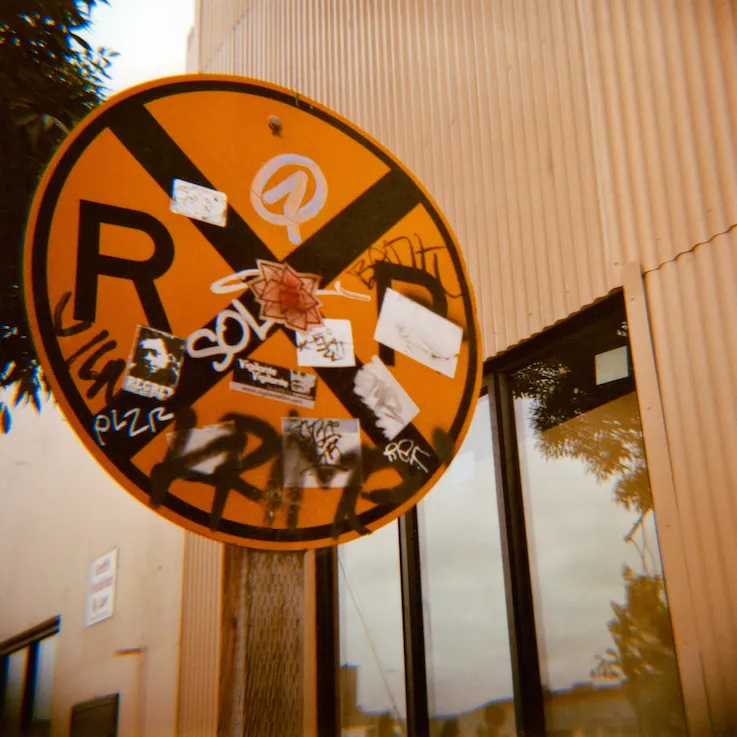
Anyway, the first film came out okay.  It’s going to take some practice to get into it, and I probably need a cheaper 35mm to do some learning. Here are the first shots. It’s a fun distraction, so I’m going to keep at it. I’m still shooting as much or even more digital, but there’s just something about analog I can’t shake.