The Wrath of Kon

Dispatches, thoughts, and miscellanea from writer Jon Konrath

Tag: memories

The Awl

So it looks like The Awl is no more. Another blog bites the dust.

The Awl started in 2009, originally some folks who left The Gawker and decided to do their own thing from their apartment in Brooklyn or whatever. It was a general culture blog, with emphasis on New York City, and a bit more about new media, comedy, and technology or online life, with a wry and sarcastic sense of humor, and less of an emphasis on the usual celebrity stuff that drags down a lifestyle blog.

I don’t remember how I got hooked on it — maybe some cross-posting from Boing-Boing or Wired or something. But I started following it religiously in 2010 or 2011, reading every day, commenting frequently, sometimes deep-drilling on research when I read a story that interested me. And I always kept it on my distant radar that I’d try to write something to publish there, some nonfiction or memoir piece, maybe a smarmy cultural analysis thing, I don’t know.

I think one thing that did come out of that was that in that 2011, 2012 timeframe, I blogged a lot more here, and was probably influenced by The Awl to write more article-like things. That always happens, through osmosis or kleptomania, maybe a mix of both. I was writing a lot in general then, trying to find a way to restart a mostly-dormant writing career that hadn’t released a real book since 2002. I didn’t want to be a journalist, didn’t want to fall into that “new media” category or anything, but it shows in a lot of my writing here that I was influenced heavily by that. (Go read an old post like The Death of Death and tell me I wasn’t reading The Awl when I wrote that.)

Another big takeaway for me as I think back over the last ten years of The Awl is how it fed some need to be a New York expatriate, in a weird way. I left Manhattan four or five years before that, which is six lifetimes in New York time, but I had some distant nostalgia for the city then. Magnify this even further by the fact that I started remotely working for a New York company in 2010, and would occasionally find myself in town again, but would also virtually be in the city every day. Reading stories about the hyper-gentrification and strange politics and book gossip and the struggles of living on The Big Smear partly satisfied that need for me, at least a little.

Like all online properties, The Awl got stupid at one point a few years ago, either flipped ownership or editors or something, and the ensuing reboot just wasn’t as interesting to me. I stuck with it when I could, but it no longer became a daily read. Some of this was just the way blogs changed over time: long reads became one-page reads; articles became listicles; opinion pieces became link-bait topics. Things slowly morphed as ads dominated page layout, comment sections vanished, and it went from being a bunch of cool kids exchanging smarmy jokes to a… well, whatever it became. Not really a blog anymore.

I’ve been in my head a lot lately about what’s going to happen when Facebook dies - that’s another article I’ve been meaning to write for a bit. And it makes me think a lot about the cycle of life of these web properties, like SomethingAwful or Fark or Digg or whatever. I know there are things that I used to use daily and then somehow abandoned, and I always wonder why they lost critical mass with me, and with everybody. When did everyone make a conscious decision to stop using MySpace? Was it because Facebook was so much better, or was it because everyone else stopped using it?

And it makes me think a lot about what the next thing will be. I am trying to make more of a conscious effort to blog here, because I will always have this blog, and can always keep going. But I’m shouting into the darkness here, and there’s no network around this, no way for me to follow others, draw in new readers, find like minds, or whatever. This is a single silo, connected to nothing. That’s fine by me, but it’s not the solution for others. Other people won’t blog. They aren’t idiots like me.

And I don’t know shit about how to make money on this, and I never run ads here or strategize some grand scheme, like picking focused topics and trending keywords and how to flip these posts into a book proposal that will get me a deal, blah blah blah. This also is not a way for me to sell books — my writing here is much different than the writing in my books, and I’m a horrible marketer, so who knows what works. So I can’t pull the “I made a million dollars blogging and you can too!” scheme to get the rest of you creative and interesting folks to entertain me by writing your own blogs.

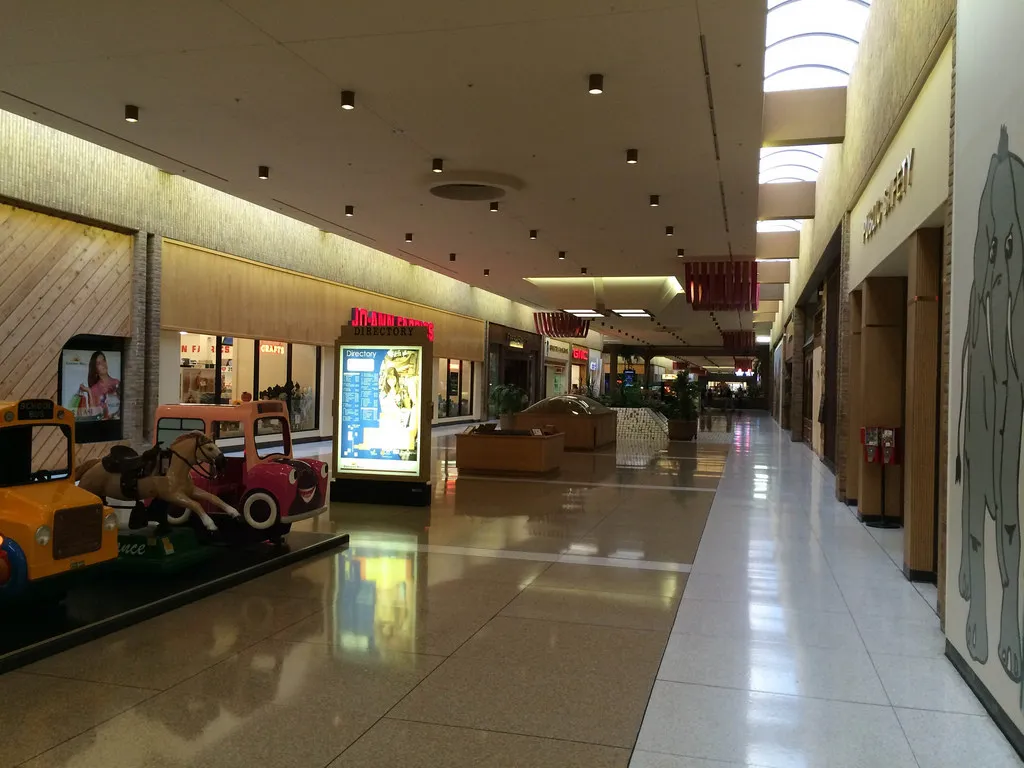
But yeah — the death of a blog like The Awl makes me think the trend is going in the wrong direction, and that’s frustrating. I feel like I have the lifelong dream of opening an indoor shopping mall in the Midwest, then getting in the car and cruising around the dying remains of the malls of Indiana and Ohio and Pennsylvania. It’s depressing. It makes me wonder what is next.

Sears

Yeah, so that Sears in Marin I posted about? It’s on the new closing list. I think it has until April. I should probably go take more pictures, but the last trip was so depressing, it’s probably not worth it.

One of the other Sears store on the new closing list is the one in Shoreline, WA. I have a specific history with that one. In 1996, I was talking to this woman who lived in Southwest Washington, and she was going to be in Seattle to stay with some friends, in Shoreline. We agreed to meet for lunch, and for some reason, the meeting place was that Sears. I think it was the only public landmark I could think of in that area. Anyway, yada yada, and I ended up dating her for the next year and a half.

I really shopped at that store — it was sort of dumpy, and in a weird part of town. The part of Shoreline that is on the water is very affluent, with a golf course and lots of multimillion dollar houses looking out at the water. But the row of stores on Aurora — I think there used to be an outdoor mall in the area, and it was gone, and sort of isolated. The one thing I remember is that the inside of that store vaguely reminded me of the Sears in University Park Mall, in Mishawaka, Indiana.

The UP Sears is not closing. The thing I remember about that one — in my senior year of high school, someone called in a bomb threat right before first hour. When I was driving into the parking lot, firemen were waving people away, telling us to go home. So I drove to the mall in South Bend. It wasn’t open, so I slept in my car for a few hours, and then cut through Sears to go to the record store, because the Joe Satriani EP Dreaming #11 came out that day, and I had to buy it. I don’t know why I so clearly remember walking through that Sears, or why it looked different to me, but it’s a very vivid memory, thirty years later.

The Sears I would have compared that one to would be the one in Pierre Moran mall, in Elkhart, which closed last year. The entire mall was de-malled a dozen years ago, but the Sears remained. Ray’s girlfriend (now wife) worked there forever. I was also friends with someone who worked in the design department there, and used to go visit her, so I was somewhat familiar with the insides of the store, although it was enemy territory for me, being a Wards employee.

The Sears in Bloomington is completely gone, which is weird. The mall lives on, but the Sears was completely leveled, and a grocery store is going in there. That would be a sad thing for me to see, because I always parked in front of that Sears when I went to the mall. I think I parked in front of it the first time I went there, in the summer of 1989. I remember going there with a then-girlfriend in a cab so she could pick up one of those Brother word processors she ordered from their catalog, which really dates me.

Another closing last year was the Sears in Lynwood, WA, at the Alderwood mall. That was a frequent stop for me, because the aforementioned girlfriend moved to an apartment not too far away. I had a car at her place once that needed some work done, and it was a long weekend of wrenching on it, then realizing I didn’t have a good breaker bar or a metric socket, driving to that Sears, buying tools, going back and breaking a socket, returning to Sears to exchange it on that wonderful Craftsman unlimited warranty, repeat a few more times.

Also, Alderwood has strange memories for me because I used to shop there all the time, and the day before I left Seattle, I went there in my one-way rental car to buy some last-minute stuff, and ate one of my last Seattle meals there at the Uno pizza in the food court, which is so revolting and horrible and last-minute, but there you go. (The Uno is now gone, too. Probably a good thing.)

I feel dumb for obsessing over dead malls and retail, and nostalgia in general is such a high-carb k-hole for me to stumble down, with little reward and a lot of depression. But I keep doing it. I’m looking forward to the weather improving so I don’t have to walk indoors anymore.

WordPerfect for Mac

Screen-Shot-2017-11-10-at-5.05.58-PM

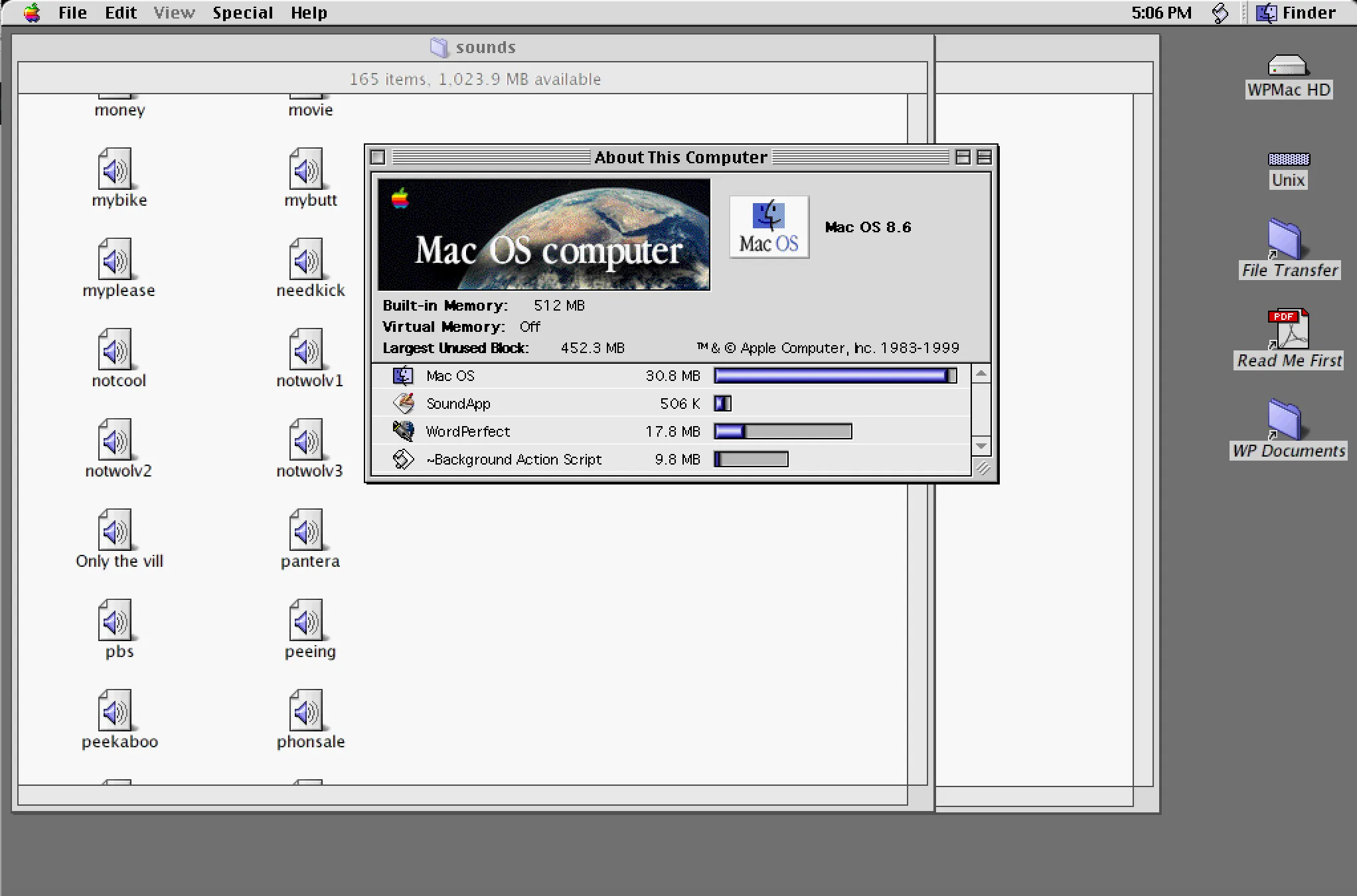
A stupid memory… I was thinking about how I used to love WordPerfect on the Classic Mac OS. It wasn’t a port of DOS WP 5.1; a different dev team wrote their own program, and the company called it WordPerfect, so it worked much faster. I always found it better than Word on the old Sys6/7 Mac.

Anyway, found this page: http://www.columbia.edu/~em36/wpdos/mac-intel.html - Someone has set up the SheepSaver PowerPC emulator to run MacOS 8.6, along with a few versions of WordPerfect. So you can download one image file, and with almost no fuss (aside from the big download) you can then run WordPerfect on a modern Intel Mac.

I was messing with this and realized I have a Stuffit archive of the Mac machine I had at my first job, 22 years ago. I’ve never been able to un-stuff it, because of the weirdness of Mac resource forks or whatever. I brought it into this emulated machine, and it instantly opened it. So I had the same set of files I had back on my Centris 660 AV in Seattle in 1996.

There wasn’t much there: the 1984 commercial in QuickTime; a bunch of QuickHelp source for the Spry Mosaic browser; some other assorted utilities, like DropPS and GraphicConverter. The fun find was I had a Sounds folder, which had a few hundred short clips of audio from Beavis and Butthead and Pulp Fiction. They were all sampled at like 10kHz; the whole folder is like 38 MB.

It reminds me of a time when Windows audio was almost nonexistent, unless you paid hundreds of bucks for a SoundBlaster, but every Mac had pretty decent audio, standard. There was a big culture of hoarding these little ten-second samples of Star Wars and RoboCop movie quotes. Like I remember hanging out with my Calculus teacher at IUSB - this must have been in late 1990. There were almost no Macs at the South Bend campus, but for some reason, he had a brand new SE/30. I went to check it out one time, and he spent half an hour playing me every sound file he had downloaded from the internet, these little clips from science fiction films, all hooked in so it would play Darth Vader when he started up or shut down his machine.

I don’t even know how to play these audio files outside of the emulator, but it works in the program. I guess now I can just go to YouTube and play the entire TV show if I want, but it’s interesting to see a snapshot of how it used to work back then. Also, the old Mac interface looks so blocky and weird now, which is hilarious.

Donald Cried (2016)

Donald Cried is a film in the “you can never go back” camp, but it’s also more about the estranged relationship between two friends who were inseparable as teenagers, but took completely different paths into adulthood.

Originally a short by independent filmmaker Kris Avedisian, this was expanded to a feature-length affair with the help of a successful Kickstarter campaign. The film starts with the protagonist Peter returning to his home town in Rhode Island to handle the affairs of his recently deceased grandmother. He left the small town a dozen years before, and went to New York City to reinvent himself, forget his past, and work on Wall Street. The problem with his quick overnight trip: he’s lost his wallet, so he’s stuck at his grandmother’s old house with no cash, no ID, and a to-do list of funeral home, nursing home, realtor, and everything else involved in closing the last of his involvement with his old life.

With no other options, he turns to his last lifeline, and meets up with his old pal Donald, who he hasn’t seen since high school. Donald is a stoner dropout who lives in his mom’s attic, works part-time at a bowling alley, and is the opposite of Peter, stuck at the same point he was back in the glory days of high school. We quickly find out that Peter was once cut from the same cloth, and had the same love of heavy metal and juvenile delinquency. Peter just needs a ride to pick up his grandma’s ashes and empty out her nursing home, plus a few bucks for bus fare back to the city. Donald is ecstatic about the triumphant return of his old friend. Antics ensue.

I always have a certain nervousness when returning back to Indiana, and that’s captured too well in this film. It’s a mixture of “this could have been me” and flashbacks of the past that bring out the “man, I was an idiot back then.” My nostalgia issues are a bit contrary to Peter’s in the film, though. He’s trying to remain unseen, and not get entangled in the past. For example, the realtor he gets is a woman he went to school with, and that he had some feelings for back in the day, but he initially acts as if he doesn’t remember who she is at all. I’m not saying I seek out people and reunite with them (I did have an ex-girlfriend sighting at a mall a few years ago, and I ducked in another store to escape) but I do seem to seek out old landmarks and get too mentally involved with the ghosts of the past.

The real star of this movie is Avedisian, who plays the character of Donald. He’s this lanky, bearded guy with an awkward Ray Romano-sounding voice and a Keith Moon haircut, and he’s completely cringe-worthy in his total lack of a filter. This starts as a truly hilarious character, like a Mark Borchardt from American Movie, except with no ambition to make films. At first, he’s just the funny guy to the straight guy, but then you become sympathetic to him, feel sorry for him. My feelings bounced between “wow, what is with this dude” to “wow, how could Peter help this dude get his shit together.” And the latter is a strong one for my personal experience, so it really got me.

The small town setting was also big for me. Warwick isn’t a “small” town — it’s the second-biggest city in Rhode Island. But, it’s only 80,000 people, and what is captured in the film is the small town feeling of cruising at night, bowling alleys and convenience stores, little houses, and that feeling that a lot of people never leave, never forget high school, never move on. The duo go, on Donald’s insistence, to visit another one of their high school buddies. When they get there, he’s sitting in bed, unmoving, watching cage fighting matches on TV, like he’s never left the house in fifteen years. Or there’s the bowling alley manager, a burly guy actually played by former WWF wrestler Ted Arcidi, who’s in his office showing a teenaged cashier his grainy VHS tapes of when he used to be a powerlifter back in the Eighties and could bench 700 pounds. It’s an interesting backdrop, and really sets up why Peter left, and why it is such a strange yet compelling place to visit.

Overall, I have only one big problem with this film: I wanted to write a book that was almost exactly this. I started outlining it two years ago, when I went back to Indiana for a weekend. I had the backdrop, and I thought I had the characters. But I never could quite break the story correctly. And Avedisian showed me that I really didn’t have the depth needed to get the characters down. I gave up on the idea a while ago, and now I’m stuck on the thought that I really should do something with it, but of course if I started working on it, I’d unconsciously ape exactly what he did.

Anyway, it’s on iTunes for rent right now. Not for everyone, but I found it pretty entertaining.

This site is now twenty years old.

Screen-Shot-2017-04-10-at-12.32.13-PM

What were you doing twenty years ago?

I was living in Seattle. Working on the west shore of Lake Union. Working on two different books, but years from finishing either. I’d done a paper zine that had petered out after a half-dozen issues, and had a personal web site I’d been running for three or four years, but it was mostly just links and had no real content.

That was one of my gripes in the early days of the web: there were very few sites with actual content. Most personal web sites were just a list of links elsewhere, and maybe a person’s resume. There were a few sites focused on content, but there were no real go-to places for people generating their own content. This was obviously long before Facebook or Twitter, but it was also before Blogger or LiveJournal. It was years before the concept of blogs was even born.

In that mid/late-90s time, there were online diaries. People would hack together their own diaries online, on services like GeoCities or Angelfire, and write daily about their life. It was very much the wild west, and you had to do the heavy lifting yourself, getting an index to work, links and other things. This was before CSS was practical, before PHP was really used (PHP 2.0 wouldn’t ship for another six months) and when tables and frames had just become standardized enough to use regularly across all browsers. But, some people did it. Just to give you an idea of volume: Open Pages ran a web ring for diarists, and was by far the most popular. In 1998, they had 537 members. In 1997, there were just over a million web pages on the entire web, with about 120 million users. Now, there are about 1.2 billion web pages, and 3.2 billion users. The web was a much smaller place then.

I kept a paper diary every day, and had for a few years. I didn’t want to put this online, but I did want to have a place to talk about whatever. I did this a bit with my zine, but it took some work to put out each issue. I figured I could do something where I could write every day, and immediately put it live. I ate lunch in my office by myself every day, and I wanted something to do besides work on these books which would not see the light of day for years.

At the time, I had a site running from my account at the Speakeasy internet cafe, which was at speakeasy.org/~jkonrath. With the help of my friend Bill Perry, I wrote a little scrap of emacs code so I could fire up the emacs editor, hit Control-X Control-J, and be dumped into a new file with today’s date plus .html as the filename. I could then write in it, save it, and it would be live on the web site. I then wrote a little C program that would crawl through the files and create an HTML index, which I put in a left-side frame. (Yes, frames. Does anyone even remember that evil shit?)

I wrote for a few years, with a few breaks here and there, and the idea was just a simple diary, of day-to-day stuff. There was no central theme, and maybe this was lack of ambition, or that I already had these books as my main project, and all I was doing was documenting my thought process. Some people started larger projects, like writing a series of essays and stories so their diary was more of a lit journal, or keeping on a theme and creating something that was more akin to a TV show or a “real” web site, like actual journalism. I didn’t want to do that.

This reminded me of the zine world, and how it got huge and then fell apart in the Nineties. A lot of people made zines because it was all they could do in their pre-internet small town: go to the photocopy shop and xerox a bunch of stuff to mail to people. But some people wanted to compete with the larger publications, and tried to make their zines look more like the glossy mags. So they spent thousands of dollars on offset printing, and getting office space, and getting distribution into book stores, and it went from becoming a zine to becoming a business. It killed the spirit of DIY zines.

This is what happened when the word “blog” was invented, and some heat was applied to the market. People went from this DIY ethic to doing it for the money. Blog-to-book deals happened. People started political blogs to compete with (or be ahead of) sites like CNN. Movie rights were sold. People became celebrities. Ads were everywhere. Blogs became A Thing.

And, I kept puttering away. I moved to New York. I started publishing books. And my entries became longer and more focused, but they were still about memories and nostalgia and gripes and travel and whatever else.

LiveJournal was invented. And Blogger, and Blogspot, and WordPress, and Friendster, and MySpace, and Facebook, and Twitter. A flood of new content happened, but the bar was greatly lowered. It went from long essay writing to short update writing to very short link sharing to 140 characters to nothing but a picture or an emoji. Writing writing vanished.

I kept plugging away, although my other projects took up more and more of my time. I should look up the exact metrics - there are just over 1200 published posts now, which over 20 years, is something like once every six days. But, it’s going a bit slower now - I think we’re going on 100 days in 2017, and I’ve only got 17 entries so far. A lot of that has to do with the fact that I never know what to write here anymore. I feel like writing about the day-to-day seems dumb, and people don’t want to hear about it. There’s some heavy self-censorship going on there, because of the general change in what we do online, and that feeling of futility that nobody is reading this anyway. But, I’ve kept going.

The 34.216.9.77/ web domain started late in 1998. This was moved to Pair.com around then. I slowly made improvements to my duct tape infrastructure, but in 2009, gave up and moved everything to Wordpress. Originally, the site was just called my journal, no real name. Then it got the name Tell Me a Story About the Devil. Then, around the beginning of 2011, I started calling it The Wrath of Kon. And here we are.

As I mentioned, there’s about 1200 entries, for a word count of just over a million, something like War and Peace plus Infinite Jest.

So, twenty years. There’s no reason for me to stop at this point, so let’s see what happens in the future.

BTW: if you want to read my favorite entries from over the years, go here: https://www.rumored.com/tag/favorites/